Buy anything from 5,000+ international stores. One checkout price. No surprise fees. Join 2M+ shoppers on Desertcart.
Desertcart purchases this item on your behalf and handles shipping, customs, and support to Croatia.
๐ Capture the world wider, faster, and sharper โ donโt miss a frame!
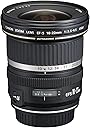
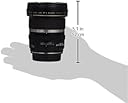
The Canon EF-S 10-22mm f/3.5-4.5 USM is a premium ultra wide-angle zoom lens designed exclusively for Canon EOS digital SLRs with APS-C sensors. Featuring a versatile 10-22mm focal range (equivalent to 16-35mm full-frame), fast and silent ring-type USM autofocus, and close focusing down to 9.5 inches, it delivers exceptional image quality with advanced aspherical and Super-UD lens elements. Its durable metal construction, 77mm filter compatibility, and Canonโs 1-year warranty make it a must-have for professionals and enthusiasts seeking expansive perspectives and reliable performance.
| ASIN | B0002Y5WXE |
| Best Sellers Rank | #1,049 in SLR Camera Lenses |
| Brand | Canon |
| Built-In Media | EF-S 10-22mm f/3.5-4.5 USM Lens, Instruction Book, One Year Limited Warranty Card |
| Camera Lens | Canon EF-S 10-22mm f/3.5-4.5 USM SLR Lens for EOS Digital SLRs |
| Camera Lens Description | Canon EF-S 10-22mm f/3.5-4.5 USM SLR Lens for EOS Digital SLRs |
| Color | Black |
| Compatible Camera Mount | Canon EF |
| Compatible Devices | Mirrorless Camera |
| Compatible Mountings | Canon EF |
| Customer Reviews | 4.7 out of 5 stars 775 Reviews |
| Exposure Control Type | Automatic, Manual |
| Focal Length Description | 10-22 lens |
| Focus Type | Auto Focus |
| Global Trade Identification Number | 00013803043099 |
| Has Self-Timer | No |
| Image stabilization | Digital |
| Item Part Number | 9518A003, 9518A007 |
| Item Weight | 16 ounces |
| Lens | Wide Angle |
| Lens Coating Description | Metal |
| Lens Design | Zoom |
| Lens Fixed Focal Length | 10 Millimeters |
| Lens Mount | Canon EF |
| Lens Type | Wide Angle |
| Manufacturer | Canon Cameras US |
| Manufacturer Part Number | 9518A002AA |
| Maximum Focal Length | 22 Millimeters |
| Maximum Shutter Speed | 1/4000 seconds |
| Media Type | ProductImage |
| Minimum Aperture | 4.5 |
| Minimum Focal Length | 10 Millimeters |
| Model Name | 9518A002 |
| Model Number | 9518A002 |
| Number of Diaphragm Blades | 6 |
| Photo Filter Size | 77 Millimeters |
| Real Angle Of View | 107.5 Degrees |
| Screen Size | 9.5 Inches |
| UPC | 304609544713 013803043099 |
| Warranty Description | 1 year coverage for labor, 1 year coverage for parts |
| Water Resistance Level | Not Water Resistant |
| Zoom Ratio | 2.2:1 |
P**Y
Impressive IQ for a wide zoom
The ultra wide zoom has been a mainstay of pros, especially photojournalists, since the early 1990s. Sweeping landscapes, operation in tight quarters and ease of hand holding are hallmarks of this range. The EF-s 10-22 3.5-4.5 USM is the first lens to bring this range to APS-C (1.6X crop) cameras like the 7D, 60D, 70D and Rebel. CONSTRUCTION: My initial impression was it's a little plasticy and zoom and focus rings are slightly coarse and stiff. After a year, it loosened up nicely but is still a notch below the smoothness of my EF-s 15-85 3.5-5.6 IS USM. However, it's light and petite: easy to slip in a coat pocket and ideal for travel or hiking. The metal mount and polycarbonate barrel make it durable yet lightweight. The front element moves slightly during operation so a UV filter is needed to seal the front from dust. AUTO FOCUS: Ring-type USM drives an internal lens group and, thus, AF blazes and is silent to human ears. The front element doesn't rotate during focus and zoom operations. It has FTM, allowing manual focus without switching out of AF mode. This AF design is optimized for stills and not ideal for video: the built-in mics on my 60D and 70D picked up a high pitched stutter from the motor and contrast focus is jerky during video recording. The workaround is to use an external mic and/or focus manually. If video is your main thing, buy the Canon EF-S 10-18mm f/4.5-5.6 IS STM instead as the STM drive is stepless and silent to the camera mic. OPTICAL PERFORMANCE: Basically, this lens features optical quality of an L series wide zoom in a prosumer barrel. Wide open, this zoom is sharp and contrasty in the middle of the frame with slight softening towards edges. The wide side is the sharpest with slight degradation as you zoom towards 22mm. Sharpness across the frame improves as you stop down. By F8 it is pin sharp from edge to edge. I'm going for increased depth of field for landscapes and cityscapes, so I leave this lens at F8 most of the time. I only shoot wide open for occasional low light snaps. Distortion is well corrected. There is a wee bit of barreling at the wide end and slight pincushion ate the long end. But less distortion than my EF-s 15-85 3.5-5.6 IS USM and a little better than the 17-40 4L USM. Like any wide angle optic, you need to compose carefully to avoid perspective distortion, e.g., noses appearing too large or buildings falling over. Chromatic aberration is a reality with zooms and this one is not exempt, with magenta fringing along high contrast edges. e.g., tree branches against a bright sky. However, it is mild and easy to remove in DPP, LR or Aperture. In normal light you will never notice magenta fringing. Flare is well controlled for a zoom: no problems with sunsets or streetlights. Nevertheless, a lens hood is recommended for protection and to shade the front element from glare. Speaking of hoods... HOOD NOT INCLUDED: The recommended EW-83E hood is bulky and (looks like a dish) and costs $32. Worse of all, it's so shallow it offers little protection. I have an EW-83H that came with an EF 24-105 4L IS USM. The bayonet mount is the same size as the EW-83E but the hood is longer and narrower, offering increased protection. I thought the longer length might vignette but, amazingly, it doesn't vignette at any focal length, has better protection from glare and less bulk than the EW-83E. If you're going to spend money on an expensive hood for the 10-22 3.5-4.5, get the EW-83H instead of the EW-83E. If you're on tight budget, check out the Vello EW-83H clone/knockoff. LAST BLURB: This zoom is a specially lens and a bit wide for casual use. After all, 10mm covers 107 degrees! Nevertheless, I reach for this lens to shoot cityscapes, landscapes or in tight quarters. It has ideal coverage for spacious cathedrals or mammoth train stations. If you need an ultra wide zoom on APS-C, this is among the best in terms of image quality: sharp, fast to focus and easy on the shoulder.
A**R
No excuse not to buy this lens!
This is one terrific lens! It solves the problem of wide-angle coverage in the 1.6 FOVCF very nicely. As others have pointed out, the mechanical build and optical quality (with 3 Aspherical elements and 1 Super-UD) probably deserve an "L" stamp and a red ring. This lens appears to be of almost identical build, quality and size as the EF 17-40mm f/4.0 L USM. Even uses the same 77mm filter size as most of the L's. Overall sharpness is excellent, with maybe a little softness towards the corners at 10mm, but I've seen comparisons with other ultra-wide zooms like the Sigma and the Canon blows them away! CA is well controlled too. There is slight Barrel and Pincushion distortions present at the low and high ends, but less than would be expected for a lens this wide. All in all this is one of the best wide-angle zooms available. The major criticism of this lens usually comes down to; "well, how long will Canon continue to make 1.6 FOVCF cameras?" or "Someday I might upgrade to a Full Frame camera, then what will I do with this lens?" I doubt very seriously that Canon will do away with the APS-C cameras any time soon. My reasoning is that: 1. Canon just came out with the Full Frame 5D at the $3000 price point. Introducing a FF camera to replace the 20D at $1500 would kill the 5D after only a few months. 2. Having the EF-S lens line already established almost guarantees keeping the 1.6 format - mostly because of this lens. To be able to use the EF-S 10-22mm, a chip can't really go any bigger than 1.6 since this seems to be the limit of the useable coverage. Using a 1.5 or 1.4 sensor for example would probably start to introduce significant fall-off at the corners of the larger chip. As I am writing this, the PMA conference is only four days away. My prediction is that Canon will announce a replacement for the 20D that will, in essence be a 1.6 FOVCF version of the 5D. They will probably increase the (already excellent) density of the 20D's CMOS by shrinking pixel size down to around 5 micron yielding something around the 10 mega-pixel range to compete with the Nikon D200. Maybe they will call the camera the 50D after the 5D since they can't really use the name 30D because D30 was already used. In any case, my point is that the 1.6 APS-C format will likely be around for some time to come, until the point where the FF price point drops enough to warrant discontinuing the xxD line. Even then, when that happens, doesn't mean you'll throw your 20D in the trash! You'll still want to keep using it and/or sell it, and having this lens will significantly increase its usefulness or resale value. Now, having said all that, this is the only EF-S lens I plan on buying. From the reviews I've read, the other EF-S lenses are of significantly lesser quality, and all of your other lens needs can be met with standard EF lenses anyway, APS-C or otherwise. Plus you get the option to buy L glass. So, bottom line is buying this particular EF-S lens for a 20D or XT is a no-brainer. It's the best solution for wide angle in this format. Hesitating to buy it because "I might get a FF camera someday" is also nonsensical. What I might do in the future is just that, for the future. Not buying a mid-priced car today because "someday" I might buy a Ferrari doesn't satisfy my use and enjoyment of the car today!
T**O
A lens worth buying a digital slr for
I've been more or less addicted to wide angle photography for the last 20 years or thereabouts. Unfortunately, ultra wide angle shooters have been left out of reasonably accessible digital slr photography until very recently. Now there are several viable name brand options available, namely the Canon 10-22mm f3.5-4.5 reviewed here, the Nikon 12-24mm f4, and the Zuiko 7-14mm f4. Because of the 3 different crop factors involved, these lenses end up being pretty close in (35mm equivalent) effective range; 16-35 for the Canon, 18-36 for the Nikon, and 14-28 for the Olympus. Many will caution against purchasing these lenses since they cannot cover the full frame 24x36 format, and cannot even be mounted on a regular body. In the Olympus' case, it doesn't matter since the company has staked its fortunes on the smaller 4/3rds sensor format, and has opened it up to other manufacturers such as Fuji and Panasonic. With the Nikon and Canon, you are taking a leap of faith that the companies will continue to produce 1.5 and 1.6 crop factor sensors into the future so that you will be able to take your crop-only lenses to upgraded digital bodies down the line. To my mind, Olympus has already demonstrated the desirable technical characteristics of a smaller sensor format, so there is good reason to believe that smaller than full frame sensors are here to stay. By extending the glass beyond the mount and into the body, and/or covering a smaller circle, Canon and Nikon are providing those same technical benefits to users of their smaller sensor cameras, namely sharp, extra wide angle in a compact package. Besides which, I'm much more concerned with the photos I couldn't take if I stayed away from the product, than I am with its unknown future upgrade path. While the Olympus lens and 4/3rds system was intriguing, I felt that the 7-14mm wasn't worth more than double the price of the Canon for 2 extra mm at the wide end. It's also double the weight - making it impractical for use as an everyday lens, and negating the advantages of the E-1 body. So, I was pretty much down to the Canon or the Nikon (or the always available Waitsomemore). At this point, I should say I'm platform agnostic. In the 80's I happily used Minolta equipment. In the 90's I bought some Nikon gear to use their 15mm prime lens. Basically, if it suits my purposes, I don't care what the label is. Back to the lenses. The Nikon is more expensive and less wide, but it does have the continuous maximum apeture throughout the range. The Canon is wider, a tad lighter, and a tiny amount faster at the wide end. Both appear to be excellent choices, but I could not consider them independently of the cameras they would be mated to. Since I did not already own a digital body, it also came down to a decision between the Canon 20d & Nikon D70s. Here, the Canon wins for me on quality of sensor and a host of other details. In practice, the lens is a joy to use. It's sharp. The zoom allows it to be as wide as you need it, which is an improvement over my previous favorite Minolta 20mm 2.8, though it does lack the depth of field scales which the Minolta has. The zoom also allows for keeping the lens mounted without switching as often, and that's important for keeping out dust. It's a very solidly built, quality instrument. Focus is fast if you're into that sort of thing, and nearly silent with the ultrasonic motor. The lens does not extend in length for zooming or focusing, though the front elements do move slightly inside the barrel. Mated to the 20d it's a tool that exceeds my previous film cameras in just about every way imaginable. I'm finally free to make the ultrawide photos that I want to make in the digital domain and the initial results have been outstanding. If you're into ultrawide and want to go digital, the 20d with 10-22 is a fantastic setup. If you've already gone digital and want to try wide angle, (assuming your camera can use ef-s lenses) this is a true bargain - you get a 16mm, 20mm, 24mm, 28mm, and 35mm all rolled into one. It makes me positively giddy. Thank you, Canon!
G**S
My favorite lens
I live in NYC and have been shooting with this lens for over three years, most recently on a Canon 70D. I've found it invaluable for architecture in the City and landscape photography - it is my walk around lens. The lens is well made and has withstood many bumps and bruises while hiking with the camera clipped to my chest. It survived a fall when my tripod tipped over, the only damage was a broken ND filter. I've been happy with the sharpness and contrast. I wouldn't say the lens has any cons if you understand the limitations inherent to an ultra wide lens. This lens is rectilinear and does an excellent job controlling distortion. At 10 mm there is elongation at the edges of the frame, pin cushion and perspective distortion. Keeping the camera level will minimize this and pin cushion can be corrected in Lightroom. While taking group shots, it's important to zoom in to at least 12-14mm or frame the picture so people aren't at the edges. The lens is a bit more prone to flare, which can usually be avoided by changing your framing. It's also suffers from more CA than my other lenses, but this is also easily corrected in Lightroom. At 22mm (35mm full frame) there is no distortion and I've found it to be the perfect length for shooting panoramas in portrait orientation. Overall I've learned that 10mm shouldn't be used often for traditional landscapes, unless you're using it to emphasize something in the foreground. The utrawide 10mm is much better indoors in places like cathedrals and the like - in fact sometimes I wish it was a bit wider in these circumstances. Overall, I love this lens and its my most used by far. Hopefully this review will help some folks shooting with it. The only downside is that I'll have to buy the 16-35mm L if I ever switch to full frame.
J**F
Filters For A Great Lens
Let me jump right into filters for this lens. I spent hours looking on forums, review websites and even searching amazon reviews trying to figure out what uv filter to buy for this lens (for front element protection). I hope this post will save you much time so you can spend it out there shooting! My requirements for a filter were: No "vignetting" caused by the filter at 10mm. No reduction in image quality. Must have front accessory threads that would allow me to clip on canon standard lens caps. I eventually just gave up searching and decided to try the Hoya 77mm HMC UV Digital Multi-Coated Slim Frame Glass Filter filter that everyone seemed to be buying for this lens. This filter produced no vignetting even at 10mm at f/22. Images taken with and without the filter are almost identical. Image quality reduction is negligible with this filter. You may experience extra reflections from the filter when pointed at a bright light source, but I have not found this to be a problem in real world use. My canon lens cap attaches nicely to the filter and does not pop off randomly. I also own the B+W 65-073102 77mm Neutral Density 0.9-8x Filter #103 which meets all my requirements listed above. I suspect any B+W filter with the newer F-Pro mount will not cause vignetting on this lens (because all my F-Pro B+W filters are precisely the same thickness) and may be your best choice optically. B+W 77mm Clear UV Haze with Multi-Resistant Coating (010M) is likely an excellent choice if you don't mind parting with the extra cash when compared to the Hoya filter. Also, I can stack the UV and ND filters on this lens causing only very slight vignetting at 10mm and no vignetting around 11mm. Awesome lens. Build quality is top notch for non L glass. Image quality is not quite as good when compared to the Canon EF 17-40mm f/4L USM Ultra Wide Angle Zoom Lens for Canon SLR Cameras or Canon EF 16-35mm f/2.8L II USM Ultra Wide Angle Zoom Lens but getting equally wide with these lenses would require you to own a full frame body. I feel this is the best UWA choice for 1.6x sensors. The Tokina 11-16mm f/2.8 AT-X116 Pro DX Digital Zoom Lens (for Canon EOS Cameras) is tempting for f/2.8 but personally I felt I would mainly use a lens like this at around f/8 and find I do so in practice. The only reason I am only giving this lens 4 stars is for the high price assigned to a non L build quality lens. It would be nice to see weather sealing and the same plastics seen on the L series at this price point. I don't need the red ring... that's what they make rubber bands for :P I hope this helps you! Thanks for reading.
P**N
a beginner to rank amateur at best. This is the first real lens I have ...
I am not a professional photographer; a beginner to rank amateur at best. This is the first real lens I have ever owned and I use it on a Canon T5i I purchased last year, my first DSLR. I take about 250-300 pictures a week as part of my profession so a dependable camera body and lens are crucial. This lens delivers a noticeably superior picture quality compared to what I was getting out of the kit lens that came with the T5i and especially compared to the picture quality from my old Canon PowerShot, which was respectable. The colors are vivid and not as flat; the focus is sharper. The wide angle functionality enables me to photograph small areas realistically and I don't particularly notice the barrel distortion until about 13 to 10 mm. That's awesome as I only use such a short focal length in the smallest of spaces; for interior photography I usually play in the 14 to 18 mm range and longer for outdoor photography. This lens is not an uncap and shoot; there is a learning curve. It's taken me over a month just to become comfortable with it. You can always cheat and use the camera's auto setting but you're really missing out. I am having so much fun with this lens I actually look forward to going to work. And I've learned more about photograph with this lens than ever before. There was one problem. The autofocus malfunctioned after about a month of steady use and I had to drop off the lens to a canon service center in my town. Within two weeks Canon returned the lens with a brand new autofocus motor in it. It works like a charm again. I hope it is fixed for good. I have read elsewhere that the autofocus on this particular lens has been a problem for others. Maybe I should learn how to manual focus and use the autofocus less. Some advice: this is a heavy lens and bigger than you think. Ditch the neck strap and grab a hand strap.
S**E
Quite Possibly Canon's Best EF-S Lens
I cannot say enough positive things about Canon's 10-22mm. I bought mine in November 2010 and it's probably been my most used lens. (Now I should mention I only use three lenses: Canon 50mm f/1.8 , Canon 100mm f/2.8L and this 10-22mm. Well I also have a Lensbaby Composer but that doesn't count hahah) The 20-22mm is a well-built lens. It has a Super UD (Ultra-low Dispersion) element. Dispersion causes color fringes on the edges of subjects, often referred to as chromatic aberration (CA). Super UD has characteristics similar to fluorite lens elements. Super UD is found only in a few Canon's lenses such as the 400mm 5.6 L. The 10-22 is also a very light lens; hardly notice it on my 7D . This is a very veratile lens. At 22mm it's a 35mm equivalent, which happens to be one of my favorite focal lengths. What can I say, I'm a minimalist :) On the 10mm end it's just a lot of fun. Everything is in the shot. Everything! lol There's very little edge distortion at the edges imo; I've never bothered correcting for it. Obviously when at 10mm then you want to keep subjects away from the edges, especially tall buildings and people. However, sometimes I like to purposely exploit the edge distortion; it can impart cool effects when used creatively. I wish it was constant aperture. That's really my only gripe, and it's a minor one. Speaking of aperture, I've read people complaining about it being "slow" and not good in low light. Baloney. Check my Flickr stream. I use it indoors all the time, bowling alleys, clubs, restaurants...I've used it at night on countless occasions. That's what higher ISOs are for. I met a guy who shoots in night clubs for a living -- and he was using this lens. It's good stuff! As of February 2012 it's currently over 800. That's a bit spendy. Maybe wait until summer.
W**N
Very Sharp Lens!
I took this lens out on a photo shoot with my Canon EOS Rebel T1i the day after I received it from Amazon.com. I had been a bit skeptical about purchasing it because I did not know how much I would need or like a truly wide angle lens, since I tend to prefer telephoto lenses. However, when I first used this lens, I was very impressed with the image quality and with what I saw through the viewfinder. The wide angle of view offers some very interesting new photo opportunities! The images this lens produced for me were superb in terms of color saturation, clarity, and sharpness. The pictures were so sharp that I could crop them, keep only about 5% of the original image, and still have tack sharp pictures! Aside from the cheaper build of this lens, it performs on the same level as my "L" lenses. As an added bonus, this lens offers an excellent depth of field with a close focusing distance of about 9 to 10 inches! That makes it possible to get close-up shots of flowers where every part of the flower is in focus - no more depth of field concerns! When zoomed out toward the widest angle, my camera's built-in flash causes a shadow from the lens to appear in the picture. But when an external flash is used, this is not a problem. I used a slim Circular Polarizer filter with this lens with no problems - no vignetting! Before buying this lens, please understand that it is an EF-S lens that can be used only with Canon cropped sensors, such as the T1i, 50d, etc. It will not work with the full-framed Canon cameras (eg, 5d, 1ds, etc.).
A**A
Canon EF-S 10-22mm Lens โ Capturing the Extraordinary in Every Frame!
The Canon EF-S 10-22mm f/3.5-4.5 USM SLR Lens is a game-changer for my photography. Its wide-angle capabilities allow me to capture stunning landscapes and Astrophotography details with exceptional clarity. The autofocus is fast and precise, ensuring sharp images, while the f/3.5-4.5 aperture range provides versatility in various lighting conditions. This lens is a must-have for any EOS Digital SLR user seeking to elevate their creative potential. Simply put, it's a masterpiece!
E**N
Sรบper
Contento por la compra.
J**A
Buen servicio y buena calidad
Muy bien embalado muy correcto el trato del vendedor y en un tiempo muy aceptable
S**0
่ชฌๆ้ใใฎๅๅ
่ชฌๆ้ใใฎๅๅใงใใใใใใใจใใใใใพใใ
L**O
Non convince del tutto
In sintesi: PRO: distorsione minima - super resistenza a flare e ghosting - ben costruito e piacevole da usare - AF molto veloce - nitidezza zona centrale molto elevata CONTRO: nitidezza ai bordi da scarsa (aperture piรน ampie) a sufficiente (a f/11), tanto da farmi pensare di essermi imbattuto in una copia difettosa - aberrazione cromatica piuttosto evidente - costo secondo me esagerato per le prestazioni che offre. In ogni caso ho restituito la lente non essendo soddisfatto della nitidezza
Trustpilot
1 week ago
1 week ago