๐ท Elevate your photography game โ because your moments deserve legendary clarity!
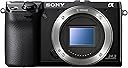
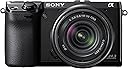
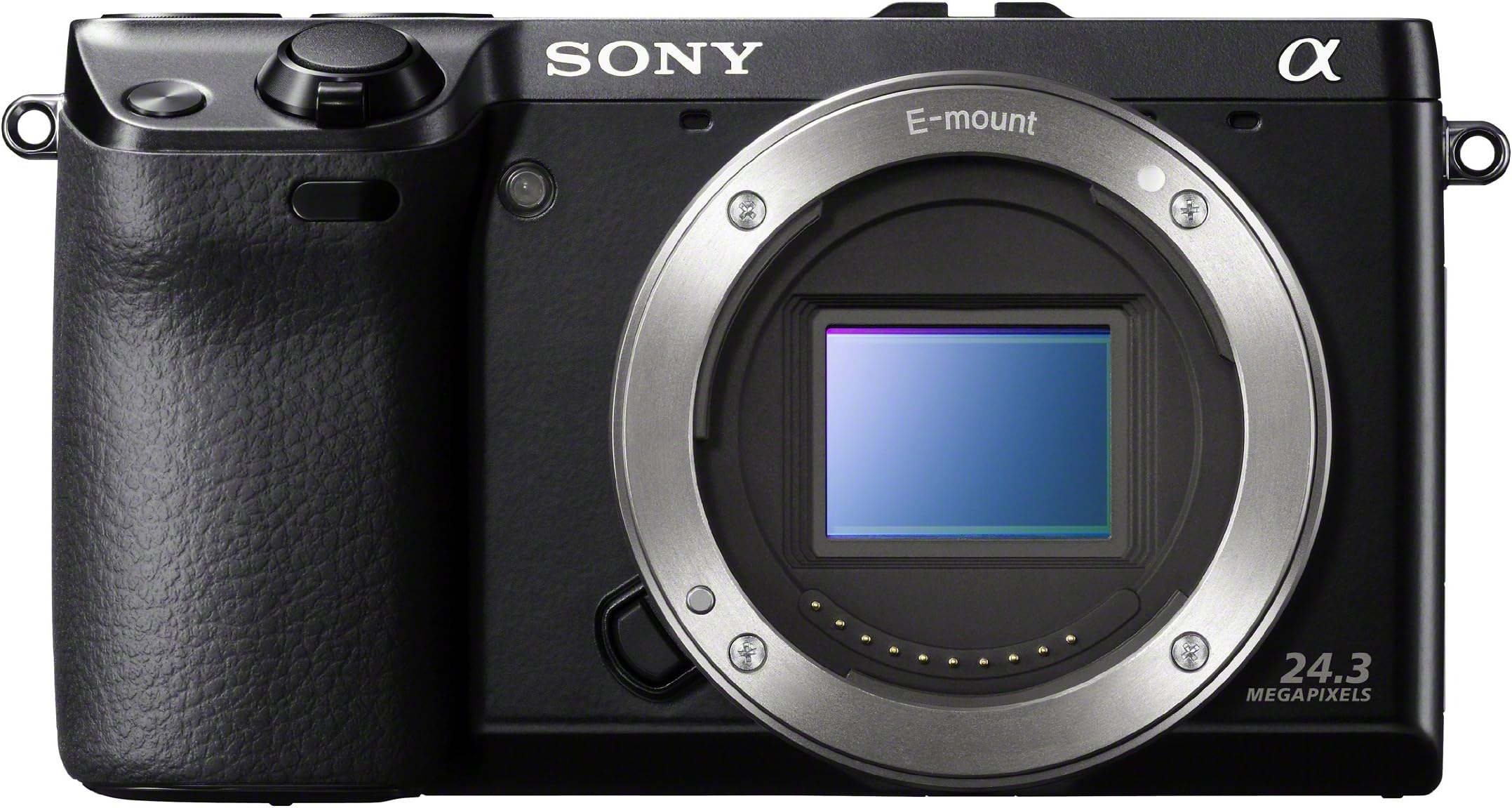
The Sony NEX-7 is a professional-grade mirrorless camera featuring a 24.3MP APS-C CMOS sensor, a groundbreaking 2359K-dot OLED electronic viewfinder, and up to 10 frames per second continuous shooting. Designed for enthusiasts and pros alike, it offers DSLR-quality imaging in a compact body with intuitive manual controls and compatibility with a vast range of lenses. Perfect for capturing stunning stills and Full HD video, the NEX-7 delivers exceptional detail, dynamic range, and creative flexibility.
| ASIN | B005IHAIEI |
| Age Range Description | Adult |
| Aperture modes | F3.5โF5.6 |
| Aspect Ratio | 16:9 |
| Auto Focus Technology | Continuous, Contrast Detection, Live View, Multi-area, Selective single-point, Single |
| Autofocus Points | 25 |
| Best Sellers Rank | #312,125 in Electronics ( See Top 100 in Electronics ) #917 in Mirrorless Cameras |
| Bit Depth | 14 Bit |
| Brand | Sony |
| Built-In Media | Instruction Manual |
| Camera Flash | Built-In |
| Camera Lens | 18-55mm zoom lens |
| Color | Black |
| Compatible Devices | Computers, external storage devices, and other USB-enabled devices |
| Compatible Flash Memory Type | SD |
| Compatible Mountings | Sony E (NEX), Sony FE |
| Connectivity Technology | HDMI, USB |
| Continuous Shooting | 10 frames_per_second |
| Customer Reviews | 4.1 out of 5 stars 78 Reviews |
| Digital Zoom | 10 |
| Display Fixture Type | Tilting |
| Display Maximum Resolution | 921,000 dots |
| Display Resolution Maximum | 921,000 |
| Display Type | OLED |
| Effective Still Resolution | 24.3 |
| Expanded ISO Minimum | 100 |
| Exposure Control | Automatic, Manual |
| File Format | 14bit, JPEG, RAW DNG |
| Flash Memory Bus Interface Type | UHS-I |
| Flash Memory Speed Class | 10 for SD/SDHC, UHS Class 1 for SDXC |
| Flash Memory Type | SD/SDHC/SDXC/Memory Stick Pro Duo/ Pro-HG Duo |
| Flash Modes | auto, on, off, slow synch, rear curtain synch |
| Flash Sync Speed | 1/160_sec |
| Focal Length Description | 18-55 mm |
| Focus Features | Contrast Detection |
| Focus Mode | Continuous-Servo AF (AF-C) |
| Focus Type | Autofocus & Manual |
| Form Factor | Mirrorless |
| Generation | 1 |
| Global Trade Identification Number | 00027242833838 |
| HDMI Type | Type C Mini HDMI |
| Hardware Interface | USB |
| Image Capture Type | Stills & Video |
| Image Stabilization | Digital |
| Image stabilization | Digital |
| Item Weight | 10.24 ounces |
| JPEG Quality Level | Fine |
| Lens Construction | 12 elements in 10 groups |
| Lens Type | Zoom |
| Manufacturer | Sony |
| Manufacturer Part Number | NEX7/B |
| Maximum Aperture | 3.5 f_stop |
| Maximum Image Size | 1920 pixels |
| Maximum Shutter Speed | 1/4000 seconds |
| Memory Slots Available | 1 |
| Metering Methods | Multi, Center-weighted, Spot |
| Minimum Focal Length | 18 millimeters |
| Minimum Shutter Speed | 30 seconds |
| Model Name | Sony NEX-7 |
| Model Number | NEX7/B |
| Model Series | NEX |
| Number of Diaphragm Blades | 7 |
| Number of Items | 1 |
| Optical Zoom | 1 x |
| Photo Sensor Resolution | 24.3 mp |
| Photo Sensor Size | APS-C |
| Photo Sensor Technology | CMOS |
| Screen Size | 3 inches |
| Self Timer | 10 seconds |
| Sensor Type | CMOS |
| Series Number | 7 |
| Shooting Modes | Automatic, Manual, Programmed Auto |
| Skill Level | Professional |
| Specific Uses For Product | Photography |
| Supported File Format | 14bit, JPEG, RAW DNG |
| Supported Image Format | JPEG, DNG |
| Total Still Resolution | 24.3 mp |
| Total USB 2.0 Ports | 1 |
| Total USB Ports | 1 |
| UPC | 027242833838 |
| Unit Count | 1 Count |
| Video Capture Format | AVCHD, MPEG-4 |
| Video Resolution | FHD 1080p |
| Viewfinder | Electronic |
| Viewfinder Magnification | 1.09x |
| White Balance Settings | Auto, Cloudy, Daylight, Flash torch |
| Wireless Technology | yes |
| Write Speed | [1 MB/s, 10 MB/s] |
| Zoom | Optical Zoom |
A**R
The almost perfect Nex 7
Let me start by saying that I have been an avid, but not an expert photographer for 50 years. I carry a camera with me everywhere I go. My recent cameras have included the Nikon D7000, and the Sony Alpha Nex C3 and 5n. But I have had Canon and Panasonic cameras and video cameras I also love. Anyway, this time, I got my wife the Nex 3c for Christmas because it shares the same 16 mp processor that is in the Nikon D7000. To put an APS-c processor in such an inexpensive camera, I thought, would open the world of natural light photography to my wife with a sensor that's a proven winner in a small, convenient camera with interface designed for point and shoot photographers. When I got home, my wife had our six month old daughter dressed in a Santa outfit... Break out the camera...Out of the box in five minutes the most incredible, clear, good color gorgeous detailed photos, all in natural light...we were so excited we rushed to print a Christmas card. That simple incident has caused my wife to finally get interested in a camera more rewarding than her Casio Ex Slim. Reading more, I decided to get myself the 5n. Same processor but with more capabilities and controls. I got many wonderful photos with the kit 18-55 but not as good as my D7000. But then I bought the Sony 18-200 lens for the 5n. The photos and detail with this lens knocked my socks off and was every bit the quality I was getting from the D7000 for which I have an equivalent lens. It was this experience that made me interested in the 24 mp Nex 7. I read a few reviews of the Nex 7. I read of many features, but mainly stunning image quality. Some commentators think that 24 mp is about the equivalent of the detail you can achieve with a film camera. I was interested. But the one think this excercise has brought home to me, if you're seeking detail, then there's alot of other things that go into image clarity than just the sensor. And the other things get more and more evident as the megapixels are pushed. First on this list is whether you have a lens that will deliver enough detail to take advantage of the megapixels. I did crave the detail, I had the lens. So I bought the camera. The Sony Nex 7 takes some getting used to. Its three dial system is ingenious and provides easy quick access to an functions including by example, creativity settings, saturation and sharpness, settings to expand dynamic range, aperture, speed and iso, so that with practice you can reset all of these for every shot almost instantly. There are many other great features also. But mainly, when I got the settings right, the quality of the pictures was just something I never saw before from any camera. There are things that could be done a little better, as there always are. The flash unit is incredibly cheesy. The movie button is placed so that I have taken many movies I did not intend. Good thing they can be erased. And there is no case that fits this incredible little camera. And it is almost shocking that with all the settings available, there is no way to save a custom profile once you have everything just the way you want it. There are other things as well. But overall, it delivers an incredible array of capabilities and unequaled image quality for an APS-C sensor that has to be seen to be believed. With good lenses, that can translate into superior photos in most conditions. How does it compare to the 5n? Honestly for people shots, and especially for shots indoors at night in natural light, the 5n is just as good or better.(My favorite professional reviewers are DPreview.com. Their tests showed that the 5n is better in low light, but if they resampled the 5n image up to 24 mp then the images were equal. This is stupid. They had to downgrade the 5n image to make it equal the 7.) The extra pixels are just not needed and they do reduce low light sensitivity. But in low light both are better than my Nikon D7000 which honestly, I still love and will also use. (The nikon has a quality usable flash.) At half the price for the camera plus the kit lens, the 5n is definitely a better value than the Nex 7 for all but the true enthusiast. Only with the purchase of expensive extra glass, and a lot of testing and practice, will the potential better photo qualities emerge. But when they do the results are stunning to a discerning eye. Now after two months, I would add the following: This camera is even better than I thought, I think in part due to the 18-200 lens being just superb. All my shots are better than all my shots were before. After figuring out the three wheel system and using it, it is fast and convenient. Need to be careful not to bump a wheel and change a setting by mistake. One nice feature. When you set the camera the way you want it in program and aperture modes, then turn it off, the settings are the same when you turn it back on. I am not using my Nikon D7000 at all. I keep trying to find comparable shots where the Nikon will equal this camera. No can do. In daylight, same picture, the Sony Nex 7 produces considerably better pictures. The detail is sharper, and when you learn to use the dynamic range settings they are incredibly better so you get better detail in the light and in the shadows. The depth of field is greater than with the Nikon. The distortion controls are wonderful and are making my pictures better. The articulating screen makes it easy to compose your shot from low and high angles. With zoom and so many pixels it's easy to let camera movement destroy a shot. So finding something to rest the camera against to take a shot always helps, and depending on the height of the object you use, the articulating screen makes it easier to compose your shot. I just love this camera and I believe it is making my photographs better than they ever were.
C**O
No limitations, no excuses.
There are hundreds of reviews, including those by technical publications. I'll concentrate on things that may not be so apparent to a lot of people. This is a well-made camera with lots of attention to details that will make you appreciate it over time. It is not tiny or light, just much more compact than the typical DSLR. The most fabulous feature is its ability to use just about every lens ever made! That is astonishing. And it does it well with different ways to focus manual lenses. There is a multi-shot system that works to produce sharp photos with any lens in about any lighting condition. I even used an old Nikon telephoto that would only work with a tripod on the Nikon, but was even sharper hand held on the Nex! Non-Sony lenses are mounted by adapters that are available on Amazon and elsewhere. Most are fairly rudimentary little devices made in China under a hundred different brand names, but they work. One thing to consider is to use lenses that have a manual aperture control ring. Newer lenses were often made just for automatic cameras and you have to use adapters that have their own aperture control built in and these are not as nice to use. Those old lenses are coming out of the closet and off the shelves at camera stores where they have been gathering dust forever. The prices are going up, especially for the more revered models. In any case, the Nex-7 certainly makes tons of sense for anyone who has some nice old lenses languishing in the drawer. Be aware that wide angles made for rangefinder cameras often produce a magenta cast in the corners of this Nex. A lot of this is variable depending on subject and lighting, but it is causing much consternation for some people. There is a software solution (Cornerfix) and lenses made for SLRs do not have that problem, but they are bigger and require a longer adapter. Sony's published roadmap indicates that new Sony wide angles are on the way, so that would be a solution for many people. Also causing some complaining is the menu system. There are a lot of settings and it is a formidable task to dive in and find your way around. Sony gave this camera a number of knobs and buttons and a click wheel for direct access to menu sub-sets. And you can customize these settings to some extent to fit your needs. Still, there is no way but to jump in and practice and practice until you get it right. The battery drains pretty fast, especially when the proximity sensor turns it on when in a case or you accidentally hit the prominent video button. I highly suggest the outrageously priced Sony model as the aftermart batteries are worthless and maybe harmful to your device. I think a car charger would be very useful. THE NEX-7 DOES NOT COME WITH A MEMORY CARD. I got a Sony memory stick, only 8gb to start. I read a compelling argument that it is better to have several small ones than to put all your photos on one big one that might fail during an important assignment or on your bucket list vacation. Either the memory stick or a Class 10 will handle everything as fast as possible. BTW, a regular old USB cable downloads the camera quite fast with the memory stick at least, so no need for a card reader. Some people don't like their expensive cameras physically attached to a computer and I see their point. All the special tricks this camera does are done well. Panoramas, HDR, etc are all implemented very well. A wrist strap is just perfect with this camera. I'll promote Gordy. Sound is a big deal with video. At the ocean the wind noise was pretty bad, even with the setting for that activated. I hope to buy the little Sony mic someday. This camera has the large "C" sized sensor with nearly 25mps. When it came out there was much wailing and bitterness from the Noise People, those who do not think resolution is as important as the noise issue. As it turns out, noise is very much in control at anything like a normal ISO and with the technology you don't have to go to high ISOs anyway. Coming from a 6mp camera, I certainly see the vastly better resolution and appreciate it. My old Core 2 Duo computer still handles the files fairly well and I don't keep a high percentage of my shots, so haven't run into storage problems yet. Sony software is horrid, still considers Apple as an afterthought evidently. The manual, though, is excellent. I suggest downloading it to get an idea of how it all works. And one more thing about the lenses. Sony has been criticized because the E-mount lenses because they are big on the camera. They do incorporate motors and anti-shake mechanisms and are very light. Some of the size problem is that the camera is small by comparison. They are very attractive and modern looking I am just astonished at how sharp the 55-210 is. I just took a 100mm shot of a building hundreds of yards away, then blew that up to 100% and you can see the twirls in a little rope. Just amazing in combination with the Nex-7. Far beyond any system I have ever used. I think this is a wonderful camera that gives you every chance to make a great photograph or movie. You can't ask for more than that.
F**0
Technology to come. . .
A little background: I've been a film user probably forever. Only 7 years ago I decided to go digital with a Canon EOS30D and never looked back. I'm in no way a "pro" by definition, but I do know what I want to do and what "tools" to achieve them with. Fast forward to the NEX-7. What a piece of technology! First things first: This is not a camera you want to "upgrade" to if you come from a point-n-shoot background or basic DSLR's. Smaller, compact and radical menu designs will quickly frustrate even the most seasoned pro DSLR users. But if you take the time to learn about it, just like how you would learn going from film to digital, it is a VERY powerful camera. With respect to other reviewers on this site the Tri-Nav system IS highly "customizable" [Gary L. Friedman covers this in his NEX-7 ebook]. I had rented it from our local camera shop [with the kit 18-55mm] to try it out. At first I was totally unimpressed and brought it back. The clerk offered me the Zeiss F1.8 to try with the NEX-7. What a night & day difference! YES! to take advantage of the Sony sensor you NEED quality glass to compliment it. So I bought the body only and purchased the Zeiss F1.8 & a Tamron Zoom lens [for traveling]. My passion for photography is ignited again and I'm excited to build a system about the NEX. Yes, there are limitations right now because there are not a lot of accessories and lenses for the NEX system. Sony has always been slow in that regard. But, I also purchased an adaptor to use my older Canon lenses [unfortunately, manual F-stop and focus] and am able to get those shots I so desire. OK, so pros & cons for me: PROS 1) Compact body LOADED with features. 2) Electronic View Finder [EVF] is a big game changer enabling me to "see" what the sensor sees. 3) Tilt-screen lets me get those overhead shots or low to the ground POV scenes that I like for street photography. 4) With fast SD cards I can get action shots in RAW at about 4 to 7fps depending on the scene. I get 10 to 12fps with JPG. 5) "Peeking" focus assist helps with the telephoto shots 6) FAST startup and responsive controls. You hardly ever miss any shots you want to take. 7) LIVE VIEW mode is maintained through continuous shooting up to about 5fps 8) All the data overlays on the live view screen helps set up shots. 9) Low light shots are/at equal to the DSLR 'cousins'. 10) and, of course, the Image Quality is the best! [with good glass!]. Pixel peepers may even find it hard to fault the images. CONS 1) There is no way at this time [firmware?] to save different shoot settings like the way DSLRs cans save 2 or 3 settings. So unless you are in iA mode you have to think about every shot you do. This is one reason why point-n-shoot upgraders WILL get frustrated with this camera. 2) Auto ISO is only limited to 1600 max. 3) Auto Bracketing is limited [+/- 0.7 is not a lot to work with] *note firmware 1.01 now adds ev +3 or -3 with 3 shots auto. 4) Battery life sucks so I have auto off feature ON and I carry a spare battery. With the fast startup I won't miss much. 5) The hot-shoe is Sony proprietary so unless you have an adaptor it uses only Sony flashes and accessories. 6) Pop-up flash will cast shadows on zoom lenses 7) Not many good E-Lenses. . . YET! 8) In low light the EV is VERY grainy. Hard to compose shots. Switching to the Live View glows on your face too much. 9) Sometimes it takes time for the NEX to track in low light. [Uses Contrast AF. Wish it was Phase like the Sony DSLRs] [FYI if you want to see what I use this with you are free to take a look at some of my pics: [...]] Movie Mode: I admit I have not used this feature a lot since I am mostly a stills photographer. But it works well enough. I did not take many movies with it, but I was impressed at the high-quality, the autofocusing, and the overall ease. Overall this is an amazing piece of technology coming from a film background. It does take some getting used to handling and using. I took the time to learn and found this easy to setup. Not as easy as it's bigger DSLR cousins, but easy enough for what it does. Sony has got a winner with the NEX. Can't wait to see what else is coming!
R**S
I Suspect This Was Stolen
The listing says that it comes with "standard packaging" but it did not come in the box. There is no warranty, no registration card, no inspection card, nothing besides the case, the camera (with strap already attached), and the cord. The item listing says that it is an old model, but does not say that it is used. The item was dirty, the screen is dirty, the hard case it came in is dirty, and there are scuffs on the camera body. For a $399 camera, I expect it to at least say in the listing that the camera is scuffed up, and I expect the case and the camera to be CLEAN. I turned the camera on, and it powers up, but I have not checked to see whether it takes photos or whether the menus have been reset to initial factory settings. I suspect not. Besides all of this, the item was very late. So late that I was about to ask for a refund.
P**M
Great in a lot of ways but not perfect. Worth the spend
A little background to give you perspective on the review. I'm an advanced amateur shooting for about 10 years. I also own a Canon 5D Mark II with some L Zoom lenses (24-70 F2.8 and the 70-200 F2.8) and the very good 50mm 1.8 prime and a Fuji X100. I spent a lot of time (probably over 40 hours) researching this camera, reading reviews etc. before buying it on Amazon from a third party seller. I've had it about a week now and shooting with with the Sony 18-200 Zoom Lens (SEL18200). Below are my observations: Good: 1. Very small camera body, smaller than my X100 and feels a lot like my old S90 compact in terms of size (this is of course without the lens). With the 18-200 lens its no longer pocketable but still small and very manageable compared to a SLR. 2. Great build quality, tough body, I like the styling and I love the handgrip. Just the right size. 3. Probably the fastest shutter I have ever used, very little shutter lag. 4. Easy to use menus/interface etc. Lots of options and things like sweep panorama and other "gadget" type things work well although unlikely that I will use them much. 5. Good battery life. I'm easily getting the 400 or so shots per charge its rated for. 6. Electronic viewfinder - The good part is that it works really well, focus is fast even in low light, for the not so good part relating to the viewfinder see below. Not so good 1. The electronic viewfinder that gets rave reviews is simply not as good to my eyes as looking through glass. Its a far cry from an optical viewfinder and I find the little "noise/dots" in low light distracting. Images even when blown up don't seem to show the same noise so this is definitely a viewfinder issue. To give you context even with a lens cap on when the LCD is completely black the viewfinder has tiny dots dancing on it sort of like static on a TV screen, this doesn't go away. 2. Internal Flash design needs work. When used with the SEL18200 lens there is noticeable shadow in images due to the lens blocking some of the light, to the point where I am currently not using the flash at all and will eventually invest in an external or wireless flash. Just simply providing the ability to bounce this off the ceiling would have helped. UPDATE: Someone in comments just pointed out and I verified that you can manually tilt the flash while shooting. Solves my issue with the SEL18200, thanks. In the end what I really care about though is image quality. In this the camera does not disappoint. It does indoors just about as well as my Fuji X100 which to me is the best low light, auto WB adjustment under any kind of light shooter I have ever used and for landscapes and nature its almost as good as my 5D particularly in good light. I suspect with a better lens I would be hard pressed to see the difference, right now while the 18-200 f3.5 is very versatile my Canon glass is definitely a little sharper, but at its size and lightweight appeal by guess is that the Sony will get a lot more at bats than the Canon. Even when blown up to the size of a modern day LCD TV pictures look great and the zoom lens is great at bringing far away details closer. The 24MP seรฑsor does capture a lot of detail and does well in low light situations as well. I'm not really a high ISO shooter preferring flash or faster lenses where this becomes required but up to ISO 1600 have not noticed any issues with the picture quality even on a 63" screen. All in all I am very happy with my purchase and look forward to many years of shooting with it. I'd recommend it along with the SEL-18200 lens for anyone looking for a second camera as a go anywhere alternative to a SLR and lenses or as a very significant upgrade from a compact. This could also very easily become the only camera for an enthusiast/advanced amateur type who would be willing to trade in the bulky DSLR. I definitely hope they make more high quality lenses for it as time goes by. I was also looking at the 24mm F1.8 Carl Zeiss prime (36mm equivalent) but in the end opted for the versatility of the zoom particularly since my X100 gives me a dedicated 35mm point of view for about the same price but with camera body attached. Update - I did some more comparisons to my X100 and liked the Nex 7 enough to sell the Fuji. I used the proceeds to purchase the Carl Zeiss Sonnar 24mm F1.8 e mount lens. I'm finding this lens to mitigate some of my viewfinder issues since its bright enough and the little dancing dots seem at bay but not totally gone. Also finding this lens to be of very high quality, auto-focus is very quick and indoor low light shooting a breeze. Portraits are sharp and background is pleasantly de-focused, even in dimly lit rooms I am not using flash or high ISOs and outdoors or in good light its beautiful. Update 2 - I have now been using the Nex 7 for almost three months. I have to say I love it even more. Its become my go to camera for a lot of different occasions and I recently travelled internationally with this and the Zeiss F1.8 lens as my only camera. Pictures of the trip came out beautiful, although I'm not much of a dedicated 35mm shooter I found that there was enough there to make me very happy and in some cases crops etc. taking advantage of the ample resolution the Nex offers strengthened particular images. I have also added the HVL20 flash to my collection and find it to be useful in low light, indoor types of situations and pretty compact still and recently added the Tamron 18-200 lens which I am liking a little more than the Sony SEL18200 since its a little smaller, lighter and produces about the same image quality. Vain I know but I actually like the black of the Tamron lens more. I have been doing some tests also of portraits compared to my 5D Mark II and for me at least the Full Frame bokeh of the 5D can't be beat. I don't have a great portrait lens for the Nex yet so will reserve final judgement until I acquire one (50mm F1.8 on pre-order) but at near identical focal lengths and apertures the Canon 5D images have the 3D like pop to them that the Nex is missing ONLY when compared side by side, i.e. the Nex does render a little more detail in the background. Outside of this extreme bit of detective work that likely has very little value in actual use I am extremely happy with Nex for portraits and for all others types of shooting including landscape with the Zeiss lens.
D**S
Pleasantly Surprised
I originally purchased a competing product (Olympus) and set of lenses. I kept them a week and was never really pleased with the quality of the results. It's a great "looking" camera but it fell short of my expectations for image quality. I had already looked at the Sony but couldn't get past the unconventional design and I didn't want an EVF (or so I thought). But I took a shot and bought the Sony NEX 7, 30mm Macro, 50 1.8, 18-55, etc. I took about a dozen test shots and then loaded them into the computer to see what I got. I was absolutely blown away with the IQ from this camera. I was intrigued from day 1. It took time to learn the camera. The menu set up is extensive and took me some time to get familiar with. The camera has a lot of options. Some are useful and some are gimmicky, but the camera executes every bit as you would expect. I do play with several of the special modes. It's fun. And given that I use a 1D4 and 5D3 for my more serious work, this is a great camera to play with. After I'd used the camera for a good week and was much more comfortable with what it could do, I packed up and sold my 7D. I was using the 7D as my carry camera. For all of those purposes the Sony slays it. The NEX 7 wont be a great sports camera, and it won't unseat my 5D3 in the studio. But for day to day use, travel, candids, easy carrying, etc. I'm absolutely blown away. Sony really has delivered an amazing package in the NEX 7. The IQ and flexibility is better than I had with the 7D. Moreover, it's super light, compact and easy to carry. Oh, and accessories/lenses are very reasonable. The 30mm Macro is simply amazing. It's on my camera more than 50% of the time. If you buy the NEX 7, get the 30mm Macro. And give it 10-20 hours of use. It is very different from your P&S and it's very different from your SLR. But it is outstanding at what it does do. Update. Took a trip to Hawaii (Oahu and Big Island) in December and debated between taking the 5D Mark III with several lenses or going with the Sony. I kept thinking that I'd really want the bigger camera system but realized I really didn't want to haul all that gear all over both islands with me. So, I grabbed my smallest Lowe Pro and the NEX 7, 30 macro, 18-55 and pancake. I knew I would not have the reach I would with the bigger lenses from Canon but also knew that normal, wide and small zoom would probably cover my needs. The only time I wanted a bit more reach was at the Kilauea Caldera. Otherwise I was good with those three lenses. (I left the 50 1.8 at home). Having had a couple of weeks to review the pictures both form the NEX 7 and the RX 100 I am entirely pleased. There was NOTHING that I was lacking in terms of expectations and results. I could have had more flexibility with my Canon system BUT that would have meant hauling a lot more gear and a lot more weight. Instead I had a small shoulder bag with a couple of pounds of gear which was great for hiking over lava fields, climbing mountainsides, walking the beaches, hiking the rain forests, etc. and arriving at my destinations with fresh shoulders and legs. My big Think Tank pack and Canon gear would have worn me out.
A**S
It is time to get a brilliant mirorless camera to resurrect your manual-focus lens collection -- cheap
Wow, did I score, big-time. The five stars is heavily taking into account that, whilst this *is* a spectacular camera (okay I'll change that to, "spectacular by 2012-2014 standards") and enables me to use my full stock of brilliant Canon manual-focus pro lenses from the 1960s, '70s, '80s and '90s (with an unexpectedly god and solid $8 adapter), the big score here was the price. This camera is still asking a thousand bucks in some places but this one was a bargain. Why? It's just an example but here is the seller's description of the camera I bought. It's entirely accurate: "Used - Good - good condition only little some sign of ware on body and work great .inluded original battery and charger and neck strap and body caps,but not thing else included,30-Day Return Policy ." ...and here is my assessment of what I received: Condition: excellent very slight wear at edge and tiny scratches in LCD anti-glare coating tiny scratches on base one potential dust particle on sensor (since removed using camera's cleaning feature + air bulb) some dirt on LCD (since cleaned) greasy eyepiece (since cleaned) date correct, time set to U.S. Central Time otherwise like-new firmware version 1.02 (since upgraded) battery performance and appearance: excellent (required full charge upon receipt) neck strap by Sony but apparently not the original My price? $300. Holy beans! I even found the improved version of the kit lens (SELP 16-50mm OSS, pancake) for hundreds off ($94) because it had a "dent" that turned out to be a TINY ding in the front ring. Here's my point: It is now not just *possible* to resurrect magnificent 1980s and '90s Canon (and Nikon) glass, from fisheyes to 400-mm tree-trunk-sized monsters to tilt-shifters to astounding varieties of macro gear on a digital sensor, it is now possible to do that on an amazing camera, bought used for a song. What this means: The NEX-7 holds an APS-C sized sensor. Sony's a7R II hit the market in 2015 with a full-frame-sensor as a gorgeous monster of a camera. It's to-die-for. It's about three-thousand bucks. FOR NOW... Do you see what's possible, with new models hitting the streets every year? My NEX-7 is only three years old and came at a 73% discount, yet it does everything it did in 2012 and '13. If you luck out and find an a7R II in three years for $815, you'd be an idiot not to grab it -- especially if you still have MF glass. [BY THE WAY: The better choice for an "old" Sony than the NEX-7 might be their a6000. But that camera is newer and is still asking about $450 at its lowest. I'm an old techie and I declare it's good to stay off the bleeding edge. But the day is coming: I'm lying in wait for you, full-frame...] The big picture: We're now back where we were with film when we discuss the importance of cameras-versus-lenses. Once sensors are so good they echo the image quality of film, image quality is no longer a matter of what body you pick up. Whether we're talking film or digital, the body is only a recording device. It need only be functional and durable. The image quality is in the glass. Except for autofocus, the glass hasn't changed much since thirty years ago. If you don't shoot sports or wildlife, manual focus is hardly a big deal. (Plus, if you want fast autofocus out of simple lazyness -- and I can respect simple laziness -- you always have the option to buy a modern lens to suit your camera.) If the world makes any sense -- which it does not -- the price of old Canon manual focus lenses should leap upward as people realise they can use what the pros used in the '80s and '90s, digitally, for a song.
D**Y
Superb images, flawed interface. NEX 5n is a better choice.
This is a review of my new NEX-7, a lovely, precision made piece of pocket magic. I hope Amazon readers will indulge me if I first make a few observations about the great Sony Corporation, and then some thoughts about the future of of digital cameras in the age of the iPhone. I have a longtime fondness for Sony dating from the 1970's when my job required constant international travel. This was before personal computers and the internet; I depended on my Sony Walkman, my Sony microcassette recorder, my Sony shortwave radios, and all the other jewels of miniature electronics Sony produced in those days with imagination and precision. Trinitron. The U-Matic 3/4" video players we used for education and training before Betamax and VHS. Unfortunately in recent decades Sony has not stayed on the leading edge of consumer electronics. The company grew large and subdivided, replacing a strong sense of design coherence led by Akio Morita, with management by committee. The secret of Apple, and the reason Apple surpassed Sony, is mainly that one individual, Steve Jobs, maintained a coherent personal vision of product rightness over a long period of time and a variety of platforms. Sony on the other hand divided into a conglomerate of disconnected businesses. For example, unlike Apple, Sony's foray into the content industry (movies, music) did not really feed back to enhance their hardware products. There is not one Sony company but several; the people who make the new Sony Tablet P or the Bloggie MP4 recorders probably have never met the camera team. The CEO of Sony in recent years, Howard Stringer, was not a digital visionary but a clueless corporate "Mister Businessman." As I write this Sony has lost billions for eight years and has just announced 10,000 more layoffs. The new CEO says his focus will be "One Sony." I hope so because the disconnects within the Sony group are evident in this NEX 7; it is excellent photographically but lacks integration in other important ways. Sony was an early player in digital cameras and has remained strong, unlike their losing battle to stay in the television market or the MP3 market. In 2006 they committed to full-on competition with Canon and Nikon by buying out the Konica-Minolta line. Their DSLRs are first rate and they are the first to offer translucent non-moving mirror SLR's. Now with the NEX line of mirrorless, large sensor cameras, Sony has a hit and is hoping to lead the next phase of consumer photography. Or rather I should say, of ENTHUSIAST photography since as we all know, mass market photography today is increasingly dominated by the smartphone / iPhone with a vast array of third party software apps. More about that later. However, design by committee is evident in the Sony NEX 7; it gives the feeling that the features marked for incorporation came from a show of hands in a giant meeting rather than a unified concept. In sensors, Sony is pretty much the best in the world. Ditto for their marvelous manufacturing. But in user interface, in image processing and compression, in viewfinders, in lenses, in connectivity, wireless, software, in overall system architecture - they are uneven. Moreover, the camera group seems stuck in a past where cameras were in a silo by themselves. How sad that they seem unable to pull together Sony's amazing range of corporate skills in wireless, computers, etc., to focus them all on any one product. OK, that's my history essay. Thanks for reading. Now on to testing the NEX 7. After having mine on backorder at Amazon for EIGHT MONTHS, it finally arrived a few days ago. I was also fortunate to capture one of the Zeiss 24mm NEX E-mount lenses, a gem (except it is overpriced and lacks image stabilization). I made a direct comparison with my Nikon D7000 for basic image quality and evaluated the other features as best I could, without yet having read every page of the 211 page (!) manual. There are three basics of digital photography: 1) image quality including JPEG efficiency, 2) handling quality including size, weight, speed, and ease of use and 3) connectivity, networking, and special techniques. I am leaving out cost; if that is your metric, I can tell you right now that you can buy a very good digital camera which will produce excellent photos for about one seventh what I spent for this baby with the Zeiss lens. 1. Image quality. I compared indoor both RAW and JPEG images from the NEX 7, 24 MP with my Nikon D7000, 16 MP. They certainly should be comparable since Nikon in fact uses a Sony sensor similar to that in the NEX 5n. I did this at ISO 100, 800 and 3200, trying to match the lenses between the two as comparably as I could, prime for prime, zoom for zoom. The results were mixed. With RAW images, the Nikon D7000 had a slight but definite edge, with more contrast and smoothness, especially in the shadows. (This implies the NEX 5n sensor may also be better than 7 at high ISO.) But with JPEGs it was the other way; at both high and low ISO, the NEX-7 images were distinctly superior to the Nikon in clarity and punch. The difference was greatest at ISO 3200. So it seems when JPEG compression is brought in, the Sony boys have a slight edge in the fine details of their algorithm for image compression. The differences are subtle; let's call it even. The NEX 7 produces beautiful, sharp, dynamic photos, really nice, and every bit as good as the best half-frame DSLR. So far so good. 2. Handling. So if the image quality is top grade, and the slim NEX 7 is so much lighter and smaller than my top of the line Nikon half-frame DSLR, and I am much more likely to take it with me when I travel, does it mean I'm ready to switch over completely? No, I'm not. For one thing, I have been shooting Nikon SLR's since John F. Kennedy was president. Nothing feels as comfortable and natural to me as having that funny clacking box held up to my eye, allowing me to see exactly what the lens will see. The NEX 7 comes with an EVF (electronic viewfinder) which means a little television you squint at through a lens as if it were a real viewfinder. This has been touted as a great advance but I find I don't like it. For one thing, the EVF display - in spite of being a state of the art 2.4MP OLED - is rough compared to a real life image. The picture has sparklies and the colors are off, and the proximity feature (viewfinder doesn't turn itself on until your eye is near the camera, to save battery) is disconcerting. And the information there is simply a duplicate of what can be seen on the much nicer, big LCD on the back, which has a handy tilt mount. With the LCD one can watch as the exposure is adjusted and see the changes in real time, which doesn't work so well using the EVF. The big display also helps more with focus; there is a digital zoom and a Sony feature called "focus peaking," visible color marking of the in-focus area that allows fine manual focus. This is my favorite feature and makes it much easier to use manual lenses from Pentax / Leica / Canon. This electronic assist for manual focus, which is also on the 5n, is one of the best reasons for buying a NEX. 3. Features and connectivity. The NEX 7 offers approximately 50 settings, ranging from gimmicks I am unlikely to ever use (camera fires the shutter when it detects a smile - will this work with my dog?) to those I use constantly (exposure comp, ISO, white balance) to those which sound intriguing but will need trying out to see if they really work (HDR, dynamic range). This all could have been organized more simply and some of the choices are head scratchers. For example: white balance and meter mode appear under the Brightness/Color menu, not the Camera menu nor the Settings menu. There are many such illogical, confusing choices. For example, there are an interesting set of "picture effects" which can emphasize one color, etc. These effects are fun to play with; I have uploaded a sample on the product page which picks out the reds in my neighbor's barn. But if I next want to try picking out the yellows in the scene rather than the reds, I must push or twist no fewer than six buttons and wheels, going back through the menus tediously to start over again with the next Picture Effect. Also, since there is no way to go backwards on these effects to the unaltered image, skilled photographers (the ones who would buy the NEX 7 in the first place) will prefer to apply effects like these in postprocessing rather than in the camera. So this entire feature set is more gimmick than useful. In general, the user definable wheels and buttons on the NEX only whetted my appetite for even more programmability. It would be much better if the camera would allow me to set up ALL my own menus the way that makes sense to me - for example gathering all the rarely used items in one menu so as to reduce clutter, and then another menu with a short list of items I use frequently. Instead, I'm left trying to figure out the obscure choices made for me by a Sony engineer sitting in a cubicle in Tokyo. Also, it is evident Sony did not try out the prototype on enough users before freezing the design. For example, a dedicated movie shutter button is placed where it is vulnerable to being pushed by accident, resulting in frequent unintended movie recordings, which must then be reversed through a nest of menus. This may sound minor but in fact is so irritating I may have to tape a piece of cardboard over the button. Numerous other reviewers have complained about this; it is a mistake and should have been caught before product release. And why do we need a separate shutter button for movies anyway? Other notes: Battery life is short compared to pocket cameras, especially when the EVF is on. Autofocus is a bit slow. Connectivity should have been higher on the list. No wireless, no GPS, and no ability to communicate with computer or phone except by ordinary USB download. Finally, there is a huge missing feature; after setting the 50 options, there is no way to SAVE the configuration. If you are not sure you remember what you set, your only choices are to go through all the menus again, which is tedious, or else 'reset all' in which case you must start from scratch next time. Lens choices are an issue for such an expensive "pro quality" body. Available e-mount Sony lenses are mostly not up to the body in quality. The 18-55mm kit lens has a plastic lens barrel. It is also hard to understand why Sony chose to develop a new e-mount at all instead of simply using their established alpha-mount with its large existing lens portfolio. Apparently this was for lens compatibility with their video camcorders, but that has no relevance for me. There will be more lenses to come; Sony appears to have been somewhat taken aback by the success of the NEX series and is scrambling to catch up. In the meantime, it's a significant plus that numerous accessory mount adapters are available for non-Sony lenses, even old manual lenses from the 1970's - many photographers are buying NEX 3, 5 or 7 for this reason alone. Summary: I am having a delightful time playing with the NEX 7 - but then I'm a gadget lover as well as a photographer. I enjoy the soft snickety-snick of the focal plane shutter. It's a sweet, complex toy and lots of fun, and a worthy successor to the Sony marvels of decades past. Build quality, an area where Sony is unsurpassed, is refined and precise. It produces images as least as good and in some cases better than my big, heavy Nikon DSLR, but is much lighter and smaller. It does not feel as natural to hold as an SLR, but it's going to be around my neck more of the time, and you can't take a picture unless you have your camera. The problem with the NEX is that the architecture does not feel as if it came from the mind of a single inspired designer. Rather there is a "pile of features," some brilliant and some gimmicky. I don't think the new wave of NEX type mirrorless cameras make DSLR's obsolete quite yet. Perhaps we would one days see a full frame camera similar to the NEX? One which would be designed from the get-go to make full use of the tens of millions of legacy full frame Nikon / Canon / Pentax / Leica lenses out there? Overall, I'm a bit disappointed in Sony. I wish the NEX 7 could have been a breakthrough in user programmability, wireless connectivity, and interface design to go along with the innovative mirrorless mechanicals - but it is not. It adds more photographic capability only in conventional terms; bigger sensor, more pixels, smaller box, more features. Yes, there are more user choices for the buttons and wheels than usual but for the most part, the interface is like other cameras, only more so. And there are too many details to learn. The very fact of needing a 211 page manual shows it is too complicated. At this point in photographic history, conventional digital cameras are hitting a wall. As smartphones come with better and better internal cameras (the 8MP sensor on my iPhone 4S is as good as my digicam from a few years ago), the devices identified primarily as cameras need to meet them from the other direction, becoming more like cell phones. All portable devices these days should have wireless connectivity, it's a no-brainer. And what if the NEX 7 allowed for third party apps? The first brand to break out of the 'camera' silo and offer a programmable high end photography solution will be a true breakthrough. NEX 7, for all its niceness and precision, is not that breakthrough. Conclusion: It is difficult to recommend the NEX 7 given its slightly uneven design, flaws in the interface, expanded size, high price and paucity of quality lenses. Its big feature is the EVF which I did not find to my liking. It seems to me the Sony NEX 5n is the sweet spot of the NEX line. It has most of the best features of the NEX 7 for about half the price. The EVF is optional as an accessory for the 5n. And it's smaller and lighter weight and has slightly less digital noise than the 7 at high ISO due to fewer megapixels. The touch screen on the 5n is also useful. And you may not need to use your whole vacation to read the 5n manual - it only has 82 pages.
Trustpilot
3 days ago
2 weeks ago