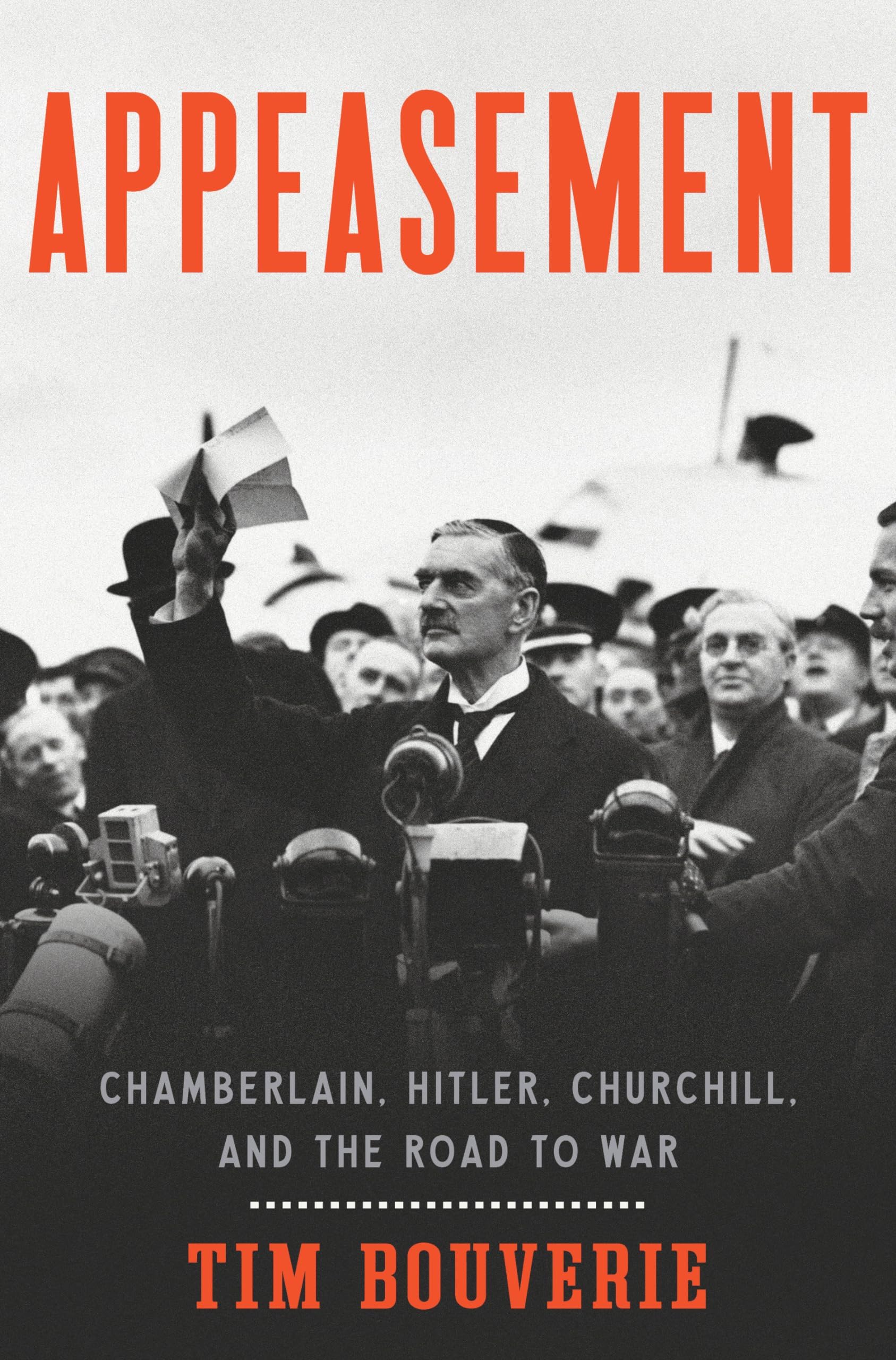
Appeasement: Chamberlain, Hitler, Churchill, and the Road to War
Product ID: 132614332
Desertcart purchases this item on your behalf and handles shipping, customs, and support to Croatia.
A NEW YORK TIMES EDITORS’ CHOICE • SUNDAY TIMES (UK) BESTSELLER • A gripping new history of the British appeasement of Hitler on the eve of World War II “An eye-opening narrative that makes for exciting but at times uncomfortable reading as one reflects on possible lessons for the present.”—Antonia Fraser, author of Mary Queen of Scots On a wet afternoon in September 1938, Prime Minister Neville Chamberlain stepped off an airplane and announced that his visit to Hitler had averted the greatest crisis in recent memory. It was, he later assured the crowd in Downing Street, "peace for our time." Less than a year later, Germany invaded Poland and the Second World War began. Appeasement is a groundbreaking history of the disastrous years of indecision, failed diplomacy and parliamentary infighting that enabled Hitler's domination of Europe. Drawing on deep archival research and sources not previously seen by historians, Tim Bouverie has created an unforgettable portrait of the ministers, aristocrats, and amateur diplomats who, through their actions and inaction, shaped their country's policy and determined the fate of Europe. Beginning with the advent of Hitler in 1933, we embark on a fascinating journey from the early days of the Third Reich to the beaches of Dunkirk. Bouverie takes us not only into the backrooms of Parliament and 10 Downing Street but also into the drawing rooms and dining clubs of fading imperial Britain, where Hitler enjoyed surprising support among the ruling class and even some members of the royal family. Both sweeping and intimate, Appeasement is not only an eye-opening history but a timeless lesson on the challenges of standing up to aggression and authoritarianism--and the calamity that results from failing to do so. Review: Enthralling and uncanny relevancy to today. - I thoroughly enjoyed Bouverie's enthralling account of the “gathering storm.” He writes swimmingly, and I agree with other readers it reads like a thriller, at times. It’s just enough historical content for it to not skim on accuracy, without being bogged down in unessential details. I knew the overarching theme of appeasement in this period. However, Bouverie's book afforded me a more detailed account of the actions, and the motivations behind them. The result was one of those uncanny moments that make us think of the phrase, “history repeats itself.” The pragmatic, range of the moment, policy, that discounts adversaries’ ideologies, and projects ours onto them, resonates so lucidly in the pages. It makes you wish every western leader had this knowledge. I did not agree with everything in it. I disagree with the author’s historical economic analysis. Also, there’s a couple moments I thought he catered too much to the conventional, revisionist, view of Churchill in an effort to “humanize” the giant. For example, he seems to sympathize with the interpretation that the Dardanelles debacle rested solely on Churchill (Martin Gilbert’s brilliant biography of Churchill provides a lot of evidence this is a myth). However, these were minor offenses, in my view, and didn’t distract from the brilliantly written story. Definitely worth a read. Review: Brilliant History - Tim Bouverie’s “Appeasement: Chamberlain, Hitler, Churchill and the Road to War” is a superb piece of historical analysis of 1930s Europe. It begins with the rise to power of Adolf Hitler and finishes with the collapse of France in 1940. The latter event of course, overlapped with the fall of Chamberlain and the rise of Churchill. Throughout the 1930s, the British (and the French) did not know how to deal with the rise of Nazi Germany. The preferred method was “appeasement”. In other words, the British would accede to Hitler’s demands in the hope and expectation that the man would be satisfied and no more territorial claims would arise. Thus, the Rhineland led to the Anschluss with Austria, the dismemberment of Czechoslovakia and, eventually, the fall of Poland. Within a year, France too had fallen. Much of the blame for these events has fallen on Neville Chamberlain. History has not been kind to the man. He was aided and abetted by others, principally Lord Halifax. Winston Churchill was amongst a handful of appeasement naysayers. But Churchill, it must be remembered, had baggage. He was the architect of Gallipoli, the opponent of reform in India and, strangely, a champion of Edward VII during the abdication crisis. Yet for all this baggage, Churchill was on the right side of history in terms on understanding history and the threat posed by the Nazis. All Chamberlain could say of Czechoslovakia was that it was “a quarrel in a faraway country between people of whom we know nothing”. Quite remarkable! Bouverie’s book is excellent. The 1930s in Europe were a pivotal time in world history. He brings it to life and produces a definitive record of events. Highly recommended.


| Best Sellers Rank | #301,171 in Books ( See Top 100 in Books ) #110 in International Diplomacy (Books) #402 in European Politics Books #713 in Great Britain History (Books) |
| Customer Reviews | 4.6 out of 5 stars 1,160 Reviews |
D**Y
Enthralling and uncanny relevancy to today.
I thoroughly enjoyed Bouverie's enthralling account of the “gathering storm.” He writes swimmingly, and I agree with other readers it reads like a thriller, at times. It’s just enough historical content for it to not skim on accuracy, without being bogged down in unessential details. I knew the overarching theme of appeasement in this period. However, Bouverie's book afforded me a more detailed account of the actions, and the motivations behind them. The result was one of those uncanny moments that make us think of the phrase, “history repeats itself.” The pragmatic, range of the moment, policy, that discounts adversaries’ ideologies, and projects ours onto them, resonates so lucidly in the pages. It makes you wish every western leader had this knowledge. I did not agree with everything in it. I disagree with the author’s historical economic analysis. Also, there’s a couple moments I thought he catered too much to the conventional, revisionist, view of Churchill in an effort to “humanize” the giant. For example, he seems to sympathize with the interpretation that the Dardanelles debacle rested solely on Churchill (Martin Gilbert’s brilliant biography of Churchill provides a lot of evidence this is a myth). However, these were minor offenses, in my view, and didn’t distract from the brilliantly written story. Definitely worth a read.
A**D
Brilliant History
Tim Bouverie’s “Appeasement: Chamberlain, Hitler, Churchill and the Road to War” is a superb piece of historical analysis of 1930s Europe. It begins with the rise to power of Adolf Hitler and finishes with the collapse of France in 1940. The latter event of course, overlapped with the fall of Chamberlain and the rise of Churchill. Throughout the 1930s, the British (and the French) did not know how to deal with the rise of Nazi Germany. The preferred method was “appeasement”. In other words, the British would accede to Hitler’s demands in the hope and expectation that the man would be satisfied and no more territorial claims would arise. Thus, the Rhineland led to the Anschluss with Austria, the dismemberment of Czechoslovakia and, eventually, the fall of Poland. Within a year, France too had fallen. Much of the blame for these events has fallen on Neville Chamberlain. History has not been kind to the man. He was aided and abetted by others, principally Lord Halifax. Winston Churchill was amongst a handful of appeasement naysayers. But Churchill, it must be remembered, had baggage. He was the architect of Gallipoli, the opponent of reform in India and, strangely, a champion of Edward VII during the abdication crisis. Yet for all this baggage, Churchill was on the right side of history in terms on understanding history and the threat posed by the Nazis. All Chamberlain could say of Czechoslovakia was that it was “a quarrel in a faraway country between people of whom we know nothing”. Quite remarkable! Bouverie’s book is excellent. The 1930s in Europe were a pivotal time in world history. He brings it to life and produces a definitive record of events. Highly recommended.
M**A
Excellent, but too narrow in scope
Appeasement is an excellent look at how the policy of appeasement came about, the philosophical basis for the policy and how those who believed in it tried to put it into practice. Many, like myself, probably tend to associate the policy with the 3 Prime Ministers in office before the start of World War 2, Ramsay McDonald, Stanley Baldwin and Neville Chamberlain, but it was openly supported by many other pre-war politicians and most people in general as Mr Bouverie makes clear in this book, as were the disastrous results of the policy. This book covers the policy, the supporters, both public and private, and how those policies led directly to the terrible tragedy of World War 2 and does an excellent job in doing so. Excerpts from personal diaries, letters and newspaper articles do much to flesh out the bare facts into an understanding of how people felt and why they felt that way, but I felt that the scope of the subject was a bit too narrow. Thus while the actions of the British Conservative party and government are covered well, there is little written about how the Labour and Liberal parties helped drive the policy to its ultimate failure and even less written about how those who supported the policy came to understand that the policy was driving the world to war. We see people like Chips Channon, a strong supporter of the government and the policy of appeasement, but learn nothing of how or when he began to understand how his beliefs were driving the country over the cliff and into war. Appeasement was so widely supported that the absence of a description of how people came to understand that it was causing war instead of avoiding it is keenly missed. The one thing detailed in this book that I have rarely seen in other histories of this period is how Neville Chamberlain, usually considered the main villain in British pre-war policy, fought for and won the decision to spend extra money building up the RAF instead of the British Navy and Army and, since it was the RAF and the Battle of Britain that ended up saving the UK from a German invasion, he at least gets the credit for that in this book. The Kindle edition of the book is excellent and I found no issues. I recommend this book to anyone with an interest in how World War 2 began in Europe.
S**Y
Outstanding book, A Masterpiece
I am utterly amazed that such a young historian could have written such a well written and argued book. This is the way to start a career and I look forward to more books by this young man. The book is expertly crafted and keeps a steady pace throughout as it reveals the unfolding folly of appeasement of Hitler by the British government under Neville Chamberlain. The book goes behind the scenes to reveal the shameless admiration for Hitler and Nazism exhibited by a large swarth of the British Aristocracy and how it politically gave support to Chamberlain's dream of appeasement. What to me is brilliantly done by the author, is how he allows the historical characters of the time to support his arguments and not indulge in excessive personal judgements. Chamberlain and appeasement is widely condemned by history and rightfully so, considering the horrors Hitler went on to unleash, yet this book stays in the mental state of the late thirties. This author has brilliantly managed to show the delusions of Chamberlain and others without excessive foreshadowing of the huge war we know will come. Master historians put the reader into the time period and how decisions were made at that time. You the reader, know what is going to happen later on but this book expertly puts you back into that time of delusion, irrationality and fear before the huge war. This young author is already a master historian. There is more to say, but I will end by saying, read this book. It is a masterpiece and keep an eye out in the future because this author is going to be a major one from here on.
S**O
The exciting debut work from our newest must-read historian. A+.
Bouverie's Appeasing Hitler is superb in every way (and a page turner to boot!). Brilliant writing coupled with well-reasoned, persuasive arguments and a pleasing eye for detail and anecdote. I was particularly impressed with the analysis of the connection between Chamberlain's character and policies and I'll be starting the author's Allies at War right away.
D**N
Terrific read
Appeasement by Tim Bouverie is both an entertaining and informative read, which I consider a true page turner. A great deal is discussed about how and why European diplomacy failed in preventing World War II due to various reasons and factors. For one, World War I ended a relatively short time before the aggressive foreign policies of Nazi Germany and Fascist Italy came to be. The British politicians and much of the general public did not want another major war and were willing to go any distance to avoid one, including "compromising" with the likes of Adolf Hitler and Benito Mussolini. Secondly, the traditional and democratic allies of the UK were also unsupportive of a more assertive policy towards Germany and Italy. At the time, French politics were in turmoil and very unstable and the United States was following a more isolationist foreign policy with minimal involvement in European affairs. Thirdly, British Prime Minister Neville Chamberlain, whether willingly or naively, believed that the dictators Hitler and Mussolini were reasonable leaders who could be trusted to fulfill their parts in any agreement. On the contrary, however, both were bullies who would stop at nothing to get what they wanted. Hitler invaded Poland after Chamberlain believed he would stop once Austria and the Sudetenland portion of Czechoslovakia would be added to the Third Reich. Mussolini invaded Albania after Chamberlain believed he would stop with East Africa (Abyssinia). Finally, the western powers of UK and France failed to make an alliance with the Soviet Union, which if they succeeded, could have been an effective deterrence toward Nazi Germany's expansion. Although Josef Stalin was also not to be trusted, he was the lesser of two evils at the time when compared to Hitler. A recommended and informative read.
K**3
Two tales of self-delusion: Hitler vis-a-vis Chamberlain
Yet another run at attempting to model the multi-dimensional genesis of political and media interaction leading to the Second "World" War. Somewhat convincing explanation of C's seeming dithering; less so of Hitler's. Something missing in the book, compared to my own recollections(yes, I'm that old) of RKO-Pathe news movies, radio reports, and my Dad's commenting in '37: there's gonna be a war ... as he listened short wave to Hitler's ranting. (Dad was in the AEF, Meuse-Argonne campaign.) Still: well worth a read, since same sort of muddled thinking currently on stage front and center.
B**S
Well Done
This is a fine recap of the period before WW II and the British led European appeasement of Hitler. The author covers some well known territory, but brings a fresh perspective to the events. The book is very well researched and the writing is crisp and clear. I will say if you have an interest in the period, you might prefer Piers Brandon's The Dark Valley, which details how five countries, (the US, the UK, France, Japan and Germany) handled the 30s and William Manchester's, Alone, the second volume of his books on Winston Churchill, which describes Churchill's sounding the alarm about Hitler. Both are superior to this volume, although, I did enjoy Appeasement. I thought it was a good book, although I disagree with some of the reviews that praised it for having a fresh perspective. I did not see that it raised any new issues, or discovered previously unknown facts.
A**O
Molte affinità con la situazione odierna Russo Ukraina.
La voglia di pace dei vecchi imperi colonialisti europei, ha dato la forza politica ma soprattutto economica e tecnologica a un pazzo di sperare di conquistare l'Europa pezzo dopo pezzo senza aver paura delle reazioni della grandi potenze. Le stesse, democrazie spinte a politiche pacifiste dalle popolazioni ferite dalla prima guerra mondiale si sono fatte trovare nel '39 con gli arsenali semi vuoti e senza munizioni per poter effettivamente difendere la Polonia!!
D**H
How mindless appeasement of a powerful political leader can lead to disaster
An eye opener of abook about what appeasement of a powerful political leader can lead to. A brilliant piece of history.
O**R
Stand up to your principles
Excellent beginning of the book. Looking forward to the continuation.
.**N
Who made the decisions and why.
This is an excellent and very readable account of the Conservative government of Neville Chamberlain who while wanting to avoid the appalling losses of WW1 was blind to the facts that Hitler was bound and determined for war and revenge. Why Chamberlain made three plane trips to Germany to engage with an Austrian dictator can only be put down to his vanity and lack of judgement for which millions paid the price.
R**R
Thoughtful research.
Although it is “another book” on the origins of WWII, in addition to the normal reasons, it presents other approaches well worth considering during this complex period of history. Written in an accessible style.
Trustpilot
2 weeks ago
2 months ago