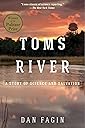
Toms River: A Story of Science and Salvation
Product ID: 14460998
Desertcart purchases this item on your behalf and handles shipping, customs, and support to Croatia.
WINNER OF THE PULITZER PRIZE • Winner of The New York Public Library’s Helen Bernstein Book Award A new classic of science reporting.”— The New York Times The true story of a small town ravaged by industrial pollution, Toms River won the 2014 Pulitzer Prize and has been hailed by The New York Times as "a new classic of science reporting ." Now available in paperback with a new afterword by acclaimed author Dan Fagin, the book masterfully blends hard-hitting investigative journalism, scientific discovery, and unforgettable characters. One of New Jersey’s seemingly innumerable quiet seaside towns, Toms River became the unlikely setting for a decades-long drama that culminated in 2001 with one of the largest environmental legal settlements in history. For years, large chemical companies had been using Toms River as their private dumping ground, burying tens of thousands of leaky drums in open pits and discharging billions of gallons of acid-laced wastewater into the town’s namesake river. The result was a notorious cluster of childhood cancers scientifically linked to local air and water pollution. Fagin recounts the sixty-year saga of rampant pollution and inadequate oversight that made Toms River a cautionary tale. He brings to life the pioneering scientists and physicians who first identified pollutants as a cause of cancer and the everyday people in Toms River who struggled for justice: a young boy whose cherubic smile belied the fast-growing tumors that had decimated his body from birth; a nurse who fought to bring the alarming incidence of childhood cancers to the attention of authorities who didn’t want to listen; and a mother whose love for her stricken child transformed her into a tenacious advocate for change. Rooted in a centuries-old scientific quest, Toms River is an epic of dumpers at midnight and deceptions in broad daylight, of corporate avarice and government neglect, and of a few brave individuals who refused to keep silent until the truth was exposed.
| Dimensions | 6.13 x 1.4 x 9.25 inches |
| Edition | Reprint |
| Isbn 10 | 1610915917 |
| Isbn 13 | 978-1610915915 |
| Item Weight | 1.85 pounds |
| Language | English |
| Print Length | 576 pages |
| Publication Date | April 7, 2015 |
| Publisher | Island Press |
User
Toms River: When Better Living Through Chemistry Met Its Reckoning
Toms River by Dan Fagin is one of those rare books that manages to be part detective story, part scientific case study, and part moral reckoning. It is no surprise that Fagin won the Pulitzer Prize for this work. This is investigative journalism at its absolute peak—meticulous, humane, and relentless.The book resonated deeply with me because my early career ambition was shaped by chemistry and its promise. I became a chemical engineer believing in DuPont’s famous motto, “Better Living Through Chemistry.” As a kid at the 1964 World’s Fair in Queens, I stood mesmerized inside the DuPont pavilion. Forget the singing and dancing...the real magic was watching a man on stage make nylon before our eyes. In that moment, chemistry felt like pure wonder.I declared to my parents that I was going to be a chemist when I grew up, locked myself in the bathroom, and mixed a formulation of iodine, hydrogen peroxide, and talcum powder. The blend produced a violent reaction…not chemically, but when I dropped it on my mother’s brand-new bath mat, her response was pretty reactive. After grounding me for two weeks, my parents wisely redirected my ambitions by giving me a chemistry set to focus my curiosity on more controlled experiments.Toms River shows what happens when childhood wonder collides with adult reality, and when chemical companies bury their heads in the sand by outsourcing responsibility for their own waste. Fagin painstakingly documents how industrial effluent streams were shunted into so-called solutions: open lagoons—liquid landfills—and “containerized lagoons” of 55-gallon drums and tanks, all managed under the convenient assumption that dilution would take care of everything. But as every water professional knows, dilution is not the solution to pollution.What Toms River ultimately reveals is not a failure of any single individual, but a systemic one. The contamination unfolded within a regulatory culture that was reactive rather than precautionary, constrained by high evidentiary thresholds and persistent deference to industry assurances. Scientific uncertainty became a convenient shield behind which responsibility could be deferred. Outsourced waste management blurred accountability, while institutional compartmentalization allowed pollution to persist long after community warning signs were visible.Fagin brings scientific rigor to life by following pollution plumes through groundwater, tracking clusters of data, and showing how causality in environmental health is established not through a single smoking gun, but through accumulation: patterns, persistence, and proof over time. His work echoes the wisdom of Paracelsus, who reminded us centuries ago that “the dose is the poison.”Equally compelling is the human story: a citizenry unwilling to accept reassurances from powerful institutions when lived experience tells them otherwise. Families, scientists, and advocates press forward not with certainty, but with questions refusing to be silenced by complexity, delay, or doubt.In the end, Toms River is not anti-chemistry. It is anti-complacency. It is a reminder that science, when untethered from accountability, can quietly harm the very communities it claims to serve. For anyone who believes water professionals are health professionals and that data, courage, and persistence matter, this book is essential reading.
User
Very Interesting Despite Its Flaws
The book seemed to be written in two very distinct parts. The first, a fascinating, highly informative, somewhat troubling but generally even-handed examination of many aspects of our vast industrial expansion of the previous century and a half. The second, a somewhat cumbersome, sad and harder to digest probe into the minutiae of a massive class action lawsuit built upon statistically weak data.As a former resident of both the industrial northern tier of NJ in the 1960's-1970's and of the seemingly more "pristine" Toms River, NJ for a short period in the mid 1980's, the first part of the book held me spellbound as it not only recalled events and attitudes that I personally remember vividly but also illustrated well the inherent flaws of lax regulatory oversight on entities whose sole existence is predicated on the absolute maximization of financial profit. Fagan does a commendable job in both his facts and his prose in relating the events that led to the polluting of Toms River.I thought however that the subsequent extensive focus on litigation based primarily upon the existence of chemical agents at the parts per billion concentration in the public water supply weakened the overall "cautionary tale" effect that the author claims as motivation for writing the book. Clearly, had the specific laboratory analyses been done decades earlier the toxicity of the water (and probably the air) would have been evident, but here's the rub, they weren't done because there were little to no regulations in place and no means of enforcing them if they had been in place. As laws changed so too, begrudgingly, did the practices of industry. And obviously, with time the water became less contaminated as fewer pollutants were introduced to the surrounding soils. By the time the extensive water testing was done, pollutant levels were much lower than in the past, and these results are what the regulatory agencies reported to the public and what the lawyers worked with in the lawsuit. The author's implication that a significant part of the blame for Toms Rivers' health problems rested with lax or arrogant regulatory agencies seems weak based upon the evidence he presents. It also seems to be pointing the finger in the wrong direction, and may provide encouragement to the many today who have been conditioned to believe that government is ineffective and therefore unable to regulate for the common good--an ironic viewpoint which if acted upon would likely return us to a similar state of affairs that led to the health and environmental problems encountered in Toms River and thousands of other unnamed places throughout this country. With respect to the industrial dumping of the past it would seem that the best we as a society can do is to clean up what we can, learn from our mistakes and not make them again.
User
Engaging Remarkable
Toms River is a story about the environmental impact on a community from 1952 through 2001. It is about corporate negligence, scientific investigation, community activism, science and medical history, and personal tragedy. It is a very complex, tragic story with many characters that are conveyed in a very engaging manner. The book follows Toms River as a growing community that transitions over time and is impacted by carcinogens in its drinking water and air.The first two chapters of the book are slow reviewing the origins of Toms Rivers dating back to the Colonial period. One interesting approach is Dan Fagin provides a sub narrative throughout the book on a history of chemistry dating back to the Greeks, and other scientific developments that eventually lead to the chemical industry. There are no breaks in the text to indicate a change in topic. It took me a couple of chapters to become accustomed to the shift in the discussion. There should be subtitles or a series of asterisks *** to indicate the narrative change.The book builds its narrative first focusing on decisions and neglect taking place at the chemical plant and the water company. There was an additional location where a scrupulous waste company deliberately dumped waste on private property to save money that became a significant source of pollution.The third section reviews growing community concerns, contentions within the community, struggles between the local community and the companies, arguments with local and state officials, grassroots political activism, media attention, and eventually the EPA becoming involved with the pollution cleaned up as a Super Fund project.All through the book the community wants answers as to what is causing cancer within its community. This looming question is not addressed until the cleanup had begun. There are many people in the community with cancer, particularly children. Here Fagan does an excellent walking the reader through the history of cancer research and what the disease actually is. Throughout the book there is liberal use of quotations, particularly from community meetings that I found very effective. Causes for the cancer are complex and not easy to explain. Some of the families received compensation, but how cancer hit the community was never truly answered and no apologies given.
User
Fagin is a great science writer. Excellent read … but nobody seems to have considered infectious agent as potential risk factor
Dan Fagin is one of the best science journalists working today. He digs deeply into a story, and zeros in on the key issues, key people, and key narratives. Along with a good read, everyone can learn something from this book. No matter whether you are a layperson concerned about industrial pollution; an activist working on trying to solve a similar case of environmental injustice; a worker in a dangerous industry; a health care provider faced with patients who may be affected by environmental or occupational exposures; a government official drawn into a clash between industry, constituents and environmentalists; or a scientist interested in how the "real world" outside the lab or office works. Everyone interested in how pollution can affect health and how industries, communities, and governments respond to this problem, will learn something from this book.One issue which Fagin barely touched on has been generally ignored during investigations of cancer clusters for the last 30 years. That is the possibility that some virus or other infectious agent played a role in the clustering of cancers, not just in space, but also in time. From the 1950s to the 1980s, a leading theory of cancer clusters that were limited in duration as well as location, was an infectious disease. Much effort went into seeking a virus that caused childhood leukemia. While some types of cancers have been shown to be caused by viruses and other infectious agents, no specific virus was ever linked to childhood cancer clusters. With widespread concern for carcinogenic chemicals and radiation that arose in the 1970s, the virus theory was largely abandoned. However, just because a specific virus has not been found does not negate the possibility that some of the most dramatic cancer clusters might have an infectious agent as an important risk factor. The Fallon NV cluster is a prime example. The latest scientific investigations of this cluster are starting to point to an infectious agent risk factor. An infectious agent wouldn't have to act alone. It might require chemical or radiation insults as well before a cancer cluster would result. This could explain why true cancer clusters are rare.
User
First half gripping -- and should have been almost the end.
Gripping story, pulls you in, educates, and moves you along -- up to about the midway point. The second half is as slow and often downright boring as the first half was otherwise, filling page upon page upon page upon page of this person's studies and that person's studies, and this person's epidemiology and that person's epidemiology, often repetitious and increasinlgy arcane. The second half could have been more meaningfully summarized in 1/4 the pages (and the whole book, then, would have been better if last half was instead the last 1/5.) For those truly wanting to following the numerous, detailed, scientific discussions of the various, competing studies, which fill out the second half, a few footnotes would have sufficed to direct such readers to further information. As it is, I found myself going from riveted to skipping pages to get to the end. Where are the editors of yesteryear?Motto: Don't try to stretch a good story out beyond it's natural flow.
User
Frightening Revelation
Born and raised in Toms River, I found this book to be disturbing on many levels. So many entities violated the public trust resulting in significant childhood cancer cases. Families suffered. What I thought was a perfect, little, idyllic town was a carcinogenic nightmare. Due to many scientific references throughout the book, it is a long, deliberate, contemplative read. For the serious reader who wants to understand how this tragedy happened, it’s a worthwhile investment of time.
User
Excellent, frightening book
Dan Fagen's book is an excellent piece of reporting and history. He puts a human face on the enormous suffering and high rates of cancer in the Toms River, NJ area near the Ciba-Geigy plant.The book is exhaustively researched--to the point some of the history of medical research felt unnecessary to tell this story, so it lost a point in this rating.But for every other aspect--his investigation into dumping of toxic wastes unrelated to CG on a nearby farm, CG's lack of concern for its employees, its denial that its practices were responsible for cancer deaths, particular those of young children, most susceptible to carcinogens in the nervous system, the crushing toll it took on families, and the inability of a small government agency (NJ DEP or the EPA) to deal with a multinational, profitable company effectively--this book is a standout.A hand to him for giving the credit due to nurses, who were essential in tying the cluster of childhood cancers to the Toms River area and bringing it to the attention of the EPA. As a nurse for more than 25 years, I can tell you nurses get almost nothing but bad press and no recognition, when they are more than willing to stand up to just about any force and advocate for their patients.He quotes the nurse who was most instrumental in bringing this to the attention of the EPA, Lisa Boozarian (? sp) on her last night on the children's cancer ward, watching a mother climb into her dying daughter's bed and sob, "How will I get along with out you?" Kudos to Lisa, all the pediatric oncology nurses, and finally to Daniel Fagen for realizing nursing is the opposite of Nurse Ratched.If you have children, if you are worried about the environment, or if you just like good reporting, read this book.
User
Purchased for school
Good read. Had to purchase for school but enjoyed the content
User
Top of the line expose!
This is one of those complex environmental "who done it's" without a resolution of "who done it". Well, we do know "who done it" -- the chemical companies, the waste disposal contractors, dye manufactures, politics, and the "economic life" of Tom's River. It is a lesson story in the environmental ills of many communities. The basic theme you will soon follow is this contrast. If I poison you then I am liable for your demise. My action, your death, my fault. If, however, you are poisoned over time by multiple parties, lack of government oversight, failures of your water company, all supported by banks of lawyers, then no one becomes liable for your cancer or demise.I have read a number of environmental issue books. A common theme is this: If you take a substance and die quickly there seems to be an "issue" but, if you are exposed to a substance over a long period of time (arsenic, silicone, asbestos, tobacco, and so on) then these poisons are not an "issue".Have we reduced ourselves to the point where an industry thinks it is okay to poison an employee a bit at a time so the worker is happy having a job, he can support his family, and the community feels economically stable?
User
Sieht aus wie gebraucht
Nichts zum Inhalt des Buches, aber leider die einzige Möglichkeit, um etwas zu reklamieren ohne gleich wieder einschicken zu müssen. das Buch sieht leider gebraucht, obwohl die Verpackung einwandfrei ist. Würde mich grundsätzlich nicht stören, aber wenn man es verschenken mochte sehr schade. Und bei dem Preis auch
User
Very Good
A deep approach at the history of public health and investigation of diseases, always bringing to the Toms River incident, full of sources and very well writen.
User
An engrossing story about a communities courageous battle against the power of a large company.
Very interesting. Gave me a lot of insight into the hard work that goes into trying to persuade large companies/corporations to change their practices. A very human story about the very long battle a community went into to prove their intuitions about the effects of pollution on their health. I was astounded at the time and effort they put in and staggered at how the contamination of the people, surrounding land and waterways wasn't investigated sufficiently for decades. Also gave me a real and connected insight into the work of Greenpeace.
User
History, politics and science...
The combination strikes the right balance for someone who is not an expert though interested in a compelling story that unfolded over many years. Having grown up in New Jersey made it personal in an unexpected way. Well written, absorbing and constrained so that the wide range of players in this long drama almost speak for themselves. Highly recommended.
Trustpilot
4 days ago
2 weeks ago