Buy anything from 5,000+ international stores. One checkout price. No surprise fees. Join 2M+ shoppers on Desertcart.
Desertcart purchases this item on your behalf and handles shipping, customs, and support to Croatia.
๐ก Elevate your TV signal gameโnever miss a channel again!
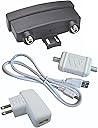
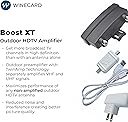
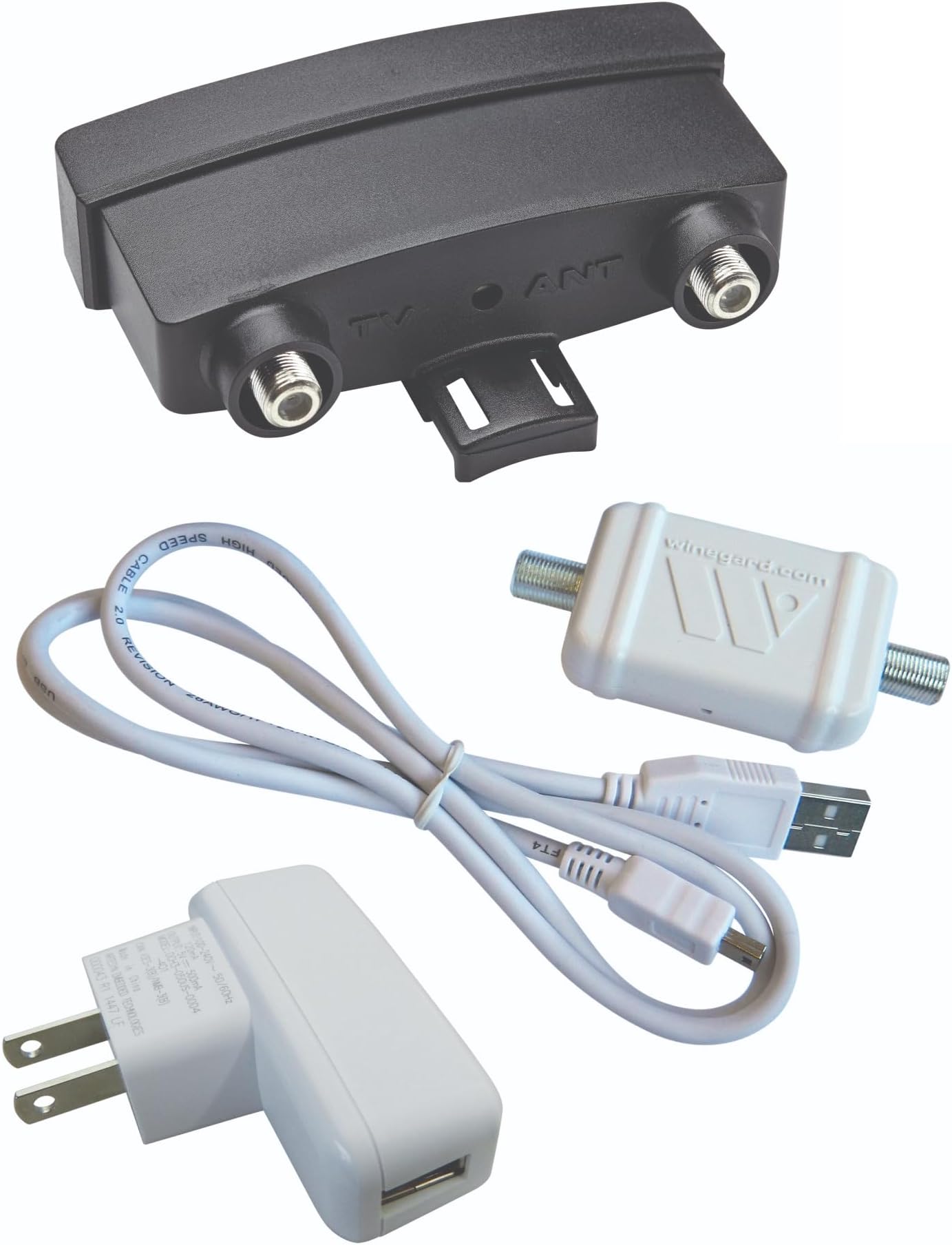
The Winegard LNA-200 Boost XT is a compact, black HDTV preamplifier designed exclusively for non-amplified outdoor antennas. Featuring proprietary TwinAmp technology, it separately amplifies VHF and UHF signals to maximize channel availability and signal clarity while adding minimal noise (~1 dB). Ideal for overcoming signal loss from long cable runs and splitters, it boosts weak signals to deliver a crisp, reliable HD viewing experience without the need for outdoor mounting.


| ASIN | B00DQN3R9O |
| Antenna | Television |
| AntennaDescription | Television |
| Best Sellers Rank | #182 in TV Antennas |
| Brand | Winegard |
| Built-In Media | 1-Limited Warranty, 110V Adapter, Lna-100 Boost Indoor Digital Tv Antenna Amplifier, Printed Documentation, Usb Power Cable |
| Color | Black |
| Customer Reviews | 3.9 out of 5 stars 6,280 Reviews |
| Global Trade Identification Number | 00615798401405 |
| Impedance | 140 Ohms |
| Item Weight | 0.2 Pounds |
| Manufacturer | Winegard |
| Maximum Range | 400 Meters |
| Mfr Part Number | LNA-200 |
| Model Number | LNA-200 |
| Number of Channels | 1 |
| Number of Items | 1 |
| UPC | 615798401405 |
| Unit Count | 1.0 Count |
| Warranty Description | 1 Year Limited |
M**N
Does as advertised, and that is worth a handful of Stars alone.
This LNA 200 Preamplifier has proprietary designed "TwinAmp" Technology that separately amplifies VHF and UHF signals for maximum performance. The Boost XT preamplifier works with any passive outdoor TV antenna. It can improve the strength of signal detected and in some cases it is possible to boost "fringe" signals enough to be visible. Some call it enhancing signals, but with every decibel of amplification the amplifier also adds a little "noise" or detracting interference. Inserted interference is every very foot of cable, connector or splitter which by nature degrades the signal information. Eliminating the loss by Inserted interference is perhaps the greatest goal of the Low Noise Amplifier. The concept is to find the lowest ratio of Noise to Amplification (or Gain) possible. Although amplifiers can improve a weak reception signal to some degree, they are more capable and beneficial by maintaining the strength of signals as they leave your antenna and travel to your HDTV. I would say the diminish signal strength (Roof and Trees) are offset by the strengths of elevation and proximity. I imagined I only had the "inserted" noise to deal with. I hooked up a TV without the amplifier and no splitter, with a twenty foot run of new coaxial cable. The Phillips HDTV scanned the signal and searched for channels. The Signal Strength came up at a 97 on it's built in signal strength meter and 72 Channels found, which impressed me. I started installing four line splitter, and hooked the other three TV's to the antenna feed. Checking the same set, with a four splitter installed, came up now at 90 in strength and a 70 channel scan of available channels . (Those two channels lost both were UHF in the 60's range seem to be a continuous screen message "This channel available for Lease" so I didn't worry too much, but it seemed odd anyway). The longest run, at about 50 feet, was found to have a strength of 87 and 70 channels. The remaining runs came in at 89. (all these measurements were "pre" amplifier only. We had positioned, aimed, and physically secured the antenna in the best reception position we could determine). I then installed the amp and found we boosted reception signal by either 5 or 6, we did rescan, and the two channels were now available on each set, and they were still available for lease (head scratcher). So we went from 97 to 96 with our first set which we were happy with. You are simply trying to maintain and improve the signal's loss of strength after it leaves the antenna and starts going through all the components and eventually to your TV. This does a great job of keeping the lowest ratio noise to gain and keeping performance in line with all the parameters of the install. That said, if you only read this little bit of advice it will all be worth it. There are two critical and distinct points I found out about over the air antennas, first it's a confusing process and and second, usually the fault of signal anomalies lies with the antenna selection. The biggest mistake people make is purchasing the wrong size and type antenna initially. Such as too small, performance suffers. Too large, wallet suffers. Omni or directional? narrow band, built in amplifier or passive, rotational, or fixed etc.) Then, having started with a slight handicap, you start fiddling and buying components. Trying to compensate for faults with peripheral equipment can be expensive. HDTV over the air is quite fickle. It is not like the analog days where built in rabbit ears and tinfoil could give you a decent black and white picture. When my father purchased our first Color TV,(a first in our neighborhood, we should of charged people a quarter admission fee) he declined, over the objections of the Salesman, to have a new antenna installed when the set was delivered. Instead, he hooked up his faithful Rabbit Ears, turned it on, and found the picture so lacking he actually believed there was something wrong with the set. He diagnosed the problem, and told the small group assembled that the antenna was inadequate. He drove to the dealer, and somehow he got a really good deal on the "Diamond Class" antenna, and a custom pole that would allow him to view same picture that he viewed on showroom display. They even had it installed with the an hour. They knew if one person bought a Color TV set, there is a huge volume of potential customers who would look at Dad's set, but not come to their show room just to satisfy their curiosity. Any good publicity, and Dad even did a great pitch on the whole deal. It was only second to a car purchase in it strategic importance. He even managed to get the antenna installed the same very same day, with along with a deck of the Store Salesman's business cards and a handful of brochures. He was clearly second showroom, one more casual. No pressure,no commitment to close a deal right then. Dad was quite the pitchman. There were a lot of sets and antenna's popping up all around the neighborhood within a week. I won't go into the holdout over the need of a separate UHF (Until Hell Freezes) antenna that came up a few years later. I only give this to prevent you from thinking this amp will cure all ills and be as disappointed as my Father was when he shelled out only a belated 39.99 (and tax to) in order watch his new color TV. Most people aren't aware that antennas are constructed for different signal frequency situations. If the broadcast tower is 100 miles away, an antenna constructed for a signal of distance of 50 miles won't deliver the same reception signal as one designed for 100 miles. Being in the valley is never as good as being located on a hill. The first thing to help you determine any prospective attempts to correct a signal would be to check your antenna. Go to http://www.fcc.gov/guides/antennas-and-digital-television and enter your physical location, then make sure you are grabbing as good a signal as you can. Make sure your antenna is sized and orientated (aimed) properly for your location. Make sure all your components are function properly, coaxial fittings, splitters matched for outputs desired, be methodical, test and check each change or adjustment to ensure maximum performance. Don't get caught up in the biggest or most expensive will guarantee the best results. If it were true, it would be easier. Oh, I would encourage the use new material and parts whenever possible. Good luck and may all your stations be clear ones.
D**B
Excellent Antenna Amp
I wanted to "cut the cord". I live between Baltimore and DC. I purchased an indoor antenna that let me watch Baltimore VHF stations and a few Baltimore UHF stations. After adding the amp, I can watch all Baltimore stations and all but one DC UHF station. I did an evaluation which I hope you will find helpful. First, a little background. There are two kinds of TV amplifiers. The cheaper is called a "distribution amp". Use this amplifier if you have strong signal at the antenna, but want to use that signal for many TVs. When doing this, you will need one or more splitters, which divide the signal between the TVs. For example, a 5 to 1 splitter will give each TV about 1/6 of the signal. (Some of the signal is lost because the splitter is not perfect.) By the time the signal gets to the TV, the signal strength is reduced. A distribution amp overcomes this signal loss, but it adds noise. Adding noise is not a major problem because the signal was strong to begin with. You can save a few bucks. If the antenna signal is weak, you need to amplify the signal while adding as little noise as possible. You need a "pre-amp", which costs more. In most cases, the pre-amp will also overcome the splitter losses. You get both functions in one device, but pay a few bucks more. Just a little more background. TV broadcast signals are divided into VHF and UHF bands. VHF is channels 2 - 13 and uses 55 to 220 MHz. UHF is channels 14 - 69 and uses 450 - 800 MHz. No matter which type of amp you use, you want both bands amplified. This is difficult to do with one amp. The better approach is to separate the two bands and use two amps -- one for VHF and one for UHF. This amplifier is two pre-amps in one package. It covers both VHF and UHF bands. It adds about 1 dB of noise, which is very good for an inexpensive device. If you are solidly grounded in TV technology, you will know there are other factors that are very important in making a good amp. I won't go into them here, other than to say my observations are that this amp performs amazingly well. When evaluating how well an amp works at your house, channel scan is not a very good indicator. For example, my TV's scan picks up channel 5, a DC VHF station. But the signal is so poor that the picture only shows up for a few seconds now and then. The better way to evaluate is to do the channel scan without the amp. Then measure the signal strength for several stations with and without the amp. TVs have a signal strength meter in the menu, but you have to do a little digging to find it. For my TV, it's in setup -- channel setup -- Digital TV. My scan without the amp picks up channels 5, 11, 66, and 67 (among others). The signal strength without the amp is 0, 83, 42, 63. I picked these channels because 5 is useless (seldom shows a picture), 11 is excellent, 66 usually shows a picture put pixelates a lot, 67 is pretty good but pixelates occasionally. I can watch 11 and 67, but not 5 and 66. Now I know that I want the signal strength to be at least 65. These numbers are for my TV. Other TVs may display different signal strength numbers. What's important is how Your TV's numbers relate to the quality of your picture. Also, for this test, it's best to do it with one TV and no splitters. If you do this and get good signal for all stations, you can stop reading right now. A pre-amp won't improve anything. After I inserted the amp, the signal strength was 60, 83, 56, 87. Channel 5 went from useless to pretty good, which is amazing. Channel 11 didn't increase, but 83 indicates a strong signal with a perfect picture. Channel 66 went from unwatchable to good. Channel 67 went from good to excellent. What more can one ask of an antenna amplifier? Where should you place the amp? I did these tests without any splitters -- all of the signal was going to one TV. You want the amplifier to be before any splitters, but it doesn't have to be physically close to the antenna. My antenna is on the 2nd floor. It has a 6 foot cable, which plugs into a socket in my wall. On the other side of the wall is a 60 foot cable to a low voltage box in my basement. The box has splitters and other cables that go to other sockets in other rooms. I can't place the amp right at the antenna. But I can place it either on the 2nd floor or at the low voltage box. I tried both. There was no difference in performance. Not even one digit changed on the signal strength for any station. The point is, there is no measurable loss in signal between the antenna and the other end of the coax cable, even if the cable is 65 feet long and includes two connections (one on either side of the wall.) (Assuming you use good coax cable with screw connectors.) You don't need an outdoor amp, even if you have an outdoor antenna. After I purchased this amp, I found another from the same manufacturer that was exactly the same electronics but packaged for indoor use. I could have saved a few bucks by buying the indoor amp. If you have an outdoor antenna, you will benefit by not having your amp out in the weather, and lose almost nothing. Just make sure the amp is before any splitters.
D**.
This product works!
I installed this pre-amp on my roof-mounted RCA Yagi antenna mast to increase the signal strength of the OTA channels we were receiving. We are using a single coaxial cable to carry the signals on a very long run (well over 150') using standard RG6u coax cable. The cable feeds into a 4-Tuner HD Homerun where it is then distributed to several televisions through our home network. Prior to installing this pre-amp, the HDHR software was showing that our strongest channel was coming in at 77% strength with others in the 60's, 50's 40's and as low as 38% strength. According to Silicon Dust, they recommend a minimum of 60% strength and you could tell we didn't have enough signal strength on many of the channels as they glitched in and out frequently. The results are exactly as we had hoped. This little box has increased the signal strength of every channel significantly. Most channels are now at or near 100% strength and even the one that had been at 38% is now over 70% strength. The HDHR software also allows you to see the "signal quality" which is very important b/c if you have a high signal strength, but the quality is poor, it won't make any difference in viewability. The signal quality percentages have remained the same as they were before the pre-amp so you can be comfortable in knowing that this product will not decrease your overall quality of signal while it acts to amplify it. The purpose of a pre-amp is to add strength to a signal, but it isn't going to increase the quality of your signal. If you aren't already receiving a good error-free signal from your antenna, then purchasing a pre-amp isn't going to solve that issue for you. On the other hand, if you are trying to send an already acceptably error-free signal over a very long cable run, or to multiple tuners or through splitters, then an pre-amp is exactly the type of product that can help out. Anyone who says this product doesn't work either has a lemon and needs to replace it, or, is trying to solve a problem that this isn't designed to solve. Used the way it is supposed to be used, this works extremely well. I've given it a 4-star rating due to the quality of the casing materials. The plastic on the pre-amp feels flimsy and slightly rattles, it is only designed to be mounted with zip ties and the mounting location for them is below the mass of the amplifier which causes the top of it to be off-center of slightly dangle forward off the mast. This is easily rectified, but it wouldn't have been difficult to add another mounting location to the top of the amplifier in addition to the one that is at the bottom of it so that it could be more securely attached. Finally, the power injector power plug is made of very cheap plastic that creaks when you squeeze it too hard and doesn't feel like acceptably sturdy quality even though it is working.
C**N
Did not work for our application.....
Product arrived on-time but did not perform as described. The LNA-200 degraded the OTA signal possibly due to over amplification that also produces the same results as under amplification. Bottom line, we took it out of the antenna system and signal strength increased significantly and noise level was not noticeable on both low/high band channels. In the end, no amplification was used in project. But keep in mind all line components were replaced, along with installing new Quad RG6 coax for runs. I converted my entire home system over from cable/satellite to OTH antenna system. Excellent results with ALL connectors and splitters that were rated between 2GHz - 3GHz. Yes, we did experiment with other connectors and splitters and found best results in our case, using what I recommended. By the way, splitters by Monster were noticeably better given signal strength on each TV without signal noise. Completely rewired our home for OTA system as we converted away from cable/satellite. Ran hundreds of feet of Quad RG6 coax and needed used the following to complete the install. Results were outstanding, with excellent HD picture quality in every room. We did not use the previous coax as quality and parts used were substandard resulting in poor signal transmission. Here is what I ordered from Amazon for rewiring my home, NOT a weekend project...LOL. 1. Monoprice Professional Compression Crimping Tool 2. DataShark 70029 Universal Cutter/Stripper for Flat or Round TV/UTP Cable 3. PPC Ex6xl Rg-6 Snap & Seal Compression Connector 4. Southwire 56918445 500-Feet Quad Shields Type RG 6/U 18 AWG Coaxial Cable, Black 5. Audiovox ANT751R DGTL Outdoor or Outer Yagi Antenna 6. Winegard HD-6010 HD FM Radio Antenna 7. 10pcs High Frequency 3GHz F81 Barrel Connectors Couplers 8.Cables to Go 40669 Right Angle F-type Adapter (Silver), 10 pk 9. Winegard DS-3000 J Pipe Mount for Antennas 10. F Type 75 Ohm Terminator - 10 Pack 11. Winegard LNA-200 Boost XT Digital HDTV Preamplifier (DID NOT USE RETURNED - Did not work produced over signal amplification-noise) 12. 4 Port Cable TV/HDTV/Digital Amplifier Internet Modem Signal Booster Internet AMP (DID NOT USE RETURNED - Over amplification-noise) 13. Extreme 4 Way Balanced HD Digital 1GHz high performance coax cable splitter - BDS104h (DID NOT USE RETURNED - Used MONSTER)
V**S
Excellent Product -- A Review With A Little Technical Application Background
The LNA-200 is an excellent piece of hardware that can produce significant benefits in over-the-air TV reception. That being said, its benefits can only be realized when signal conditions are appropriate and it is installed correctly. From analyzing the negative reviews, it appears that many of the problems that were encountered with this equipment were the result of inappropriate use and/or installation. The particular situation in which this amplifier works well is one in which the receiving equipment is signal starved but not noisy โ a low-level signal (e.g., transmitter tower is distant from the receiver and/or of relatively low power) embedded in a relatively low noise background. While expensive instrumentation is required to definitively determine when this situation exists, it is possible to use the signal strength diagnostics built into most modern digital TVโs to get a strong hint that this is the case. In particular, if a TV owner uses the Menu option to access a screen which shows the signal strength and/or signal-to-noise ratio and/or signal quality, a reasonably clear picture of an appropriate application may be possible. If these parameters are low โ i.e., they reflect a small signal โ or vary relatively rapidly in time, it is likely that the desired digital signal is being adversely affected by environmental or propagation distance effects. The best way to make this kind of observation is with a single TV set connected to a single antenna โ either upper-VHF or UHF band โ so that the intrinsic signal effects are separated from noise or losses arising from multiple splitting effects/losses and/or intrinsic receiver/line noise. Under these conditions, use of a high-quality, low-noise pre-amplifier (i.e., more than 10 dB gain, noise factor of 1 dB or thereabouts, but not more than 1.5 or 2) is likely to be very beneficial. If not, an amplifier like an LNA-200 is unlikely to be very helpful. [Note: Amplifiers with higher noise figures may be useful as distribution amplifiers for multiple splits AFTER the signal levels are brought up to usable levels.] To use a pre-amplifier like an LNA-200 effectively, it should be connected in the coax cable line after the antenna but before any other components (e.g., before splitters used to divide the signal among multiple TV sets), so that it increases the signal level without amplifying any noise or loss effects introduced by the installation plumbing in a userโs home. Other amplifiers, most often characterized as distribution amplifiers rather than pre-amplifiers, typically have much higher noise figures โ anywhere from 4 to 15 dB โ and may be useful downstream further downstream in a home wiring network. In such locations, they can maintain signal strength after being multiply split, but these amplifiers are not useful in bringing up signal levels from the intrinsic noise floor because they introduce additional noise which is amplified and drives down the intrinsic signal quality. A good measure of overall signal quality is the signal-to-noise ratio (SNR), if a TV setโs menu of diagnostics provides this parameter: modern tuners must be designed (by the ATSC tuner standard to which they are bound) to lock onto digital signals when the SNR is at least 15 dB, and values less than generally result in poor/no picture and/or image tearing. Signal levels of 20 dB or so are OK, but โ in the presence of atmospheric turbulence or weather โ may be degraded below useful levels. In this situation, an amplifier like an LNA-200 may provide the boost needed to generate a useful, reliable TV image. While details of the negative reviews that area associated with the LNA-200 rarely have enough detail to diagnose the reason for the failures, they give hints that many of the problem areas are likely to have arisen from the following: (1) inappropriate application, such as at the bottom of a cable-splitting chain next to a TV set, rather than at the antenna; (2) incorrect installation of the in-line-coax power supply, which can fail to provide the DC power needed if itโs installed backwards or if a signal splitter (most of which are not โDC passingโ if not specifically ordered to allow power to be passed up the line for amps/rotators as the signals come down the line); (3) incorrect installation of the amplifier, by connecting the inputs from the antenna and the output to the TV to the wrong terminal which can damage equipment in the lines, including the amplifier or TV. Reports of units being dead out of the box (DOB) have also appeared in the reviews of this equipment but itโs not clear what the frequency of this problem is. Sadly, in the case of most modern electronics, a disappointingly large fraction โ 5 or 10 % is not unusual -- of newly shipped units either are DOB or are perceived so. Some of the perceptions are from users who donโt know how to set up or connect the equipment โ probably the majority. The actual number of really DOB units is typically a few percent, and may reflect either poor quality control or damage in transit/handling โ but the reviews which appear online donโt provide the information needed to determine what the real problem is. In the case of the LNA-200, my guess is that most of the problems with applications lie with improper application, installation, or connection. The Winegard folks have been around for a long time and are known for their excellence in design and production of durable hardware. If you do encounter a problem, Iโd recommend that you give them a call or send them an e-mail to determine the genesis of the problem โ theyโll almost certainly connect you with an applications engineer who can determine whether youโve got the right gear, installed it correctly, and are using it the way it was supposed to be operated โ or whether youโve just got a dud. Theyโre a good company โ probably the best at what they do โ and my experience has been that they stand behind their gear.
F**T
If you don't read any other review, read this one.
6/04/19 Edit: Updated review. I am upgrading my rating on the LNA-200 based on the performance of the replacement unit. The warranty replacement LNA-200 has been perfoming adequately for about three weeks, so I'm hopeful it will continue. The original LNA-200 failed after two weeks and it took me quite a lot of back-and-forth with Winegard to get a warranty replacement, but so far (three weeks in) it is still enabling me to receive the channels I expected to receive. EDIT: I'm editing my original review because I finally received by email a commitment from Winegard to issue an RMA and replace the defective product. When I receive the replacement I'll hook it up and see how things go. I'm hoping for the best and I really want this to work (and not just for two weeks like the failed one). I understand that electronic components can fail and I'm happy to see Winegard stepping up and taking care of it. I'll update once the replacement unit is installed. (Original review) I always read the reviews for a product before I purchase it. This was no different. The reviews for the LNA-200 were a mixed bag of positive and negative, but overall the positive reviews outweighed the negative ones, so I took a chance. I gambled and lost. The upshot is this-- if you get a good LNA-200 that works for you for more than a couple of weeks, that's great and I'm happy for you. If you get one that fails two weeks after installation (as did mine) , you're just out of luck. After no less than a half-dozen email exchanges between myself and Winegard Tech Support I have gotten absolutely nowhere with them and they refuse to send me a replacement. A bit of background: In February of 2019, my aging Radio Shack (go ahead and snigger, it worked) booster failed due to the seals in the mast-mounted unit breaking down and allowing water intrusion, which corroded the internal circuitry. After viewing different products to replace it, I decided to purchase the Winegard LNA-200. At first, it worked beautifully. I am located about 75-80 miles from the broadcast towers in Little Rock and use a deep-fringe antenna mounted on a mast at 25 feet. I was pulling in 19 digital OTA channels (including subs) with the LNA-200 and I was happy with it, given my location and distance from the towers. Two weeks later I came home to find that I couldn't pick up any channels. I power-cycled the preamp but got no change in the results. I let the preamp sit, without power applied, for over an hour and then rescanned. I got four channels (including subs-- PBS 2-1, 2-2, 2-3, and 2-4). I after verifying that my cabling was still intact and finding no problems, I contacted Winegard Tech Support by email. I actually got a reply from them the same day, instructing me to check the voltage at the preamp and verify that it was at least 5 volts. I did so, and reported back to Winegard that I was getting 5.2 volts. Since the voltage from the USB power supply was adequate, I asked them to send me a replacement preamp. They dodged my request and once again asked me to verify the voltage. I did so, again, and reported back to them that the voltage was still 5.2 volts. I asked again that they send me a replacement preamp. They dodged the request again, and once again brought up the issue of voltage, but this time the technician went further and told me he (?) was surprised I could receive any channels because it was clearly a line-of-sight issue due to trees leafing out. I presumed, at that point, he must have entered my address in Google Earth and looked at the location, so I did the same. If he had looked at the Google Earth image closely, he would have seen that the main beam of my antenna is pointed about 30-degrees northwest of the nearby tree, and what he was seeing in the image was not the tree, but the long, late-afternoon shadow of the tree in question. I replied again by email and asked him to explain to me, then, how the previous Radio Shack booster had pulled in the channels in question for several years (until it was destroyed by water intrusion) but the LNA-200, after two weeks, had lost its ability to do so. I have not yet received a reply, so let me say this-- I always try to give the vendors I purchase from ample opportunity to work through technical issues or issue a RMA for defective products before jumping on Amazon at the drop of a hat and writing a bad review. But this has gone on long enough. I've been stonewalled over replacement of a clearly-defective unit and I get the idea that their customer support strategy is to dodge and stonewall long enough that the frustrated customer eventually gives up. So let me say this: if you buy the LNA-200 and it works well for you, I'm happy for you. If it lasts longer than 2-3 weeks before failing, I'm ecstatic for you. But if you get a defective unit and expect Winegard Tech Support to make it right, you're setting yourself up for an exercise in frustration and futility. And the sad thing is that they could have replaced the device that maybe cost them all of $20 and this review would not have been necessary. But I'm tired of companies selling inferior crap and then refusing to be held responsible for it, so if this review prompts someone else to bypass the Winegard LNA-200 and keep looking, then perhaps Winegard's marketing division will eventually break down the metrics and come to the realization that the obstinance of their technical support division is costing them much more in lost sales than simply replacing a failed part every now and then and keeping a frustrated purchaser like me from posting a negative review about the abysmal tech support.
J**O
Works great. Dramatically increased my signal strength to the television.
This product really helped! It increased my television reception dramatically. I decided to try and cut the cord. For years I had cable, and then I switched to directv. My directv bill averaged $98 per month and really all I watched were the ESPNโs and the network channels. I decided to cut the cord. I have AT&T Internet so WatchESPN streams on my Roku and AppleTVโs at home perfectly. I thought that if I could get the network channels then I could cancel Directv. The problem is, I am located about 50 miles from the broadcast tower and 2 of the 4 network channels are broadcast in VHF while the remaining channels are UHF. This would mean that I would need 2 antennas. So I went to antennasdirect.com and began researching. 2 websites that were a huge help were http://www.antennapoint.com and http://www.tvfool.com Both websites have data on the closest television towers at your address. They show the frequencies and the direction in relation to your home. Over the air (OTA) television is directional meaning you antenna must be aimed at the tower broadcasting the channels you plan to pick up. (Especially the further you are from the broadcast tower). I decided to order 2 antennas. UHF and VHF. VHF antenna (Clearstream 5 โ I highly recommend. It works great): https://www.antennasdirect.com/store/vhf.html UHF antenna (DB8e โ This antenna worked wonderfully as well): https://www.antennasdirect.com/store/DB8e-Ultra-Long-Range-Outdoor-DTV-Antenna.html The clearstream came with a VHF/UHF antenna combiner. So I used the combiner to combine the two antennas. A combiner is nothing more than a splitter used backwards from what I could gather. I intended on splitting my signal to 4 different televisions. Everything I read said that when you run long runs of coax cable, the television signal is diminished drastically. So, I purchased a pre-amp and a powered 4-way splitter. Pre-Amp: http://www.amazon.com/Winegard-LNA-200-Boost-Digital-Preamplifier/dp/B00DQN3R9O/ref=pd_sim_e_3?ie=UTF8&refRID=0NDCZXJGZZ8ZK1PEMR6P 4-way splitter: http://www.amazon.com/Antennas-Direct-CDA4-Distribution-Amplifier/dp/B0082ZJNW6/ref=pd_sim_e_6?ie=UTF8&refRID=0NDCZXJGZZ8ZK1PEMR6P I decided I would install my antennas in the attic. I felt like I would get more life out of the cables, antennas, and splitters if they were out of the elements. I wasnโt sure if the signal strength would be strong enough but I thought I would try it, and if it didnโt work then I could mount onto the roof. I installed the antennas in the attic and hoped I wouldnโt need the pre-amp or the powered splitter. The first thing I did was hook up a regular 4-way splitter and ran a channel search. All the desired channels came in, but the signal strength was too low and there was a lot of buffering. I decided to hook up the powered 4-way splitter and that increased the signal strength a bunch but still it was in the 65-70% range and that was not what I wanted. I then hooked up the pre-amp and boom! I had a 90% or more signal strength on all channels. I also made sure to use only RG6 coax cable and cut the cables to be as short as possible. Here are the RG6 cable tools I purchased. Cutter and stripper: http://www.amazon.com/dp/B0099DIV4G/ref=sr_ph?ie=UTF8&qid=1420732747&sr=1&keywords=RG6+cable+tools Cable end compression tool: http://www.amazon.com/RG59-Connector-Waterproof-Connectors-Crimping/dp/B0050N0S36/ref=sr_1_8?ie=UTF8&qid=1420732747&sr=8-8&keywords=RG6+cable+tools Cable ends: http://www.amazon.com/PCT-TRS-6-Universal-Coaxial-Compression-Connector/dp/B00760VRCM/ref=pd_bxgy_hi_img_y I also used two mounts in the attic. They worked great. Here is the link: http://www.amazon.com/gp/product/B000WOVD1Y/ref=oh_aui_detailpage_o01_s00?ie=UTF8&psc=1 Thatโs itโฆthat is all you need to get free OTA television. I was able to receive all the channels available in my market. WMAB 2/WMAE 12 (x.1 PBS/MPB, x.2 PBS HD, x.3 Create) WCBI (4.1 CBS, 4.2 MNTV, 4.3 The CW) W07BN-D (IND/TBN) WTVA (9.1 NBC, 9.2 ABC) W25AD (TBN) WLOV (27.1 Fox, 27.2 Me-TV, 27.3 This TV) W34DV/W39CA (UBN) WEPH (49.1 CTN) The best part of all this, was calling Directv and canceling my service.
M**N
doubled my chanels
Just installed and works great, It boost the Channels received from 24-30 channels marginal to 70-74 channels running through 1 or 2 four port splitters. If I ran directly to a TV with no splitters at times I got 43 stations. Through 1 4 port splitter I received 24-30 channel. After installation, It boosted more channels for reception than I expected. Som are 60 miles away. I am receiving stations from the North East and South/South West. I Live about 25-30 miles for Towers to the West/South West and 40-60 miles from Towers in the North/Nort East. I have an older Chanel master type 8 bowtie directional antenna. I was getting the 4 major stations from the southwest but only a few from the North/North East. Some were breaking up. Some were available some days and lost signals other days. I was marginal on some TV stations as they broke up or lost some when I added a splitter to go to all the TV's in the house and not just a single run. I ordered this to boost the signal as I was losing close to 15 DB loss in the runs through 2 4 port splitters. I had the antenna running into a 4 port splitter that causes a 7 DB drop or so. 2 of the runs are 100 feet or more. I cascade 1 leg into 1 more 4 port to split out for another 7db loss to shorter runs of 50 feet. All terminate at a wall jack. Total drop is about 15-16DB due to components Hope this lasts. You want the unit close to the antenna. Mine is 15 feet away in the attic from the roof top antenna. The power supply sits inline downstream from the Winguard, It supplies DC to the unit through the coax cable. It was easy to install. It took me about 5 minutes to install. I cut the cord to Dish before and went to streaming services with live TV that I pay $15 a month extra for. Now I can get rid of that $15 a month charge and have the option of watching either of the local stations from the 2 major cities I am located between. If there are no futher updates, then the unit is still working.
C**S
I have a good antenna and ordered a good quality 30 feet coax ...
I live in a concrete building facing the opposite side of all TV transmission antennas. I am positioned in the opposite way of all TV signals and about 30 miles from the main TV antennas. Before, I was getting barely 8 unstable channels. I was not expecting much from this amplifier, since my geographic position is very unstable and deficient. I read many of the negative comments about Winegard LNA-200 Booster. I was not convinced that I should spend that money for a product that could perhaps lead to deception. I took a chance and ordered it anyway, since I had not much to loose on this issue. I have a good antenna and ordered a good quality 30 feet coax cable and hooked the amplifier as shown on the instruction paper. WOW !!! It went from 8 unstable channels to 18 very stable channels, even though my location is very poor !!! What a difference, and since I don't watch TV that much, I get the best of all as HDTV and the signal is 100 % + the quality of the image has improved quite a lot. I also don't get any over amplified signals! I can tell you, if you have a good antenna, non defective cables and you connect the whole thing together the right way, the Winegard will certainly do the job. I can say that I am more than satisfied with the result. Therefore, if you do not get the same good result, it cannot be the fault of Winegard LNA-200. That's why I give a 5 stars rating!
P**D
Great quality upon startup
This preamp is performing very well when installed (for SuperBowl viewing party). I have a 3 way splitter for 3 TVs after the amp and have not lost even the weak American channels. Not sure of the noise figure but it's good. Only drawback is when attaching my RG-11 downlead. The plastic case seemed flimsy. Didn't break but I was concerned. I'd recommend a short RG-6 patch and F81 first if you are using the larger cable. Also not enamoured about the USB type power supply. For a couple of bucks, a proper "wall-wart" should be used. Otherwise great.
G**O
Nicely designed, excellent manufacturing quality
Nicely designed, excellent manufacturing quality, easy to install and works very well. I have an antenna in the attic with a 4 way splitter in the basement and cable runs from there up to each TV - about 60 ft of cable in total. This adds up to a fair bit of line loss apparently, even with RG6 cable and splitter. Our big 42 inch LG generally had pretty good reception, but the small 18" TV's in the kitchen (Samsung) and work room (Toshiba) had problems pulling in some channels and drop-off was bad when the winter weather got a little blustery. I installed the black box at the antenna and the "power inserter" at the input to the splitter. This little preamp has improved the reception quite nicely. All channels are now available on all TV's and drop-off in bad weather is significantly reduced.
V**R
First let me say that I was very happy with the delivery and return process (in my case ...
First let me say that I was very happy with the delivery and return process (in my case I needed to request a refund and it was granted immediately and the return process was hassle free). In terms of the product, in my situation I have an exterior grade, multi-directional antenna installed in the attic with a long run of coax cable from the antenna into the basement of a two storey home. The cable is then connected to another coax cable that runs up to the 2nd storey media room where I split the signal to a flat screen in that media room and to a coax cable that runs back to the basement and there it connects to the coax cable that runs to the first floor den flat screen. I'm using that configuration simply because the home is pre-wired that way by the local cable company with coax running to several rooms in the home from a central junction point in the basement where cable tv would normally be installed. That's the set up, now for the review of the Wineguard 200. Prior to installing it I received 25 channels with the antenna alone, but with a signal strength indicator tool I could see that there were about another 15 channels I could potentially receive but the signal strength at the set showed as too weak to provide a picture and a few of the stronger ones sometimes appeared briefly or in pixelated fashion. After installing the Winegaurd (following instructions to the T, and double checking with their web site and googling other user forums on the subject to verify there was nothing else I could do to improve my installation, I received only 2 stations with the Winegaurd versus 25 without it. From all my research I understand others have had great success and it is one of the best such devices on the market. However, in my specific environment it made performance much worse than without it. Hence my low rating, but I wouldn't let that deter you from the product as it may perform well in your environment. It could have just been my type of antenna (even though on paper it met the antenna type criteria Wineguard recommends this booster for).
A**C
Doubled my stations and increased signal!
I live in Toronto and have a mostly clear view of the CN Tower and Ash Bridges Bay / Lake Ontario from my apartment balcony. I recently purchased a Clearstream V2 antenna as an upgrade from my TERK antenna. Without thhe Wineguard, I'd get about 20 channels and about 15 of them would be always clear. I was curious to see if I could amp the signal because, at times, I had been able to pull in CBS, NBC, FOX, CW but not great (40-50% signal so they'd usually drop at night). The Winegard was pretty easy to install - I did need to get an extra coax cable though to attach to the antenna input. It did take me a few tries until I got the hookup right because my set up was different from the instructions - AntenasDirect helped me very quickly with their customer service team (online and on the phone). Now once I got this plugged in - wow - it definitely was great. As soon as I rescanned, I got 47 stations!! All the US networks (which was my goal) in addition the the Canadian ones. Here's what I am able to get - now of course, you might have something different depending on your set up and where you have the antenna pointed (mine is ESE about 110 degrees). WSTM (NBC) WSTQ (CW) CNY CBC WROC (CBS) BOUNCE LAFF ESCAPE CTV WHEC MeTV WHEC (NBC) CHCH WHA (NBC) CW GRIT TV TVO WXII (HD,W,C) CBC FR Global (SD/HD) TCN CKWS WUHF (Fox Rochester) Antenna COMET-T CITS (YES) WGBT ThisTV TuffTV TNNT4 MyRoC QVC ION QUBO IONlife Shop HSN CITY TV Anyway, in order to get the most out of your antenna, I would highly recommend getting this booster!! I was skeptical at first but now it's doubled my stations and it will make cutting the cord even more worth while.
Trustpilot
1 month ago
2 weeks ago