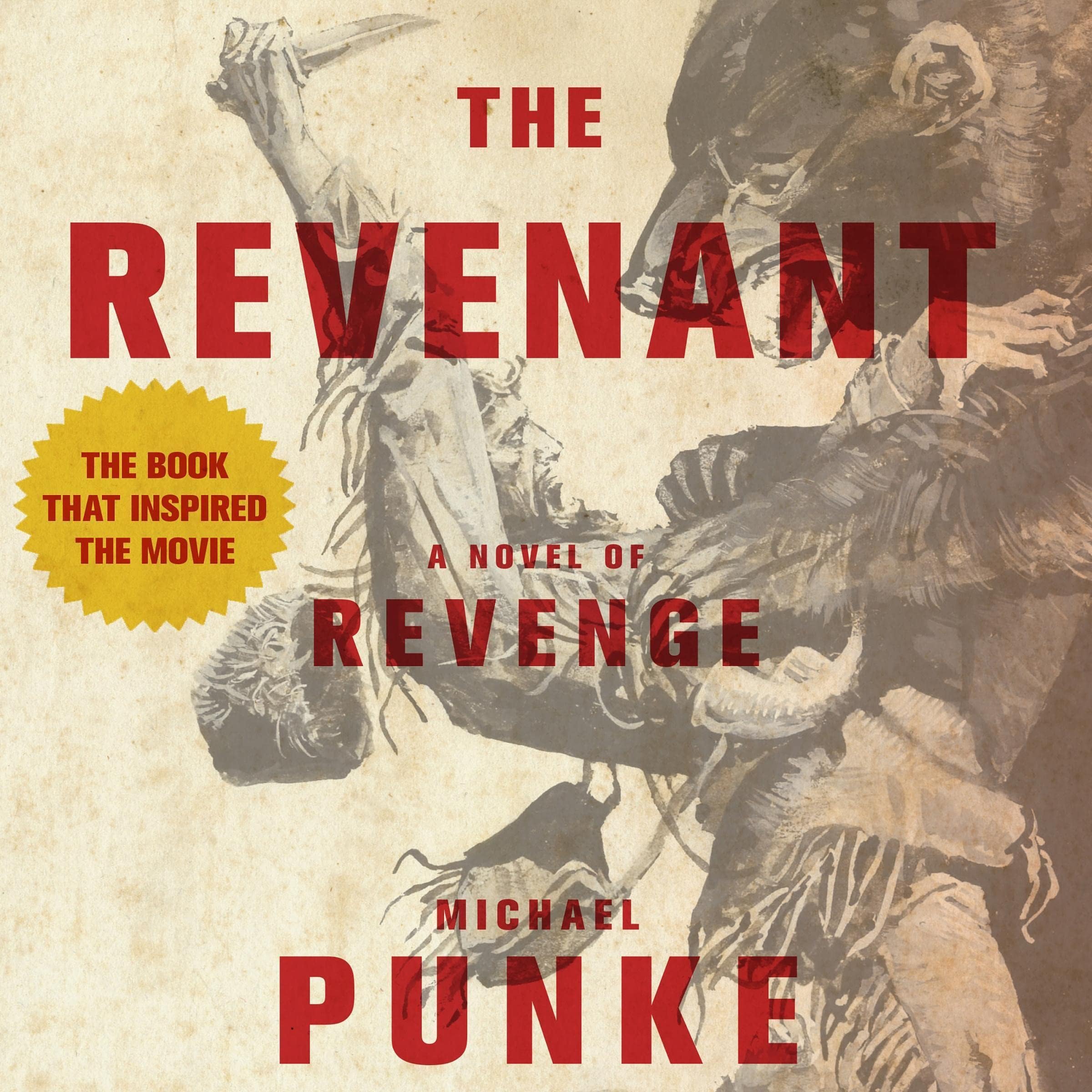
The Revenant: A Novel of Revenge
Product ID: 146894066
Desertcart purchases this item on your behalf and handles shipping, customs, and support to Croatia.
NOW A MAJOR MOTION PICTURE #1 NEW YORK TIMES BESTSELLER A thrilling tale of betrayal and revenge set against the nineteenth-century American frontier, Michael Punke's The Revenant is the astonishing story of real-life trapper and frontiersman Hugh Glass The year is 1823, and the trappers of the Rocky Mountain Fur Company live a brutal frontier life. Hugh Glass is among the company’s finest men, an experienced frontiersman and an expert tracker. But when a scouting mission puts him face-to-face with a grizzly bear, he is viciously mauled and not expected to survive. Two company men are dispatched to stay behind and tend to Glass before he dies. When the men abandon him instead, Glass is driven to survive by one desire: revenge. With shocking grit and determination, Glass sets out, crawling at first, across hundreds of miles of uncharted American frontier. Based on a true story, The Revenant is a remarkable tale of obsession, the human will stretched to its limits, and the lengths that one man will go to for retribution. Review: Great book - A rollercoaster of events and gore blend together to create an experience only The Revenant by Michael Punke, can display. The story of captain Henry and his crew demonstrate betrayal, suffering, and the need of revenge as Glass goes through many arduous battles not only against beasts and Indian tribes, but also against his own body to survive. The Revenant by Michael Punke was published on June 10th, 2002. The story displays a very intense narrative around Glass and his relationship with his crewmates, Bridger and Fitzgerald. It displays how trusting the wrong people can have a strong impact on you and revenge isn’t always the right answer. The events of the story lead to Glass having a very strong feeling of animosity towards Bridger and Fitzgerald. This feeling of animosity may or may not have kept Glass alive through the whole story. Hugh Glass was an American frontiersman, fur trapper, trader, hunter, and explorer. Constantly travelling through forests and mountains Hugh Glass and his crew had to worry about the Arikara tribe who kept themselves aloof to white men. As the crew was out in the forest Glass decides to go hunt for food by himself. This ended up being the biggest mistake of his life. As he was out hunting, he was mauled by a grizzly bear. He was injured so terribly he had a broken leg, a ripped scalp, a punctured throat, and many gashes. Once his body was found captain Henry left John Fitzgerald and Jim Bridger to watch over Glass until he died so they could give him a proper burial. As days passed John Fitzgerald was starting to become impatient. He didn’t feel the need to stay with Glass for much longer and wanted him to die quicker. He starts to belittle Glass because he believes Glass is already going to die soon. So, even though he was given the duty to watch over Glass until he died, he did not feel the need to do that anymore. Fitzgerald states “Of course I want him to die! Look at him. He wants to die!” (Punke 48). After another couple of days Fitzgerald decides that he should just leave Glass to die. But to make decision he would also have to convince Bridger to leave too. As Fitzgerald spoke to Bridger about leaving, Bridger thought the complete opposite. He wanted to make sure they were there with Glass until he was fully dead. But every time Bridger and Fitzgerald talked about leaving Glass, Bridger was always very hesitant about it. For example, Michael Punke states “Bridger struggled, desperately wanting to challenge Fitzgerald, but wholly incapable of articulating a rebuttal” (50). This was because Bridger was a very altruistic person. As the days kept passing by, they had no other choice but to leave Glass as they saw some Indians within a mile in the distance. “There were 5 Indians at the distance of about two hundred yards on the opposite bank of the grand.” (58) But as they were leaving, they also decided to steal all of Glass’s equipment too. Once Glass finds out about this, he seeks revenge for the rest of the story. The Revenant contains many gory and violent scenes that some people may like, and others may dislike. The story line and plot has surprised me in many ways as many unexpected and shocking events have happened. I have personally enjoyed it because the story also keeps an entertaining, action-packed storyline throughout the entire novel. One thing the author, Michael Punke, did well with The Revenant is the way he keeps the readers attention throughout the whole story. He wrote the book in a way where there is no point in the story where your mind starts to wander off or you start to get bored. He keeps the story very consistent with its shocking and action-packed scenes. I also really enjoyed how detailed some of the segments of the story were described. Michael Punke did a great job on adding lots of detail into many of the events. He got it to a point where you could very clearly visualize and imagine what is happening in the story in that moment. One example of Michael Punke using detail to help the reader imagine what was happening in the story was when he stated “The Grizzley dropped to all fours and was on him. Glass rolled into a ball desperate to protect his face and chest. She bit into the back of his neck, shaking him so hard that Glass wondered if his spine might snap.” (24) The detail the author uses in this sentence helps the reader clearly imagine the terror that Glass is going through in the story. It is used so well it makes the reader feel like they are in the story watching the event as its happening. One thing Michael Punke could have done better was the organization of the story. Every chapter or two he would change from one part of the story to a different part. For example, he would go from Glass’s point of view traveling to find his crew to Fitzgerald’s point of view in the middle of nowhere. It worked well in some parts of the story but not as well in others. Sometimes the transition would not be as smooth going into a new chapter and this could confuse the reader. If the reader does get confused by these changes of view, they could very easily mix up the events in the story. Overall, The Revenant was a great book and I recommend it to anyone who likes action-packed stories. The book really thrived in some areas like detail which made the story way more entertaining. I would not recommend this book to anyone who dislikes violent, gory, or survival kind of books. But if you enjoy any of these topics then this is a must read for you. Review: Gripping and engrossing tale of survival in the harshest of conditions - “At the same time, Glass sensed that his body was marshalling itself for another, decisive battle. Not at the surface, but deep within.” The term revenant is defined as “one who returns after death,” a fitting title given the predicament and remarkable story of trapper Hugh Glass. I’m sure all are aware of the Leonardo DiCaprio film from a while back that is the adaptation of this novel, and specifically the famous (infamous) “grizzly bear” scene. I feel as though, while both are powerful stories, the novel gives more emphasis on the psychology of Glass’ dire life or death situation and the lengths to which he had to “come back from death.” The author sets the scene early in the novel. In the early part of the 1800s, the Rocky Mountain Fur Company is in the midst of a brutal and often dangerous mission. One of the more experience of the bunch, Hugh Glass, is preforming a scouting duty when a vicious encounter with a grizzly bear puts him at death’s edge as the rest of men decide how to proceed. This novel is called a “revenge” novel or “revenge” story, and while revenge is certainly a player and theme—and largely the basis and fuel for the protagonist’s motivations—the survival element was far more important, thought-provoking, and interesting. And, as a survival story, The Revenant is top notch and engrossing. The author does a superb job placing the reader right square in the point of view from Hugh Glass’ perspective after he is abandoned by two of the men in his group, his supplies taken, and his wounds severe and life-threatening. There is a rawness and brutality to the depiction of Glass efforts to go from the brink of death to try to muster up enough energy to go into full survival mode. I cannot write it without maybe giving away some spoilers, but there is a great quote from one of the characters near the end who basically gives such great insights into his thoughts on Glass’ quest for revenge. In this edition, there is an “Historical Note” from Punke where he details the historical elements and certain fictionalized parts of the novel, and sheds some light on the book itself and gives some context. The Revenant is a gripping and fascinating historical fiction, looking into one man’s brutal quest to survive and make it to the next day in the harshest of conditions. Definitely recommended, especially for those who love survival or man vs. nature type stories, or stories of overcoming odds.
A**R
Great book
A rollercoaster of events and gore blend together to create an experience only The Revenant by Michael Punke, can display. The story of captain Henry and his crew demonstrate betrayal, suffering, and the need of revenge as Glass goes through many arduous battles not only against beasts and Indian tribes, but also against his own body to survive. The Revenant by Michael Punke was published on June 10th, 2002. The story displays a very intense narrative around Glass and his relationship with his crewmates, Bridger and Fitzgerald. It displays how trusting the wrong people can have a strong impact on you and revenge isn’t always the right answer. The events of the story lead to Glass having a very strong feeling of animosity towards Bridger and Fitzgerald. This feeling of animosity may or may not have kept Glass alive through the whole story. Hugh Glass was an American frontiersman, fur trapper, trader, hunter, and explorer. Constantly travelling through forests and mountains Hugh Glass and his crew had to worry about the Arikara tribe who kept themselves aloof to white men. As the crew was out in the forest Glass decides to go hunt for food by himself. This ended up being the biggest mistake of his life. As he was out hunting, he was mauled by a grizzly bear. He was injured so terribly he had a broken leg, a ripped scalp, a punctured throat, and many gashes. Once his body was found captain Henry left John Fitzgerald and Jim Bridger to watch over Glass until he died so they could give him a proper burial. As days passed John Fitzgerald was starting to become impatient. He didn’t feel the need to stay with Glass for much longer and wanted him to die quicker. He starts to belittle Glass because he believes Glass is already going to die soon. So, even though he was given the duty to watch over Glass until he died, he did not feel the need to do that anymore. Fitzgerald states “Of course I want him to die! Look at him. He wants to die!” (Punke 48). After another couple of days Fitzgerald decides that he should just leave Glass to die. But to make decision he would also have to convince Bridger to leave too. As Fitzgerald spoke to Bridger about leaving, Bridger thought the complete opposite. He wanted to make sure they were there with Glass until he was fully dead. But every time Bridger and Fitzgerald talked about leaving Glass, Bridger was always very hesitant about it. For example, Michael Punke states “Bridger struggled, desperately wanting to challenge Fitzgerald, but wholly incapable of articulating a rebuttal” (50). This was because Bridger was a very altruistic person. As the days kept passing by, they had no other choice but to leave Glass as they saw some Indians within a mile in the distance. “There were 5 Indians at the distance of about two hundred yards on the opposite bank of the grand.” (58) But as they were leaving, they also decided to steal all of Glass’s equipment too. Once Glass finds out about this, he seeks revenge for the rest of the story. The Revenant contains many gory and violent scenes that some people may like, and others may dislike. The story line and plot has surprised me in many ways as many unexpected and shocking events have happened. I have personally enjoyed it because the story also keeps an entertaining, action-packed storyline throughout the entire novel. One thing the author, Michael Punke, did well with The Revenant is the way he keeps the readers attention throughout the whole story. He wrote the book in a way where there is no point in the story where your mind starts to wander off or you start to get bored. He keeps the story very consistent with its shocking and action-packed scenes. I also really enjoyed how detailed some of the segments of the story were described. Michael Punke did a great job on adding lots of detail into many of the events. He got it to a point where you could very clearly visualize and imagine what is happening in the story in that moment. One example of Michael Punke using detail to help the reader imagine what was happening in the story was when he stated “The Grizzley dropped to all fours and was on him. Glass rolled into a ball desperate to protect his face and chest. She bit into the back of his neck, shaking him so hard that Glass wondered if his spine might snap.” (24) The detail the author uses in this sentence helps the reader clearly imagine the terror that Glass is going through in the story. It is used so well it makes the reader feel like they are in the story watching the event as its happening. One thing Michael Punke could have done better was the organization of the story. Every chapter or two he would change from one part of the story to a different part. For example, he would go from Glass’s point of view traveling to find his crew to Fitzgerald’s point of view in the middle of nowhere. It worked well in some parts of the story but not as well in others. Sometimes the transition would not be as smooth going into a new chapter and this could confuse the reader. If the reader does get confused by these changes of view, they could very easily mix up the events in the story. Overall, The Revenant was a great book and I recommend it to anyone who likes action-packed stories. The book really thrived in some areas like detail which made the story way more entertaining. I would not recommend this book to anyone who dislikes violent, gory, or survival kind of books. But if you enjoy any of these topics then this is a must read for you.
F**9
Gripping and engrossing tale of survival in the harshest of conditions
“At the same time, Glass sensed that his body was marshalling itself for another, decisive battle. Not at the surface, but deep within.” The term revenant is defined as “one who returns after death,” a fitting title given the predicament and remarkable story of trapper Hugh Glass. I’m sure all are aware of the Leonardo DiCaprio film from a while back that is the adaptation of this novel, and specifically the famous (infamous) “grizzly bear” scene. I feel as though, while both are powerful stories, the novel gives more emphasis on the psychology of Glass’ dire life or death situation and the lengths to which he had to “come back from death.” The author sets the scene early in the novel. In the early part of the 1800s, the Rocky Mountain Fur Company is in the midst of a brutal and often dangerous mission. One of the more experience of the bunch, Hugh Glass, is preforming a scouting duty when a vicious encounter with a grizzly bear puts him at death’s edge as the rest of men decide how to proceed. This novel is called a “revenge” novel or “revenge” story, and while revenge is certainly a player and theme—and largely the basis and fuel for the protagonist’s motivations—the survival element was far more important, thought-provoking, and interesting. And, as a survival story, The Revenant is top notch and engrossing. The author does a superb job placing the reader right square in the point of view from Hugh Glass’ perspective after he is abandoned by two of the men in his group, his supplies taken, and his wounds severe and life-threatening. There is a rawness and brutality to the depiction of Glass efforts to go from the brink of death to try to muster up enough energy to go into full survival mode. I cannot write it without maybe giving away some spoilers, but there is a great quote from one of the characters near the end who basically gives such great insights into his thoughts on Glass’ quest for revenge. In this edition, there is an “Historical Note” from Punke where he details the historical elements and certain fictionalized parts of the novel, and sheds some light on the book itself and gives some context. The Revenant is a gripping and fascinating historical fiction, looking into one man’s brutal quest to survive and make it to the next day in the harshest of conditions. Definitely recommended, especially for those who love survival or man vs. nature type stories, or stories of overcoming odds.
G**E
Hugh Glass
I did not know if this book would be of interest to me and hold my attention. I have studied the Fur Trade Era of history very extensively and read many books that relaid the story of Hugh Glass and John Colters' run for his life from the Blackfeet. I have published articles and blogs about the tools, weapons and characters that lived through the Fur Trade Era from about 1820 to 1840 or for the life of the Rendevous System of supplying the Mountain Men with gear and traps and alcohol at the annual meeting in the Rocky Mountains. I have written about the Mountain Men who did not survive the Fur Trade Era, it was a dangerous time. I belong to historical societies, groups, the National Muzzleloader Association and The Spring Mountain State Park Mountain Men. We orgainized, planned and helped to educate the public about the doins' of the fur trappers and traders with annual Rendevous at various locations and at a couple of Nevada's State Parks. I am a Historical Docent for Nevada Parks. I took a class at Washington State University at Pullman, on The Frontier in Western Literature in the late 1960's and the story of the Mt. Men was an essential part of this class. I studied several accounts of Hugh Glass' s adventures in this class and even got some difficult questions right on the final test about OL Hugh and the Grizzly. I read Lord Grizzly and the other books of the trilogy by Frederick Manfred. So, I feel that I know about Hugh Glass and felt that even if the movie trailers looked good, I was afraid the book might not be as easy to read and enjoy. I was WRONG. The book is well written and interesting. I could not put it down. I read it until I finished it and put my other currently reading books aside for the duration. I have a few questions for the Author however. Mr. Punke, the author, had a very few things that were not historically accurate from my experience. And the history of Hugh Glass, as stated by Mr. Punke near the end of the book may have a couple errors. For example, I believe that when the revenant was trapping in the Southwest territory he may have been on the Gila River not the Helos river. I found it interesting that the book indicated that Glass trapped on the Columbia River in later life. I agree that his days as a pirate with Laffite's outfit was a book in and of itself. The time spent with the Loup Pawnee Tribe is accurate as depicted in The Revenant. I really did enjoy reading this book and the author found interesting ways to use very little dialogue and Glass's many days of pain and misery to bring to life the story of a most interesting Mountain Man.I did not know if this book would be of interest to me and hold my attention. I have studied the Fur Trade Era of history very extensively and read many books that relaid the story of Hugh Glass and John Colters' run for his life from the Blackfeet. I have published articles and blogs about the tools, weapons and characters that lived through the Fur Trade Era from about 1820 to 1840 or for the life of the Rendevous System of supplying the Mountain Men with gear and traps and alcohol at the annual meeting in the Rocky Mountains. I have written about the Mountain Men who did not survive the Fur Trade Era, it was a dangerous time. I belong to historical societies, groups, the National Muzzleloader Association and The Spring Mountain State Park Mountain Men. We orgainized, planned and helped to educate the public about the doins' of the fur trappers and traders with annual Rendevous at various locations and at a couple of Nevada's State Parks. I am a Historical Docent for Nevada Parks. I took a class at Washington State University at Pullman, on The Frontier in Western Literature in the late 1960's and the story of the Mt. Men was an essential part of this class. I studied several accounts of Hugh Glass' s adventures in this class and even got some difficult questions right on the final test about OL Hugh and the Grizzly. I read Lord Grizzly and the other books of the trilogy by Frederick Manfred. So, I feel that I know about Hugh Glass and felt that even if the movie trailers looked good, I was afraid the book might not be as easy to read and enjoy. I was WRONG. The book is well written and interesting. I could not put it down. I read it until I finished it and put my other currently reading books aside for the duration. I have a few questions for the Author however. Mr. Punke, the author, had a very few things that were not historically accurate from my experience. And the history of Hugh Glass, as stated by Mr. Punke near the end of the book may have a couple errors. For example, I believe that when the revenant was trapping in the Southwest territory he may have been on the Gila River not the Helos river. I found it interesting that the book indicated that Glass trapped on the Columbia River in later life. I agree that his days as a pirate with Laffite's outfit was a book in and of itself. The time spent with the Loup Pawnee Tribe is accurate as depicted in The Revenant. I really did enjoy reading this book and the author found interesting ways to use very little dialogue and Glass's many days of pain and misery to bring to life the story of a most interesting Mountain Man.I did not know if this book would be of interest to me and hold my attention. I have studied the Fur Trade Era of history very extensively and read many books that relaid the story of Hugh Glass and John Colters' run for his life from the Blackfeet. I have published articles and blogs about the tools, weapons and characters that lived through the Fur Trade Era from about 1820 to 1840 or for the life of the Rendevous System of supplying the Mountain Men with gear and traps and alcohol at the annual meeting in the Rocky Mountains. I have written about the Mountain Men who did not survive the Fur Trade Era, it was a dangerous time. I belong to historical societies, groups, the National Muzzleloader Association and The Spring Mountain State Park Mountain Men. We orgainized, planned and helped to educate the public about the doins' of the fur trappers and traders with annual Rendevous at various locations and at a couple of Nevada's State Parks. I am a Historical Docent for Nevada Parks. I took a class at Washington State University at Pullman, on The Frontier in Western Literature in the late 1960's and the story of the Mt. Men was an essential part of this class. I studied several accounts of Hugh Glass' s adventures in this class and even got some difficult questions right on the final test about OL Hugh and the Grizzly. I read Lord Grizzly and the other books of the trilogy by Frederick Manfred. So, I feel that I know about Hugh Glass and felt that even if the movie trailers looked good, I was afraid the book might not be as easy to read and enjoy. I was WRONG. The book is well written and interesting. I could not put it down. I read it until I finished it and put my other currently reading books aside for the duration. I have a few questions for the Author however. Mr. Punke, the author, had a very few things that were not historically accurate from my experience. And the history of Hugh Glass, as stated by Mr. Punke near the end of the book may have a couple errors. For example, I believe that when the revenant was trapping in the Southwest territory he may have been on the Gila River not the Helos river. I found it interesting that the book indicated that Glass trapped on the Columbia River in later life. I agree that his days as a pirate with Laffite's outfit was a book in and of itself. The time spent with the Loup Pawnee Tribe is accurate as depicted in The Revenant. I really did enjoy reading this book and the author found interesting ways to use very little dialogue and Glass's many days of pain and misery to bring to life the story of a most interesting Mountain Man.I did not know if this book would be of interest to me and hold my attention. I have studied the Fur Trade Era of history very extensively and read many books that relaid the story of Hugh Glass and John Colters' run for his life from the Blackfeet. I have published articles and blogs about the tools, weapons and characters that lived through the Fur Trade Era from about 1820 to 1840 or for the life of the Rendevous System of supplying the Mountain Men with gear and traps and alcohol at the annual meeting in the Rocky Mountains. I have written about the Mountain Men who did not survive the Fur Trade Era, it was a dangerous time. I belong to historical societies, groups, the National Muzzleloader Association and The Spring Mountain State Park Mountain Men. We orgainized, planned and helped to educate the public about the doins' of the fur trappers and traders with annual Rendevous at various locations and at a couple of Nevada's State Parks. I am a Historical Docent for Nevada Parks. I took a class at Washington State University at Pullman, on The Frontier in Western Literature in the late 1960's and the story of the Mt. Men was an essential part of this class. I studied several accounts of Hugh Glass' s adventures in this class and even got some difficult questions right on the final test about OL Hugh and the Grizzly. I read Lord Grizzly and the other books of the trilogy by Frederick Manfred. So, I feel that I know about Hugh Glass and felt that even if the movie trailers looked good, I was afraid the book might not be as easy to read and enjoy. I was WRONG. The book is well written and interesting. I could not put it down. I read it until I finished it and put my other currently reading books aside for the duration. I have a few questions for the Author however. Mr. Punke, the author, had a very few things that were not historically accurate from my experience. And the history of Hugh Glass, as stated by Mr. Punke near the end of the book may have a couple errors. For example, I believe that when the revenant was trapping in the Southwest territory he may have been on the Gila River not the Helos river. I found it interesting that the book indicated that Glass trapped on the Columbia River in later life. I agree that his days as a pirate with Laffite's outfit was a book in and of itself. The time spent with the Loup Pawnee Tribe is accurate as depicted in The Revenant. I really did enjoy reading this book and the author found interesting ways to use very little dialogue and Glass's many days of pain and misery to bring to life the story of a most interesting Mountain Man.
P**H
Mediocre Mountain Man Tale
The good thing about this novel is that the subject matter has to do with the famed mountain man of yore, those explorers, trappers and traders in the mostly unexplored, untamed American West in the early 19th century. There aren’t a whole lot of these anymore. The bad news is that it is not terribly nuanced. Although the plot moves along okay, there is nothing new here for one who is familiar with the mystique of the mountain man. This one is the fictionalized story of Hugh Glass, who really existed, and his remarkable tale of survival in the wilderness after being mauled by a grizzly bear. He was the designated hunter for a trading expedition up the Missouri River in approximately 1823. After his mishap he was left for dead, and worse, his rifle and knife and other basic necessities of survival were taken away from him. Grievously wounded, and initially unable to walk, he finally makes it to a post months later and hundreds of miles away after dodging savage Indians, deadly wolves and terrible weather. He then seeks his revenge on those who abandoned him. As mentioned, it’s a great story. But there is no depth. The setting for example is barely discussed. There is a river, there are some brown hills, copses of trees, snow. The reader comes away from this without a picture in his mind of this pristine landscape. The Indians are presented as no more than a natural disaster like a hurricane or lightning. One hoped not to run into them, and shot at them if attacked, but that’s about it. We don’t know what they looked like or how they acted or get any kind of an understanding of their culture. Compare this with Mountain Man, by Vardis Fisher. In Mountain Man, the reader will learn more about wild animals, Indian customs, different Indian tribes, and the natural beauty of this wild place in the first thirty pages than he will in reading Revenant in its entirety. If one is interested in this kind of thing, there are other great ones out there too: Long Rifle, by Stuart Edward White; The Big Sky, by A. B. Guthrie; and finally Pemmican, also by Fisher. If you like these stories, start with them.
A**R
Pretty good
This was an engaging read. The story is gripping and had me continually hoping glass was going to get his vengeance.
K**N
Revenge is a Dish Best Served Cold
Revenge is a Dish Best Served Cold The 2002 novel, The Revenant, written by Michael Punke, is a captivating story of survival and revenge. Throughout the book, the main character, Glass, is seen pushing the limits of survival while trying to get revenge for his stolen gun and cruel abandonment by fellow trappers. Glass’ animosity toward his betrayers fuels his survival through a remarkable set of misfortunes. The third person omniscient point of view allows the reader to follow his survival through the perspective of several compelling characters. Hugh Glass was a first-born son to a comfortable bricklayer in Philadelphia. Having discovered a passion for geography, Glass joins the Rawsthorne & Sons frigate to satisfy his desire to see the world. After a decade, Glass decides to make his way back to his family and finds himself in a bit of a predicament; vicious pirates have boarded his ship home. Having the option of working for them or death, Glass chose the former. His working imprisonment by the pirates lasts a couple years before Glass is able to escape. After an arduous journey, Glass finds himself in St. Louis, now employed by the Rocky Mountain Fur Company, about to embark on an expedition led by one Captain Harry. It’s now around 1823 and Glass is traveling with the Company through South Dakota. While out on a hunting trip, Glass is viciously mauled by a bear with no expectation of survival. The reader learns that the team’s self-appointed, makeshift doctor “… had never seen human carnage like this, fresh in the wake of attack” (Punke 26). Captain Harry realizes that the company could continue no further with this man who appears to be headed straight for death’s door. With a forty-dollar reward promised, two men were dispatched to stay behind with Glass until he died to give him a proper burial. The duo decide the threat of staying (from Native American attack) is greater than their moral obligation to the dying man and decide to leave Glass to die alone. Believing that Glass won’t survive, the two men strip him of his useful possessions and leave, the only explanation being “’Sorry, old Glass. You ain’t got much more use for any of this’” (61). Having lost his precious gun and his dignity, Glass is driven to survive for one reason, and one reason only: revenge. The writing style of The Revenant only enhances the quality of the book. The novel is written in third person omniscient with the primary focus on the main character, Glass. The shifts in narrative focus to Glass’ antagonists offer interesting contrasts to Glass’ obsessive quest for revenge. Additionally, the novel is proceeds at a good pace. It’s fast enough that you don’t have to worry about sitting through any slow parts, while having enough detail and description to make sure you aren’t missing or misunderstanding anything. There is only one part of the book which is a bit difficult to get through. The bear attack was written in such gory detail that making your way through it is a little bit grim. It would have been sufficient to state that it took the medic “… an instant to recognize the components that made up his face” but the author goes on to describe the damage to Glass’ face in great detail (26). The anonymity of the prologue provides an interesting beginning to the book. The Revenant starts off with the characters only being referred to as boy or (injured) man. The inarticulate ramblings of a man near death provide a glimpse into a later part of the book when the main character, Glass, is being abandoned. It’s almost like a trailer to a movie, where things are a bit hazy and difficult to piece together, but still very interesting and ends up securing your attention. The book begins with “They were abandoning him” (1). You know from the very first sentence what is going to happen: a grievously injured man is going to be cruelly forsaken. A final noteworthy aspect of The Revenant is its almost entirely male cast of characters. While there are mentions of mothers, sisters, and long-dead fiancées, all of the main characters, and a majority of the supporting characters are male. However, the book doesn’t suffer from having a less diverse set of characters or from lacking the typical romantic sub-plot. The Revenant is an enthralling novel about survival for the sake of revenge. Because the book entails mature themes, the intended audience is a bit older. The exciting and unusual plot will appeal to a wide range of readers. Michael Punke is an American writer, novelist, professor, policy analyst, policy consultant, attorney, former Deputy United States Trade Representative, and former U.S. Ambassador to the World Trade Organization in Geneva, Switzerland. He is currently the Vice President of Public Policy for Amazon Web Services. Additionally, Punke was born and raised in Wyoming.
W**Y
Part Fiction, Mostly Based On Real Accounts, Highly Entertaining
Portrayal of Hugh Glass and his quest for revenge on John Fitzgerald who left him defenseless after a grizzly bear attack on the Grand River. This is historical in that most of the characters in this book existed in real life in 1823-1824. The fiction comes in some of the place names and what happened between Glass and Fitzgerald toward the end of the book. For those who have watched the movie starring Leonardo DiCaprio, part of the movie fits the book, mainly the grizzly scene, but overall, the book is different from the movie. Both the book and movie was entertaining. It's amazing to me how Glass not only survived a bear attack, but was able to reach Fort Union, avoid Native Americans for the most part, then head downriver to Fort Atkinson in some of the colder parts of the year. I also like the background parts of where Glass came from, being a part of pirate Jean Lafitte's crew and also being capture by the Pawnee tribe before the events of this book. There is a website about Hugh Glass that you can read more about this. Really enjoyed reading this book and the author did a great job with the scenery and putting you with Glass on his journey. Recommend this book for those who like stories of the old Frontier days, and western adventure.
J**E
High Adventure that Delivers!
The word REVENANT is defined as "a person who returns, especially supposedly from the dead." There could be no better title for Michael Punke's high spirited western novel. In these pages, we discover historical fiction at its best. Though the book was published some years ago, it seems to be garnering more attention with a re-release, as well as anticipation of the movie THE REVENANT starring Leonardo DiCaprio, due out in January 2016. At any rate, the story centers around legendary "mountain man" Hugh Glass. The time period is the early 1820's, when traders and fur companies were searching out domains in the Rocky Mountains, and in the present day states of Nebraska, Wyoming, Colorado, Montana, and the Dakotas. It is also a time only 18 years removed from the return of Lewis and Clark from the Pacific and the triumphs of the Corps of Discovery. Word had spread throughout our young nation of the vast areas of lands where a fortune might be made through the hunting and trapping of animals. The lust for furs, hides, and pelts to propitiate European buyers played a major role in this westward expansion. Thus, endeavors like The Rocky Mountain Fur Company sprang into existence and vied with one another to gain strong footholds in prime furbearer sections of the enormous Missouri Territory. Often, financial backing was based out of St. Louis, where teams of men were organized to venture up the Missouri River, as well as its tributaries. The book centers around one such team led by a Captain Henry and included such members as John Fitzgerald, Jim Bridger, and Hugh Glass. Along with surviving the harsh elements of the Wild, these men also had to defend themselves against hostile Indian tribes like the Arikara and the Blackfeet. In addition, there was great competition from the Spanish and French that added to the urgency of securing tracts of land rich for trapping. Much of what we know of these early "mountain men" is centered around both facts and legends. Hugh Glass, Jedediah Smith, and Jim Bridger were three of the first actual white men who ventured into the Rocky Mountains and beyond. In THE REVENANT, we are given an exciting glimpse into a very early and virgin American West. It is no secret that Hugh Glass was a central figure at the time, and he was indeed attacked by a grizzly bear and left for dead by his party. Punke does such a marvelous job of weaving fact and fiction together, and he elaborates on this merger at the novel's end. What I found most fascinating about this moving saga were the rich backgrounds we are given involving the histories of the major characters. We are treated to accounts not only of Glass, but also of Bridger, Fitzgerald, Henry, and the French voyageurs. The descriptions of the bear ordeal, of Glass's stoic determination, of the Indian attacks, and of survival in the brutal wilderness itself were absolutely compelling. Punke's knowledge and visceral prose make for story telling at its finest. If you enjoy films like JEREMIAH JOHNSON and books like UNDAUNTED COURAGE or CROW KILLER, I believe you will find THE REVENANT to be a splendid read that is well worth your time....
G**A
interessante
ho letto questo libro senza sapere cosa aspettarmi, spinta dalla curiosità e dai "rumors" sul film da cui è stato tratto.. mi è piaciuto molto.. io l'ho letto in inglese e l'ho apprezzato
K**E
Auch wenn man den Film gesehen hat, lohnt es sich dennoch das Buch zu lesen.
Die Story läuft etwas anders als im Film. Aber absolut lesenswert und spannend. Ich fand es super wie das harte und gefährlich Leben der Fallensteller in der damaligen Zeit beschrieben wird. Finde allerdings, dass die Indianer in dieser Geschichte eher schlecht weg kommen hier hätte ich mir etwas mehr Objektivität gewünscht, immerhin waren es ja die weißen Fallensteller die unberechtigt in das Indianergebiet eingedrungen und deren Lebensgrundlage (z.B. die Büffel) vernichtet haben.
M**S
Very full life
I was one that had been introduced to Mr.Glass through the movie’s. His life was much more interesting than any movie. I often think about how we humans lived in the past. Life was a lot tougher back in the day. People were stronger , more adventurous and willing to own their lives. This is a very well written book of Hugh Glass and his life. All though it’s very difficult to try and follow someone through the days when there is not a lot of written records I believe this author did a fine job bringing this man to life. Lots of historical points to reference and people as well. Definitely recommend to all.
L**S
Maravilhoso.
Compre sem medo.
C**E
SWEEPINGLY BRILLIANT
It just shows that I shouldn't let my prejudices influence me. I'm always a bit jaundiced about books linked to films, so I wasn't expecting too much from this novel. How wrong I was. Of course, this isn't a book written of a film but a book, written years earlier, that was, subsequently, made into a film. That makes a big difference. There's lots of stuff on the media about how true to the book the film is but I'm not bothered about that here; I'll just comment on the book itself. It's brilliant! Many years ago I hear about the story of Hugh Glass and his epic crawl through the wilderness but I only dimly remembered that when I saw this book being hyped. But is was enough to make me buy the Kindle version. I'm no expert on how the mountain men and trappers lived but every line of this work rings with authenticity. And it's truly fascinating stuff. The level of detail, from the kit to the flora and fauna is spectacular and never boring. I don't appreciate the condescension when an author uses a word and then feels obliged to explain what it means, implying that the reader is either too ill-informed to already know it or too dull to find out, and I'm delighted to report that Mr Punke doesn't do that at all. The story is peppered with words, phrases and names, often in a foreign language, that the reader is expected to work out for themselves; so, for example, beaver pelts are referred to as 'plews' because that is exactly what they would have been called at that time. Good for you Mr Punke. The characters that populate this work are so richly drawn that they live and breathe and I really cared about them. Some of their exploits should have been too unbelievable to sit, comfortably, within the plot yet that isn't the case at all; they are just remarkable men (and they are all men). A great deal of this story is historical fact and the skill displayed by the author in using fictional elements to knit it all together is so well delivered that the whole is a seamless flow. I absolutely devoured this book and, when I had to put it down (because real life intruded), I couldn't wait to get back to it. There are all sorts of superlatives that are overused in reviews so I won't type them here; simply imagine that I've poured every complimentary superlative that you've ever heard into this paragraph and you'll get the picture. I feel privileged to have read this or, indeed, it's so good that I feel as though I've lived it. If I have but one complaint, it's that the book ended too soon; I could have, happily, read on for several hundred more pages of this stuff and I felt real disappointment when I had to put it down for the last time. The only book(s) that I've read that sound as though they have a similar resonance, especially abut the various Indian tribes, were the series written by James Fennimore Cooper, know largely as 'The Last of Mohicans'. What's strange about that is that, in fact, Fennymore Cooper was a fraud who never went anywhere near the frontier of which he wrote, and he conjured most of it from his imagination, whereas the historical credentials of Michael Punke are rock solid (JFC's hero was, actually, called 'Natty Bumppo' but I can't see Daniel Day-Lewis being happy with that label!). Sadly, Mr Punke hasn't written anything else that attracts me but, in case I haven't made it clear, I absolutely loved The Revenant!!
Trustpilot
1 month ago
1 week ago