
Desertcart purchases this item on your behalf and handles shipping, customs, and support to Croatia.
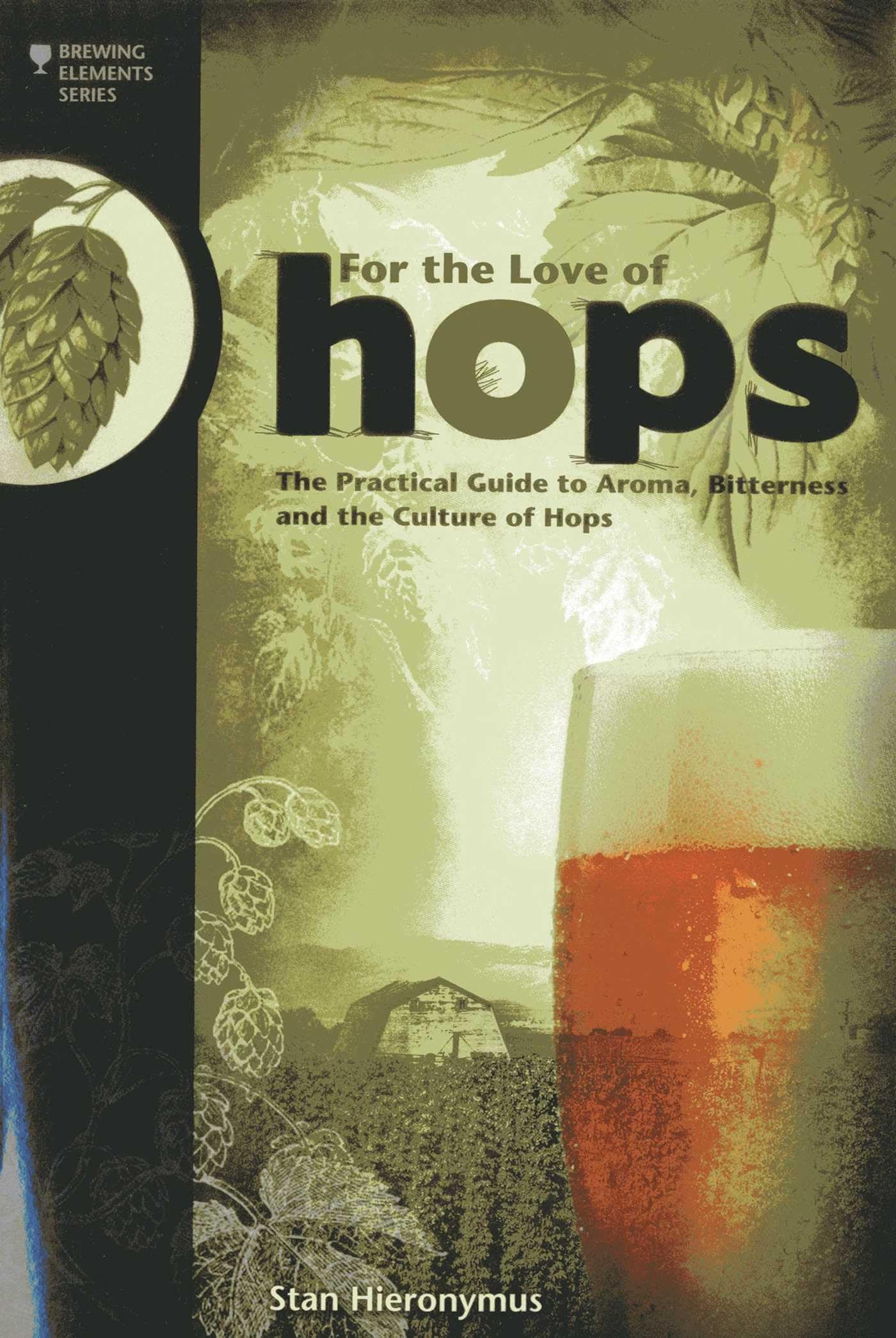
It is difficult to believe that at one time hops were very much the marginalized ingredient of modern beer, until the burgeoning craft beer movement in America reignited the industry's enthusiasm for hop-forward beer. The history of hops and their use in beer is long and shrouded in mystery to this day, but Stan Hieronymous has gamely teased apart the many threads as best anyone can, lending credence where due and scotching unfounded claims when appropriate. It is just one example of the deep research through history books, research articles, and first-hand interviews with present-day experts and growers that has enabled Stan to produce a wide-ranging, engaging account of this essential beer ingredient. While they have an exalted status with today's craft brewers, many may not be aware of the journey hops take to bring them, neatly baled or pressed into blocks and pellets, into the brewhouse. Stan paints a detailed and, at times, personal portrait of the life of hops, weaving technical information about hop growing and anatomy with insights from families who have been running their hop farms for generations. The author takes the reader on a tour of the main growing regions of central Europe, where the famous landrace varieties of Slovenia, the Czech Republic, and Germany originate, to England and thence to North America, and latterly, Australia and New Zealand. Growing hops and supplying the global brewing industry has always been a hard-nosed business, and Stan presents statistics on yields, acreage, wilt and other diseases, interspersed with words from the farmers themselves that illustrate the challenges and uncertainties hop growers face. Along the way, Stan gives details about some of the most well-known varieties—Saaz, Hallertau, Tettnang, Golding, Fuggle, Cluster, Cascade, Willamette, Citra, Amarillo, Nelson Sauvin, and many others—and their history of use in the Old World and New World. The section culminates in a catalog of 105 hop varieties in use today, with a brief description of character and vital statistics for each. Of course, the art and science of using hops in making beer is not forgotten. Once the hops have been harvested, processed, and delivered to the brewery, they can be used in myriad ways. The author moves from the toil of the hop gardens to that of the brewhouse, again presenting a blend of history and present-day interviews and research articles to explain alpha acids, beta acids, bitterness, harshness, smoothness, and the deterioration of bittering flavors over time. Perception is all important when discussing bitterness, and the author touches on genetics, evolution, the vagaries of individuals' perceptions of bitterness, and changing tastes, such as the “lupulin shift.” The meaning of the international bitterness unit, or IBU, is not always properly understood and here Stan lays out a brief history of how the IBU came to be and an appreciation of the many variables affecting utilization in the boil and final bitterness in beer. Adding hops is not as simple as it sounds, and Stan's research illustrates that if you ask ten brewers about something you will get eleven opinions. Early additions, late additions, continuous hopping, first wort hopping, and hop bursting are all discussed with a healthy dose of pragmatic wisdom from brewers and a pinch of chemistry. There then follows an entire chapter devoted to the druidic art of dry hopping, following its commonplace usage in nineteenth-century England to the modern applications found in today's US craft brewing scene. The author uncovers hop plugs, hop coffins, and the “pendulum method,” along with the famous hop rocket and hop torpedo used by some of America's leading craft breweries. Every brewer has their dry hopping method and, gratifyingly, many are happy to share with the author, making this chapter a great source for inspiration and ideas. Many of the brewers the author interviewed were also happy to share recipes. There are 16 recipes from breweries in America, Belgium, Czech Republic, Denmark, England, Germany, and New Zealand. These not only present delicious beers but give some insight into how professional brewers design their recipes to get the most out of their hops. As always, Stan imparts wisdom in an engaging and accessible fashion, making this an amazing compendium on “every brewer's favorite flower.” Review: Directed at a broad audience - those in the middle will love it. those at the edges will not. I loved it. - This is my third Stan Hieronymus book and I have enjoyed every one. Here he tackles the important brewing ingredient hops and provides what the brewer and beer aficionado needs to know to understand, appreciate and effectively use hops. This whole series tries to appeal to both brewers and beer fans and may disappoint some by providing too little detail and others by providing too much. Nearly half the book covers background, covering hops from field to the brewers. He gives a primer on essential oils which helps understand how hops work. He addresses the history and future of hops, growing and harvesting hops, and the different forms of hops used for brewing. The second half of the book focuses on hops in the brewery and gets deep into the chemistry of hops, important calculations, methods of measurement, understanding bitterness, and maintaining hop quality. He finishes up with a several recipes illustrating how various classical beer styles use hops. Readers who want a Joy of Cooking type recipe book for using hops in beer will be disappointed. Those who want to develop a better understanding and appreciation of hops and learn how to use them better in their brewing will love this book. This book should appeal to mid to upper level home brewers and those interested in beer who want to develop their knowledge further. Review: Stan is the Man! - Say what you will, this is a must-have for the pro, semi-pro and amateur want-to-be pro home brewer. Lots of easy reading and lots of technicals to spin your brain on. At this price point, I don't see why every level of brewer doesn't have it or order it immediately. The reference section is extremly complete, but none-the-less, will soon be out of date given the high level of activity in the area of hop growing. Fortunately, the family of hops allows people to get back to center and understand the slight variances between strains, similarities, and differences. All we need now is a really excellent book on grains and the entire spectrum of brewing will be complete. Get on it, Stan!


| Best Sellers Rank | #389,017 in Books ( See Top 100 in Books ) #52 in Crop Science (Books) #110 in Beer (Books) #391 in Homebrewing, Distilling & Wine Making |
| Customer Reviews | 4.7 out of 5 stars 807 Reviews |
A**S
Directed at a broad audience - those in the middle will love it. those at the edges will not. I loved it.
This is my third Stan Hieronymus book and I have enjoyed every one. Here he tackles the important brewing ingredient hops and provides what the brewer and beer aficionado needs to know to understand, appreciate and effectively use hops. This whole series tries to appeal to both brewers and beer fans and may disappoint some by providing too little detail and others by providing too much. Nearly half the book covers background, covering hops from field to the brewers. He gives a primer on essential oils which helps understand how hops work. He addresses the history and future of hops, growing and harvesting hops, and the different forms of hops used for brewing. The second half of the book focuses on hops in the brewery and gets deep into the chemistry of hops, important calculations, methods of measurement, understanding bitterness, and maintaining hop quality. He finishes up with a several recipes illustrating how various classical beer styles use hops. Readers who want a Joy of Cooking type recipe book for using hops in beer will be disappointed. Those who want to develop a better understanding and appreciation of hops and learn how to use them better in their brewing will love this book. This book should appeal to mid to upper level home brewers and those interested in beer who want to develop their knowledge further.
J**T
Stan is the Man!
Say what you will, this is a must-have for the pro, semi-pro and amateur want-to-be pro home brewer. Lots of easy reading and lots of technicals to spin your brain on. At this price point, I don't see why every level of brewer doesn't have it or order it immediately. The reference section is extremly complete, but none-the-less, will soon be out of date given the high level of activity in the area of hop growing. Fortunately, the family of hops allows people to get back to center and understand the slight variances between strains, similarities, and differences. All we need now is a really excellent book on grains and the entire spectrum of brewing will be complete. Get on it, Stan!
F**A
Opening a view of brewing and hops
Very interesting book, well organized and describing so many important information about hops culture, production, technical components (chemistry) and its impact in different usages on beers. Another impressive book from the series Brewing Elements. I enjoyed a lot the reading journey, and understood much more about brewing!!! Thank you Stan, for sharing your deep knowledge in a very professional way!
J**S
Not bad
Good book. Some good info about how breweries use hops, which was interesting. It tells how much lagunitas, stone, and new Belgium dry hop. Not the best book I've read cuz I got bored a bit by it. Some interesting recipes that lays out grist percentages and hops. One is an 'Indian Brown ale' by Sam calgione which looked kinda cool
E**T
Fascinating...a great historical and current perspective
For brewers and foodies alike, Stan Hieronymus' book is a wonderful read. Aspects of the recent developments and current markets for hops provide a compelling story of this fascinating plant and how much it figures into distinctive flavor profiles of today's microbrews. This curious author has conducted extensive historical research as well as interviews with contemporary brewers, hop farmers, researchers and botanists. Grab a copy and hop to it - you will be amazed!
W**O
You got to be hopping kidding me
This book series has been long over due. I have so far enjoyed every book within the brewing elements series and this one being written by Stan Hieronymus is a must in any brewers library; be it a homebrewer or professional. Stan gives the most comprehensive account of the aspects of hops and current scientific studies on hops. This book is truly a gem for anyone wanting to improve there brewing through better hop utilization.
J**F
Awesome Information
Stan Hieronymus has done his homework. He has distilled volumes of information down into this one book. While it would have been good to take the trips and visit where he went in this book, it would not have been fun to pour over the massive amount of information that he gathered in order to write this book. This book reads like a text book and is excellent for pro as well as avid amateur brewers.
M**N
Decent, but a bit dry
Like many of the other reviewers/ brewers, I bought this because I really enjoyed the YEAST book by Brewing Elements Series. I agree with one of the other reviewers that also gave it three stars, so I probably don't need to re-hash that review since it was well written. A few reasons why I couldn't pour over in the review: My main complaint is that I also found the material to be lacking in practical brewing information (compared to the yeast book which has all kinds of hands-on yeast lab set-up and technique, yeast handling and storage on a nano and macro level, temperature and oxygenation test results and graphs, etc...). The HOPS book is very well researched, but except for the clone recipes near the end of the book and the hop reference guide in the middle section, I just didn't find it useful in my day to day brewing. The first half of the book is basically the history of hops, who grew them, and the genetic lineage of the different strains of hop plants (Cascade, Chinook, etc). Personally, I thought that while the writing is conversational, it jumps around a lot. It's hard to specify without referencing multiple paragraphs and pages, but after a while I felt like all I was reading was "Japan...1952...Germany....USDA.....1910......Illinois...... Oregon State... ...1988.....1985.....Chinook.....1966....Sierra Nevada. ....2004.......1955.....1970). You should already know that everyone tastes and smells and likes different beers/ hops for whatever reasons (environmental, genetic, conditioning, seasonal). I feel like this book really just re-emphasises that nobody can really put their finger on (or at least come to a consensus on) what exactly certain hops smell like, how exactly to get any particular flavor into your beer, or why exactly it happens. I feel like I kept reading (which I already know), that you just have to experiment with bases, hops, yeasts, timing of hop additions, and amounts to find the flavors you like. I'm paraphrasing of course, and I'm well aware that this is what makes brewing such an wonderful and exciting art form. I just expected a little more practical information from this book that I could immediately apply. It's my fault that the history of the hops was less interesting to me. Still, I'm glad I read it.
A**R
Hops
Ottimo libro che aiuta nel capire meglio le proprietà del luppolo nella birrificazione casalinga e non. Essendo in inglese è necessario masticare un po' la lingua e la terminologia dell'homebrewing.
C**S
Comprehensive and informative
Although this book is somewhat old in terms of publication date. It nonetheless has a wealth of useful and relevant information contained within. Compared to 'The New IPA, by Scott Janish', this book is a lot more approachable. Chapters are well laid out, without being too overwhelming in terms of size and content. I feel this book would suit a beginner / intermediate home brewer looking to expand their knowledge and understanding of this aromatic plant. The recipes towards the end of the book are specifically designed to work with a specific hop or range of hops. Although they are a little simple in terms of laying out the brewing process. But, that's not really the emphasis of this book. Overall, worth the purchase.
I**S
Short and Informative
A decent introduction to hops and their effect on your beer. It covers some of their history as well as regional varieties. Recommended for all brewers.
P**T
tres bonne série
top
L**S
Recomendable
Recomendable para las personas que quieren consultar sobre las materias primas cerveceras, en concreto del lúpulo. Uno de los libros mas completos sobre la materia prima utilizada para dar amargor, como conservante de la cerveza.
Trustpilot
1 month ago
1 month ago