
Buy anything from 5,000+ international stores. One checkout price. No surprise fees. Join 2M+ shoppers on Desertcart.
Desertcart purchases this item on your behalf and handles shipping, customs, and support to Croatia.
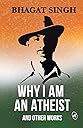
Bhagat Singh is a name that became synonymous with revolution in Indiaโs struggle for independence. This young boy brought about a change in the way people thought about freedom. He was well read and fought extensively for rights โ his own, his comradesโ and his countrymenโs. A discussion with a friend soon turned into a matter of self-assessment for Bhagat Singh, leading to a discourse on why he chose to be an atheist. Even in the face of death at a very young age, his uncanny observation leads to his putting forth some pertinent questions. On another occasion, he was disappointed with his fatherโs plea in Court for his innocence and chose to write a letter to him. This book is a collection of eighteen of his valued writings from within the walls of prison and outside it, which show us the resolve in his words, and the bravery in his acts subsequently. Review: Rebellion against king is always a sin according to every religion. - I would like to thanks desertcart for amazingly delivering the book so kudos to them. Reading Why I Am an Atheist and Other Works is not merely an encounter with the writings of a revolutionary; it is an encounter with a mind that was profoundly ahead of its time. This collection of letters and essays reveals Bhagat Singh not as a romanticised martyr frozen in nationalist imagery, but as a deeply reflective, self-critical, and intellectually rigorous thinker whose ideas continue to unsettle and inspire. What struck me immediately was his literary and philosophical depth. For a man writing in his early twenties, Bhagat Singhโs vocabulary, conceptual clarity, and argumentative precision are astonishing. At several points, I found myself reaching for a dictionaryโan experience that itself testifies to his serious engagement with philosophy, history, and political theory. His writings reflect not slogans, but sustained reasoning shaped by wide reading and relentless introspection. Bhagat Singhโs humility stands out as much as his courage. Even when articulating radical positions, he does so without arrogance. His views on violence, leadership, and revolutionary strategy evolved noticeably in the later phase of his life, revealing a thinker willing to revise his beliefs rather than cling to dogma. This intellectual honesty lends his ideas a moral credibility that transcends time. The essay Why I Am an Atheist remains one of the most lucid and logical defences of rationalism written in the Indian context. Here, Bhagat Singh explains his rejection of faith not as rebellion or ego, but as the outcome of disciplined reasoning. He openly critiques the orthodox Arya Samaj environment in which he studied, while acknowledging its role in shaping his early political consciousness. His journey from that background to the Hindustan Republican Association reflects a broader ideological shift towards socialism and scientific materialism. Equally moving are his letters to comrades. In one powerful exchange, he persuades Sukhdev not to take his own life, urging him instead to endure suffering and live on to fight the system. These moments show Bhagat Singh not merely as a revolutionary icon, but as a compassionate comrade deeply concerned with human life and collective struggle. His admiration for the Russian Revolution and thinkers like Lenin and Trotsky is evident, yet never uncritical. Bhagat Singh consistently emphasises the need to educate the massesโespecially peasants and marginalised communitiesโas the true foundation of any lasting revolution. His disappointment with the Congress leadership, particularly its compromises and its over-reliance on moral symbolism, is expressed with painful clarity. He saw freedom not as a transfer of power, but as social and economic emancipation. Perhaps the most haunting aspect of this collection is his confrontation with death. In his final letter, requesting the Governor of Punjab to shoot him instead of hanging him, Bhagat Singh demonstrates extraordinary composure and revolutionary resolve. He looked death in the eye without theatrics, understanding his execution as part of a larger historical struggle rather than a personal tragedy. Today, when even ideologically opposed political forces selectively appropriate his image, this book reminds us how fundamentally Bhagat Singh stood against communalism, authoritarianism, and exploitation. While the British may have left India, he would likely recognise how power remains concentrated in the hands of a few, often justified through religious and ideological dominationโprecisely what he warned against. For me, as a reader and as someone inspired by socialist ideals, Bhagat Singh emerges from these pages as a thinker, not a symbol; as a human being, not a myth. His ideas may no longer dominate political discourse, but their moral and intellectual force continues to challenge hypocrisy across the spectrum. To conclude in his own words, words that capture the essence of his life and thought: โThe sword of revolution is sharpened on the whetting stone of ideas.โ This book is essential readingโnot to worship Bhagat Singh, but to truly understand him. 5/5 ๐ Review: Good book - Must read for today's youngsters


| Best Sellers Rank | #214 in Books ( See Top 100 in Books ) #1 in Indian History (Books) #1 in Atheism (Books) #1 in Political Freedom & Security (Books) |
| Customer Reviews | 4.6 out of 5 stars 7,831 Reviews |
N**R
Rebellion against king is always a sin according to every religion.
I would like to thanks amazon for amazingly delivering the book so kudos to them. Reading Why I Am an Atheist and Other Works is not merely an encounter with the writings of a revolutionary; it is an encounter with a mind that was profoundly ahead of its time. This collection of letters and essays reveals Bhagat Singh not as a romanticised martyr frozen in nationalist imagery, but as a deeply reflective, self-critical, and intellectually rigorous thinker whose ideas continue to unsettle and inspire. What struck me immediately was his literary and philosophical depth. For a man writing in his early twenties, Bhagat Singhโs vocabulary, conceptual clarity, and argumentative precision are astonishing. At several points, I found myself reaching for a dictionaryโan experience that itself testifies to his serious engagement with philosophy, history, and political theory. His writings reflect not slogans, but sustained reasoning shaped by wide reading and relentless introspection. Bhagat Singhโs humility stands out as much as his courage. Even when articulating radical positions, he does so without arrogance. His views on violence, leadership, and revolutionary strategy evolved noticeably in the later phase of his life, revealing a thinker willing to revise his beliefs rather than cling to dogma. This intellectual honesty lends his ideas a moral credibility that transcends time. The essay Why I Am an Atheist remains one of the most lucid and logical defences of rationalism written in the Indian context. Here, Bhagat Singh explains his rejection of faith not as rebellion or ego, but as the outcome of disciplined reasoning. He openly critiques the orthodox Arya Samaj environment in which he studied, while acknowledging its role in shaping his early political consciousness. His journey from that background to the Hindustan Republican Association reflects a broader ideological shift towards socialism and scientific materialism. Equally moving are his letters to comrades. In one powerful exchange, he persuades Sukhdev not to take his own life, urging him instead to endure suffering and live on to fight the system. These moments show Bhagat Singh not merely as a revolutionary icon, but as a compassionate comrade deeply concerned with human life and collective struggle. His admiration for the Russian Revolution and thinkers like Lenin and Trotsky is evident, yet never uncritical. Bhagat Singh consistently emphasises the need to educate the massesโespecially peasants and marginalised communitiesโas the true foundation of any lasting revolution. His disappointment with the Congress leadership, particularly its compromises and its over-reliance on moral symbolism, is expressed with painful clarity. He saw freedom not as a transfer of power, but as social and economic emancipation. Perhaps the most haunting aspect of this collection is his confrontation with death. In his final letter, requesting the Governor of Punjab to shoot him instead of hanging him, Bhagat Singh demonstrates extraordinary composure and revolutionary resolve. He looked death in the eye without theatrics, understanding his execution as part of a larger historical struggle rather than a personal tragedy. Today, when even ideologically opposed political forces selectively appropriate his image, this book reminds us how fundamentally Bhagat Singh stood against communalism, authoritarianism, and exploitation. While the British may have left India, he would likely recognise how power remains concentrated in the hands of a few, often justified through religious and ideological dominationโprecisely what he warned against. For me, as a reader and as someone inspired by socialist ideals, Bhagat Singh emerges from these pages as a thinker, not a symbol; as a human being, not a myth. His ideas may no longer dominate political discourse, but their moral and intellectual force continues to challenge hypocrisy across the spectrum. To conclude in his own words, words that capture the essence of his life and thought: โThe sword of revolution is sharpened on the whetting stone of ideas.โ This book is essential readingโnot to worship Bhagat Singh, but to truly understand him. 5/5 ๐
K**A
Good book
Must read for today's youngsters
S**R
Good book
Almost good but page should be slightly better than this
A**R
you can easily go for it.
good product
K**R
Must Read!
Must Read! Inquilab Zindabad
M**L
Nice one
The delivery was awesome, the book is as it is without any torn or bends, the paper quality is also good, Font size is also good, And the insides are telling life of Bhagat singh mainly his views on different things, which indirectly gives us lot of learning
S**R
The important to know please complete the reading.
Very nice book.... True patriotic will definitely like this book ๐
P**I
A very interesting read
A very interesting and logical read. It was quite insightful to learn about Bhagat Singh's thoughts and explanations on many topics. However, after page 65, there are multiple errors in print and editing of the book. With wrong spellings and repetitive sentences. This book should've been diligently reviewed then printed.
Y**G
Best buy
Wonderfull
P**N
Just read the essay. Dont buy the book
The essay on being an atheist is fine - and comes in at about 15 pages. The rest of the "book" is utterly meaningless. Also, several the back pages fell out, even though I bought the book new.
C**N
Excellent volume
Excellent guide to understanding modern India. Must read.
J**Y
Formatting/Grammar
Definitely did not review before publishing. Lots of grammar and formatting mistakes.
Trustpilot
2 months ago
1 day ago