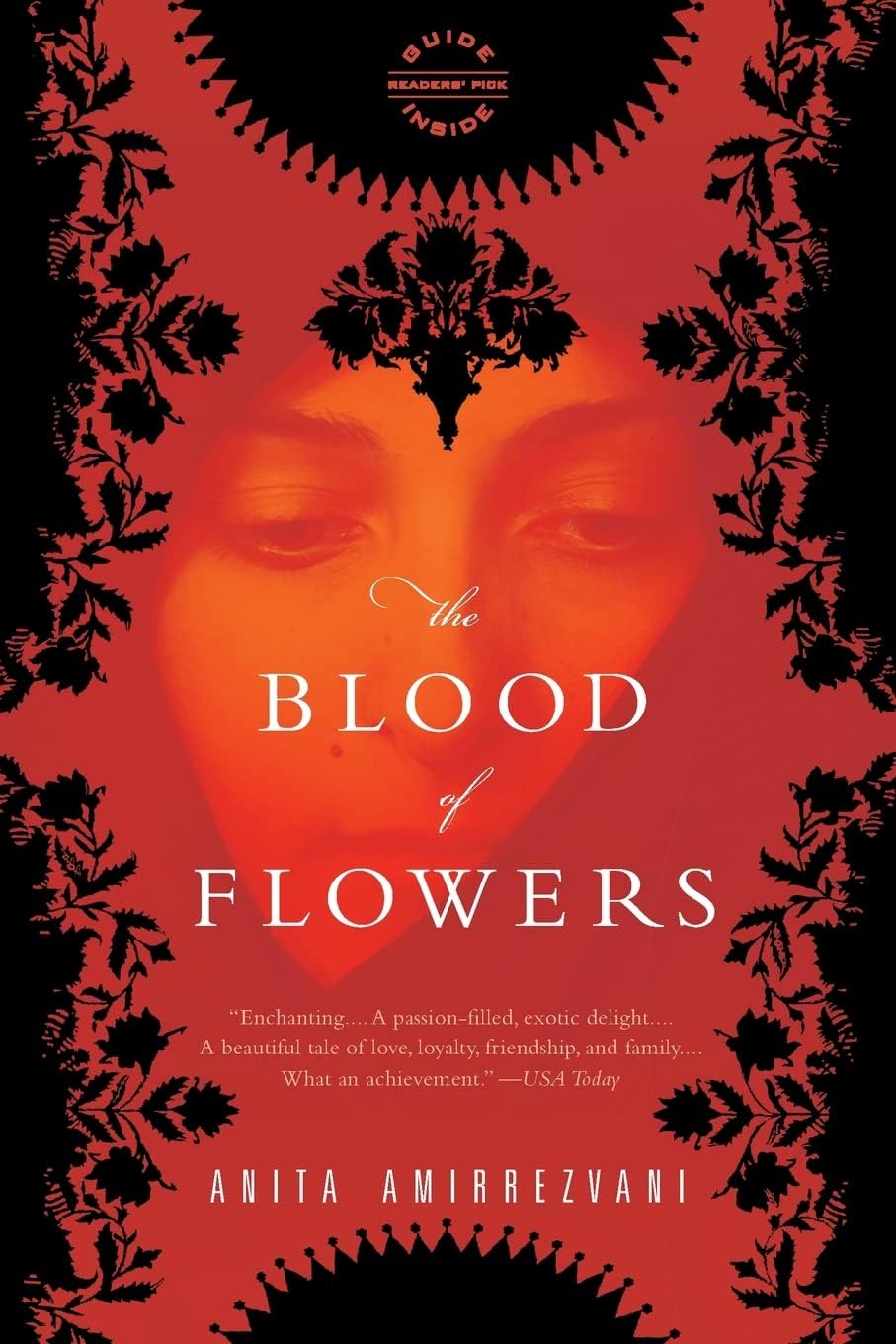
The Blood of Flowers
Product ID: 18970381
Desertcart purchases this item on your behalf and handles shipping, customs, and support to Croatia.
desertcart.com: The Blood of Flowers: 9780316065771: Amirrezvani, Anita: Books Review: Fit for a place among the 1001 Arabian Nights - Middle Eastern historical fiction is still pretty rare in English, which makes it unusual and especially interesting. Its really too bad because there are so many great stories that originated in the Middle East-like the Arabian Nights. I have yet to find a novelized version of the story of Sheherazade in English. But this book came close in a way. "The Blood of Flowers" is the story of an Iranian girl n the 17th century who has always loved making carpets. She is dismayed when the comet passing in the night skies is read as an unfortunate sign for important events in the coming year, but it reassured by her loving father and mother. But when her father dies she and her mother are forced to move from their mountain village to the great city of Isfahan to live with her uncle-a wealthy royal carpet maker. Though she makes the very most of having a great carpet maker nearby to teach her, our heroine (who is never named) has somewhat of a rash personality and her actions only make her aunt resent her and her mothers presence more and more-even though they both work like slaves. So when an offer of marriage comes-from a very wealthy man-mother and daughter don't have the finical resources to truly resist. But it isn't a normal marriage. It's a temporary marriage, contracted to last only three months. The girl would much rather marry someone who wants her enough to marry her forever but her financial situation means she has no choice. The upside is instead of paying a dowry, the girl will be paid, allowing her to pay off debts incurred to her aunt and uncle. To keep the money coming though (and perhaps a more permanent arrangement, or a house) the girl must do everything she can to please her temporary husband. For reasons she doesn't understand the girl is also to keep the arrangement a secret. But when circumstances change in a way that brings her secret too close to home, our heroine is forced to learn to be an adult, make her own decisions and use the skills of her mind and hands, and the blood of the flowers, to make her future. This novel is styled so that every chapter is told in first person by the girl and finishes with a Middle Eastern fable, or one in the style that the author made up. Each of the eight tales (one for the prolog, one each for the seven chapters) helps advance the story through the messages of love and forgiveness, cleverness, forbearance and longing. The whole effect is a weaving together of words and ideas to make a wonderful, full and very colorful story. The concept of the temporary marriage-and Iranian tradition that still exists today is also fascinating. In one way it is abhorrent-a kind of legalized prostitution that ends with a girl no longer possessing her virginity and having limited options for her future, and in another way it allows people who love each other to be together, even if they aren't free to marry formally. I'd never heard of anything like it before and was a little stunned that it exists, especially in a society that bases so much on women's purity. Overall this is an excellent novel. It is constructed with a kind of care I have rarely seen-making each and every word and action fit with the others. The plot is fascinating, the historical detail amazing and the characters very whole. Five stars. Review: while lacking in diversity is forgiven by a great plot that had me glued to the book until ... - Anita Amirrezvani’s The Blood of Flowers is a very interesting read about a young girl struggling for the survival of her and her mother. Character development, while lacking in diversity is forgiven by a great plot that had me glued to the book until I finished it. In the beginning, it did start out slow but, worth the wait once the storyline picked up. The main character, being only 14 years old, goes through some life changing experiences that would leave a huge impact on anyone if their father died, which is shown well and not only conveyed the narrators sadness but also that of the mothers. However, at times the narrator does seem to lack some serious common sense for someone her age, which was not only irritating, but at the same time makes one pity the girl who has some seriously bad luck. While the author does include some backstory for most of the characters, it did not go much in depth and the only person we see going through some character development is the narrator. The novel has some dark undertones which left me dreading the outcome of certain things, especially when the narrator seemed content for too long. Readers with anxiety issues: beware. Although the book heavily implies the restrictions on women in 17th century Persia, the narrator not only continues to work as her uncle’s kind of/ sort of apprentice but also makes a name for herself (which is ironic in itself since her name is not once mentioned throughout the whole novel) in the carpet making business. Highly unusual for an unmarried woman. That aside, the other women in the novel do show a more normal semblance of how a woman should act during that period. The narrators ‘best friend’ while viewed as being far more rebellious, in the end turns out to be mundanely compliant as soon as things take a sour turn. The best part of the novel has to do with the not so romantic romance. The narrator strives so hard for her temporary husband to like her, she does not even realize that no matter what she does, he will one day grow tired of her. On the other hand, these kind of life lessons shapes her to be the strong, independent woman we see by the end of the novel. Taking under consideration the stories her mother used to tell her, the narrator makes do with what is given to her and turns a seemingly morose situation into a somewhat manageable one. Thus, the author’s true purpose is revealed. Nothing beautiful is made without struggle. The carpet making shows different memories and emotions. At first, it is the narrator’s innocence. Later on, aggravated determination which by the end of the novel turns into a sophisticated determination accomplished by trial and error. To this end, the narrator finally gives up child-like tendencies and settles into an adult mindset.
| ASIN | 0316065773 |
| Best Sellers Rank | #604,876 in Books ( See Top 100 in Books ) #367 in Cultural Heritage Fiction #1,043 in Folklore (Books) #5,826 in Literary Fiction (Books) |
| Customer Reviews | 4.3 4.3 out of 5 stars (1,268) |
| Dimensions | 5.5 x 1.01 x 8.25 inches |
| Edition | Reprint |
| ISBN-10 | 9780316065771 |
| ISBN-13 | 978-0316065771 |
| Item Weight | 12.8 ounces |
| Language | English |
| Print length | 401 pages |
| Publication date | May 1, 2008 |
| Publisher | Little, Brown Paperbacks |
L**A
Fit for a place among the 1001 Arabian Nights
Middle Eastern historical fiction is still pretty rare in English, which makes it unusual and especially interesting. Its really too bad because there are so many great stories that originated in the Middle East-like the Arabian Nights. I have yet to find a novelized version of the story of Sheherazade in English. But this book came close in a way. "The Blood of Flowers" is the story of an Iranian girl n the 17th century who has always loved making carpets. She is dismayed when the comet passing in the night skies is read as an unfortunate sign for important events in the coming year, but it reassured by her loving father and mother. But when her father dies she and her mother are forced to move from their mountain village to the great city of Isfahan to live with her uncle-a wealthy royal carpet maker. Though she makes the very most of having a great carpet maker nearby to teach her, our heroine (who is never named) has somewhat of a rash personality and her actions only make her aunt resent her and her mothers presence more and more-even though they both work like slaves. So when an offer of marriage comes-from a very wealthy man-mother and daughter don't have the finical resources to truly resist. But it isn't a normal marriage. It's a temporary marriage, contracted to last only three months. The girl would much rather marry someone who wants her enough to marry her forever but her financial situation means she has no choice. The upside is instead of paying a dowry, the girl will be paid, allowing her to pay off debts incurred to her aunt and uncle. To keep the money coming though (and perhaps a more permanent arrangement, or a house) the girl must do everything she can to please her temporary husband. For reasons she doesn't understand the girl is also to keep the arrangement a secret. But when circumstances change in a way that brings her secret too close to home, our heroine is forced to learn to be an adult, make her own decisions and use the skills of her mind and hands, and the blood of the flowers, to make her future. This novel is styled so that every chapter is told in first person by the girl and finishes with a Middle Eastern fable, or one in the style that the author made up. Each of the eight tales (one for the prolog, one each for the seven chapters) helps advance the story through the messages of love and forgiveness, cleverness, forbearance and longing. The whole effect is a weaving together of words and ideas to make a wonderful, full and very colorful story. The concept of the temporary marriage-and Iranian tradition that still exists today is also fascinating. In one way it is abhorrent-a kind of legalized prostitution that ends with a girl no longer possessing her virginity and having limited options for her future, and in another way it allows people who love each other to be together, even if they aren't free to marry formally. I'd never heard of anything like it before and was a little stunned that it exists, especially in a society that bases so much on women's purity. Overall this is an excellent novel. It is constructed with a kind of care I have rarely seen-making each and every word and action fit with the others. The plot is fascinating, the historical detail amazing and the characters very whole. Five stars.
S**A
while lacking in diversity is forgiven by a great plot that had me glued to the book until ...
Anita Amirrezvani’s The Blood of Flowers is a very interesting read about a young girl struggling for the survival of her and her mother. Character development, while lacking in diversity is forgiven by a great plot that had me glued to the book until I finished it. In the beginning, it did start out slow but, worth the wait once the storyline picked up. The main character, being only 14 years old, goes through some life changing experiences that would leave a huge impact on anyone if their father died, which is shown well and not only conveyed the narrators sadness but also that of the mothers. However, at times the narrator does seem to lack some serious common sense for someone her age, which was not only irritating, but at the same time makes one pity the girl who has some seriously bad luck. While the author does include some backstory for most of the characters, it did not go much in depth and the only person we see going through some character development is the narrator. The novel has some dark undertones which left me dreading the outcome of certain things, especially when the narrator seemed content for too long. Readers with anxiety issues: beware. Although the book heavily implies the restrictions on women in 17th century Persia, the narrator not only continues to work as her uncle’s kind of/ sort of apprentice but also makes a name for herself (which is ironic in itself since her name is not once mentioned throughout the whole novel) in the carpet making business. Highly unusual for an unmarried woman. That aside, the other women in the novel do show a more normal semblance of how a woman should act during that period. The narrators ‘best friend’ while viewed as being far more rebellious, in the end turns out to be mundanely compliant as soon as things take a sour turn. The best part of the novel has to do with the not so romantic romance. The narrator strives so hard for her temporary husband to like her, she does not even realize that no matter what she does, he will one day grow tired of her. On the other hand, these kind of life lessons shapes her to be the strong, independent woman we see by the end of the novel. Taking under consideration the stories her mother used to tell her, the narrator makes do with what is given to her and turns a seemingly morose situation into a somewhat manageable one. Thus, the author’s true purpose is revealed. Nothing beautiful is made without struggle. The carpet making shows different memories and emotions. At first, it is the narrator’s innocence. Later on, aggravated determination which by the end of the novel turns into a sophisticated determination accomplished by trial and error. To this end, the narrator finally gives up child-like tendencies and settles into an adult mindset.
E**N
A Highly Entertaining Learning Experience.
A compelling personal story, set in a previously unknown, but richly textured background and culture, has always been one of my most sought after reading experiences. Books like this make me realize that despite some 18 years of liberal arts education emphasizing history and other "soft" subjects, I know next to nothing about Middle Eastern culture. Now I know more, thanks to this informative and entertaining description of a young rug maker's struggle to survive after the death of her father, and to navigate through a male dominated society. The story moved along and held my interest, the business aspects of the rug trade were fascinating and I gained a whole new appreciation for the spirituality, philosophy and poetry that is behind the making of a Persian carpet. I learned a lot without having to struggle through mountains of overly-descriptive detail--which is my favorite kind of historical fiction.
K**R
An entrancing read!
Loved every page of this book! I was sucked in right away and my attention held the entire read. The storyline is entrancing, the details thorough enough for a vivid imagination. It was one of those reads you think about all day, waiting for the duties of the day to end so you can dive right back in. I read the book within three nights; just might not have received enough sleep.. You know its' good when you finally drop back into reality and realize it is nearly 3:30am and you have no idea how all that time passed. Cant say enough good things about it.
S**5
The world of carpet weaving brought alive with a wonderful description of the art and a deserving ode to the many many anonymous artisans around the world
M**N
Anita Amirrezvani's, "The Blood of Flowers" is a magnificent story. Her beautiful storytelling enables her reader to walk with the vivid characters, feeling and seeing their experiences, hearing their surroundings and sharing both their challenges and victories. I felt as though I had woken from living within these pages.
W**S
A wonderful story, and a touching insight into a difficult world of a young woman growing up in Iran in the 1600's. The story is set around a young girl, her family is about to arrange her marriage, when her destiny is altered following a blazing 'bad' comet in the sky. Her father then dies, which leaves her without a dowry, and her mother destitute. They head off to the city to leave with an uncle, where they are treated as servants by his greedy wife, rather than as family members. The young girl show talents as a carpet maker, and starts helping her uncle in his carpet business. But, she is not able to work in the factory alongside the men.."If only you had been a man" he laments. I found it an enthralling read. The author describes the colours of the wools, and patterns in the carpets so well that you can almost see them. I thoroughly enjoyed reading it, and would highly recommend this book.
L**S
I picked up the Blood of Flowers several years ago while traveling and left it behind at my hotel for someone else to enjoy. The story stayed in my head and I knew I wanted to read it again. That's the best review one can give I think; finding the story so intriguing and the writing so compelling that it must be re-read. I look forward to lending it to friends I know will appreciate it, and to having it in my permanent collection.
S**.
loved it and will always look with great respect at handcrafted carpets.
Trustpilot
1 day ago
3 weeks ago