

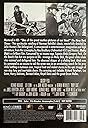
Moby Dick
Product ID: 21139796
Buy anything from 5,000+ international stores. One checkout price. No surprise fees. Join 2M+ shoppers on Desertcart.
Desertcart purchases this item on your behalf and handles shipping, customs, and support to Croatia.
Herman Melville's mad Capt. Ahab hunts the white whale that got his leg. Review: "It's a white whale, I say...a white whale!" - "Whenever I find myself growing grim about the mouth...whenever it is a damp, drizzly November in my soul; whenever I find myself involuntarily pausing before coffin warehouses, and bringing up the rear of every funeral I meet; and especially whenever my hypos get such an upper hand of me, that it requires a strong moral principle to prevent me from deliberately stepping into the street, and methodically knocking people's hats off -- then, I account it high time to get to sea as soon as I can. This is my substitute for pistol and ball." So it begins... Ray Bradbury's first Hollywood job, as screenwriter, and what a job he did! This is, far and away, the finest translation of this unique and wonderful story, by Herman Melville, taken from the true account of the whaleship "Essex." The only time in Maritime records of a whale deliberately ramming a ship! Richard Basehart is a low-key and very convincing Ishmael, Orson Welles, brilliant as the Preacher in his curious pulpit fashioned after a whaling ship, and ascended via a rope ladder... and Queequeg is magnificent, an exotic creaure, replete with unusual tattooed designs all over his face, and seldom without his unique pipe. Quite a memorable character...Gregory Peck is great as Ahab, and does a wholly convincing job of potraying the tortured Captain of the Pequod, pacing ominously up and down the deck, on his stump, fashioned from the jawbone of a whale, planning his revenge on the "damn-ed whale." His stentorian tones, and the portent with which he delivers his lines, is something to watch... Pip the cabin boy, is great with his tambourine and his joy at being at sea with the whaling men; what an adventure! When the Pequod sets out to sea, the women of the town look on, grief, sorrow and resignation etched in their faces, and then the mood lightens when the men sing as they work on the ship. And my favorite lines from Elijah...(paraphrasing)"There'll come a day at sea, when you'll smell land and there'll be no land, and all, all save one, shall perish." The adventures at sea, and the byplay between the crew, and the obvious affection and respect and awe they all feel for Ahab; wonderful stuff, and this affection eventually dooms them to follow him to their ultimate fate and encounter with Moby Dick. The effects are superb, even by today's standards, and the acting unparalleled. You will smell the salt water and feel the wind on your face when you watch this, the ultimate movie interpretation of Moby Dick. Ahab's stirring words to the crew, revealing his true intent on this voyage... "Whosoever of ye raises me a white-headed whale with a wrinkled brow and a crooked jaw; whosoever of ye raises me that white-headed whale, with three holes punctured in his starboard fluke- look ye, whosoever of ye raises me that same white whale, he shall have this gold ounce, my boys!" "Huzza! huzza!" cried the seamen, as with swinging tarpaulins they hailed the act of nailing the gold to the mast. "It's a white whale, I say," resumed Ahab, as he threw down the topmaul: "a white whale. Skin your eyes for him, men; look sharp for white water; if ye see but a bubble, sing out." "Captain Ahab," said Starbuck, who, with Stubb and Flask, had thus far been eyeing his superior with increasing surprise, but at last seemed struck with a thought which somewhat explained all the wonder. "Captain Ahab, I have heard of Moby Dick- but it was not Moby Dick that took off thy leg?" "Who told thee that?" cried Ahab; then pausing, "Aye, Starbuck; aye, my hearties all round; it was Moby Dick that dismasted me; Moby Dick that brought me to this dead stump I stand on now. Aye, aye," he shouted with a terrific, loud, animal sob, like that of a heart-stricken moose; "Aye, aye! it was that accursed white whale that razeed me; made a poor pegging lubber of me for ever and a day!" Then tossing both arms, with measureless imprecations he shouted out: "Aye, aye! and I'll chase him round Good Hope, and round the Horn, and round the Norway Maelstrom, and round perdition's flames before I give him up. And this is what ye have shipped for, men! to chase that white whale on both sides of land, and over all sides of earth, till he spouts black blood and rolls fin out. What say ye, men, will ye splice hands on it, now? I think ye do look brave." "Aye, aye!" shouted the harpooneers and seamen, running closer to the excited old man: "A sharp eye for the white whale; a sharp lance for Moby Dick!" Review: Moby Dick - a great classic!






| Contributor | Bernard Miles, Edric Connor, Gregory Peck, Harry Andrews, James Robertson Justice, John Huston, Leo Genn, Mervyn Johns, Noel Purcell, Orson Welles, Richard Basehart Contributor Bernard Miles, Edric Connor, Gregory Peck, Harry Andrews, James Robertson Justice, John Huston, Leo Genn, Mervyn Johns, Noel Purcell, Orson Welles, Richard Basehart See more |
| Customer Reviews | 4.6 out of 5 stars 2,278 Reviews |
| Format | Color, Multiple Formats, NTSC, Widescreen |
| Genre | Action & Adventure |
| Language | English |
| Runtime | 1 hour and 56 minutes |
S**N
"It's a white whale, I say...a white whale!"
"Whenever I find myself growing grim about the mouth...whenever it is a damp, drizzly November in my soul; whenever I find myself involuntarily pausing before coffin warehouses, and bringing up the rear of every funeral I meet; and especially whenever my hypos get such an upper hand of me, that it requires a strong moral principle to prevent me from deliberately stepping into the street, and methodically knocking people's hats off -- then, I account it high time to get to sea as soon as I can. This is my substitute for pistol and ball." So it begins... Ray Bradbury's first Hollywood job, as screenwriter, and what a job he did! This is, far and away, the finest translation of this unique and wonderful story, by Herman Melville, taken from the true account of the whaleship "Essex." The only time in Maritime records of a whale deliberately ramming a ship! Richard Basehart is a low-key and very convincing Ishmael, Orson Welles, brilliant as the Preacher in his curious pulpit fashioned after a whaling ship, and ascended via a rope ladder... and Queequeg is magnificent, an exotic creaure, replete with unusual tattooed designs all over his face, and seldom without his unique pipe. Quite a memorable character...Gregory Peck is great as Ahab, and does a wholly convincing job of potraying the tortured Captain of the Pequod, pacing ominously up and down the deck, on his stump, fashioned from the jawbone of a whale, planning his revenge on the "damn-ed whale." His stentorian tones, and the portent with which he delivers his lines, is something to watch... Pip the cabin boy, is great with his tambourine and his joy at being at sea with the whaling men; what an adventure! When the Pequod sets out to sea, the women of the town look on, grief, sorrow and resignation etched in their faces, and then the mood lightens when the men sing as they work on the ship. And my favorite lines from Elijah...(paraphrasing)"There'll come a day at sea, when you'll smell land and there'll be no land, and all, all save one, shall perish." The adventures at sea, and the byplay between the crew, and the obvious affection and respect and awe they all feel for Ahab; wonderful stuff, and this affection eventually dooms them to follow him to their ultimate fate and encounter with Moby Dick. The effects are superb, even by today's standards, and the acting unparalleled. You will smell the salt water and feel the wind on your face when you watch this, the ultimate movie interpretation of Moby Dick. Ahab's stirring words to the crew, revealing his true intent on this voyage... "Whosoever of ye raises me a white-headed whale with a wrinkled brow and a crooked jaw; whosoever of ye raises me that white-headed whale, with three holes punctured in his starboard fluke- look ye, whosoever of ye raises me that same white whale, he shall have this gold ounce, my boys!" "Huzza! huzza!" cried the seamen, as with swinging tarpaulins they hailed the act of nailing the gold to the mast. "It's a white whale, I say," resumed Ahab, as he threw down the topmaul: "a white whale. Skin your eyes for him, men; look sharp for white water; if ye see but a bubble, sing out." "Captain Ahab," said Starbuck, who, with Stubb and Flask, had thus far been eyeing his superior with increasing surprise, but at last seemed struck with a thought which somewhat explained all the wonder. "Captain Ahab, I have heard of Moby Dick- but it was not Moby Dick that took off thy leg?" "Who told thee that?" cried Ahab; then pausing, "Aye, Starbuck; aye, my hearties all round; it was Moby Dick that dismasted me; Moby Dick that brought me to this dead stump I stand on now. Aye, aye," he shouted with a terrific, loud, animal sob, like that of a heart-stricken moose; "Aye, aye! it was that accursed white whale that razeed me; made a poor pegging lubber of me for ever and a day!" Then tossing both arms, with measureless imprecations he shouted out: "Aye, aye! and I'll chase him round Good Hope, and round the Horn, and round the Norway Maelstrom, and round perdition's flames before I give him up. And this is what ye have shipped for, men! to chase that white whale on both sides of land, and over all sides of earth, till he spouts black blood and rolls fin out. What say ye, men, will ye splice hands on it, now? I think ye do look brave." "Aye, aye!" shouted the harpooneers and seamen, running closer to the excited old man: "A sharp eye for the white whale; a sharp lance for Moby Dick!"
W**N
Moby Dick
a great classic!
P**P
THE BEST CLASSIC,Moby Dick!
Purchased this to replace damaged older DVD.The movie speaks for itself,man takes from the sea, sometimes the sea exacts a price.You'll see real old time whaling footage along with some of the best acting and dialogue in filmmaking history!What happens when Captain Ahab wants revenge upon the white whale? See for yourself,Rent/view, possibly purchase, 5 big *stars !
R**N
John Huston's Moby Dick
Written in 1851, Herman Melville's difficult, tormented novel has inspired a long stream of American creative effort. Among the most recent of these efforts is the opera "Moby-Dick" by Jake Heggie with libretto by Gene Scheer that I saw and reviewed here on Amazon in an outstanding DVD by the San Francisco Opera. The new opera prompted me to visit an earlier famous adaptation of "Moby-Dick" : director John Huston's film version of 1956. Amazon's "instant video" rental feature made it easy to get to know the film. I also used George Cotkin's study of "Moby-Dick" in American culture, "Dive Deeper: Journeys with Moby-Dick" (2012) to supplement watching the movie. John Huston (1906 -- 1987) was a flamboyant American film director and screenwriter who directed many classic films beginning with 1941's "The Maltese Falcon". Although he had difficulty reading the book, Huston had long wanted to make a movie of "Moby-Dick", and he enlisted the science fiction writer Ray Bradbury to write the script. Bradbury too had experienced difficulty reading Melville's novel, but he took to the project enthusiastically. He and Huston had a stormy relationship with each other, but both immersed themselves in the book and the project. As George Cotkin tells it in "Dive Deeper", Bradbury struggled with the script but ultimately had an epiphany, proclaiming "I am Herman Melville" when he realized that Ahab in the book "wants the mens' souls" as well as revenge against the white whale. For Huston's part, Cotkin describes him as "devoted to making his film and having it touched with blasphemy, veracity, and cinematic splendor". Huston revised Bradbury's script. According to Cotkin, " Huston had wanted Bradbury's soul. He managed to get a good film script that he reworked until it fit his own vision of a man bent on diving deeper, confronting a God who had questions to answer." Huston's film captures the "blasphemy" he sought as his Ahab rails against the suffering and lost dreams of human life and against the God he holds responsible. Bradbury's script too shows a charismatic Ahab who has the power to convince his crew of the importance of his vendetta against the whale and to persuade them to follow him. Bradbury's script has a great deal of the majestic, raving quality of Melville. Although the film departs from the novel in several important ways, partly to take account of the different nature of the mediums, it captures a great deal of the spirit and themes of the original. The movie also succeeds in Huston's goal of providing "cinematic splendor" to the telling of the tale. The film was an expensive spectacular, with unique and effective coloration, scenes of the ocean and the Pequod, and a lush score. The most lavish and famous scene in the movie was the climactic portrayal of the white whale and of Ahab's and his crews doomed pursuit towards the end, as the whale carries Ahab off on his back, with the ocean broiling and the birds flying ominously overhead. There are issues with the acting and casting of the film. Gregory Peck does not have the full visceral passion to capture Ahab. He appears in this film looking somewhat like a well-dressed Abraham Lincoln and his performance is restrained. Late in life, Peck portrayed Father Mapple in another screen version of "Moby-Dick" and he frequently spoke with dissatisfaction about his performance of Ahab in the earlier film. Still, many viewers have got to know Ahab through Peck, and his effort deserves respect.As for the rest of the cast, full-voiced Richard Basehart is a capable Ishmael and the German actor of aristocratic background, Friedrich von Ledebur, overcomes the odd casting to be effective as Queequeg. Leo Genn captures the common sense of Starbuck, but the acting gem of this film is Orson Welles in his performance of Father Mapple, whose sermon sets the stage both for the novel and for the movie. According to Cotkin, Welles took to the role of Father Mapple immediately and extemporized on the sermon during the filming. "That's very good, very good indeed", Huston commented. "But now try it as written in the script." Huston's film, like Melville's novel, failed commercially upon its initial release, but its reputation has continued to grow. Over the years, many people have come to the story and its characters through the portrayals in this movie. Huston's film with its flaws thus has taken on something of a life of its own. Huston's film is worth seeing and enjoying in it own right for what it is. I enjoyed watching the movie as a sort of commentary on the book. It is one of a long series of illustrious examples of how Americans over the years have approached and thought about Melville's literary masterwork. Robin Friedman
L**S
DVD
Awesome movie, vibrant action.
G**E
great story
Outstanding acting. Good special effects
L**I
Ottimo prodotto tempi spedizione adeguati
N**B
This movie has had very little critical acclaim in its time, and the severest comment was on the set when it was noted (unkindly) that Huston himself should have played Ahab and Welles the whale. But the director's vision was completely fulfilled here, and as has been noted this is a homage to the book itself, full of high drama and over-the-top melodrama. Personally I think Peck was exceptional as Ahab, and brought out the monomania, the ruthlessness and the determination of the character very well; in fact all the leading actors were marvellous and helped give a taste of the sea to the viewer. The final chase, cut from the book's three days and three lowerings to only one, is still thrilling and the climax a rollercoaster ride. Admittedly, they changed parts of the story (e.g. Ahab beckoning) for dramatic effect, but otherwise this is as close to the book as you'll ever get.
Y**R
Très bien
J**N
The story of the crew of the 19th century whaling ship Pequod and its ill-fateful voyage in pursuit of Captain Ahab's vengeful obsession with the great white whale, Moby Dick. Disclosure: I have never read Herman Melville's famous novel on which this film is based but the movie is a classic in its own right. Well directed by John Huston and well written by Ray Bradbury. The casting of Gregory Peck as Ahab has been much debated. As a child I thought his performance riveting. As an adult I find it less so. But I would still consider him a more impressive Ahab than were Patrick Stewart and William Hurt in the two television remakes. Sometimes I wonder how Sterling Hayden or Raymond Massey would have fared in the role? That said, I find Richard Basehart's portrayal of the lead character and narrator, Ishmael, less satisfying than Peck. The rest of the cast is great, especially Mervyn Johns as Peleg. A movie worth seeing again and again.
C**N
todo ok
Trustpilot
1 week ago
3 days ago