📺 Cut the cord, not the quality—free HDTV with zero subscriptions!
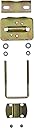
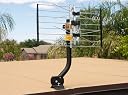
The Channel Master METROtenna is a compact, preassembled outdoor HDTV antenna designed for free over-the-air TV reception up to 40 miles. Featuring a 2-bay bowtie design with 180° multi-directional reception, it supports both UHF and VHF channels, delivering uncompressed 1080i HD broadcasts. Its versatile mounting options and easy installation make it ideal for professionals seeking premium TV quality without cable fees.


| ASIN | B000XSAW9S |
| Antenna | Television |
| AntennaDescription | Television |
| Best Sellers Rank | #901 in TV Antennas |
| Brand | Channel Master |
| Color | Gray |
| Customer Reviews | 4.5 out of 5 stars 2,467 Reviews |
| Global Trade Identification Number | 00020572042208 |
| Impedance | 75 Ohms |
| Item Dimensions L x W x H | 24.3"L x 15.2"W x 5"H |
| Item Weight | 3 Pounds |
| Manufacturer | Channel Master |
| Maximum Range | 40 Miles |
| Mfr Part Number | CM-4220HD |
| Model Number | CM-4220HD |
| Number of Channels | 999 |
| Number of Items | 1 |
| UPC | 531479642045 743415355265 020572042208 012304135555 |
| Unit Count | 1.0 Count |
| Warranty Description | 1 Year Manufacturer Warranty |
R**H
Channel Master CM 4228 8-bay HDTV/UHF Antenna CM4228HD
I had been having a lot of problems with my fringe area standard antenna since the inception of digital TV. Through research I found out that TV stations are no longe broadcasting on the same channel as the channel number. In Chicago, all but two stations are now broadcasting on the UHF band. Channel 2 is now broadcasting on channel 12 and channel 7 is still broadcasting on channel 7, thus still on the VHF band. If all the stations here had moved to the UHF band, one would only need a roof UHF antenna which are not as bulky as VHF/UHF antennas. The long elements of VHF or combination VHF/UHF antenna are only used by VHF actual brodcast channels. So if you live in an area where all the TV stations have moved to the UHF band, you no longer need that bulky VHF/UHF antenna on your roof. Just get the best UHF antenna that you can find. I live 42 miles from the transmitters in Chicago, so I live in a fringe area. Now since I needed an antenna that covered the UHF spectrum as well as VHF channels 7 and 12, which utilizd a design without the long VHF elements and had strong UHF elements, I had a problem until I discovered this ChannelMaster antenna. It covers VHF channels 7-13 and UHF 14-69. The description of the antenna fit my needs perfectly. It looks like a pretty descent UHF antenna but has VHF capabilities. I ordered the antenna and switched out my old antenna with the new one on the roof. Voila! Pefect reception on all channels and no channel drop out, even on the VHF channels. I've read that even though this antenna isn't rated for channels 2 through 6, it did work pretty well on those channels. The description says that the antenna will work pretty good in an attic, although I have my doubts in a fringe broadcast area. Now if you think that you need a new antenna, just don't go out and buy any antenna. Find out what the actually broadcast channel is for all your stations. There's a setting on pratically every TV that will tell you the actual broadcast channel. There are also web sites that will tell you the actual broadcast channel numbers in your area. If none of your actual broadcast channels are lower than actual broadcast channel 7, then this is the perfect antenna for you. Even if none of yor channels are still broadcasting on VHF, this is still a great antenna for UHF. It does look a little weird compared to TV antennas that you are used to seeing, but it is remarkably smaller. I am ecstatically happy with this antenna. I personally think that it has a greater range than what is listed in the specs.
S**E
Easy Installation, Great Performance
I installed this about 20 to 25 feet above ground, indoors, above my garage. The area above my garage has a wooden louvered gable vent facing 15 degrees west of due North. There is no insulation, so besides the louvered gable it is receiving signal through plywood and cedar clapboard. The roof above is asphalt roofing installed over tar paper and plywood. The Boston stations are about 15 degrees East of Due North and the Providence Stations are about 23 degrees east of due North. So I angled the antenna about 30 degrees to face the Boston stations. Providence Stations are about 30 miles away and Boston stations are about 61 miles. There is about 100 feet of Quad insulated RG-6 connected from the antenna to a distribution AMP which feeds two TVs, one only 25 feet from the Amp, the other another 100 feet. The 100 ft. run is old RG59. I easily received 39 channels on both TVs. Every Channel with a Noise Margin over 10db comes in consistently without out any break-up nor artifacts. This included numerous Boston Stations. Several stations with a Noise Margin between 0 and 10 come in if I move the antenna to point directly at the heading of the tower. This is also improved if I install a Channel Master Titan Amplifier for which I was able to tune in about 60 stations, but then I had some break-up on the very close stations. With additional work I could probably fine tune the amplification as I have yet to measure the signal nor try different levels of amplification. I used a titan high gain amp but did not install the medium gain amp I have. They now have one with a switch I might try at some point. The bottom line is that without any substantial effort, mounting indoors and not on the roof, I was able to receive all Providence stations, many Boston Stations and a few Connecticut stations that are 90 degrees from the direction of the antenna but close range (30-35 miles). There are houses in the path of reception and trees about 250 feet from the antenna. When considering this for an attic application, you will need to consider that for my application the signal is not blocked by insulation as it is fairly lucky that the garage peak faces the towers with only a 30 degree offset. Installation and mounting are very simple. You do want to be careful connecting the RG-6 to the antenna, do not over tighten - do not apply significant torque and when you unfold the antenna, unfold both sides at once to ensure you do not stress the phasing harness. This is shown in the instructions, it is not difficult and is really obvious and common sense. The antenna does not receive LOW VHF but there are no stations in my area that transmit LOW VHF. Remember that most stations with virtual channels from 2.1 to 6.1 are actually transmitting UHF or HI VHF at this point. There are several DTV sites that map this for you. Good Luck - I highly recommend this antenna.
T**Y
Great product!
I'm so excited! This is a wonderful product! Finally got fed up with Comcast and DirectTV after the monthly bill came close to $200.00 and that was without any special cable channels. Time to cut the cord. I didn't really know what I was doing at first and ordered a Mohu Leaf internal antenna. It worked okay for one TV but we had to move it around sometimes depending on which channel the football game was on. It would also lose some of the channels when the weather got touchy, and it only got around 30 channels total, half of them junk like religious, other language, and shopping. I got another one for our downstairs TV with the brilliant idea to put it on the outside of the house. Whoops. It melted. (It's an indoor antenna dummy. :-) So then I did a little more research and realized that there are cool powerful outdoor antennas like this one. Isn't it funny how things come around. I remember these from when I was a kid, BC - before cable, right. Anyway, I looked at the websites for channel reception in my area and even though I live within sight (kind of) of the big Colorado mountains where all those ginormous antennas are mounted, I have a big hill blocking most of it, thus the indoor antenna and limited channels. I chose the Channel Master because it covered all the reception color areas that I needed, I think all the way to pink. I followed the suggestion of the other reviewer and mounted it in the attic. Just like the pictures he provided. I put in a crossmember 2x4, then mounted a Channel Master 4 ft mast hanging downward. Then I bolted the CM 4228HD onto the mast (with the channel master mount - sold separately) and unfolded the little receivers and it looked awesome. I ran a huge run of cable from the attic to the demark outside the house. I used a splitter to cable the antenna to 3 TVs around the house with the existing coax. And now I have 3 working TVs that all get 50 + channels. Even a couple that I wasn't expecting like Fox in the upper ranges. All in all it was really easy. The only gotchas I can warn about is to test your cable runs and make sure you're using the right one. ;-) I got frustrated thinking I had built a cable wrong or that there was some signal loss only to realize the big dummy (me) had plugged the wrong cable into the splitter. I bought a $25.00 cable tester that I didn't really need but hey, I can always use more tools! And I was really surprised about the number of TVs that I can put on this thing. I guess I'm so used to the touchy signal needs of cable TV where they're measuring signal gain/loss and adding/subtracting splitters and amplifiers that I thought it wouldn't work at all. But so far, not problems. About 130 feet of cable between the attic antenna and outside the house. Then through a splitter to 3 different TVs in the house. All 3 get the same number of channels. Very happy customer and looking forward to all those cable bills I'm never going to pay again!
A**R
Works great; mediocer quality
We live about 55 miles S of Chicago. I have a 40 ft tower with hinged base. First I tried one of those "150 mile" plastic antennas with built in rotator and remote control and flaps that fold out to the sides. You know what I'm talking about, there are a dozen different brand names, ViewTV, McDuory, pingbingding, but they are all the same. GARBAGE! Both reception and quality. Oh, and by the way, the two buttons on the remote don't move the thing CW and CCW like you are assuming. Either button rotates the antenna either direction at random. This was verified when I contacted support thinking that could not be intended. Doesn't say anything in the descriptions or manuals. If you don't have xray vision to see through your roof while hitting the buttons, you don't know which way it's going! I bought one of these instead. Worked okay, but I guessed wrong when I installed with the tower down and did not have it pointed correctly. I also didn't have the stones to work off a 40 ft tower to spin it. Although I could have dropped the tower and tried again, I decided to by an RCA VH226F rotator and Channel Master signal amplifier. Word of advice, buy the amp from CM directly, much cheaper. Installing the amp necessitated taking the coax off the antenna to add in the amplifier. This leads to the one con; the quality of the connector on the antenna where you screw on your coax cable. It is a male connector sticking out of a little square plastic box on the antenna. It has a nut at the base, where the connector goes into the box, which you would assume is fixed to the connector. WRONG. When I went to remove the coax I held the nut with one wrench while loosening the coax connector. This seemed to work fine, but little did I know the male antenna connector was actually spinning out of both the nut and the box; the coax was still tight. It is an unsecured coax union with the base nut simply screwed on from the outside! While I'm thinking I am unscrewing the coax from the male fitting coming out of the box, I was actually unscrewing the connector out of the box and nut at the same time! Sun was shining, you couldn't tell the threads were rotating. Not a crisis until you find the copper center wire in the little box broke off from the box connector. I returned it, but felt the antenna might still be a good one. So I bought another one with the knowledge of how to be careful with it. Put it up today. Used the rotator to get it where it needed to be. Picked up a bunch more channels than that plastic antenna gave me with most of them at over 90 on the TV's signal meter and many at 100. This through a big maple tree no less. The plastic one did not get all the basic Chicago channels and the ones it did had signals ranging from 70 to 90. So this antenna gets 4 stars from me with the warning about the connector. I also agree with another review somewhere. Any antenna may work good in a certain application. I used to have one of those big Winegard fishbones in an attic at another house that was fine. So although the signal from this antenna and booster is GREAT, I can't tell you another brand, except for the plastic garbage, might not work just as well.
C**W
Excellent antenna in spite of some glitches.
I owned the prior version when living on the mainland US in Utah. It worked very well although mechanically it seemed a big under engineered. That said it pulled in over 40 digital channels, mostly low power translators/repeaters for Salt Lake and Phoenix channels. When I moved to Hawaii, Big Island, the digital repeater towers were all 10-20 miles away, again low power and in a couple of cases not far above average terrain at all. I had some concerns about the new version. Aside from being poorly packaged, with the loss of some screw hardware during shipment, the antenna arrived through the US postal service, in semi decent condition. I straightened a couple of pieces and replaced the lost screws. To test it I literally sat it on a box about three feet above the ground, looking through rainforest in the general direction of the transmitters. Surprisingly, it pulled in the digital repeaters of all of the major networks, a couple of independents and PBS. When I mounted the antenna up above the roofline of my home, away from view and requiring almost a hundred feet of RG-6 coax, I found I still had adequate signal levels after I added a splitter to run a piece of coax to the patio. I had some question regarding the matching transformer used on the antenna to provide a 75 ohms output. The input of the transformer seems to be 300 ohms and the output is obviously 75 ohms. This results in a 50% loss of signal from the get go. I called Channel Master tech support and the person I spoke with could not answer my question regarding removing this transformer and hooking up a Channel Master low noise booster that I used on my previous antenna. I was then connected to a 'technical' person who refused to make a comment, much less endorse my intentions to improve the performance. It actually didn't matter as I receive all the off the air channels available here. I'm pretty confident that deep fringe performance could be improved by removing the transformer, placing a low noise booster with a 300 ohm input right at the antenna, then feeding the output of the booster to the TV set. Throwing away 50% of the signal right at the antenna makes no sense. A better solution would have been to provide the option of removing the passive matching transformer to fit an optional low noise amplifier in it's place.
N**O
One less cable subscriber here!
My Comcast one year promotion ended, and they wouldn't give me more than $10 off the "normal" (double!) price for my cable, so that lit a fire under my behind to finally give over-the-air a serious, college try. I did a lot of research, and decided to pull the trigger on this baby. And wow, color me impressed. Even though the Sacramento market I'm tuning is about 50 bird-miles away or more, this baby pulls in 6 distinct networks, and a total of 14 channels (if the subchannels are included). I now get ABC, CBS, NBC, Fox, CW, and PBS! And, that's with the antenna mounted in the attic, still going through "material". And also the actual antenna is still about 5 feet below the ridge-line of the tall hill we're on (and on the wrong side of!). But, I adjusted the antenna just so, so none of the channels experience pixelation, even during stormy weather. Granted, the PBS channel is JUST strong enough to have a margin enough to avoid pixelation, but hey, it is good enough. That's the nice thing with digital, either you'll get a channel good enough or you won't and extra margin above and beyond that doesn't really make much difference (virtually no difference). And over the air (OTA) HD is better than all the cable and even satellite providers, because it's not compressed as much. It's crystal sharp. To put this in perspective, with a NICE set of rabbit ears, I could get ABC and most of the time, CBS, but CBS would pixelate a lot during really stormy weather. And best of all, I combined this with a TiVo Premiere XL with lifetime service, and now have great TV for absolutely free (other than the $600 upfront costs). If like I, most of your TV viewing is from the main networks anyway, it's nearly perfect! The TiVo also does unlimited Netflix streaming for $9 or $10/month! Hulu Plus is also supposed to be coming to TiVo soon, so I'll have that to use as a supplement also for only $8/month. It feels so good not to be paying those greedy cable companies (and networks!) that have raised their rates about 3 times the rate of inflation for the past 10 or 20 years. Even the downturn didn't deter them... all most all of them took their regular increases anyway! Cable and the networks really need to get it together, because customers have options now, and more and more of us are starting to cut the cord! We're finally beginning to vote with our wallets. Now they're putting bandwidth caps on us to protect their TV franchises from streaming video, but eventually consumers will prevail, and the antenna also neutralizes a lot of the need for the Internet anyway. They just need to adapt, sooner or later. The current business model they have is unsustainable, and consumers aren't going to tolerate it much longer. Thanks Channel Master for an excellent product and freeing me from my monthly cable bill for good! In 4-6 weeks (depending on how you look at it), the antenna will have paid itself off already. It was a no-brainer with my TV viewing habits.
B**S
I used a wonderful Internet resource called Antenna Web (https
Over time I am trying to move my home and family to the “cord cutter” nation and have developed an overall (possibly too ambitious) plan to do so. One of the large parts of my plan is to utilize Over The Air (OTA) TV channels which is why I purchased the Channel Master CM-4221 HD antenna. As background, I have been marginally involved in video and video distribution for a long time. Channel Master is one of the brands that has always served me well. To be frank, this antenna was the only one I have tried for my home because it works so well for me. As always, Your Mileage May Vary. Luckily I live between 9 and 35 miles of the transmitters for 16 stations which, combined, broadcast about 40 distinct channels. Being this close means that I receive fairly strong signals at my house. Additionally, all but one of the transmitters lies very close to each other to my southeast. Specifically, they are within about a 32 degree beam width for those familiar with antenna parameters. How do I know this? I used a wonderful Internet resource called Antenna Web (https://www.antennaweb.org/). Just plug in your address and it will tell you where nearby transmitters are and will guide you as to what type of antenna you need to receive them. Between the proximity of the transmitters and the fact that they are mostly bunched together I have a situation where I can use a relatively small, mostly directional antenna like the 4221. This was great news because, due to homeowner’s association rules, I had to install the antenna in my attic. The antenna comes about 95% assembled and all you have to do is unfold a couple of antenna elements (the bow tie looking wires in the picture), attach the balun that connects your coax / signal wire to the antenna (that black box in the picture), and the clamp that holds the antenna to whatever you use to hold the antenna upright. All told it took about 10 minutes to perform all of these minor mechanical tasks. After installing it in my attic, which took a lot longer than 10 minutes, I connected the coax in my house to a digital receiver to see how it worked. In a word, it was fantastic. Digital TV is incredibly forgiving when it comes to being able to drag in TV signals but because I plunked my antenna in an attic behind a roof and lots of rafters I was a bit worried. I needn’t have been as this antenna works like a champ. I had to make some minor adjustments to properly aim the antenna at the transmitters, but that was my fault. If I had been smart I would have carried a compass up to the attic with me when I installed it rather than taking the classic male “Oh, I’m sure I know where I am” approach. A couple of things to note: 1) I don’t know if it is necessary, but in my opinion you should plan on supporting the coax you will connect to the antenna with something more than just the balun. I mean it looks good and strong, but to be safe I used a zip tie around the coax and the antenna mount to take some weight off the balun. 2) Antennas are sometimes marketed as black magic and companies will make all manner of claims about range and gain. Without much searching you’ll find companies claiming that a tiny “rabbit ear” antenna perched on top of a bookcase in your living room has 60 mile range and 20 db of gain. When comparing antennas look for external reviews and be VERY skeptical of small cheap antennas that claim to have incredible performance. This antenna does everything it promises and is an excellent value for its price.
G**G
Not amazed.
This antenna performed no better than a GE attic antenna which cost 2.5 times as less. I'll just copy and paste the review I did for the GE 24792 Compact Attic Mount Antenna with Mount : ------------------------------------------- " I'm amazed by this little GE antenna. Before carrying it to the attic, I wanted to see if it would perform next to my TV's with a 3 foot cable and no preamp. On one TV I got around 35% signal strength on 4 of 5 UHF stations that are about 57 miles away (a couple are 22-27 miles). This was in the center of my house, 8 ft off the ground (crawlspace + my height). The signal was beaming through a bedroom, so at least two walls to get to the outside. Also, I'm aiming through trees (tall oaks, trunks only) and hilly terrain. I'm going to compare this antenna to (1) a 15 year old 8 bay with 300ohm connector and a 15 year old channel master preamp, (2) a Channel Master CM-4228 antenna and Channel Master CM-7778 preamp, (3) G.E. Attic antenna and Channel Master CM-7778 preamp. All three antennae were tested in the same location in my attic. There was really not a lot of difference in signal strength between the three setups. The GE actually got slightly better performance overall, raising the signal strength 5 points on a couple of channels. In my attic, I'm aiming through the roof, of course. The line of sight is obstructed, again, by the trunks of about six very tall trees, all within 250 feet, with the nearest two being about 50 feet. I mounted the GE at the very top of the roofline rafter. This places the antenna about 25-30 feet above ground level. Here is the signal strength I'm getting on 7 primary channels I can receive using the GE antenna. The mileage is calculated by TVFOOLS.COM. Note that the stations 57 miles away have their tower based on top of a 1,621 foot mountain. My antennae is pointing at 102 degrees. I had a TV close by that I could view from the attic. Cable length was about 35 feet Channel A: 57.3 miles, 102 degrees, Signal Strength: 90 Channel B: 57.5 miles, 102 degrees, Signal Strength: 84 Channel C: 57.3 miles, 102 degrees, Signal Strength: 83 Channel D: 57.6 miles, 102 degrees, Signal Strength: 78 Channel E: 57.3 miles, 102 degrees, Signal Strength: 85 Channel F: 22.5 miles, 74 degrees , Signal Strength: 83 Channel G: 27.6 miles, 213 degrees, Signal Strength: 71 Once I connected my two way splitter and moved the test TV back to the bedroom, I lost about 10 pts of signal on each station, but the picture is still perfect with no pixelation. My TV locations require about 50ft and 75ft of cable from the TV to the antenna. In total, I get about 15 digital channels, with 7 of those being the primary channel. It takes a few minutes to assembly and you have to be careful. The mounting hardware allows you to place the antenna just about anywhere. I have it mounted, hanging down from an angled rafter. TV signals can be strange, so your mileage may vary with any antenna. If you can't get a signal, no antenna in the world is going to help. " --------------------------------------------- Unfortunately, I had to take a loss shipping this Channel Master back to Amazon ( I kept the preamp). If you plan on mounting outside, then the Channel Master will serve you well as the GE wouldn't hold up under a Spring breeze.
M**N
Very pleased with the product.
I have pretty awesome location for OTA (near Toronto). Moving from a one coil antenna to this one, and I could not be happier. I have now 50 channels and at least 5 that are actually worth watching: CTV, CBC, PBS and few others. The picture quality is excellent. The actual installation was easy. I used 1.5” abs pipe to make mounting assembly attached to the metal railing of balcony.
A**R
My new Channel Master CM-4220HD UHF TV Antenna works great
Antenna was easy to set up in my apartment and I get all the channels I want. Takes up little space, well built and cuts out the expense of cable TV. Channel Master is best TV antenna out there. I have used them when I lived in a rural setting for many years .
S**Y
OK, J'ai pris une chance, mais je suis ...
OK, J'ai pris une chance, mais je suis satisfait. A 67 kilomètres de Montréal, je suis à la limite de la capacité technique de cette antenne (40 miles). Ce qui fait qu'il arrive parfois que des canaux ne sont plus captés en fonction de la température et/ou que le son coupe momentanément. Hormis cette réserve, le signal est clair, l'image impeccable et je capte quand même 14 chaînes, notamment CBFT, CBMT, WCAX, CFCF, CKMI et CIVM. Pas mal ! ;)
J**.
Excellent range, well worth the money
This was my first time buying an outdoor antenna, and while there were a lot of cheaper options available, I went with a brand with a good reputation, and I went with an 8-bay because if I was going to the trouble of mounting an antenna on the roof, I wanted that antenna to have a good range. Boy, did I ever get an antenna with good range! In theory, this antenna has an 80 mile range, and those theoretical numbers are usually under ideal, laboratory-like conditions. But with an antenna that's mounted about 30-40 feet high with several condos and office buildings in the area, I was still able to pick up a broadcaster that TVFool says is 90.1 miles away, with an NM of -23.3 dB, signal power of -114.2 dBm, and the signal path is tropospheric scatter. Basically, I shouldn't be getting this signal at all, but according to my TV, I'm getting a "Good" signal. I'm also getting a lot of strong signals from other US broadcasters in Buffalo (I'm in north Toronto). This was not a cheap antenna, certainly more expensive than other options out there (and I seriously considered buying the cheaper antennas). But considering what my cable TV bill was before, I made all my OTA-related purchases with an eye towards how long it would take for me to break even after I save on cable TV costs, and the break even time for this antenna was very short. Considering that I'm getting 40 channels and subchannels without tweaking the direction of my antenna to hit that sweet spot, this antenna was well worth the cost. Channel Master is a trusted brand, and I can see why!
N**Y
Did the job!
Attached with a chimney mount in Guelph. So far get 5 or 6 channels perfectly.. Global is a bit spotty but will try changing the direction slightly to see if that helps. CBC, CTV, TVO all good..3 other channels are weak but showing as found. Would probably need a rotor to get those
Trustpilot
3 weeks ago
1 day ago