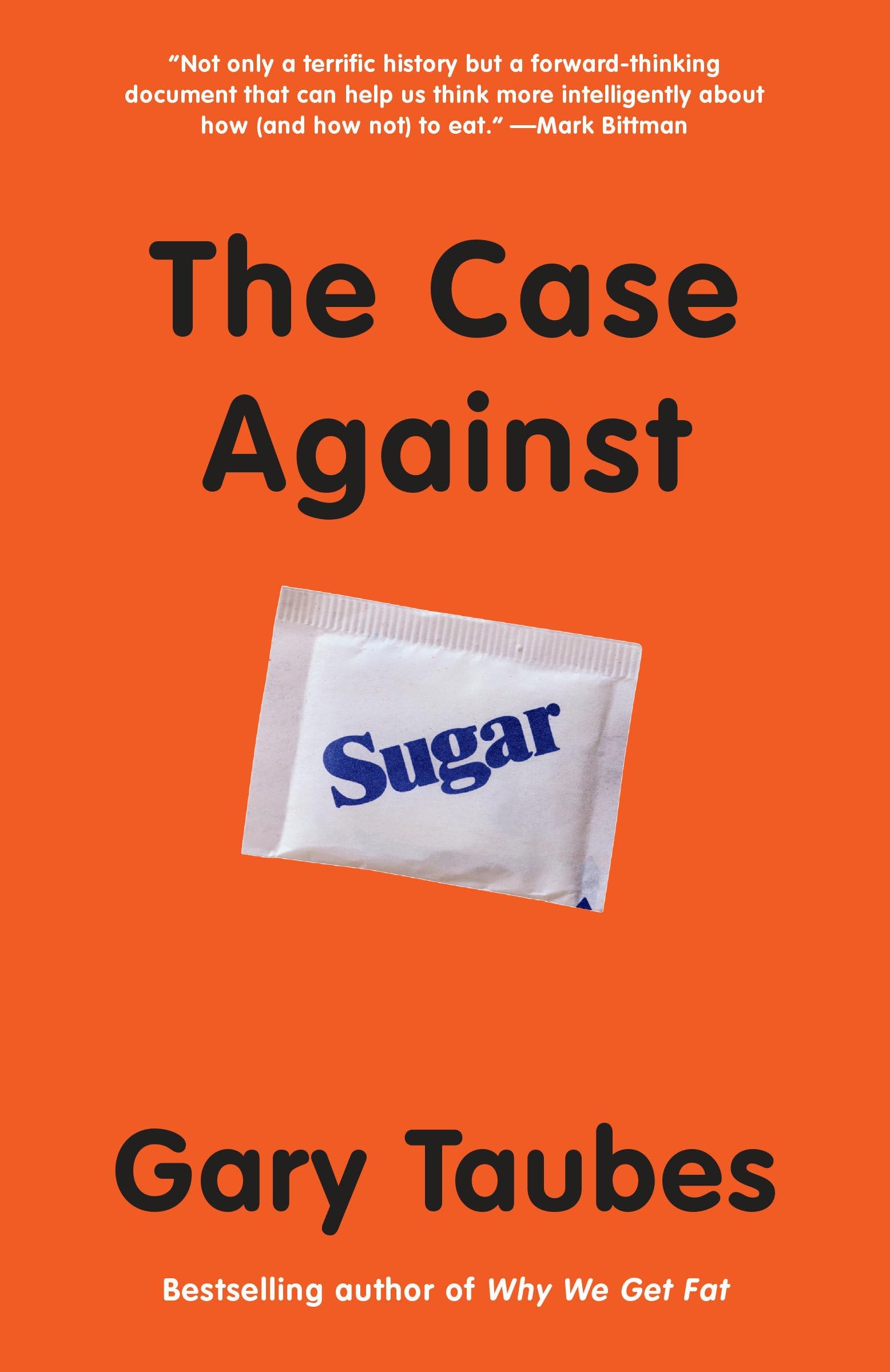

Anchor Books The Case Against Sugar
Product ID: 257279214
📈Rising chronic disease link
📚Groundbreaking exposé
⚖️Scientific objectivity
Desertcart purchases this item on your behalf and handles shipping, customs, and support to Croatia.
⚡️ Decode the sweet deception before it’s too late!
‘The Case Against Sugar’ by Gary Taubes is a best-selling, scientifically grounded book that exposes sugar as a major driver of modern chronic diseases. Combining investigative journalism with historical and biochemical evidence, it reveals how sugar addiction fuels epidemics like diabetes and heart disease, while uncovering the sugar industry's decades-long efforts to obscure these facts. Essential reading for health-conscious professionals aiming to outsmart industry spin and reclaim control over their wellbeing.
| Best Sellers Rank | #194,519 in Books ( See Top 100 in Books ) #426 in Chemistry #723 in Diets #871 in Nutrition |
| Customer Reviews | 4.5 out of 5 stars 873 Reviews |
I**S
Two books about sugar addiction and chronic diseases
Two books taken together offer adequate evidence that sugar addiction stands out above all other factors among multiple causes of chronic diseases that became epidemic in recent times. Robert Lustig -- THE HACKING OF THE AMERICAN MIND Gary Taubes -- THE CASE AGAINST SUGAR Gary Taubes, as a journalist, demonstrates the best of objective science. Often a journalist makes the facts clearer than a scientist ever does. In his previous books, one stands out for public health relevance. That is WHY WE GET FAT. Taubes makes a case for sugar as the main factor that, far above all else, is the reason we have epidemics of gout, high blood pressure, elevated blood glucose, insulin resistance, diabetes, arterial disease, cancer, Alzheimer's disease and more. All of these are hormonally related to metabolic syndrome, the topic that put Lustig in the forefront of nutritional science. Taubes gives a historical background of opposing views fairly, with little condemnation, though much activity of sugar industry representatives could have been judged criminal. Opposing views: "Chronic diseases are caused by overeating and under-activity. (more calories in than out.)" "Eat less and exercise more" has a history of failure, but heavily promoted by the industry with massive publicity efforts over many years. Some observers were not fooled, but they were few, and did not have the media presence of Frederick Stare and Ansel Keys. My crude accusation: The industry-government-medical-media complex that tried to make sugar into a health food and denied its role in disease may have caused over 100,000,000 to die short of their normal life span, living their last years in misery. The death count and misery is rapidly growing even now. Taubes quotes a reason for this opposition, other than self (selfish) interest: "As soon as we think we are right about something," as New Yorker writer Kathryn Schulz noted in the 2010 book BEING WRONG, we narrow our focus, attending only to details that support our belief, or ceasing to listen altogether." Fortunately, Gary Taubes understands this. This is my understanding of THE HACKING OF THE AMERICAN MIND by Robert Lustig: Sugar has the same neurohormonal paths in the brain as opiods. Sugar is addictive with brief hits of pleasure, but not satisfying, with long-range health consequences. We want more because a little is not satisfying. We crave more to the point of leaving other nutrients lacking, and food without sugar becomes tasteless. The book is not about sugar, though that may be Lustig's most vital point. It is about addictions, hormones of pleasure and hormones of happiness that do not lead to contentment. Though I have studied nutrition and endocrinology for many years, that is not my main interest. I am interested in what Lustig says about sugar. I am author of an orthomolecular nutrition textbook, but my greater interest is in the health and welfare of many people I know who suffer from chronic diseases, or are heading that way. I have a problem with Lustig's writing about drugs. He overstated the value of psychoactive prescription drugs and seemed unaware of the extent of harm. I have seen too many lives destroyed by these to let that pass. His suggested that cannabanoids and even limited use of LSD may be more effective. They could hardly be worse. I expect Taubes's book to be the one that makes a difference in the world, with Lustig's as vital scientific background, with both giving accounts of how the powers of this world hack the minds of all of us. My conclusion: 1. Sugar excess is the major cause of modern chronic diseases. 2. Sugar is addictive and not satisfying. Excess leads to disappointment, not happiness or contentment. 3. Sugar substitutes have little evidence of benefit. 4. We can benefit greatly in prevention and treatment by reducing sugar to near the level used by our ancestors or non-industrial populations. Skipping deserts is a useless token, not a solution. Fruit is good, not fruit juice. Sweet drinks of all kinds are out. Most processed foods have sugar added, and must be regarded as toxic. 5. We need fat, even saturated fat, a spectrum of natural fats. Coconut oil, fish oil. bacon. Fats add flavor, satisfaction and satiety. 6. We need phytonutrients and minerals which are scarce in modern food. 7. Changing is hard. Changing is scary to anticipate, pleasant to remember. If these two books are too much for you, try a fun but scientific book by Denise Minger: DEATH BY FOOD PYRIMID.
A**M
Eine Gefahr für die Finanzierung des Gesundheitssystems
Seit den 1960er Jahren ist man der Auffassung gewesen, dass Fett eine Hauptursache für Herz- und Kreislauferkrankungen ist. Als mehr und mehr Fertiggerichte fettfrei sein sollten, musste man das Problem mit dem Geschmack lösen, weil Fett ein Geschmacksträger ist. Also hat man Zucker hinzugefügt, vor allem das in den 1960er Jahren in Japan entwickelte Hoch-Fruktose Mais-Sirup. Dieses Zucker kostet nur ein Viertel wie normales Zucker schmeckt auch süßer. Ein Problem ist aber, dass Fruktose im Leber so wie Alkohol verarbeitet wird – zur Fett. Gary Taubes verfolgt die Geschichte von Zucker in der westlichen Welt und findet parallelle Entwicklungen mit einer ganzen Reihe von ernsthaften und kostspieligen Krankheiten. Zucker gibt es hier seit etwa 400 Jahren, aber es war erst mit der industriellen Revolution das Zucker erschwinglich wurde für die breite Masse der Bevölkerung. Im 19. Jahrhundert gab es etwa 2 oder 3 Fälle von Diabetes in der Englischen Bevölkerung, gegen Ende des Jahrhunderts stieg diese Zahl aber rapide an. Heute leiden etwa 16% der Amerikaner unter Diabetes und es wird erwartet, dass weitere 30% zu ihrer Lebzeiten damit rechnen können, Diabetiker zu werden. In den 1980er Jahren waren etwa 1% der Chinesen Diabetiker, heute sind es 11% und man rechnet damit, dass eine halbe Milliarde Chinesen als Prä-Diabetiker einzustufen sind. Wo auch immer westliche Essgewohnheiten eingeführt werden kommt eine Explosion von Diabetes, Herz-Kreisluferkrankungen, Leberzirrhose, Gicht und Übergewicht. Auch Krebs und Alzheimers scheint mit Zucker im Zusammenhang zu stehen. Gary Taubes erwartet, wie viele andere Autoren auch, dass eine ähnliche gerichtliche Auseinandersetzung uns bevorsteht, wie wir mit der Tabakindustrie gehabt haben. Diesmal aber mit der Zuckerindustrie. Ähnlich wie die Tabakindustrie behauptet die Zuckerindustrie seit Jahrzehnten, dass Zucker nicht gefährlich ist und sie geben viel Geld aus um Forschungsberichte mit solchen Ergebnissen zu produzieren und Lobbyisten einzusetzen um die gewünschten politischen Beschlüsse zu bekommen. Sehr empfehlenswertes Buch. Hoffentlich erscheint es bald in Deutscher Übersetzung!
A**N
Another piece of arsenal in the fight against sugar
There is a lot of research in this masterpiece as Gary Taubes delves to the past and informs us why sugar is responsible for almost all the lifestyle diseases of the 20th and 21st century. This book is a must read for every human, except for remote tribes such as Shompens in the Andaman and Nicobar islands and some in Amazon and Papua New Guinea, who are humanity's only hope as they DO NOT probably suffer from Western diseases. Our tongue is so tuned to sugar that very few manage to live without it. We have made our pets, animals at zoos diabetic as sugar is in every product, including pet food. The highlights were the link between cigarettes and sugar, artificial sweeteners which were demonized, the fight between the good forces (Yudkin, Campbell and Cleave) against evil (Keys, Stare, etc). Two prominent myths such as causes of gout and hypertension are explained in depth, that purines in red meat are not always the culprit for gout, or that excess salt is not the sole antagonist for high blood pressure. This is my fourth book in my anti-sugar collection, which has John Yudkin's Pure, White and Deadly, Robert Lustig's Fat Chance and William Dufty's Sugar Blues.
I**A
Worth Its Weight in Gold
‘Medicine is mostly taught untethered from its history,’ asserts Gary Taubes at the beginning of this book. ‘Students are taught what to believe, but not always the evidence on which their beliefs are based.’ This book is a much needed history of sugar. I can think of nowhere else where failure to look at the evidence on which medical beliefs are based has had, and continues to have, such tragic consequences. The leading authority who dominated the teaching about diabetes during the twentieth and into the twenty-first century was a dedicated doctor called Elliott Joslin. His textbook, ‘The Treatment of Diabetes Mellitus was first published in 1916. Revered as a bible, its most recent edition appeared in 2005, forty-three years after his death. Joslin argued that fats, and not sugar, were the cause of diabetes. This belief was supported by Harold Himsworth, a very influential diabetes researcher based in London, who in 1931 proposed that a diet rich in carbohydrate should be recommended to diabetics. Both Joslin and Himsworth pointed to Japan as a country where the diet was rich in carbohydrate and low in fat, and where there was very little diabetes. What both men ignored was that sugar consumption in Japan at that time was comparable to that in England and America in the nineteenth century, when diabetes was very rare. They both assumed that sugar and other carbohydrates were equivalent in their effects on the human body. Sugar (sucrose) is formed in plants by the condensation of two simpler sugars – glucose and fructose. Glucose, the molecule into which starches are digested, is used to provide energy. Any surplus is converted, in the liver and muscles, to glycogen (‘animal starch’) for storage until needed. Conversion of glucose to glycogen is under the control of the hormone insulin. Fructose, by contrast, is converted by the liver into fat. Its fat-forming effects seem to be enhanced when glucose is present. Joslin’s and Himsworth’s misconception might have been challenged by the research on metabolism, endocrinology, genetics and nutrition which was taking place in Germany and Austria before the Second World War. Post 1939 this very valuable work was lost to the scientific community. Nutritionists in the English-speaking world focussed on energy balance. A calorie was a calorie no matter where it came from. Putting on weight was simply a matter of consuming more calories than could be expended. Excess weight caused both diabetes and obesity. Diet and exercise were the solutions. When the technique of radioimmunoassay was developed in the 1960s, it brought with it the possibility of measuring hormone levels, and the problem of insulin resistance came to light. Unexpectedly, high insulin levels could accompany high levels of sugar in the blood. Insulin was no longer effective in moving glucose out of the blood and into cells. This pattern was found in people suffering from obesity, and in those who developed diabetes later in life. What caused insulin resistance was then a mystery. It has since been linked to sugar consumption. By the 1950s it was recognised that heart disease was associated with both diabetes and obesity. Whether too much fat or too much sugar caused heart disease was still an open question, and researchers were highly motivated to find an answer. The hypothesis that fat was the murder weapon was supported by the very wealthy and powerful Sugar Association with its Food and Nutrition Advisory Committee. The American Heart Association also came down on the side of fat. It advocated low fat diets for every American, while its researchers were admitting that the dietary fat/heart disease hypothesis needed much more investigation. Those who favoured the sugar hypothesis like John Yudkin in England faced ridicule and the charge of being quacks. In the 1960s Yudkin fed human subjects sugar-rich diets and reported that this increased their cholesterol and triglyceride levels. It seemed to ratchet up their insulin levels and even make their blood platelets sticky. Clinical trials were set up in the US and in Europe to test the fat, but not the sugar hypothesis. To date they have failed to show that high levels of dietary fat cause heart disease, obesity or diabetes. Nevertheless, in 1986 the American government and health organisations committed themselves to getting Americans to eat a low fat diet. Everyone else followed suit. The epidemic of diseases included in metabolic syndrome has only worsened. Gary Taubes cannot prove that sugar is the cause of Western chronic diseases, but the evidence he gives is overwhelming. I have concentrated on some of the scientific aspects, but this book contains much more. It is also as riveting as a good novel. Taubes’ clarity of vision is very rare, and a book like this is worth its weight in gold.
G**E
Excellent book. I recommend.
Great book! Falarei em português: Este livro deveria ser lido por todos! Desvenda muitas falácias sobre o que foi dito como verdade na questão de alimentação desde muito tempo.
Trustpilot
1 month ago
1 week ago