Cuneiform: Ancient Scripts
Product ID: 25791928
Buy anything from 5,000+ international stores. One checkout price. No surprise fees. Join 2M+ shoppers on Desertcart.
Desertcart purchases this item on your behalf and handles shipping, customs, and support to Croatia.
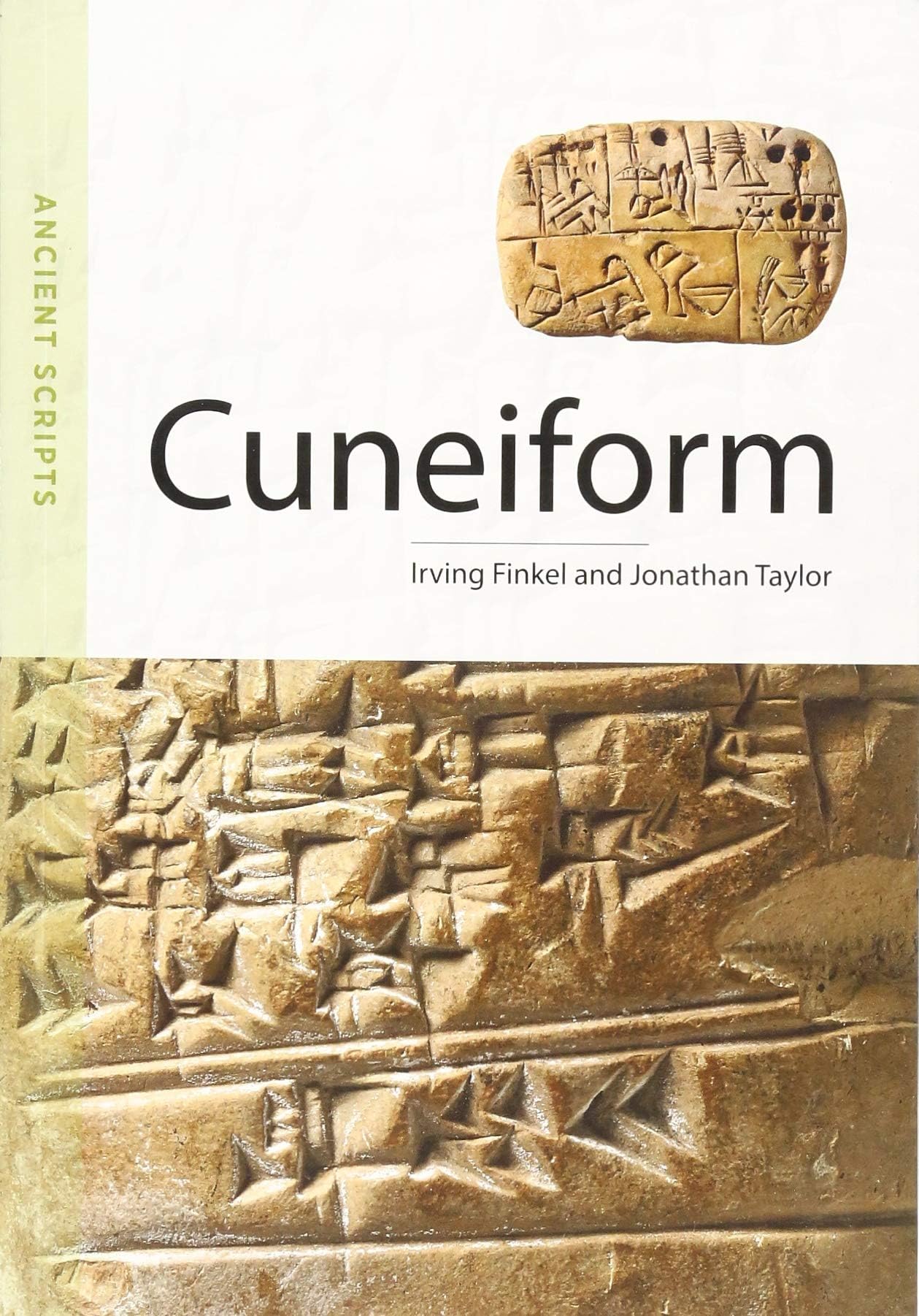
Cuneiform script on clay tablets is, as far as we know, the oldest form of writing in the world. The resilience of clay has permitted these records to survive for thousands of years, providing a fascinating glimpse into the political, economic, and religious institutions of the ancient Near Eastern societies that used this writing system. A concise and accessible introduction to the topic, this book traces the history of cuneiform from its beginnings in the fourth millennium BC to its eventual demise in the face of the ever expanding use of alphabetic Aramaic in the first millennium BC. The authors explain how this pre-alphabetic system worked and how it was possible to use it to record so many different languages. Drawing on examples from the British Museum, which has the largest and most venerable cuneiform collection in the world, this lively volume includes elementary school exercises, revealing private letters, and beautiful calligraphic literature for royal libraries. Review: A great example is the simple one sound for the Sumerian ... - Short but effective summary of just about all aspects related to cuneiform with some effective close-up illustrations of tablets. Examples of the original accounting list pictographs from 3200 BC in 300 year development of an actual writing system. Early cuneiform writing involves a mixture of consonant-vowel syllable sounds, symbols for specific words, and short words from the original Sumerian standing for longer words now pronounced in Akkadian. A great example is the simple one sound for the Sumerian word “water” which stands in for a multi-syllable Akkadian word. Everything made much more complicated today by being written in an unknown language. There are problems in that some syllables can be represented by several different signs, and some signs can represent different words or sounds. Of course, we have similar issues with modern English writing. Some suspect that the multiplicity of the same signs for different words may indicate that Sumerian was a tonal language like Chinese. Investigators are helped by the existence of scribes’ lists showing the equivalence of Sumerian and Akkadian terms. Nice illustration of how the cuneiform stylus instrument was made and how it created the wedge-shaped impressions. We hear that ink was used to annotate some tablets, and there are references to parchment cuneiform texts, too. Bricks were often stamped with cuneiform inscriptions with a kind of moveable typeset suggested by some signs being inserted in an inverted position. This kid of reverse image preparation must have been familiar from use of seal impressions but never used in any other way. Perhaps half of all existing known cuneiform tablets come from a single source – Ashurbanipal’s great archive at Nineveh. Cuneiform just barely survived into early historic times (mostly in ancient astronomical texts) so that there are useful Greek crib tablets using Greek letters to give the phonetic value of cuneiform symbols circa 100 AD to suggest what late Akkadian and Sumerian sounded like. Generally good, lengthy explanatory captions for figures, but one or two (such as the cross-section of a typical clay tablet) are hard to follow. Review: Excellence (knockout) in a punch! - I had seen you-tube videos of one of the authors and it compelled me to purchase this one. Excellent read. Well paced and extraordinary contents for such a small book. I felt I was in a well scripted, interesting lecture. SUPERB photography. It gives a concise to-the-point historical summary on cuneiform, yet it also transcends to the world it served or created. It provides a historical insight of an epoch through an obscure written-language. It also makes the reader reflect on his beliefs. In short, it doesn't fail to inform, captivate and did I mention it is in understandable intelligent prose? After 20+ years of ED and the 5 diplomas that allow different professional experiences that allow the "it's time to retire now and read whatever you want", you are ALWAYS thrilled whenever less than $20 provides you with a lucky, pleasant surprise that shows you something new. I read it in a day and have been reflecting on it for a week. I guess I'm just trying to say: at least, I liked it well enough.
| Best Sellers Rank | #103,032 in Books ( See Top 100 in Books ) #35 in Assyria, Babylonia & Sumer History #61 in Alphabet Reference #81 in Archaeology (Books) |
| Customer Reviews | 4.7 out of 5 stars 521 Reviews |
F**.
A great example is the simple one sound for the Sumerian ...
Short but effective summary of just about all aspects related to cuneiform with some effective close-up illustrations of tablets. Examples of the original accounting list pictographs from 3200 BC in 300 year development of an actual writing system. Early cuneiform writing involves a mixture of consonant-vowel syllable sounds, symbols for specific words, and short words from the original Sumerian standing for longer words now pronounced in Akkadian. A great example is the simple one sound for the Sumerian word “water” which stands in for a multi-syllable Akkadian word. Everything made much more complicated today by being written in an unknown language. There are problems in that some syllables can be represented by several different signs, and some signs can represent different words or sounds. Of course, we have similar issues with modern English writing. Some suspect that the multiplicity of the same signs for different words may indicate that Sumerian was a tonal language like Chinese. Investigators are helped by the existence of scribes’ lists showing the equivalence of Sumerian and Akkadian terms. Nice illustration of how the cuneiform stylus instrument was made and how it created the wedge-shaped impressions. We hear that ink was used to annotate some tablets, and there are references to parchment cuneiform texts, too. Bricks were often stamped with cuneiform inscriptions with a kind of moveable typeset suggested by some signs being inserted in an inverted position. This kid of reverse image preparation must have been familiar from use of seal impressions but never used in any other way. Perhaps half of all existing known cuneiform tablets come from a single source – Ashurbanipal’s great archive at Nineveh. Cuneiform just barely survived into early historic times (mostly in ancient astronomical texts) so that there are useful Greek crib tablets using Greek letters to give the phonetic value of cuneiform symbols circa 100 AD to suggest what late Akkadian and Sumerian sounded like. Generally good, lengthy explanatory captions for figures, but one or two (such as the cross-section of a typical clay tablet) are hard to follow.
J**D
Excellence (knockout) in a punch!
I had seen you-tube videos of one of the authors and it compelled me to purchase this one. Excellent read. Well paced and extraordinary contents for such a small book. I felt I was in a well scripted, interesting lecture. SUPERB photography. It gives a concise to-the-point historical summary on cuneiform, yet it also transcends to the world it served or created. It provides a historical insight of an epoch through an obscure written-language. It also makes the reader reflect on his beliefs. In short, it doesn't fail to inform, captivate and did I mention it is in understandable intelligent prose? After 20+ years of ED and the 5 diplomas that allow different professional experiences that allow the "it's time to retire now and read whatever you want", you are ALWAYS thrilled whenever less than $20 provides you with a lucky, pleasant surprise that shows you something new. I read it in a day and have been reflecting on it for a week. I guess I'm just trying to say: at least, I liked it well enough.
C**E
Beautiful book, great little introduction
This is a beautiful, informative, and high-quality little book. A great introduction for anyone interested in history or linguistics. The images were abundant and of outstanding quality. The book was very understandable (no academic jargon). I finished it an afternoon. If you really like the history of ancient Mesopotamia, you might also check out "Ancient Mesopotamia" by Professor Amanda Podany on Audible. If you're more into linguistics, then there's lecture series called Writing and Civilization delivered by Marc Zender on Amazon Video that was great. I thought they both complimented this book well.
R**B
Twinkle is great
Reading materials
J**Y
Cuneiform
If you are looking for a book on translation, which I originally thought, this is not, however it is a good book about every other aspect of Cuneiform and thus is a good resource in this regard.
A**R
Gives a good insight into the Cuneiform Scripts on clay tablets.
Written by two of the largest Curators of Cuneiform Tablets (British Museum) this book covers a wealth of information along with photographs of Cuneiform Tablets. If you're interested in this subject, I highly recommend it.
X**X
Great intro to cuneiform!
Very cool book! Great intro to cuneiform with just the right amount of engaging text (not too much).
D**T
The World's First Writing System
In about 3200 BC, temple accountants in the Mesopotamian city state of Uruk invented a writing system that transformed record keeping and communications. It would endure for the next 3000 years, spreading throughout the Middle East, eventually reaching such areas as Armenia, Bahrain, Israel, Iran, and Egypt. Scribes, with reed stylus's, wedged cuneiform symbols on soft clay tablets that would later dry and harden in the sun. Five thousand years later archaeologists uncovered thousands of these tablets in buried ancient palace archives and libraries. Cuneiform comprises 600 – 1000 characters representing complete or parts of words and syllables. The numbering systems were based on the numbers 60 and 10. The calendar was based on lunar months (29 – 30 days), with each year having 360 days. The decipherment of cuneiform, needing a type of Rosetta stone, was made possible by a trilingual cuneiform inscription in Old Persian, Babylonian, and Elamite of Persian king Darius on a mountain pass in Eastern Iran. Also, amazingly, archaeologists found a perfect tablet listing a table of signs, pronunciations, and meanings. The book is not intimidating, with simple to understand explanations, and many color photographs. It is only 103 pages with a complete index. The nine chapter titles facilitate searching for specific subjects, such as “Who used cuneiform writing?” and “How did it work?”
C**S
Excellente lecture
Excellent livre pour découvrir l'écriture la plus ancienne. Je le recommande vivement à ceux qui s'intéressent à l'histoire. Excellent auteur.
A**I
A Masterful Introduction to Cuneiform
A brief introduction to cuneiform, written by renowned philologist and Assyriologist Irving Finkel (who also has humorous videos you’ll enjoy watching on YouTube). It’s a short yet masterfully written book that explores the history of cuneiform and includes some examples from discovered tablets. The book features 50 visuals on high-quality paper. Highly recommended!
E**1
Excellent by far Finkels best
If you are interested in ancient history this is an excellent book. Well written and informative. Sadly, most subsequent books have been a great disappointment.
D**A
Beginner friendly
Best book for beginners.
P**K
Excellent Book
The book is beautiful. High build quality with sturdy semi gloss paper. It feels more like a hardcover then a paperback. The text is informative, easy to read and well written. The pictures are captivating, they jump out of the page. Buy this Book.
Trustpilot
1 month ago
2 weeks ago