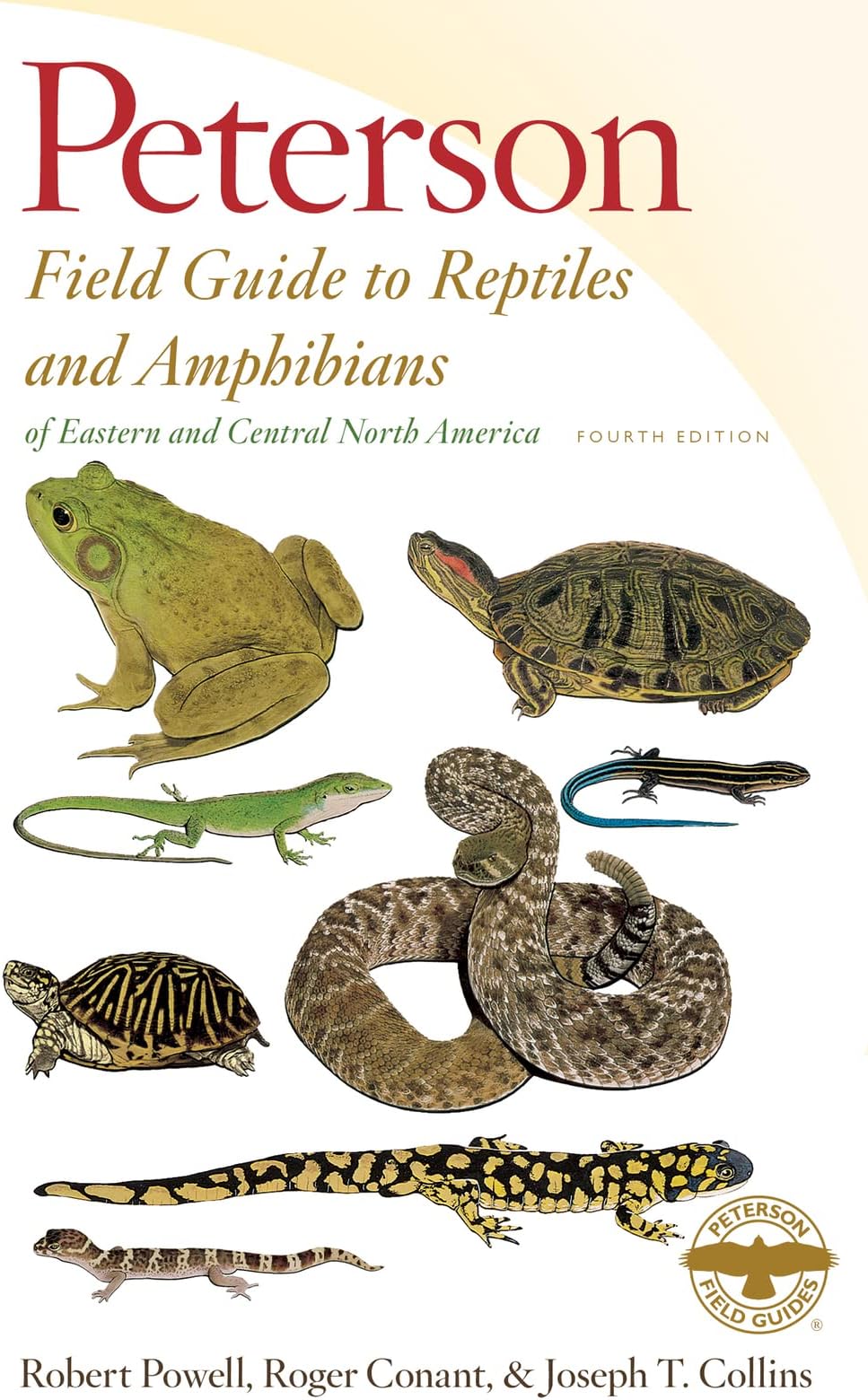
Peterson Field Guide To Reptiles And Amphibians Eastern & Central North America: The Definitive Guide to the Reptiles and Amphibians of Eastern and Central North America
Product ID: 26524433
Desertcart purchases this item on your behalf and handles shipping, customs, and support to Croatia.
A completely updated edition, including 122 newly recognized or recently established non-native species of reptiles and amphibians. The new edition of this definitive herpetology field guide reflects 25 years’ worth of changes in our knowledge of reptiles and amphibians. It includes descriptions of 122 newly recognized or recently established non-native species, updated maps, and new figures and photos. Color illustrations and drawings show key details for accurate species identification. More than 100 color photographs and 322 color distribution maps accompany the species descriptions. Clear and concise species accounts provide key characteristics, similar species, habitats, and ranges, as well as subspecies, voice descriptions, and conservation status. This edition will be a crucial resource for professional and amateur herpetologists, naturalists, outdoor enthusiasts, and students. This indispensable wildlife guide offers everything you need for confident identification: Updated Species Information: Covers 122 newly recognized or recently established non-native species, reflecting 25 years of new research. Detailed Visual Aids: Quickly confirm your findings with color illustrations, key detail drawings, and over 100 color photographs. Precise Distribution Maps: Pinpoint habitats and ranges with 322 brand-new, full-color distribution maps. At-a-Glance Species Accounts: Find key characteristics, similar species, habitats, voice descriptions, and up-to-date conservation status. Review: Fantastic Guide Book - Used it extensively in college for Herpetology. Loved it and have kept it for future use with my kids when we go camping and see some critters! Review: great field guide! - needed this for a herpetology course and it worked out very well!! so interesting to see what herps are in my area and identify them!


| Best Sellers Rank | #32,081 in Books ( See Top 100 in Books ) #3 in Biology of Reptiles & Amphibians #7 in Entomology (Books) #39 in Biology of Wildlife |
| Customer Reviews | 4.8 out of 5 stars 1,055 Reviews |
D**D
Fantastic Guide Book
Used it extensively in college for Herpetology. Loved it and have kept it for future use with my kids when we go camping and see some critters!
A**L
great field guide!
needed this for a herpetology course and it worked out very well!! so interesting to see what herps are in my area and identify them!
A**O
A Huge improvement over previous editions
I started out with the original edition of this book. It gave a lot of poor advice on how to handle herps, had a lot of black and white images and the maps were in the back.This new version uses color maps, better plates (although old ones still used) and a lot of new species. Most other guides use photographs to detail animals but the nice thing about plates is you can look at a lot of species at once and narrow down your identification. photographs have more detail. I don't like to think of these books as either/or but rather as separate identification guides each with its advantage.
L**R
Comprehensive, full color illustrations
Great guide book! Covers the whole of North America as well as including invasive species! Exactly what I was looking for; full color, tons of pictures and information about behavior, breeding, & ranges
R**T
Shame on you Bobby Powell
The book is an update of the original edition of Roger Conant from 1958, Even though two of the authors are deceased Powell should have left Conant as the original author. Powell also uses this book to make his own distasteful new common names with disregard for the lists that are made by herpetology organizations, particularly anoying is his coining of new names for a recently described species of Lilthobates, the authors did not call it Kaufields leopard frog. But Tom Collins also liked to decree his own species as well, so let poor Roger roll in his grave! The maps are also garishly colored and many of them do not depict the actual range of the animals, It is also confusing that he puts western species which have a slight eastern range extension as well as invasive foreign species into the text as if they were braodly distributed in Eastern and Central North America rather than in a separate section. It is an important reference book, but more time should have been spent to details and consulting other herpetologists and not just inventing his own. I am sure he got a lucrative contract with the Peterson Field Guide series to write this book, Tom Collins tol me how much he was making from the other editions, it would have been wise for him to welcome another person aboard to make this new edition of the Bible for North American Herpetologis better than ever. It is a travesty that he cut out the section on Making and Transporting the catch and reduced the introduction from 16 pages to 10 pages of text (3 p of photos). I persaonlly knew all threee authors.
G**R
Awe-inspiring new revision to an all-time classic, but some criticism
This guide has been one of my favorite herp books for many decades. The previous edition, first published in 1991, included a few recently discovered native species (for example, the Pigeon Mountain salamander) and various established exotics (mainly lizards) not yet known when the 1975 edition was published, and also introduced clearer, more colorful and detailed range maps included with each species account rather than placing them in a section at the back. This latest edition includes all that but also incorporates many recent taxonomic changes, even more detailed range maps, and adds some newly discovered native species (one notable case is the patch-nosed salamander, a small species found in a tiny part of northeastern Georgia that somehow evaded discovery until 2009), and many newly differentiated cryptic look-alike species, as well as many more established non-native species that have been recently recorded, in large part from Florida. I was very excited to see this long awaited 4th edition and the impressive wealth of new information it contains, and so considering this as well as the way I feel about this book in general, I am giving it 4 stars, though I had really hoped to make it 5. One major disappointment for me is that, apparently to reduce the number of pages, many of the old species accounts have been condensed, and some material from the previous edition, like the chapters on field herping, care in captivity, etc., has been omitted. Also, the classic illustrations on the color plates have been reduced in scale for some reason, apparently in order to accommodate the new color tabs along the margins without increasing the number of plates. I am rather puzzled by some of the tinkering that has taken place in this regard, and think some errors were made. For example, on Plate 6, the Yonahlossee salamander, which is the largest of the woodland salamander group, now looks only about the same size as its cousins like the slimy and red-cheeked. (By the way, it should be mentioned that no new illustrations were added to the existing plates, although many of the old illustrations were shuffled around. The newly discovered species are represented under their accounts in photographs.) I personally would have preferred for these omissions not to have been made, even if the book would have been 100 pages longer (as was the 3rd edition). But I still feel that this new edition is a must-have for the library of any herp enthusiast, and heartily recommend it if you want the latest cutting edge information about our herpetofauna, although if you are like me, you will still want to keep the previous edition handy as well.
H**R
Great field guide
Wow! 600+ pages with beautiful color plates and more reptiles than I knew existed in the US. Included the newer invasive species that have changed the Florida landscape in recent years. This and heavy, it includes just about EVERYTHING a reptile lover could want in a field guide
P**R
great illustrations!
wonderful field guide, i love the illustrations in Peterson field guides over any other
E**E
Livro com ótimo teor de informações
Ótimo livro recomendo a todos amantes de animais...
R**R
Un excelente guía de campo.
Las guías Peterson son conocidas por la calidad que contienen cada una de ellas. El libro presenta, en su cuarta edición, más de 500 especies, incluyendo especies no nativas. Presenta ilustraciones de gran calidad para cada ejemplar mencionado, donde incluyen en ciertas ocasiones variantes en patrones o variantes por dimorfismo sexual, así como mapas con distribución de cada especie. Como su nombre lo dice la guía abarca el centro y este de Norteamérica, refiriéndose a Estados Unidos principalmente, sin embargo, también incluyen la distribución de diversos reptiles del noreste de México. Esta sin duda es una de las mejores guías de campo para cualquier biólogo u otras personas interesadas en la herpetología. Lamentablemente el envío por Amazon México me dejó un cierto sabor amargo, el libro venia sin ningún tipo de plástico o envoltura que lo protegiera y debido a eso la cubierta del libro presenta daños muy perceptibles, principalmente en las esquinas dobladas y bordes magullados, no es la primera vez que pasa.
A**A
Quello che cercavo per i miei figli
Quello che cercavo,per i miei figli .
J**G
Illustrations trop petites, un peu dommage
Ouvrage assez complet et illustré
T**A
Amazing, beautiful and very informative.
I have most of the Peterson Field Guides a this is another success. Love the clear pictures, locations, and organization.
Trustpilot
2 weeks ago
4 days ago