Buy anything from 5,000+ international stores. One checkout price. No surprise fees. Join 2M+ shoppers on Desertcart.
Desertcart purchases this item on your behalf and handles shipping, customs, and support to Croatia.
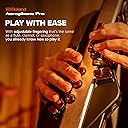
🎷 Elevate your wind game with the Aerophone Pro — where tradition meets futuristic sound!
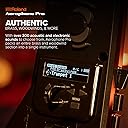
The Roland AE-30 Aerophone Pro is a professional digital wind instrument combining traditional saxophone fingering with cutting-edge sound engines (ZEN-Core & SuperNATURAL). It offers over 300 diverse sounds, advanced breath and pitch controls, and versatile connectivity options including Bluetooth, USB-C, and MIDI. Lightweight and portable, it’s designed for expressive play, seamless integration with DAWs, and powerful onboard editing, making it the ultimate tool for modern wind players seeking both authenticity and innovation.


| ASIN | B08PYQCKNT |
| Brand | Roland |
| Brand Name | Roland |
| Color | Grey, Black |
| Connector Type | USB, MIDI, Bluetooth |
| Customer Reviews | 4.1 out of 5 stars 78 Reviews |
| Finish Type | Polished |
| Included Components | AE-30, Soft Case, Mouthpiece Cover, Moisture Band, Water Basin, Thumb hook cover (2 types), USB cable (Type C- Type A), AC Adaptor, Owner's Manual |
| Instrument Key | A |
| Item Dimensions | 3.3 x 5.2 x 27 inches |
| Item Type Name | DIGITAL WIND INSTRUMENT |
| Item Weight | 9.28 Pounds |
| Manufacturer | Roland |
| Manufacturer Part Number | AE-30 |
| Material | Brass |
| Material Type | Brass |
| Model Name | AE-30 |
| Model Number | AE-30 |
| Set Name | Aerophone Pro AE-30 |
| Style | Modern,Traditional,Vintage |
| UPC | 761294516881 |
| Unit Count | 1.0 Count |
| Warranty Description | See manufacturer's website for details. |
T**E
A pro synthesizer for wind instrument players
This review is for the Roland Aerophone Pro AE-30, not for the other instruments in the Roland Aerophone line. I haven't tried those as yet, so I can't say what they're like. The Aerophone Pro is amazing in almost every way. It performs as if someone at Roland thought, "What if we made one of our synthesizers, but instead of a piano keyboard, we gave it a wind instrument user interface?" And I'm guessing that's basically how the process went. The wind instrument interface controls a wide variety of audio scenes that employ the two engines inside the instrument, the ZENCore and SuperNATURAL synthesizers. Since the manual tries to explain it but doesn't explain it well in my opinion, a "scene" is a preset, a collection of ready-to-go settings that completely specify the sound that the instrument produces as you play. It's the sound environment that you're about to create as soon as you start playing, and you can instantly switch it out for another (you can create favorites lists for easy switching during a performance). A scene consists of one to four "tones," and a tone is probably what most people would consider a "sound," a consistent timbre or waveform controlled by the instrument's pitch selectors – the keys, in other words. Tones produced by the ZENCore synthesizer are electronic waveforms. Tones produced by the SuperNATURAL engine are more complex and sound like real instruments; I'm guessing they're produced at least partly by sampling or at least comparing with real instruments. Each tone can be modified by various effects, some of them controlled by wind velocity, the bite sensor, motion, tilt, certain controls on the instrument, etc. The tones are then combined, and then another set of effects can be applied to that, producing the overall result. And that's a scene. There are over 100 built-in scenes, and lots of room for user-defined ones if you want to get even more creative. You can use its menu interface to create more scenes – create them from scratch or copy and modify one of the built-in ones – or you can download the Aerophone Editor app for your smart phone and work on scenes with an easier-to-use interface. The AE-30 has Bluetooth functionality. One thing it can use Bluetooth for is to communicate with the phone app. Another thing is for MIDI – it can control or be controlled by a DAW using MIDI over Bluetooth, if the device and software support that. And finally, the AE-30 can function as a Bluetooth speaker, allowing you to play music from another device and jam along with it wirelessly. It cannot, however, connect to a wireless Bluetooth speaker or headset and output audio that way. But it also has a USB-C port, and wired USB can also do MIDI (in both directions), but it can also send digital audio in both directions. So you can connect it to your computer and record your performance with a DAW – either as MIDI or as digital audio. What's more, the AE-30 also has the old-school DIN MIDI connectors – that's right, it has three ways of interfacing with other devices via MIDI. There are both a 3.5mm stereo analog headphone jack and a 1/4" stereo analog output jack. The output jack is for connecting to an amplifier, mixer, etc. for performance, and if you plan on performing with this instrument, you will want some kind of amplifier. Its built-in speakers are small and tinny, but I defend Roland in this case, because they're intended as monitors, to let the player know that they're playing something. They're even angled upward toward the player. If you don't have an amplifier, well, do you have a stereo? There are adapters that can connect a 1/4" stereo output plug to dual RCA plugs, or whatever kind of input your stereo has, and they're pretty easy to find. But the AE-30 doesn't come with a 1/4" patch cable, headphones, or any of these adapters. These are things you might want to get, if you don't have them already. Unless you already have a neck strap (an alto or soprano saxophone neck strap will work fine), you'll probably want to get one of those too. The AE-30 is about the size of a soprano saxophone, and it's pretty lightweight, especially if you play using the included AC adapter. If you put six AA batteries (not included) in it instead, it's obviously going to be that much heavier. The manual recommends NiMH rechargeable batteries, and apparently you can play for about six hours on a full charge, though I haven't managed to run the batteries down yet. The Aerophone Pro can finger like a saxophone, but it has recorder, flute, clarinet, and trumpet modes too, as well as left-hand-only and right-hand-only modes and an EWI mode. Since I'm both a sax and flute player, I've picked sax mode, and fingering it is very intuitive. Supposedly you can also create your own custom fingering configurations if you want to, though I haven't tried that yet. Where a saxophone has an octave key, the AE-30 also has a two-octave key above it, as well as keys below it for going down one or two octaves. Other "extra" buttons are a pitch-bending analog rocker switch, a right thumb pad whose function varies with the scene and can be customized, and two effects toggle buttons whose functions also vary with the scene. For example, for the bagpipes scene, the thumb pad is used to set the drone pitch, and that drone continues until you press the thumb pad again (I couldn't in good conscience submit this review without telling you how to turn off the bagpipe drone). There's a knob for selecting the scene category, because the scenes are organized into categories such as woodwinds and strings, and another knob for selecting the transposition key, although both those knobs' functions can also be customized. And I'm saving the best for last: the instrument's breath control is amazingly responsive. Many of the scenes, especially the electronic ones, sound like a completely different instrument when you play softly as opposed to fortissimo. The mouthpiece has a reed that feels like a sax or clarinet reed, but it doesn't vibrate; it's just there so you can use it to bend the pitch up and down, and you can adjust the sensitivity of this to taste (there's also a pitch bend rocker switch). It's like playing a saxophone that's always in tune and can sound like many other things besides a saxophone. You can play guitar with it. You can play drums with it. You can lay down drum and bass tracks and then play over those, if you connect to a computer with a DAW. If you want a real pro synthesizer but are better at playing a wind instrument than a keyboard, this is the one. A bit pricey, yes. The AE-20 apparently does almost everything for somewhat less, but this isn't a review of the AE-20, which I don't have. It's not a good stand-alone instrument because of the speakers, but that's not really what it's for. Use the headphone jack (practice silently so you don't disturb the neighbors) or plug it into an amp (oh, who cares about the neighbors), and you're off to the races, and you and others can enjoy your Aerophone Pro in all its full-throated glory. Or connect it to your computer and make a multi-track composition. The choice is yours.
D**J
Some issues but worth the cost
I love this instrument. I was looking for something that would be fun to play where I didn't have to spend a lot of time learning new fingerings and techniques. Since I had played saxophone, this seemed like the perfect answer. This instrument really came through. The tone was surprising right out of the box. Of course, you can't expect small speakers to recreate the sounds with any great fidelity, although I hadn't expected them to be as good as they are. On the other hand, when connected to headphones or to an external amp, the sound is superb. My son discovered that he could produce harmonic notes in the upper register using the same technique as he did on his Jupiter baritone saxophone from high school. I've also enjoyed exploring all the different instruments this can synthesize including a Duduk to play "Narnian Lullaby". The controls on the AE-30 are quite intuitive. Without reading the user's manual, I had no trouble transposing keys, selecting sounds, changing volume and other rudimentary tasks. For more advanced settings like air/embouchure response and so forth I did have to revert to reading the manual. One of my favorite features is the four octave keys. Two upper and two lower octaves can be easily selected while performing. The kit came complete with a nylon gig bag of acceptable quality and a wall-wort switching power supply. It is cumbersome to store in the case since the instrument needs to be stored with the mouthpiece up to prevent spit from draining onto the keys and mucking them up. The case has plenty of room for the instrument and extra accessories including a few modest sized music books. My biggest complaint, and the reason I'm only giving this a four-star rating, is the cheap feel of the instrument. The keys are simple momentary push button switches that make clacking noises when pressed. I appreciate the attempt to make them provide the appropriate tactile feedback, but I wish they were designed more like a real saxophone using metal levers and external replaceable/adjustable springs. Aside from that, the placement of the keys feels spot on. I also feel the instrument shell could have been made from metal instead of a plastic that looks only a little sturdier than the beginner's recorder I had in third grade. I'm guessing the designers did this to keep the instrument light. Personally, I prefer a little more heft. At around $1500, this is an expensive piece of equipment. However, for me, it was a good compromise between buying a baritone saxophone and several other instruments for thousands of dollars, taking the time to learn them, and I get the portability and flexibility this instrument offers as a bonus. Overall, the Roland Aerophone Pro is well worth the cost. I'm happy I purchased it.
A**H
Great sounds yet overpriced. Unique.
What an incredible instrument, or should I say collection of voices in one body ? Pros: great synth sounds , easy to play if you have at least an intermediate level of saxophone skills. Plenty of room to grow into this for years of fun. Nothing else like it for sale right now. Cons: Expensive. Body is plastic and feels a little cheaply made. Keys make a fairly loud clicking sound.
M**N
Very easy to use and to play.
I think the AE-30 pro is a great instrument. It's a little pricey but well worth the price when you get it into your hands. It does have some baseline bluetooth capability but that is not the main draw to this instrument. I would not use it in the bluetooth mode because bluetooth always has some lag associated with it. I plug it in with USB. If you wanted to go wireless, I would buy a wireless box. I use it for laying down horn tracks with soft synths made specifically for wind controllers. Using the two together, you can produce some realistic sax, trumpet and trombone sounds. If you are not too particular, it's easy to play and can produce some really expressive sounds. Doesn't seem to suffer from a lot of electronic related issues like a lot of midi equipment does. Turn it on, and it's ready to go.
F**N
Great and some ways, not great in others
I don’t like the noisy keys. Also, I wish someone could answer my question about the distortion it makes at the beginning of a breath when playing very softly. Most noticeable with headphones. Technical support has been terrible so far. I just noticed that others have had similar issues. Too late for me to return it so I’m stuck with it. I sent a recording of the problem to technical support, and they just give me lazy half hearted answers, claiming they cannot hear the problem. I will never buy another Roland product.
W**N
If it worked . . .
The redesigned Aerophone Pro, AE-30, is more attractive, more professional looking, and offers many more features than its precursor, the AE-10 and more than the Akai’s EWI 5000 or Solo. There is no question that the AE-30 YouTube videos are impressive. I am impressed, and I believe they are honest representations. However . . . I was forced to return it to Amazon because 1) it was defective; and 2) Roland did not care: I sent Roland Technical Support audio recordings of the problems, but all they did in 2 months was to say, we cannot duplicate this issue. TONE/SCENE DEFECTS Negative: 1) All long notes (continuous blowing) decayed to silence within ½ second. This happened 4 times. Listen to the audio: I’m playing (continuous air pressure) half notes--2 beats per notes--at 60 bps, the last note I held for around 6 seconds. 2) The tones suddenly developed a large, unattractive, vibrato/tremolo. This happened 3 times. 3) The clarinet scene/tone, which has no built in vibrato, suddenly developed a very attractive, musical, vibrato. This happened once. I am not the only person complaining about these defects. There is another customer review here mentioning them! (I sent Roland the entire review.) TECHNICAL SUPPORT Positive: Tech Support got back to me with my original service request within minutes. Negative: I uploaded an MP3 of problem 1 above, on April 1. TechSupport said they heard the recording, but could not duplicate it. That’s it, nothing more. They’ve ignored all follow-ups asking for the status. TONES/SCENES/VOICES Negative: My AE-30 did not sound good out of the box. I use a Bose L1 and Roland Cube. Out of the box, the AE-10 sounded much better—the acoustic based sound were much more real—so good, I did not feel I needed to tweak them). Making adjustments on the AE-30 (for starters, reducing the reverb by 60%), improved the sounds, but I was not able to get them to sound like what I heard online. Positive: Being able to make adjustments right on the AE-30 is a truly great feature. MOUTHPIECE Positive: The mouthpiece/reed are much better than the AE-10’s, which would catch and pinch. The AE-30 does not. Bravo! Positive: The reed/bite lever is much more responsive than the AE-10, and they are in contact better. LIP UP/DOWN Positive: lip up was not possible on the AE-10, at least as of several years ago (firmware improvements could have corrected this). Set to Bite Ctrl Mode > Sax, lip up and lip down is easy and responsive on the AE-30. However: INTONATION Negative: The default settings have a very small area on the bite pressure pitch curve--between pitch up and pitch down--where it is easy to sustain an in-tune pitch. (On the Yamaha WX5/VL70m and the Xpresso, the default is significantly bigger, easy to hold, and can be adjusted longer or shorter.) Perhaps this can be adjusted with the Parameters settings. I do not know. The problem is balancing the instrument (see Strap Ring, below). With single lip embouchure and Bite Ctrl Mode > Sax, intonation is manageable because a firm bite can steady the instrument and still permit pitch variations. With double lip (French) embouchure, it’s nearly impossible maintain both the correct pitch and a steady instrument, unless sitting and resting the horn on the leg. In several of the YouTube videos, the performers say they’re using the EWI Bite Ctrl Mode, and there is, of course no intonation problem then. And most sax players use single lip,which, again, reduces or minimizes intonation issues. STRAP RING/THUMB HOOK Negative: These are not correctly placed—they are not balanced. It is not as much of a problem playing sitting down. It is a slight problem playing single lip: playing double lip, it is a huge problem. To see the balance problem, place the right thumb on the screw head for the Battery Case. Play a little. The balance and stability are immediately better! However, it’s just not practical to play like that. Switching to single lip reduces the problem. Setting the Bite Ctrl Mode > E-Wind removes the problem entirely: although I could feel the out-of-balance pressure on the right thumb regardless. Because the instrument is not balanced well, bite pressure helps stabilize it. But the more sensitive bite pressure is to pitch, the more critical the design fault. Also, this balance issue tends to make it difficult not to press the Thumb Pad (right thumb). See diagram. KEY WORK & KEY CLICKS Negative: This is unquestionably subjective: but I do not remember the AE-10 keys being as loud; and the AE-30 keywork does not feel the same, perhaps less responsive. Positive: the general spacing of the keys feels better than the AE-10 (3-4 hours of practicing and I often got cramps in my forearms—this did not happen with the AE-30). OCTAVE KEYS Negative: These are quite different from the AE-10. They are a soft, rubbery material and each key is higher than the preceding key, going out from the center—approximately, octave 1 key is 1/16” higher than the thumb rest, and Oct 2 is 1/16” higher than 1—and they are spread apart. My thumb didn’t glide over them. Set to +2 octaves it’s not too bad; set to +3 octaves it feels very clumsy. (I adjusted easily to the AE-10 +3 octaves, coming from the Yamaha WX5, which had a similar configuration and material.) SPEAKERS Positive: The speakers are better than I remember the AE-10’s. Although many comments are negative, being able to practice quietly, or to rehearse acoustically—traveling light—with a few people is a big plus. CONCLUSION It is possible that some of the negatives I noted would disappear with more practice, I put in a little over 60 hours, but it is hard to practice an instrument that is defective and which Roland Technical Support seems, at best, apathetic towards: not to mention this is a “pro” model at 3 times the price of an Akai EWI Solo, and almost 2 times the price of the AE-10. With Amazon’s 30 day return policy, and optional insurance policy, it makes no sense not to try the AE-30 if you think it could work for you. JANUARY 25, 2021 EMAILS I just heard from Roland Customer Service. They have no idea how to test the AE-30 for altitude related problems, or for the problems I documented with audio recordings. They said that the AE-20 is likely to have the same issues. This response is 10 months after I reported the problems--that is, almost 1 year later. These are the same problems I reported and documented with audio recordings for the AE-10 in March, 2018. I had 3 (three!) AE-10s: all 3 failed.
L**S
Very usable, not perfect.
I use the Aerophone a few times a week on Church Chorus (3) and community bands. I enjoy using the instrument, however, It has been repaired twice within 2 years, due to a sticking octave key. Sometimes when you press, it will stay down (closed) and it won't instantly return back to the "open" position when you release it.
G**T
Professional Level Instrument
This is a professional level instrument. It has hundreds of sounds, as well as, hundreds of configuration settings. There are other models that may be more appropriate for younger players, or for someone who is just learning to play. Overall it is a fantastic instrument.
Trustpilot
1 month ago
1 week ago