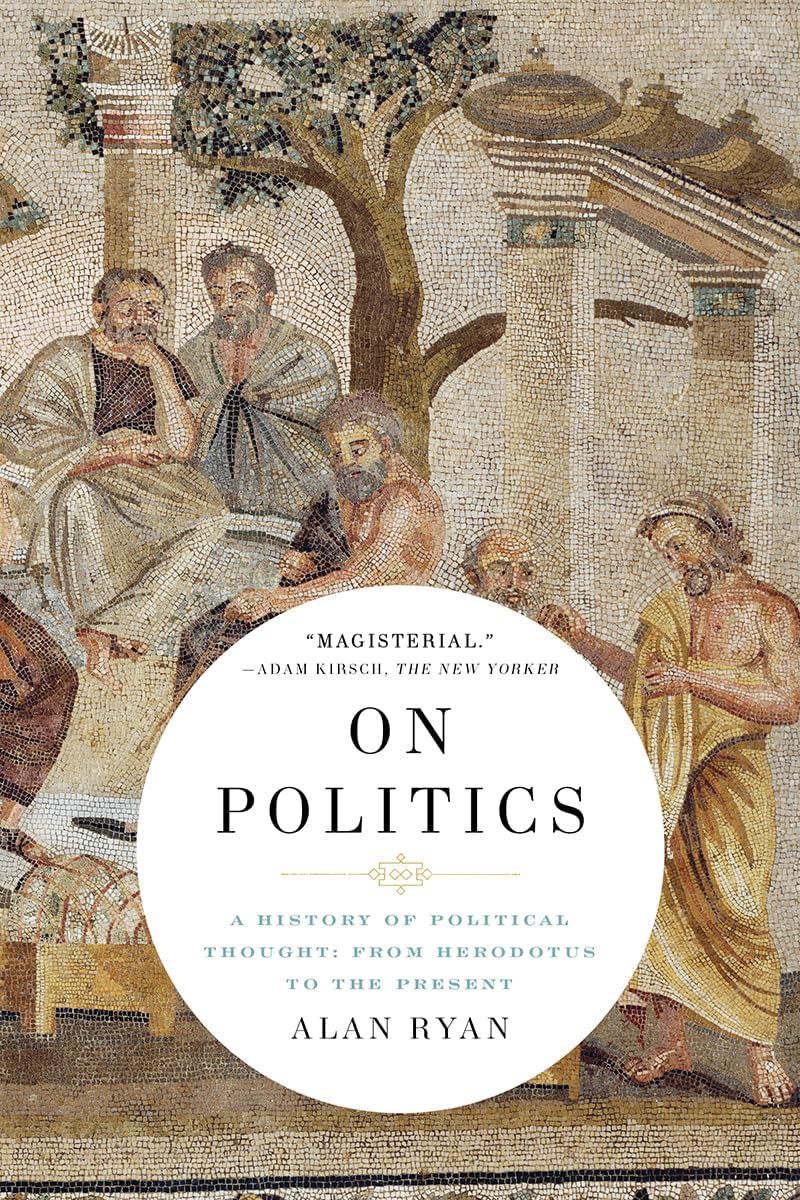
On Politics: A History of Political Thought: From Herodotus to the Present
Product ID: 288034246
⭐4.6/5 rating from 149 reviews
📚One-volume comprehensive history
🕰️Covers political thought from ancient to modern
Desertcart purchases this item on your behalf and handles shipping, customs, and support to Croatia.
📖 Unlock the timeless secrets of political power—don’t get left behind!
On Politics: A History of Political Thought is a highly readable, one-volume paperback that traces the development of Western political philosophy from ancient times to the present. Published by Liveright in 2020, it has earned a 4.6-star rating from 149 readers, making it an essential resource for professionals seeking a deep yet accessible understanding of political ideas.
| Best Sellers Rank | #409,629 in Books ( See Top 100 in Books ) #118 in Political Ideologies & Doctrines #164 in Historiography #262 in Political Science |
| Customer Reviews | 4.6 out of 5 stars 150 Reviews |
T**R
Excellent and very readable overview of the history of western political thought
It reads almost like a novel. Essential ideas are skilfully articulated. I can thoroughly recommend it to anyone seeking to grasp the core ideas of western political thought.
A**R
The book On Politics is unreadable
The parcel arrived damaged it was soaking wet
V**O
libro di studio per mia figlia
Era un libro introvabile nella mia città, ma con Amazon ho risolto il problema. Di più non posso proprio dire.
W**M
Among the 3 ir 4 best narrative surveys of "Western Civ" political thought.
Among the best conventional surveys of "Western" political thinkers' ideas in print. After the introductory chapters, best read selectively as interest leads the reader. Long as it is, it still could use some supplementary surveys that focus more on dissenting and excluded writers still within the framework of the text's project. But this is a good place to start. The book could easily serve as a 2 or 3 term college text ... probably its main target audience.
H**L
On Politics
On the basis that I don’t know much about political philosophy but I know what I like this is an extremely edifying book. The style is easy though very occasionally Mr. Ryan plops a stone into the still waters by resorting to arcane vocabulary (well, at least to me) that causes pauses in the reading with a scrabble for the dictionary. I suspect he's having a bit of innocent fun or, more worthily, he has a deep love of the English language and wants to preserve its richness. Bravo on both counts. But take note; at the very least you’ll need the Oxford Concise as the more modern lightweight dictionaries won’t do. And though I very much doubt that I’ll be using words like rebarbative (oops, my spellchecker doesn’t like that one!) and nugatory down the pub when their more common respective equivalents, unattractive and futile, will do the job without confusing anybody I can however say that I’ve learned more than a bit of political history. As usual the source references have had me filling my Amazon basket with further volumes as I delve deeper into the subject. I am now approaching the end of Book I in this doorstop of a tome and remain a keen reader, which can only reflect well on Mr. Ryan’s magnum opus. So far it has been an excellent general introduction to the broad landscape of the history of political thinking. I recommend it.
Trustpilot
2 weeks ago
2 months ago