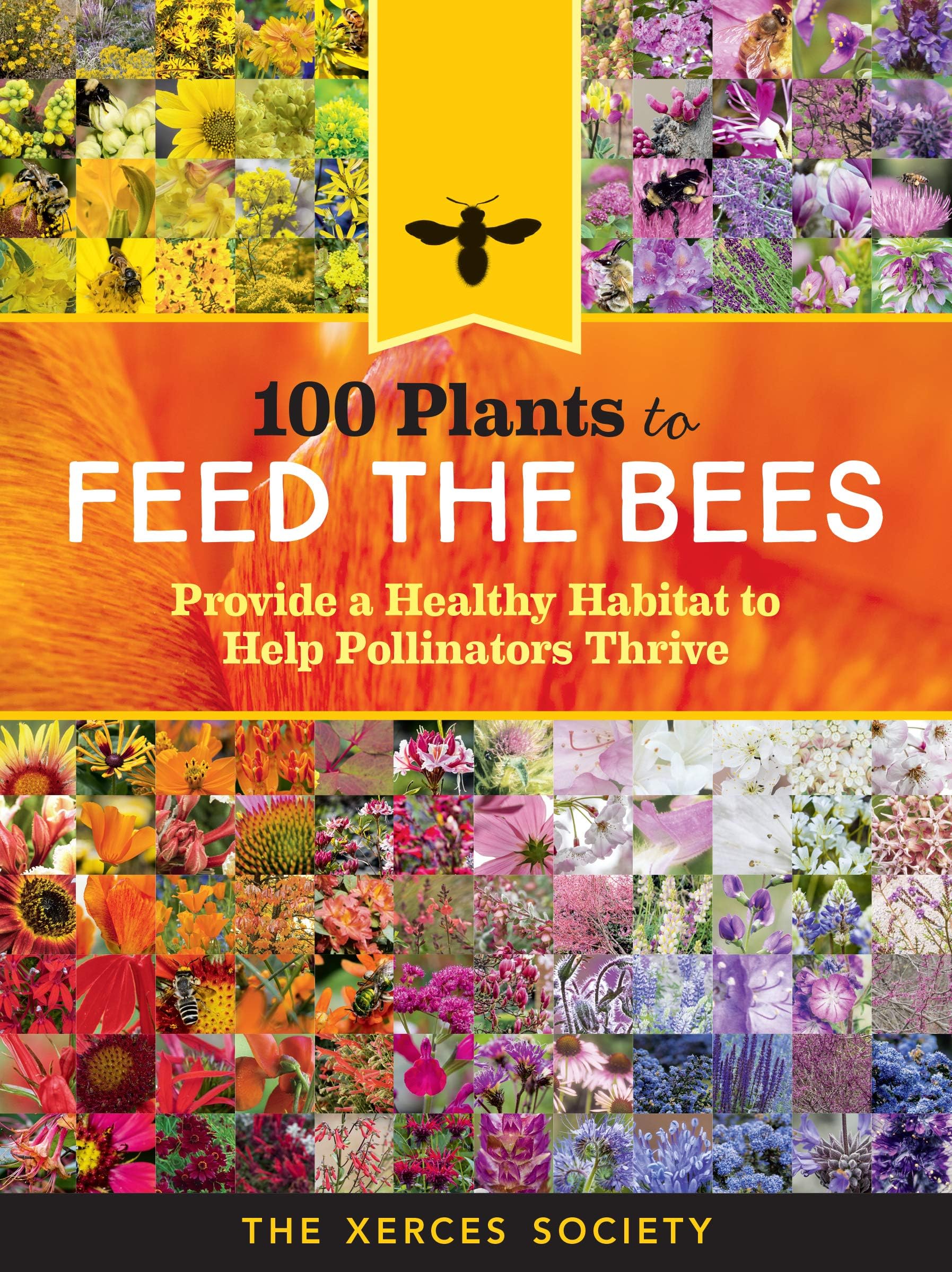
100 Plants to Feed the Bees: Provide a Healthy Habitat to Help Pollinators Thrive
Product ID: 36385714
Desertcart purchases this item on your behalf and handles shipping, customs, and support to Croatia.
The international bee crisis is threatening our global food supply, but this user-friendly field guide shows what you can do to help protect our pollinators. The Xerces Society for Invertebrate Conservation offers browsable profiles of 100 common flowers, herbs, shrubs, and trees that support bees, butterflies, moths, and hummingbirds. The recommendations are simple: pick the right plants for pollinators, protect them from pesticides, and provide abundant blooms throughout the growing season by mixing perennials with herbs and annuals! 100 Plants to Feed the Bees will empower homeowners, landscapers, apartment dwellers — anyone with a scrap of yard or a window box — to protect our pollinators. Review: Thorough and thoughtful book! - Wonderful book! It's filled with knowledge to help select plants and flowers for all parts of the US. Very thorough and thoughtful. Highly recommend! Review: Beautifully done- general information for the US - This is a beautifully done book; the photos are vibrant and a pleasure to browse. There are interesting facts about the plants and pollinators, but be aware the information is generalized across the US. If you’re looking for specific plants or pollinators for your local region- which you should be if you’re trying to plan out garden plants, you’ll need to reference other sources (native plant societies, regional bee guides).


| Best Sellers Rank | #283,109 in Books ( See Top 100 in Books ) #44 in Developmental Biology (Books) #181 in Gardening & Horticulture Techniques (Books) #259 in Environmentalism |
| Customer Reviews | 4.8 out of 5 stars 812 Reviews |
M**S
Thorough and thoughtful book!
Wonderful book! It's filled with knowledge to help select plants and flowers for all parts of the US. Very thorough and thoughtful. Highly recommend!
P**T
Beautifully done- general information for the US
This is a beautifully done book; the photos are vibrant and a pleasure to browse. There are interesting facts about the plants and pollinators, but be aware the information is generalized across the US. If you’re looking for specific plants or pollinators for your local region- which you should be if you’re trying to plan out garden plants, you’ll need to reference other sources (native plant societies, regional bee guides).
A**S
Feed your pollinators and bees.....you like to eat and they do too.
A good book to nudge you into planting more beneficial plants for bees and other pollinators. Instead of just buying what looks nice at the store, research and buy shrubs, annuals, and perennials that provide nectar and pollen. We all like to eat so do your part and provide something for all the pollinators. Stop adding sterile plants as they do not benefit anyone...including you. Start being proactive in thinking about the wildlife around you and it cannot be taken for granted that it will always be there without the environment to support and sustain. This books gives you detailed info and pictures to assist plant buyers. Take it with you to the nursery and refer to. Plant more beneficial plants for beneficial pollinators and you will benefit too!!
P**S
Very informative
This was a great book. I expected it to be written by experienced gardeners, but it was actually written by expert conservationists, so I was impressed. They listed specific plants and which specific bee, butterfly, and moth species are attracted to them. I learned more about bees, pollinators and plants than I expected, like how to avoid double-petal flowers. I also learned that many hybrid plants you find in grocery stores and places like home depot provide very little pollen and nectar for bees. Before buying this book I bought several plants and noticed they were attracting few visitors. Now I know why. The only con to this book is that it focuses almost exclusively on wildflowers and wild grown trees - plants that sometimes aren't available commercially. They added only a short list of common garden plants that are easy to find - like lavender and cilantro.
P**R
Save the Planet AND Make it Easy
The Xerces Society is a non-profit scientific conservation organization focused on habitat and species conservation and restoration, protecting pollinators, contributing to watershed health, and reducing harm to invertebrates from pesticide use. The book was published to ensure that the flowers necessary to pollinators, especially native wildflowers, are provided in sufficient amount, whether it be in our gardens or throughout our communities. The book is divided into five sections: native wildflowers; native trees and shrubs; introduced trees and shrubs; introduced herbs and ornamentals; and native and nonnative pasture plants. The sections are not meant to be comprehensive. Rather each offers some ‘favorites’ from the authors as an introduction to using plants to support pollinators. The sections are clearly presented following a set pattern of data presentation. Beautiful close-up photographs accompany each plant described. The authors present a brief overview of plants and pollinators and the rationale for their importance in the world. You will find the common and Latin name for each plant, where in the U.S. it can be grown, and the specific pollinators it attracts, i.e., honey bee, common bee, butterfly, and moth. The essential conditions for growth as well as bloom time are briefly noted. The uses of each plant are also listed, such as ornamental, farm buffer, caterpillar host, edible, hedgerow, and the like. What I especially enjoyed about this book is the presentation of so much material in a terse, uniform, useful manner. Each plant gets 2 pages and the information occurs in the same place and format for every plant. Graphics are frequently used to tell the plants’ stories. The table of contents is direct and no-nonsense. The size of this book is also handy, 6”x 8” and 230 pages. It is handy to carry around when doing plant walks. And to use in adding essential plants for pollinators, using no pesticides, and no maintenance in your own green space.
M**B
A must read if you want to learn to create a habitat for the bees in your yard
A very informative book. I ordered this book because I wanted to provide the best plants possible for building the best pollinator garden in my yard. With the help of this book I was able to achieve a balanced ecosystem and habitat where there was the right amount of good and bad bugs while feeding the bees, butterflies, and hummingbirds at the same time. It is very satisfying to be able to achieve a balance where everything has harmony. And the greatest reward of all is that my flowers, vegetable garden, and fruit trees all get pollinated at the same time. If you are interested in learning which plants will help you to provide a habitat for the bees in your yard give this book a read. Excellent reference book.
N**Y
Book: 100 Plants to Feed the Bees
Young specimen orchard; honeybees rapidly declining & colonies threatened by bears - what to do? Shift to native bees (there are >500 species in North America). But fruit trees blossom for <a month and bees need to eat all summer. So, plant the flowers that sustain them after the fruit trees blossom no more. What plants are those? Glad you asked
D**Y
Have used this book a lot
100 plants to feed the bees is just the thing for any gardener who wants to help the environment and help beneficial insects in the garden. I mad a list from this book and used it when I went to buy my bedding plants. It tells you what insects are attracted to each kind of flower, and the nectar and pollen level of each. Well organized, and easy to understand, easy to go through and pick what you need.
D**N
Where the book is written
This is a UK book and there were no Australian native plants included.
A**R
Book
I thought this was a great book for encouraging my daughter to know which plants to plant, but I haven't heard anything back from her about this book.
E**E
Beautiful photos. Great present, and I read it myself before giving it away!
Present for my dad. He loved it but . I ended up reading it cover to cover before giving it to him! Lovely photos and laid out really nicely.
S**O
Bees and the flowers that attract them
Loved this little gem of a book! Let me know what I have and what I can plant next year to attract more bees and birds to my yard!
J**W
Five Stars
Very good read
Trustpilot
1 month ago
5 days ago