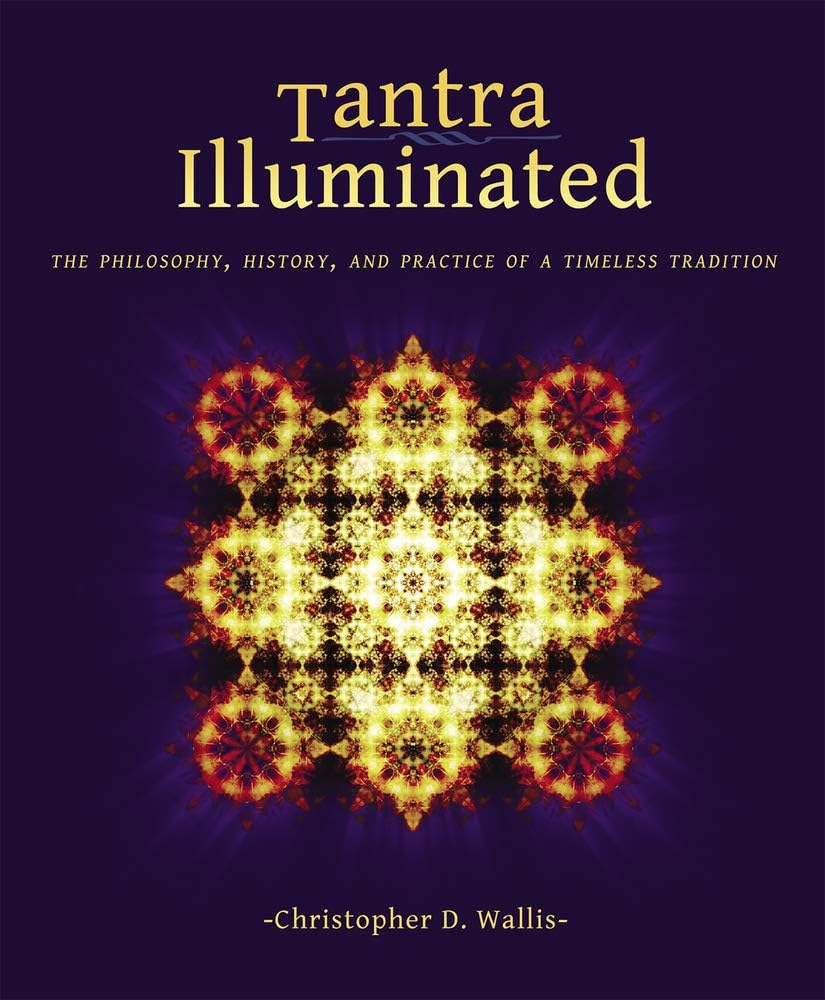
Tantra Illuminated: The Philosophy, History, and Practice of a Timeless Tradition
Product ID: 3652925
Desertcart purchases this item on your behalf and handles shipping, customs, and support to Croatia.
This book takes readers on a fascinating journey to the very heart of Tantra: its key teachings, foundational lineages, and transformative practices. Since the West’s discovery of Tantra 100 years ago, there has been considerable fascination, speculation, and more than a little misinformation about this spiritual movement. Now, for the first time in the English language, Tantra Illuminated presents an accessible introduction to this sacred tradition that began 1,500 years ago, in the far north of India. The book uses translations from primary Sanskrit sources, offers a profound look at spiritual practice, and reveals Tantra’s rich history and powerful teachings. Review: The Definitive Guide to Classical Saiva Tantra - Christopher (Hareesh) Wallis has written THE definitive, modern day work on classical non-dual Saiva Tantra (NST). This book is simply masterful. The author manages to write with a scholarly breadth, but in an easily accessible and engaging style. Many books on Tantra fall into two unfortunate categories. Either they are written in a dense, academic prose that does not lend itself well to the non-scholar, or else they are purporting the bastardized version of "Neo-Tantra" with its overt and almost exclusive emphasis on sexuality. The author manages to avoid both of these pitfalls and the result is an easily readable and enjoyable ride that delivers accurate, scholarly, and practical information on one of the most profound religious philosophies ever developed. In the book, the author manages to tackle the daunting task of actually defining, or at least delimiting, Tantra. This is no mean feat - scholars have been debating the meaning of Tantra for decades. After clearly presenting what Tantra is and what it is not, he delves into the philosophy of Tantra. What the author is calling non-dual Saiva Tantra (NST) is the Kuala variant of a Trika/Krama synthesis of Saiva Tanta as per Abhinavagupta, at least insofar as the philosophy is concerned. He carefully details the major "western" philosophical components of NST as well as the major philosophical points of interest inherent to NST. This section of the book is simply amazing. There is nowhere else that you can find all of the major philosophical components of classical Tantra in one place and that are explained so eloquently. After the philosophy section, the author gives a detailed, but generalized, accounting of the history of Saiva Tantra. A lot of his work is based off of Alexis Sanderson, who is the pre-eminent scholar of Saiva Tantra. Not only do we learn the genesis and development of the classical Tantra, but we also learn that the Tantra subsumed many elements of Patanjali's Yoga to produce Hatha Yoga, which he clearly shows has its roots in the Tantra. It is from Hatha Yoga that we obtained the Modern Postural Yoga. So not only do we get to learn about this history of classical Tantra, but we also learn about the Tantric roots of modern day yoga practice. The history is both relevant and fascinating. Finally, the author covers the practice of NST in the modern day context. He covers the three "Means" to awakening and gives a detailed analysis of how one can use many of these practices today. In summary, this is THE one-stop shop for the most relevant and useful information regarding classical Saiva Tantra. As a student-practitioner-teacher, I feel confident in saying that no other currently available book in the English language comes close to the status of Tantra Illuminated as literal "Bible" in the field. Review: Mind Operating Instructions - I owe a great debt to this author. Reading this was just what I needed to awaken a brighter and more compassionate outlook on life. I've been a seeker for most of my life devouring the great spiritual classics from A(midism) to Z(oroastrianism) and I can say, hands down, that Tantra Illuminated is a spiritual work of art that can hold its own with any of world's spiritual classics and scriptures. Tantra Illuminated is not just an exciting and scholarly book about Tantra it is a true work of Tantra. If Abhinavagupta ever gets the fame and study he deserves in the West this book will likely have played a role in bringing that change about. It's true rocket fuel for the spirit and imaginal faculty. The last section on practice was probably my favorite part of the book. It helped me gain some new insights regarding human psychology and how to best operate the mind. Previously I had finished a few books on Cognitive Behavioral Therapy* and the connections / simmilarities between Stoic and CBT Thought. When reading this section I couldn't help but draw numerous parallels. The intimate connection between thought or cognition and emotion as well as some of the methods for taking advantage of this fact for self reprogramming being the most obvious. I would think that Kashmir Shaiva practitioners and Cognitive Behavioral Therapy practitioners would be mutually enriched by cross study. The author took a risk by leaving the realm of pseudo-objectivity often demanded in religious studies and instead wrote it from an unambiguously practitioner perspective. Thanks to this fact the book was not only scholarly and informative but also transformative. I hope more academic authors follow this trend. * My counselors enlisted the help of CBT techniques to help me overcome my drug addiction in the past so I was interested in learning more. CBT and some of the Stoic exercises helped save my life.
| Best Sellers Rank | #38,564 in Books ( See Top 100 in Books ) #5 in Indian Eastern Philosophy #46 in Spiritualism #58 in Ancient Greek & Roman Philosophy |
| Customer Reviews | 4.8 out of 5 stars 827 Reviews |
B**L
The Definitive Guide to Classical Saiva Tantra
Christopher (Hareesh) Wallis has written THE definitive, modern day work on classical non-dual Saiva Tantra (NST). This book is simply masterful. The author manages to write with a scholarly breadth, but in an easily accessible and engaging style. Many books on Tantra fall into two unfortunate categories. Either they are written in a dense, academic prose that does not lend itself well to the non-scholar, or else they are purporting the bastardized version of "Neo-Tantra" with its overt and almost exclusive emphasis on sexuality. The author manages to avoid both of these pitfalls and the result is an easily readable and enjoyable ride that delivers accurate, scholarly, and practical information on one of the most profound religious philosophies ever developed. In the book, the author manages to tackle the daunting task of actually defining, or at least delimiting, Tantra. This is no mean feat - scholars have been debating the meaning of Tantra for decades. After clearly presenting what Tantra is and what it is not, he delves into the philosophy of Tantra. What the author is calling non-dual Saiva Tantra (NST) is the Kuala variant of a Trika/Krama synthesis of Saiva Tanta as per Abhinavagupta, at least insofar as the philosophy is concerned. He carefully details the major "western" philosophical components of NST as well as the major philosophical points of interest inherent to NST. This section of the book is simply amazing. There is nowhere else that you can find all of the major philosophical components of classical Tantra in one place and that are explained so eloquently. After the philosophy section, the author gives a detailed, but generalized, accounting of the history of Saiva Tantra. A lot of his work is based off of Alexis Sanderson, who is the pre-eminent scholar of Saiva Tantra. Not only do we learn the genesis and development of the classical Tantra, but we also learn that the Tantra subsumed many elements of Patanjali's Yoga to produce Hatha Yoga, which he clearly shows has its roots in the Tantra. It is from Hatha Yoga that we obtained the Modern Postural Yoga. So not only do we get to learn about this history of classical Tantra, but we also learn about the Tantric roots of modern day yoga practice. The history is both relevant and fascinating. Finally, the author covers the practice of NST in the modern day context. He covers the three "Means" to awakening and gives a detailed analysis of how one can use many of these practices today. In summary, this is THE one-stop shop for the most relevant and useful information regarding classical Saiva Tantra. As a student-practitioner-teacher, I feel confident in saying that no other currently available book in the English language comes close to the status of Tantra Illuminated as literal "Bible" in the field.
A**A
Mind Operating Instructions
I owe a great debt to this author. Reading this was just what I needed to awaken a brighter and more compassionate outlook on life. I've been a seeker for most of my life devouring the great spiritual classics from A(midism) to Z(oroastrianism) and I can say, hands down, that Tantra Illuminated is a spiritual work of art that can hold its own with any of world's spiritual classics and scriptures. Tantra Illuminated is not just an exciting and scholarly book about Tantra it is a true work of Tantra. If Abhinavagupta ever gets the fame and study he deserves in the West this book will likely have played a role in bringing that change about. It's true rocket fuel for the spirit and imaginal faculty. The last section on practice was probably my favorite part of the book. It helped me gain some new insights regarding human psychology and how to best operate the mind. Previously I had finished a few books on Cognitive Behavioral Therapy* and the connections / simmilarities between Stoic and CBT Thought. When reading this section I couldn't help but draw numerous parallels. The intimate connection between thought or cognition and emotion as well as some of the methods for taking advantage of this fact for self reprogramming being the most obvious. I would think that Kashmir Shaiva practitioners and Cognitive Behavioral Therapy practitioners would be mutually enriched by cross study. The author took a risk by leaving the realm of pseudo-objectivity often demanded in religious studies and instead wrote it from an unambiguously practitioner perspective. Thanks to this fact the book was not only scholarly and informative but also transformative. I hope more academic authors follow this trend. * My counselors enlisted the help of CBT techniques to help me overcome my drug addiction in the past so I was interested in learning more. CBT and some of the Stoic exercises helped save my life.
M**N
5 Stars, but with qualms
I especially liked the beginning and the middle of the book. Good job. I have concerns toward the latter parts. Here are some initial comments: 1. I don't think Wallis really understands postmodernism. Post modernism provides a basis for an "experience-view" of What This Is. Wallis exposes a more classical academic viewpoint that does not embrace radical levels of ambiguity. 2. It is not clear to me what audience Wallis is writing to sometimes. I would venture to say that readers who don't know much aren't going to get very much help here in this. Other readers will often respond with: "yup." (That said, there were many historical or background data that were very informative and clarifying for me. Three cheers.) 3. Too often in the last part of the book, Wallis seems to present arguments, rather than description or explanation. I wish he hadn't. For example, he presents Gupta Abinava's declarations that ritual is necessary without being clear (IMO) why it's necessary. 4. I get that ritual is powerful, both Eastern and Western. No doubt. Berger and Luckmann ("The Social Construction of Reality," 1967) ended-up arguing that forms of social construction are most powerful in more primitive cultures where autonomy and perceived individuality is not high. Moderns could use a religion or an approach to seeing What This Is that speaks to today's contemporary mind and consciousness. (I don't know what the answer is for this, but I've seen this issue in Zen, in Tibetan Buddhism, and Saivism.) These might be minor complaints. It depends upon the reader, I suppose. What I liked in the book, I liked a lot. Be well.
S**N
pragmatic description of NŚT from a knowledgeable author
I like this book. I originally listened to the Audible book but found the amount of material to be too difficult to integrate. The Audible book lacks essential figures and tables although it does have chants and features that make for a good companion to the print book. The book has three major sections. First is the essential elements of nondual saiva tantra (NŚT). This is difficult material to convey due to the philosophical nature of the teachings and the experiential aspect of understanding. Reading and meditation are recommended. The recommended steps are invaluable in understanding the subtle nature. The second section is a description of major NŚT schools of thought, the deities, and unique practices. The reading here is interesting. The third section is about the practice. The practical descriptions are accurate but brief. The book also includes valuable end material including Christopher Wallis’ biography and spiritual heritage, and a very helpful guide in pronunciation of Sanskrit words.
A**B
The View from breathtaking heights.
If you've "seen through" the myths and dogmas of organized religion but still declare yourself "spiritual," you may well be asking... How can I understand and navigate the world in a way that is free of dogma and belief, sophisticated, powerful and perfectly aligned with the core insights of modern science and Yoga? What are the infinite depths within the practice of Yoga asana, contemplation and meditation? Well the non-dual "View" of Shaivite Tantra is the answer. It's outlined masterfully by Christopher Wallis in this book, "Tantra Illuminated," which is a foundational text to answer these questions and to dispel the mis-understandings around Yoga and Tantra. This book is a breath-taking View from the Himalayan heights where great masters of Consciousness share their cryptic and super-charged insights into the mystery of the Universe with Christopher's expert explanation and inspired ways to practice and embody this transformative understanding. As well, it provides beautiful, authentic illustrations of the ways the "powers within Consciousness" are traditionally depicted and visualized in Tantric practice. I have found the Shaivite Tantric "View" outlined in this book to be the highest, most powerful, most core expression of the whole Indic tradition and that in generations to come, people will look back at the dark ages of religious dogma and see that books like this were the ground-breaking, volcanic upsurge of the "new View," that outlined the gracious, clear, and experiential path to the most exalted goals of human life. Whatever life-goals you have, you will find the insights and practices in this book wire you into the powerhouse of supreme Consciousness that will guide and support you. You'll feel that you've climbed the mountain of legend, superstition, dogma surrounding the "mystery of life" and now - you've finally arrived at the top where the air is crystalline and the View is stupendous!
S**A
This is not a self-help book but it is amazing
I purchased this book because I thought it was a self help book that would draw out for me what to do on a day to day to live a better life. It wasn't quite what I expected, but in a good way. It is history based, so a lot of information on the origins of the Tantra. I learned so much. Once you read this book everything around you will click. It can help you live in synchronicity. I would recommend this book to anyone who's is interested in history and the Tantra. I rated it four stars because I wish the last part of the book, the part where the author tells you how to apply this way of life in your day to day, was longer. It's written well and easy to follow if you focus on what you're reading.
A**R
A must-read for anyone who considers him/herself a Tantrik practitioner!
I am a Tantra Yoga teacher, and whenever someone asks me "So what is Tantra, anyway?" and is genuinely curious to know the answer, I recommend he or she read this book (or listen to the audiobook). It is a masterfully interwoven overview of the history and practices of various traditional Tantrik lineages, complete with techniques which might be beneficial for the modern reader/practitioner. Both informative in an academic sense and relevant for a non-scholastic audience, Christopher Wallis has created a masterpiece for modern Tantrik practitioners to educate and inform themselves of the deep and rich tradition of Shaiva (Śaiva) Tantra, and all the changes it has undergone over time. I consider it a must-read for anyone considering themselves a Tantrik or Tāntrika, especially in these modern times where Tantra is widely misunderstood, and "New Age" and "Neo-Tantra" movements have influenced (and muddled) our current understanding of this ancient philosophy and spiritual path to self-realization. When I read it, I thought, "Oh great, someone already wrote the book I would have devoted my life to compose!" It has inspired me to study the Sanskrit language academically to deepen my understanding of Tantra Yoga. And I am so happy to start his second book, "The Recognition Sutras"! I recommend for readers who are not accustomed to scholarly works (or those who are reading this as their introduction to Tantra) to listen to the audiobook and just let it wash over you without getting hung up on the Sanskrit words or philosophical concepts. It seems there is something for everyone in this book, so I imagine any reader or listener will find some aspect inspiring or rewarding for their insight meditation or personal practice.
J**B
Amazed at how good this is!
I’ve searched for a good introductory book on Kashmir Shaivism / Tantra for a long, long time…. And this is it! I’m only 75 pages in and it’s already worth the price! Christopher Wallis has an amazing talent of taking complex philosophical and religious topics and explaining them in an easy-to-understand manner that motivates and excites you to incorporate them into your spiritual life. I sincerely believe this book is going to be life-changing for me, and I cannot thank the author enough! Highly, highly, HIGHLY and enthusiastically recommended!!!
R**R
Now THE DEFINITIVE Book on Tantra.
There can't possibly be a more misunderstood and irresponsibly sensationalized subject than Tantra, most of that sensationalism spicing itself up by connecting this ancient and difficult subject to crass, New Age notions of exotic sex. "Tantra Illuminated" is anything but. Christopher Wallis is something of a modern phenomenon. He is both a life-long practitioner of Tantrik Yoga, being initiated into the practice at age 16, and a highly accredited scholar in the field. Dr. Wallis studied under Dr. Alexis Sanderson at Oxford, becoming both a fluent and skilled Sanskritist and a formidable scholar in his own right. With both practice and theory ( the "View" ) firmly under his belt, Wallis's authority on the subject is unquestionable. For those seeking that level of authenticity and authority in the morass of cheap garbage written on the subject, almost entirely by those completely unqualified to talk about it with even a modicum of veracity and credibility, Wallis's "Tantra Illuminated" is now THE DEFINITIVE book on the subject. We have two previous landmark works that warrant mentioning here. First, we have the works of Sir John Woodroffe, writing as he did as "Arthur Avalon". Books like "The Serpent Power", "Garland of Letters" and his translation of "The Mahanirvana Tantra" were astonishing breakthroughs in the early 20th century. They were the first attempts to translate this extraordinarily complex and very difficult subject into English. As W. Y. Evans-Wentz did with various Tibetan Buddhist titles, Woodroffe, broke new ground and opened the door to seriously motivated and sincere attempts at rigorous academic study of the field. Subsequent advances have now rendered those works, still admirable, but somewhat flawed in their translations. Decades later we have the work of George Feuerstein. More skilled, educated and a better translator than the pioneering scholars that preceded him and having the benefit of being able to refer to much more previous material than the pioneers did, Feurertsein,spoke with great authority. Like Christopher Wallis, he was also a practitioner. His "Tantra, The Path of Ecstasy" has been for many years the established classic of lay or generalized studies of Tantra. Feurerstein's work is still classic and very authoritative indeed. I would still strongly suggest that students of the subject would greatly benefit from reading Feuerestein's and Wallis's work in conjunction with each other. Now we have Christopher Wallis's "Tantra Illuminated", a work both extraordinarily broad in it's careful coverage of the history, lineages, philosophical points of variance in the different schools, mediative practices, rituals, initiations etc and abundantly rich in it's depth. This large and extremely readable book covers many things that other authors have not. The writing style is authoritative but also comes across as if the author were speaking personally to you. That's a great asset when the topic is one that's greatly misunderstood, often misrepresented and lacking the weight of knowledge and experience, together. I would argue that the most important aspect of Tantra is it's "View", it's understanding of reality. Without making the key shift to "The View", a real understanding of Tantra is next to impossible. Once "grokked", The View is a life-changer. Christopher Wallis takes the time to pace out and "unpack" "The View" in such a way that puts the apprehension of it well within the reader's grasp. Of course, as with all things Tantra, one doesn't just "think" it, you have to "be" it. That is, the viewpoint of the everyday mind has to be radically changed though long and consistent meditative practice. This is not for everyone. While this may sound alarmingly academic, let the prospective reader be very well assured that despite his academic achievements, Wallis has written a book for the non-scholar. He is warm, engaging, and personable while maintaining a strict, unwavering integrity in the handling of his subject. He doesn't mollycoddle but he speaks to the reader as if he was talking with you one on one. A testament to this can clearly be seen in his many online talks that can be found on You Tube. He's a gifted speaker, knowing his subject not just intellectually, but also practically. This double aspect places Wallis at an unprecedented advantage over all his predecessors. "Tanta Illuminated" is vast, deep and warrants repeated study. While it reads very easily the subjects and ideas it covers, especially to the uninitiated, can be something that requires long and careful contemplation. Tantra, TRUE Tantra, is after all, considered to be the highest level of understanding there is. It was often originally written in what's been called "Twilight Language", a form of coding and symbolism that deterred penetration by superficial and capricious thrill-seekers or those after mystical powers. Christopher Wallis opens up this "Twilight Language" but at key points refrains from giving information where years of careful study and practice together are required to truly appreciate the subject. There are just some things in Tantra that need the careful guidance of a qualified teacher or the possibility of serious error could result in both intellectual and inner distortions that will only lead to problems. In such cases, the author quietly demures from giving away the store and explains forthrightly, that said information is not for the general reader. But at the back of the book he lists teachers ( Primarily in the United States ) that the serious student can contact. Media savvy, he also has a very large and easily accessible presence through social media and online viewing platforms. "Tantra Illuminated" is a vast, massive tome of engaging, fascinating, even life-changing material, handled with penultimate skill by an author that not only "talks it" with scintillating genius" but also "walks it" with complete dedication and conviction. A must-have for anyone seriously interested in the subject.
D**A
Imperdibile
Un ottimo compendio: erudito, esaustivo, chiarissimo. Scritto da uno studioso di rigorosa formazione accademica e lunga esperienza come praticante e maestro.
A**V
More properly titled, "Non-dual Shaiva Tantra Illuminated", but still a very good book.
First off, let me say that I absolutely loved this book (hence the five stars). That being said, it's not a book about "tantra" in the broadest sense. There is very little to no discussion of tantric Buddhism, tantric Vaishnavism, or the dualistic streams of tantra (shaiva siddhAnta). There is also only a passing mention of popular tantric traditions that are alive and well today, such as the shrI vidyA. The book is mostly about Non-dual Shaiva Tantra as it evolved in the Kashmir region, and the author admits as much. This is the author's area of specialization, and he does a very good job of presenting its tenets, history, and practice. What I loved about this book is that it discusses NST (Non-dual Shaiva Tantra) and its history in an objective but reverential manner as becomes a practitioner with a Western academic background. This is really important, because it's difficult to find material on these topics from Indian authors (especially in regional languages) that is not overly reverential or adulatory to the point of distorting the material. Having read this book, I now have a much clearer idea of the historical context of tantric religions in India and their content. The author also lists several primary sources to follow up, which is also extremely useful. I can see myself coming back to the section on the history of NST many times as I continue my studies. Now for some issues that I feel should also have been addressed, though I appreciate that it would have made the book considerably larger. The author doesn't really discuss the interplay of the vedic/vedAntic, aitihAsic, and purANic streams of Hinduism with his subject. This is a serious shortcoming, because there's plenty of content on this available today, and readers would justifiably wonder how they can benefit from that material in their tantric practice. For e.g., how does the shiva purANa relate to NST? Also, while there are brief mentions of shaiva siddhAnta and shrI vidyA, these would have warranted longer treatments in a book on "tantra", since these are very popular tantric traditions in India. There are also obvious similarities between the nondualistic notions as is present in NST and that of advaita vedAnta, but the author seems to ignore or downplay these connections as well. It's almost as if the author wanted to sever tantric worldview from any vedic influences, but clearly the trend in history has been in the opposite direction. There is also a very obvious silence on the supernatural or magical claims in tantra. There is practically no mention of siddhis or any prayogas that are mentioned in tantric scriptures. There is also no mention of temple culture, which is strange because many Agamas spend considerable effort to expound on temple rituals and constructions, and temples are a very important aspect of modern Hinduism. Perhaps the author wanted to "sanitize" tantra to make it more palatable to a global audience. This is understandable, and I will not blame the author for it. All in all, I really enjoyed the book, and I highly recommend that every Hindu who is interested in Tantra read it, provided you keep in mind that it presents only a fraction of the tantric landscape as it exists today.
A**A
Es primero libro que me hace parar casi en cada pagina para reflexionar...
Ya lo habia empezado a escuchar en audiobook cuando entendi que necesito un libro fisico para hacer las anotaciones y leerlo una y otra vez. Es un libro precioso y trabajo increible. Estoy muy agradecida ✨🙏✨ El libro en si esta bien, aunque me gustaria que las paginas esten mas blanquitas. Pero no es un punto que le quita una estrella. Estoy contenta con la compra :)
L**R
An excellent dive into the history, meaning and practices
There is something for everyone here, no matter what your starting point. Each page is rich with insights into the Tantra and made ultra-accessible through the writing as well as the format, where Sanskrit definitions, points of clarification and links to other relevant sections are helpfully located to the side of the main body of the text. Crucially though, nothing is lost through this accessibility as the author strikes that rare balance of pitching the content in layers that the reader can shift between depending on their prior knowledge. The technical language and use of the proper Sanskrit terms are expertly woven into the text to allow the reader to learn and study the vocabulary or simply read and absorb the content as it flows from the page. If you’re looking to learn about the history of the Tantrik tradition, the profound meaning of the texts (which have been translated *by the author*) and it’s timeless appeal as a way to realising what you already are... buy this book.
Trustpilot
2 weeks ago
1 week ago