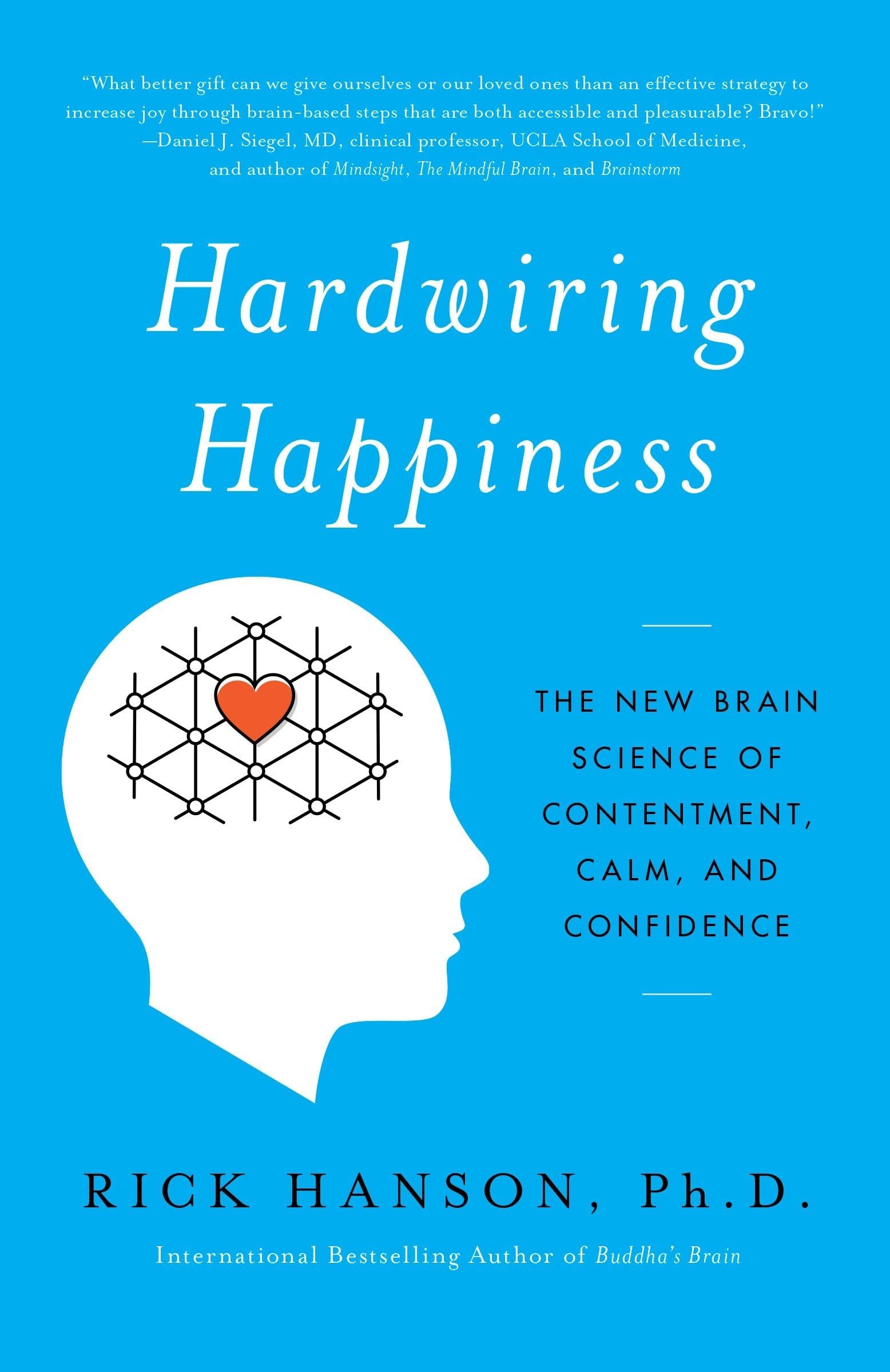
Hardwiring Happiness: The New Brain Science of Contentment, Calm, and Confidence
Product ID: 37682178
Desertcart purchases this item on your behalf and handles shipping, customs, and support to Croatia.
With New York Times bestselling author, Dr. Hanson's four steps, you can counterbalance your brain's negativity bias and learn to hardwire happiness in only a few minutes each day. Why is it easier to ruminate over hurt feelings than it is to bask in the warmth of being appreciated? Because your brain evolved to learn quickly from bad experiences and slowly from good ones, but you can change this. Life isn’t easy, and having a brain wired to take in the bad and ignore the good makes us worried, irritated, and stressed, instead of confident, secure, and happy. But each day is filled with opportunities to build inner strengths and Dr. Rick Hanson, an acclaimed clinical psychologist, shows what you can do to override the brain’s default pessimism. Hardwiring Happiness lays out a simple method that uses the hidden power of everyday experiences to build new neural structures full of happiness, love, confidence, and peace. You’ll learn to see through the lies your brain tells you. Dr. Hanson’s four steps build strengths into your brain to make contentment and a powerful sense of resilience the new normal. In just minutes a day, you can transform your brain into a refuge and power center of calm and happiness. Review: I'm Happily Rewired! - In an increasingly diverse world, happiness is a common goal that connects us; we all want to be happy. However, life’s complexities can sometimes get in the way of this important goal. In Hardwiring Happiness: The New Brain Science of Contentment, Calm, and Confidence, Dr. Rick Hanson strives to teach readers how to wire happiness into their brains in order to live an overall happier life. Hanson also has other popular books with similar topics, such as Buddha’s Brain and Just One Thing. Besides books, his ideas have appeared worldwide with many popular news sources, including NPR, CBC, BBC, Consumer Reports Health, U.S. News & World Report, and the Huffington Post. He is a well-known neuropsychologist who founded the Wellspring Institute for Neuroscience and Contemplative Wisdom. He has also presented his work at prestigious universities, such as Harvard and Stanford. In addition, Hanson has ties to UC Berkeley, being an Affiliate of the Greater Good Science Center. Thus, he is a very credible source regarding the brain and our behavior. Overall, Hanson’s ideas in Hardwiring Happiness could be a nice starting point for those seeking to improve the quality of their lives, and there is an adequate amount of neuroscience included to supplement the process behind the improvement. Hanson’s ideas in this book are based on the brain’s ability to change, which is a concept called neuroplasticity. In our busy lives, we miss opportunities to notice, create, and build upon happy experiences. Hanson aims to show that we can positively restructure our brains by simply taking extra time to absorb positive experiences. Through comprehensible explanations and clear organization, he successfully utilizes a simple acronym, HEAL, to demonstrate how to alter our neural structure for consistent happiness and confidence. He successfully ties complex science ideas and terminology and the simple, yet abstract, idea of happiness to ensure that anyone can work towards a more enriched life. Hanson organizes his ideas in this book into two major parts, with the first part being shorter and more focused on scientific background information. Hanson lists major structures of the brain and their functions, and he also writes about why we should work to change our brain structure. He begins by explaining that humans have a natural negativity bias based on evolution. In order to survive, humans had to focus on the negative. Focusing on the negative might create unwanted issues like paranoia, but negativity has helped humans survive by making sure that they can avoid danger. It is in our human nature to focus on negative situations, which is why negative situations always seem to overtake the positive ones. It would be beneficial to practice absorbing any positive experiences, which can modify our neural structure and offset the repeated history of negativity. Hanson continues on and uses simple terms to explain the complicated science information that underlies his key points. For example, he dives into brain explanations when he talks about the three major parts of the brain: the brain stem, subcortex, and cortex. These major areas of the brain relate to three specific human systems we have and can utilize to help provide for our basic needs. Based on our human nature, we have three basic needs: safety, satisfaction, and connection. The first basic system is avoiding harm, which meets the need for safety. The second basic system is approaching rewards, which meets the need for satisfaction. The third basic system is attaching to others, which meets the need for connection. Additionally, these human systems essentially have two different modes. The responsive mode means we respond to our problems in a healthy manner since all of our needs are fulfilled. This allows us to be at peace, which is why the responsive mode is where we should try to be at all times. The other mode is the reactive mode, which means we react, rather than sufficiently respond, to adversity in life since our needs are not fulfilled. This particular mode leads to fear and instability, which is why it is important for us to practice neuroplasticity to work to maintain the responsive mode. In other words, changing our brain structure is good, and we can do this by taking time to seize and absorb all the good experiences and opportunities in our lives. Part two of this book focuses on an actual process to changing our neural structures and creating happiness. This part mainly revolves around an acronym, HEAL. The “H” stands for having a positive experience. The “E” stands for enriching that experience. The “A” stands for absorbing that experience. The “L,” which is the only optional step of this four-step process, describes how we can link positive and negative experiences to help us change the way we might associate certain people, materials, or situations with negative experiences. After describing his HEAL process, Hanson emphasizes the idea that there is a difference between positive thinking and positive experience. Most people go through their lives trying to be happy just by positive thinking. Instead, we should become aware of the positive experiences in each day, no matter how small. For example, simply being aware of our consciousness counts as a positive experience. Smelling our coffee in the morning, or feeling the warm sun touch our skin can also be a positive experience. We can also create positive experiences; for example, one way to create a positive experience is by thinking of the past, which can stir up good memories that instill positivity within us. Once we become aware of a positive experience, we must stay with it, and let it be enriching. A lot of times, people will experience a positive feeling, but they let it pass by and become covered up by negative feelings and stress. When we have a positive experience, it is important to stay with it for a longer period of time, even if it’s only an extra 30 seconds in our day. We need to breathe, relax, and let the positivity take us over. After we allow the experience to be enriching, we have to really let into absorb into us. Finally, it can also be helpful to work on getting rid of negative experiences by linking positive and negative experiences, which will allow the positive to override the negative. Essentially, each time we practice this HEAL technique, we are altering the structure of our brain in a good way, such as making new synapses. These changes can help us sustain the positivity and maintain happiness. The last two chapters in the book are interesting because they emphasize further applications of the HEAL process, and I would recommend taking the time to read them. For example, Hanson believes we can practice “HEALing” others so they can live more fulfilling lives, too. We can also apply the HEAL process to promote the growth of our major inner strengths, like love. Considering all of these key points, Hanson does a great job of making the text easily understandable by explaining any complex terminology. When he talks about any part of the brain, he immediately gives its definition or function. For example, he clearly explains the difference between parasympathetic and sympathetic divisions of our nervous systems in simple terms, such that they lead to rest and digest and fight or flight, respectively. Another great aspect of this book is the outstanding organization and clarity. Each chapter has multiple tables and charts summarizing information, as well as an overall summary at the end of every chapter. Hanson also writes the book in a way that each chapter builds upon the previous chapter. He clearly states when he feels he is being redundant (thus allowing for the reader to skim to the next part), and he provides references back to specific pages that allow readers to relate new points with previously stated ideas. It is also excellent that Hanson engages readers and fully guides them into restructuring their brains in a highly interactive way. He thoroughly explains every step that he recommends taking. He has guided practices in gray boxes throughout the book that allow the reader to take a step back and actually practice the techniques. Despite all of this, the biggest question still remains: does this HEAL process work? From my personal experience, I am used to being very busy and becoming easily stressed out. After applying Hanson’s suggestions as I read, I felt happier because I started to appreciate the small pleasures in life. I relished in the feeling of taking a bite of my sandwich when I was hungry, or the feeling when I received a call from a loved one. I didn’t let these feelings quickly pass by, and this improved my mood and reduced my stress. It also seems that this process worked for others because Hanson included other people’s personal examples and stories. I enjoyed reading these small stories because it put the whole process into perspective by showing what actions or behaviors these people may have changed for the better. Other people are taking small actions to change their lives, too, so why can’t we all do it?! For example, one person decided to write down one positive experience per day and collect them throughout the year as a reminder of how much positivity is present in the little things in life. Hanson even included a few examples of how he applied his techniques, which makes the process seem more credible and realistic. He mentions that he enjoys listening to his kids laugh with each other, and he becomes happy knowing his kids are affectionate towards each other. To me, the only minor downfall of this book is the amount of science-based information that is actually incorporated. I expected neuroscience to be a main part of the book, but the science seems to only function as a way of enhancing the self-help techniques. However, I still believe that the science included in the book does an acceptable job of clarifying how this process actually works. Hanson gives a sufficient amount of science-based information to accurately explain what it means to restructure and rewire the brain. He makes up for where he lacks by including notes and acknowledgments in the back of the book so science-driven people can look up extra resources. I am glad he didn’t include too much science information because it would have taken away from the main point of the book: helping people find happiness. Even though I was surprised that neuroscience wasn’t the overriding focus of the book, I still thoroughly enjoyed this book. I feel myself becoming happier as I take in all the positive experiences in my life. I loved interacting with each chapter and thinking of all the positivity that surrounds me. I would recommend this book to everyone except to people who are narrow-minded or impatient. Some may believe this book is overly optimistic, so it takes an open-minded person to be willing to carefully read and interact with the text. It is an easy read, but the book is more powerful if the reader takes the time to try out all the exercises. Overall, I give this book 5 out of 5 stars because it is a very well-organized book with easily comprehensible text. The end of the chapter summaries clarify main points, and each chapter allows readers to engage with the text and practice the HEAL process in their own lives. The HEAL process is a very interesting and optimistic approach to how we should live, and I am glad I took the time to apply Hanson’s techniques to my own life. For me, Dr. Rick Hanson was successful because I already feel happier, and I am going to go on his website to look for further resources on this topic. I highly recommend this book to increase happiness. I can’t wait to keep rewiring my brain in positive ways! Review: Happiness Achieved - In Hardwiring Happiness, Rick Hanson has provided a simple, understandable way to integrate more positivity into one’s life. Hanson is a psychologist, New York Times bestselling author, and has been featured in many works on neuroplasticity such as magazines, articles, television shows, etc. Along with Hardwiring Happiness, Hanson has written other book such as Buddha’s Brain and Just One Thing that also deal with creating a better state of mind by involving one’s self in certain everyday thoughts and routines that can eventually change one’s whole mindset on life. A considerable amount of Hanson’s book focuses on explaining how his practices and lessons affect neural connections to improve overall happiness in one’s lifetime. Hanson’s concepts are considered more reliable and credible than other self-help books that are more opinion based in comparison. This is due to the fact that Hanson is familiar in his knowledge in not only the psychological aspect of the application of positivity into everyday life but also with the neurological approach. Hanson explains how negativity is wired into our thought processes to last longer and become more prominent because of reasons such as evolution and learning from bad experiences. He also explains how that can be reversed to be able to learn from negative situations as well as keep in mind many positive situations that one has been through and integrate that into our learning methods. Another great aspect of Hardwiring Happiness is Hanson’s practicality with his applications. Hanson’s applications involve many physical things that are done that helps one feel like progress is being made. This gives initiative for people to think about how the process has affected their neural system and strengthened learning from positive experiences rather than just basing his practices on theories and ideas. It makes the idea of reaching happiness more tangible. Additionally, Hanson’s ability to manifest his practices into small everyday changes that are still be able to have large increases in positivity proves the efficiency in his practices. Rick Hanson also uses some personal experience to explain how his methods have worked on himself. He explains that he has done research on all of his practices to make sure that they will be helpful to people neurologically as well as in every other aspect. Since Hanson goes through his process of perfecting his practices, readers are able to learn and understand how their brain works and see how and why it reacts in certain ways. This can help readers learn to overcome situations because of their new understanding of their reactions which is very useful. As a whole, I found Rick Hanson’s Hardwiring Happiness very helpful to make positive experiences become learning experiences and to better understand how the mind works when faced with both positive and negative situations. As someone who always starts “self-help” and “improvement” books but never finishes them, this book has been effective enough that it can catch someone’s attention and actually works when the practices are done as told. It was interesting to learn about the neurological approach to something like happiness because it was something that I had not read about before. It is also very accessible because one does not necessarily have to think of the book and its method’s neurologically for the applications to work. One instance in which I apply these concepts to my life frequently is whenever I feel sluggish and lazy and as if I cannot do anything right because it is just not my day. When I am having one of those moments, I have been able to stop my negative thinking towards others, myself, and in general by reminding myself of my potential and how I can willingly turn around my whole mood and performance throughout the day to my benefit. Although it is a small concept which is not recognized as often as it should, it does make a significant difference is it is used correctly. Overall, I was impressed that the practices were effective from day to day, and I can honestly say that I have become a more positive thinker. I rate this book a 5 out of 5 because it is one of the first books that I have ever been able to see myself improve from as compared to others. Also it has a much different approach that can change one’s point of view and therefore allow readers to have more trust in Hanson’s methods. It is also very intriguing because it changes the way you end up viewing the world and other’s reactions as well as your own. Although some concepts were constantly repeated throughout the book, it allows one to really understand the full meaning behind it.


| Best Sellers Rank | #31,575 in Books ( See Top 100 in Books ) #62 in Popular Neuropsychology #78 in Buddhism (Books) #246 in Health Recovery |
| Customer Reviews | 4.5 out of 5 stars 1,604 Reviews |
A**O
I'm Happily Rewired!
In an increasingly diverse world, happiness is a common goal that connects us; we all want to be happy. However, life’s complexities can sometimes get in the way of this important goal. In Hardwiring Happiness: The New Brain Science of Contentment, Calm, and Confidence, Dr. Rick Hanson strives to teach readers how to wire happiness into their brains in order to live an overall happier life. Hanson also has other popular books with similar topics, such as Buddha’s Brain and Just One Thing. Besides books, his ideas have appeared worldwide with many popular news sources, including NPR, CBC, BBC, Consumer Reports Health, U.S. News & World Report, and the Huffington Post. He is a well-known neuropsychologist who founded the Wellspring Institute for Neuroscience and Contemplative Wisdom. He has also presented his work at prestigious universities, such as Harvard and Stanford. In addition, Hanson has ties to UC Berkeley, being an Affiliate of the Greater Good Science Center. Thus, he is a very credible source regarding the brain and our behavior. Overall, Hanson’s ideas in Hardwiring Happiness could be a nice starting point for those seeking to improve the quality of their lives, and there is an adequate amount of neuroscience included to supplement the process behind the improvement. Hanson’s ideas in this book are based on the brain’s ability to change, which is a concept called neuroplasticity. In our busy lives, we miss opportunities to notice, create, and build upon happy experiences. Hanson aims to show that we can positively restructure our brains by simply taking extra time to absorb positive experiences. Through comprehensible explanations and clear organization, he successfully utilizes a simple acronym, HEAL, to demonstrate how to alter our neural structure for consistent happiness and confidence. He successfully ties complex science ideas and terminology and the simple, yet abstract, idea of happiness to ensure that anyone can work towards a more enriched life. Hanson organizes his ideas in this book into two major parts, with the first part being shorter and more focused on scientific background information. Hanson lists major structures of the brain and their functions, and he also writes about why we should work to change our brain structure. He begins by explaining that humans have a natural negativity bias based on evolution. In order to survive, humans had to focus on the negative. Focusing on the negative might create unwanted issues like paranoia, but negativity has helped humans survive by making sure that they can avoid danger. It is in our human nature to focus on negative situations, which is why negative situations always seem to overtake the positive ones. It would be beneficial to practice absorbing any positive experiences, which can modify our neural structure and offset the repeated history of negativity. Hanson continues on and uses simple terms to explain the complicated science information that underlies his key points. For example, he dives into brain explanations when he talks about the three major parts of the brain: the brain stem, subcortex, and cortex. These major areas of the brain relate to three specific human systems we have and can utilize to help provide for our basic needs. Based on our human nature, we have three basic needs: safety, satisfaction, and connection. The first basic system is avoiding harm, which meets the need for safety. The second basic system is approaching rewards, which meets the need for satisfaction. The third basic system is attaching to others, which meets the need for connection. Additionally, these human systems essentially have two different modes. The responsive mode means we respond to our problems in a healthy manner since all of our needs are fulfilled. This allows us to be at peace, which is why the responsive mode is where we should try to be at all times. The other mode is the reactive mode, which means we react, rather than sufficiently respond, to adversity in life since our needs are not fulfilled. This particular mode leads to fear and instability, which is why it is important for us to practice neuroplasticity to work to maintain the responsive mode. In other words, changing our brain structure is good, and we can do this by taking time to seize and absorb all the good experiences and opportunities in our lives. Part two of this book focuses on an actual process to changing our neural structures and creating happiness. This part mainly revolves around an acronym, HEAL. The “H” stands for having a positive experience. The “E” stands for enriching that experience. The “A” stands for absorbing that experience. The “L,” which is the only optional step of this four-step process, describes how we can link positive and negative experiences to help us change the way we might associate certain people, materials, or situations with negative experiences. After describing his HEAL process, Hanson emphasizes the idea that there is a difference between positive thinking and positive experience. Most people go through their lives trying to be happy just by positive thinking. Instead, we should become aware of the positive experiences in each day, no matter how small. For example, simply being aware of our consciousness counts as a positive experience. Smelling our coffee in the morning, or feeling the warm sun touch our skin can also be a positive experience. We can also create positive experiences; for example, one way to create a positive experience is by thinking of the past, which can stir up good memories that instill positivity within us. Once we become aware of a positive experience, we must stay with it, and let it be enriching. A lot of times, people will experience a positive feeling, but they let it pass by and become covered up by negative feelings and stress. When we have a positive experience, it is important to stay with it for a longer period of time, even if it’s only an extra 30 seconds in our day. We need to breathe, relax, and let the positivity take us over. After we allow the experience to be enriching, we have to really let into absorb into us. Finally, it can also be helpful to work on getting rid of negative experiences by linking positive and negative experiences, which will allow the positive to override the negative. Essentially, each time we practice this HEAL technique, we are altering the structure of our brain in a good way, such as making new synapses. These changes can help us sustain the positivity and maintain happiness. The last two chapters in the book are interesting because they emphasize further applications of the HEAL process, and I would recommend taking the time to read them. For example, Hanson believes we can practice “HEALing” others so they can live more fulfilling lives, too. We can also apply the HEAL process to promote the growth of our major inner strengths, like love. Considering all of these key points, Hanson does a great job of making the text easily understandable by explaining any complex terminology. When he talks about any part of the brain, he immediately gives its definition or function. For example, he clearly explains the difference between parasympathetic and sympathetic divisions of our nervous systems in simple terms, such that they lead to rest and digest and fight or flight, respectively. Another great aspect of this book is the outstanding organization and clarity. Each chapter has multiple tables and charts summarizing information, as well as an overall summary at the end of every chapter. Hanson also writes the book in a way that each chapter builds upon the previous chapter. He clearly states when he feels he is being redundant (thus allowing for the reader to skim to the next part), and he provides references back to specific pages that allow readers to relate new points with previously stated ideas. It is also excellent that Hanson engages readers and fully guides them into restructuring their brains in a highly interactive way. He thoroughly explains every step that he recommends taking. He has guided practices in gray boxes throughout the book that allow the reader to take a step back and actually practice the techniques. Despite all of this, the biggest question still remains: does this HEAL process work? From my personal experience, I am used to being very busy and becoming easily stressed out. After applying Hanson’s suggestions as I read, I felt happier because I started to appreciate the small pleasures in life. I relished in the feeling of taking a bite of my sandwich when I was hungry, or the feeling when I received a call from a loved one. I didn’t let these feelings quickly pass by, and this improved my mood and reduced my stress. It also seems that this process worked for others because Hanson included other people’s personal examples and stories. I enjoyed reading these small stories because it put the whole process into perspective by showing what actions or behaviors these people may have changed for the better. Other people are taking small actions to change their lives, too, so why can’t we all do it?! For example, one person decided to write down one positive experience per day and collect them throughout the year as a reminder of how much positivity is present in the little things in life. Hanson even included a few examples of how he applied his techniques, which makes the process seem more credible and realistic. He mentions that he enjoys listening to his kids laugh with each other, and he becomes happy knowing his kids are affectionate towards each other. To me, the only minor downfall of this book is the amount of science-based information that is actually incorporated. I expected neuroscience to be a main part of the book, but the science seems to only function as a way of enhancing the self-help techniques. However, I still believe that the science included in the book does an acceptable job of clarifying how this process actually works. Hanson gives a sufficient amount of science-based information to accurately explain what it means to restructure and rewire the brain. He makes up for where he lacks by including notes and acknowledgments in the back of the book so science-driven people can look up extra resources. I am glad he didn’t include too much science information because it would have taken away from the main point of the book: helping people find happiness. Even though I was surprised that neuroscience wasn’t the overriding focus of the book, I still thoroughly enjoyed this book. I feel myself becoming happier as I take in all the positive experiences in my life. I loved interacting with each chapter and thinking of all the positivity that surrounds me. I would recommend this book to everyone except to people who are narrow-minded or impatient. Some may believe this book is overly optimistic, so it takes an open-minded person to be willing to carefully read and interact with the text. It is an easy read, but the book is more powerful if the reader takes the time to try out all the exercises. Overall, I give this book 5 out of 5 stars because it is a very well-organized book with easily comprehensible text. The end of the chapter summaries clarify main points, and each chapter allows readers to engage with the text and practice the HEAL process in their own lives. The HEAL process is a very interesting and optimistic approach to how we should live, and I am glad I took the time to apply Hanson’s techniques to my own life. For me, Dr. Rick Hanson was successful because I already feel happier, and I am going to go on his website to look for further resources on this topic. I highly recommend this book to increase happiness. I can’t wait to keep rewiring my brain in positive ways!
E**S
Happiness Achieved
In Hardwiring Happiness, Rick Hanson has provided a simple, understandable way to integrate more positivity into one’s life. Hanson is a psychologist, New York Times bestselling author, and has been featured in many works on neuroplasticity such as magazines, articles, television shows, etc. Along with Hardwiring Happiness, Hanson has written other book such as Buddha’s Brain and Just One Thing that also deal with creating a better state of mind by involving one’s self in certain everyday thoughts and routines that can eventually change one’s whole mindset on life. A considerable amount of Hanson’s book focuses on explaining how his practices and lessons affect neural connections to improve overall happiness in one’s lifetime. Hanson’s concepts are considered more reliable and credible than other self-help books that are more opinion based in comparison. This is due to the fact that Hanson is familiar in his knowledge in not only the psychological aspect of the application of positivity into everyday life but also with the neurological approach. Hanson explains how negativity is wired into our thought processes to last longer and become more prominent because of reasons such as evolution and learning from bad experiences. He also explains how that can be reversed to be able to learn from negative situations as well as keep in mind many positive situations that one has been through and integrate that into our learning methods. Another great aspect of Hardwiring Happiness is Hanson’s practicality with his applications. Hanson’s applications involve many physical things that are done that helps one feel like progress is being made. This gives initiative for people to think about how the process has affected their neural system and strengthened learning from positive experiences rather than just basing his practices on theories and ideas. It makes the idea of reaching happiness more tangible. Additionally, Hanson’s ability to manifest his practices into small everyday changes that are still be able to have large increases in positivity proves the efficiency in his practices. Rick Hanson also uses some personal experience to explain how his methods have worked on himself. He explains that he has done research on all of his practices to make sure that they will be helpful to people neurologically as well as in every other aspect. Since Hanson goes through his process of perfecting his practices, readers are able to learn and understand how their brain works and see how and why it reacts in certain ways. This can help readers learn to overcome situations because of their new understanding of their reactions which is very useful. As a whole, I found Rick Hanson’s Hardwiring Happiness very helpful to make positive experiences become learning experiences and to better understand how the mind works when faced with both positive and negative situations. As someone who always starts “self-help” and “improvement” books but never finishes them, this book has been effective enough that it can catch someone’s attention and actually works when the practices are done as told. It was interesting to learn about the neurological approach to something like happiness because it was something that I had not read about before. It is also very accessible because one does not necessarily have to think of the book and its method’s neurologically for the applications to work. One instance in which I apply these concepts to my life frequently is whenever I feel sluggish and lazy and as if I cannot do anything right because it is just not my day. When I am having one of those moments, I have been able to stop my negative thinking towards others, myself, and in general by reminding myself of my potential and how I can willingly turn around my whole mood and performance throughout the day to my benefit. Although it is a small concept which is not recognized as often as it should, it does make a significant difference is it is used correctly. Overall, I was impressed that the practices were effective from day to day, and I can honestly say that I have become a more positive thinker. I rate this book a 5 out of 5 because it is one of the first books that I have ever been able to see myself improve from as compared to others. Also it has a much different approach that can change one’s point of view and therefore allow readers to have more trust in Hanson’s methods. It is also very intriguing because it changes the way you end up viewing the world and other’s reactions as well as your own. Although some concepts were constantly repeated throughout the book, it allows one to really understand the full meaning behind it.
J**S
Convincing and Practical! Could be a great resorce for educators!
Hardwiring Happiness has a title that sounds inspiring, but not flaky. The word “hardwiring”, and the mention of “brain science” on the cover (I judged), was intriguing to me and signaled that this book would be different from many other “feel good, but without the rigor”, self-help books. I found early in the reading that the author, Rick Hanson, Ph. D., does a great job of inspiring and convincing readers that they can change their thought patterns, thus their mood, and finally their mental state in general. Hanson explains that we can take advantage of our current understanding of the process through which neural pathways are built, to influence, and even change our own mental states. Hanson’s language is not technical; his explanations and examples make it easy for anyone to understand the brain science behind the behavior and processes of neurons. The author convincingly makes his case by specifically focusing on how to build and change neural pathways in order to combat what he calls the “negativity bias”, a tendency to hyper-focus on the negative that all human brains have evolved as a means of protection. Hanson argues that unfortunately, the “negativity bias”, the way the brain focuses on negative events as a way to ensure safe decisions will be made, leads modern-day people feeling completely bombarded by negative thoughts and feelings. However, he says, today we simply don’t need to focus on negative events and feelings as a means to survive. Rather, the challenge for us is how to counteract our inherent focus on the negative, and increase positive, uplifting and emotionally sustaining thoughts. Hanson optimistically explains that, armed with the knowledge of how neurons work, we can change and counteract the “negativity bias”. I believe this book has powerful potential for anyone in a position to share with others how to develop mental practices that can be used to fulfill basic human, core needs, while dampening the stressful noise of the negativity bias. I am intrigued by Hanson’s suggestions on how to help students of any age build positive reflexes in response to life; which the author points out is filled with myriad wonderful events that place us in a treasure trove of material from which to build a foundation for happiness. Instructors can use Hanson’s child-friendly language and metaphors, and include his helpful acronyms, to boost their effectiveness of helping others to understand how to hardwire their own happiness. Hardwiring Happiness includes concrete examples and practices, learned and developed from Hanson’s experiences as a neuropsychologist. The motivated reader can engage in the “21 Days of Good”; practices that Hanson walks the reader through. Occasionally, I found that the concrete examples didn’t speak to me, or that the many examples and reiterations sometimes felt repetitive. However, I also think that others may benefit, and take more from the examples than they do from the explanations. Overall, I found the book to be convincing, inspiring, and practical for anyone; including parents, teachers, councilors, or others in a position to influence people to lead happy(ier) lives. Hardwiring Happiness Author: Rick Hanson, Ph. D. Harmony Books. 272 pp. $16.00
D**R
The premier practical manual for having a calmer, happier, just plain better brain
Ever wonder why we live in the most affluent society in the history of the world, and yet so many people are still unhappy? Dr Rick Hanson explains this baffling fact in "Hardwiring Happiness" and offers us some potent remedies for the negativity bias of the human brain. In simple terms, being a little jumpy and fearful had survival value for our ancestors for millions of years. So now, even though no predators roam the range and we're not likely to be bludgeoned by a neighboring tribe, we're the descendants of those nervous souls and our brains still have "Velcro for negativity and Teflon for positivity." Which means that many of us are pointlessly jumpy and stressed. So how do you switch this around so more of the positive sticks and more of the negative slides off? How do we take our brains from reactivity (stressful!) to responsivity (much better)? Here Dr Hanson's book excels and may be the most practical manual of its genre. His central premise is that good stuff is happening all the time - e.g. you're breathing, heart's beating, sun's shining. All you have to do is take in more of the good. To help us take in the good, he's devised a 4-step protocol with the acronym HEAL: 1) Have a positive experience. 2) Enrich it. 3) Absorb it. Let it really sink in! Now you practice this HEAL protocol on a regular basis, which can take less than a minute. The more you do this, the more you're training your brain to stay in the happy, responsive "green zone" all the time, even in stressful conditions. If that were all I got out of the book, it would already be far more than my money's worth. And you, eagle-eyed reader, may have noticed that I haven't yet mentioned the 4th letter of the HEAL acronym: 4) Link positive and negative material. This step allows you to overwrite and/or *erase* negative experiences with positive ones ("pulling weeds with flowers", in Hanson's poetic terms). This is an extraordinary feat of mental jiu-jitsu: to heal the mind using the mind. What's even more extraordinary is that anyone can do it. I've used it in my own practice, both for myself and patients, and it works nicely. Dr Hanson's simple, step-by-step protocol to pull the weeds from your own mental garden is easy to use and quite effective. Some of the other things that I appreciate about this book: -- The organization is clear and coherent - first the Why, then the How - making the material easy to absorb. -- Dr Hanson is a trained neuropsychologist with 30 years of practice. This means that what he's teaching you works on real people like you and me. -- Not only does Hanson have thorough command of the science, but he's also a master of explaining complexity in terms everyone can understand and implement. -- Real-life anecdotes from patients illustrate some of the techniques. I'll always remember the one about writing positive experiences on strips of colored paper and turning those into a chain that grows every day. -- The book has an actual recipe for getting yourself to practice the piano more. I'm hoping it's translatable to other tasks productive if not wholly pleasant. -- A big bonus towards the end called the "21 Jewels": "a collection of practices for growing key strengths inside yourself," oriented around the three basic needs of safety, satisfaction and connection. Hanson leads you through a HEAL-based meditation for each one. Top 5: refuge, peace, enthusiasm, love, and feeling like a good person. Ultimately, this is a manual for healing yourself and your family. Using the procedures laid out in this book, you can solve problems that may have seemed insurmountable for years: mediocre mood, poor relations, stress, guilt, self-criticism. If it saves you even half of a session with a shrink, it's worth the twenty bucks you plunk down for it. I met Dr Hanson at one his talks here in the Bay Area, and find him to be a competent and compassionate healer and teacher. If you wish to turn up the color of joy in your life for the long term, you would do well to read his book. -- Ali Binazir MD, Happiness Engineer and author of The Tao of Dating: The Smart Woman's Guide to Being Absolutely Irresistible , the highest-rated dating book on Amazon for 157 weeks
M**E
A big thank-you to Rick Hanson
Rick Hanson has had a significant positive impact on my life. His research, analysis, and summary, give me scientific backing to continue to have faith and perseverance in using tools such as relishing the good in my life, as well as a regular meditation practice. In the moments when I have doubts, his work (plus that of Richard Davidson and Jon Kabot-Zin) brings me back to my focus and resolutions. After reading Dr. Hanson's previous book, Buddha Brain, I loved it and shared it with a few friends and family-members. A few people commented that it was heavy going in some places, with the neurological descriptions being too technical. As a psychologist, I had not had this reaction, but could see that view. In this book, Hardwiring Happiness, the author appears to have made intentional choices to be even more accessible, understandable, and secular. So, if you are easily bored by technical descriptions, this book is likely a better choice than Buddha Brain. On the other hand, if you are not familiar with Dr. Hanson's credentials and have skepticism about the research and supporting material for his analysis, I'd encourage you to start with the reference notes at the end of this book, which are thorough (but easy to miss as they are not obviously referenced as you read). I sincerely appreciated the manner in which he presents models, backs them up with science, and then provides very practical steps to apply the model. The HEAL model, which he presents in this book does not have significant research on it's efficacy (unless I missed the references). In my opinion, however, he does a very credible job of showing how other research on the functioning of the brain leads to this model. Frankly, HEAL is easy to do and has no down-side, so why not? My sole question mark is his lack of emphasis in this book on meditation. In my own experience, meditation has given me the calm and awareness that supports me slowing down and taking in the good, and I'm not sure that for me personally, many of the steps in this book would have the same positive effect without this grounding. His shorter book, Just One Thing, is more specifically focused on simple implementation of steps to happier and more effective living, and I'd highly recommend it as well. I've given Just One Thing to many friends, each of whom finds it deeply meaningful. On a side-note, I've been following Rick's blog regularly, and I sincerely believe that he is someone whose motivation is genuinely to be of help by sharing what he knows. My 2 cents: BUY it, read it, live it!
V**A
Finally a "how to" manual for the human species
I loved this book, but then I am a fan of Rick Hansen, having read his previous books and attended a Seminar with Rick Hansen. The practices for contentment, calm and confidence that are laid out very clearly in the book seem simplistic but I have been using the practices for several months since I attended Rick's Seminar and simple they may be but also profound and effective. I believe it really is possible to change entrenched thought patterns and emotions that don't serve us well. I think it is crucial to know that as humans we have a "negativity bias" - it explains a lot! So I say thank you to Rick Hansen for making his research so widely available. I think this book really is a handbook for the human machine. Vanessa
J**R
well written, easy to read, and full of application exercises
The emerging science of Positive Psychology continues its exponential growth using evidence-based approaches. New research and practical applications map pathways for moving our mental health and well-being from good to great. Rick Hanson is a neuropsychologist, founder of the Wellspring Institute for Neuroscience and Contemplative Wisdom, and an Affiliate of the Greater Good Science Center at UC Berkeley. The title of his latest book, Hardwiring Happiness, describes his main premise drawn from the latest research in brain science and psychology. “Neurons that fire together wire together. Mental states become neural traits. Day after day, your mind is building your brain … the structure-building processes of the nervous system are turbocharged by conscious experience, and especially by what’s in the foreground of your awareness. Your attention is like a combination spotlight and vacuum cleaner: It highlights what it lands on and then sucks it into your brain -- for better or worse.” We’re programmed to focus on any and all possible dangers and threats. Those basic survival instincts kept our ancestors from being eaten by saber-toothed tigers. But our prehistoric brains haven’t evolved nearly as quickly as civilization has eliminated those primordial perils. Rick explains, “the negativity bias is tilted toward immediate survival, but against quality of life, peaceful and fulfilling relationships, and lasting mental and physical health. This is the default setting of the Stone Age brain … makes it like Velcro for bad experiences but Teflon for good ones … if we don’t take charge of it, it will continue to take charge of us.” The book is built around his HEAL process to rewire our brains for internalizing positive experiences: 1. Have a Positive Experience — notice or build positive sensations, connections to others, experiences, gratitude, or sense of accomplishment. 2. Enrich it — hold on, deepen, and intensify the positive experience for five, ten, or more seconds. We could find something fresh novel, personally relevant, or nourishing in that moment. 3. Absorb it — visualize or feel it sinking deep into your body and as you sink into the experience. 4. Link positive and negative material (optional) — hold the positive experience in the foreground as you recall and displace a previous negative experience in that same space. The danger (and what makes this step optional) is the negative experience may crowd back in and take over our thoughts. Hardwiring Happiness is well written, easy to read, and full of application exercises that can be a bit overwhelming. The key is focusing on the most relevant ones and repeated application to rewire and refire our neural network.
G**A
A good read
A good book that really makes sense and explains why it’s so difficult to think positive and stay in that positive mindset.
C**E
A Practical and Insightful Read
Hardwiring Happiness delivers a refreshing and science-backed approach to personal growth and emotional resilience. Rick Hanson clearly explains how our brains are naturally wired to focus on the negative, and more importantly, how we can shift that pattern with simple, daily practices. The techniques he introduces are easy to understand and surprisingly effective. I especially appreciated how small moments of positive emotion, when fully experienced, can actually rewire my brain over time. It made me more mindful of everyday experiences and helped me develop a calmer, more balanced mindset. This is a valuable read for anyone looking to improve their mental well-being with practical tools rooted in neuroscience. Highly recommended.
M**Y
Must have
Author explains very well how to deal with our our emotions and get less effected with circumstances. Great help
G**N
Great book and easy reading
Easy pleasing reading, insightfull, Well organized book, highly recommended to those seeking greater levels of Well being Practical steps offered
D**A
Work on your positive mind
Practical guide how to weed your negativity and focus on and strengthen your positive thinking
C**S
A nice book about practical psychology
Psychology can make our life better. Tips and a little summary about our mind functioning which are easy to understand. What are you waiting for?
Trustpilot
2 weeks ago
4 days ago