- Passchendaele
Product ID: 39827956
Details
- GenreDrama
- FormatColor Dolby
- ContributorCaroline Gil
- LanguageEnglish
- Runtime1 hour and 55
Buy anything from 5,000+ international stores. One checkout price. No surprise fees. Join 2M+ shoppers on Desertcart.
Desertcart purchases this item on your behalf and handles shipping, customs, and support to Croatia.
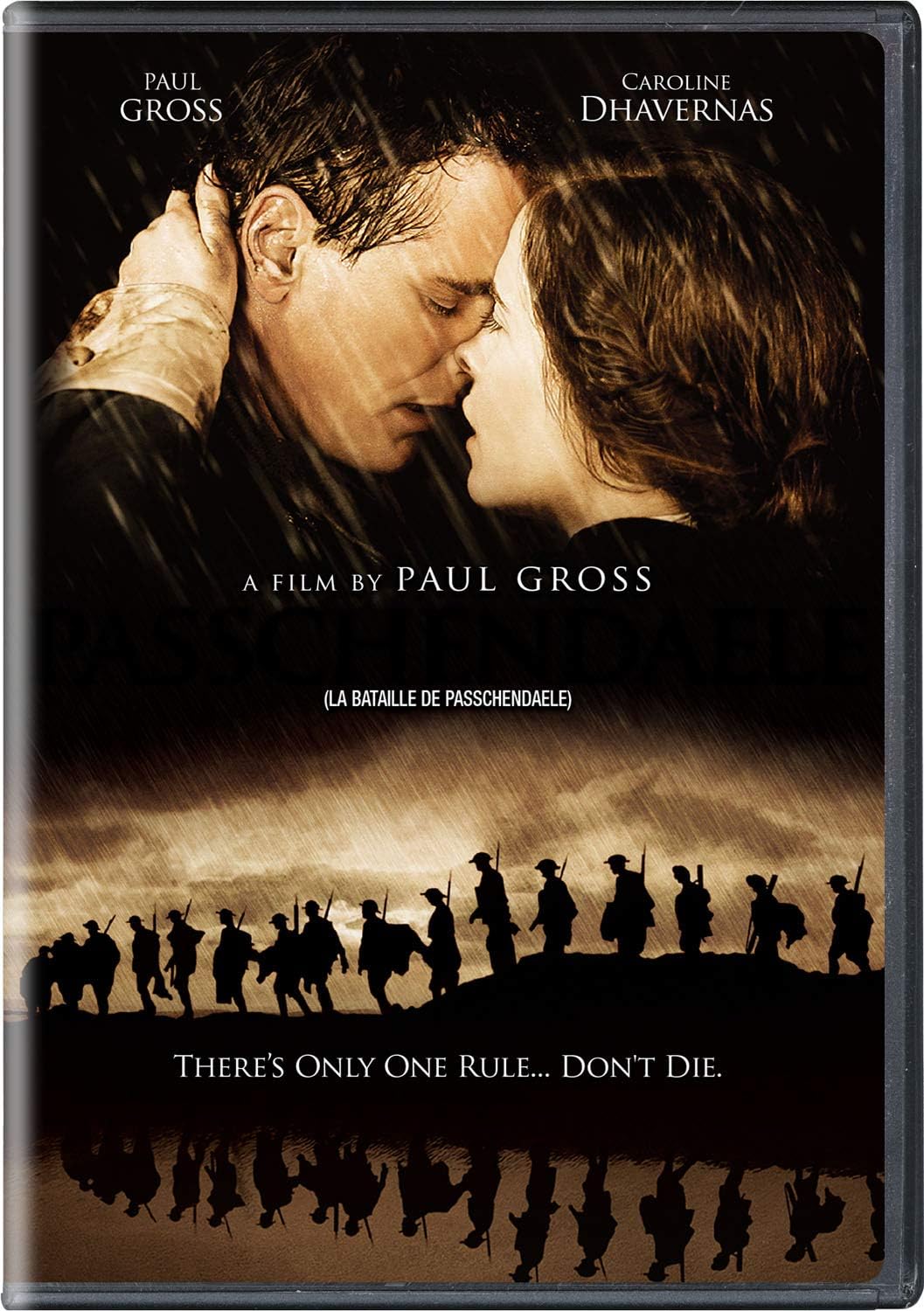
NTSC/Region 1. The motion picture Passchendaele, an epic set amidst the horror of war, was shot in Alberta from August 20th to October 23rd 2007, directed and written by Paul Gross. The film represents a lifelong dream of Gross's, who learned of this extraordinary period in Canadian history from his grandfather, Michael Joseph Dunne. The Battle of Passchendaele represents a story of determination, commitment and triumph, and this defining chapter in the forging of a nation shall never be forgotten. Review: Passchendaele/Ypres Salient 1917 - This movie is great, but there's little mention behind what is "exactly" behind the scenes of Passchendaele. It is a small Belgian town near the Ypres Salient in the Flanders area, where hundreds of thousands of British and Canadian soldiers met their fate from 1914-1918. Ypres was wrecked completely during the war and Passchendaele was blasted to oblivion by artillery and close fighting on both sides of the military armies that wrecked against each other there. Entire battalions ceased to exist in the fighting there, and this movie is dedicated to the soldiers of the Canadian army that fought and died there. Their casualties in that area are rated as well over 60,000 Canadian dead, and all from a country that had less than 10 million in the population. In the movie, one particular Canadian sergeant, who is wounded and forever haunted by the gory scenes of war he had experienced, is sent to Calgary, Alberta, Canada for a recruiting assignment under a no-nonsense Major who goes by the rules. He is attracted to a Canadian nurse, who not only happened to lose her father in an earlier battle that he participated in, but the hidden secret that her father had fought for the wrong side, which is soon brought to the public and making her lose her job for the accusation that she is a foreign spy. The nurse's brother, who suffers from asthma, is in love with a girl and feels shamed that he is not doing his part for the war effort, and has his patriotism questioned by the girl's father. With the public shame of who his father fought for, he seeks to enlist in any way he can and somehow worms his way over to a trench in the front lines. The sergeant then does what he can to get back to the war in order to protect the nurse's brother, just in time to participate in the bloody finale of the battles that rage around Passchendaele. The casualties there are unpredictable, and quite bloody, as a warning to those that think that this is just a romantic drama. The ending is quite surprising and very dramatic to great effect. I only watched the movie once, but what I saw was all I needed as a reason to order the movie myself. There are few WW1 movies like this one. Watch it for yourself! Review: Well Done! Brilliant! - This is a remarkable movie! It should be credited for an accurate depiction of the physical misery, dread, and mad activity of combat, as well as the really remarkable, sudden, and arresting acquaintance one gets w/ internal human anatomy when gobs of it are splattered all over you. Been there. To the reviewer who's written IT WOULD BE WELL FOR YOU and ONE DOESN'T NEED -- OR WANT: this movie is not entertainment; it is about a reality that few of the potential audience can have experienced: combat, what it's like to be hurt in such, and what just may become of you if you are very, very lucky, are medevac'ed out, and later receive fine-quality care. Clearly it takes a good deal of maturity to actually understand or 'GET THIS'; it doesn't appear that this particular quoted reviewer does? The movie is a faithful depiction of reality, not amusement or a game for suspended-reality millennials. Why would a potential reader NOT NEED - OR WANT confirmation of the accuracy of this depiction, from one of the 53,000 recently wounded USA veterans? We are few, in the scheme of things (3% of the soldiers deployed; 1 of every 6,000 living Americans), and many of us are not able to write. War is not a game, and depictions of it should not be entertainment. War continually cripples fragile human bodies. And it's not fun to be crippled: it's permanent. I limp and ache, and I have or had many buddies less fortunate than I am. A film can't portray to "never-served's"; what it FEELS like in combat. For those of us who have been there, though, - in any war - we vividly relive the smells, the shock waves, and the multitude of long-accumulated discomforts (headaches, hunger, bruises, rashes, cuts, sprains, infections - and the unique dumbing effect of months of sleep-deprivation), and the constant, long-term exposure to weather that we had no choice but to experience to the full, the often disturbing sights that we've seen, and the emotional numbing that some of us would fight (others not, succumbing to it, forever thereafter emotionally dead). Exhaustion was the primary, overwhelming feeling, and the resulting drifting inattentiveness the French call "ennui". All of this simply accumulated the longer you were in combat. And on top of all of this, there was the obvious need for continual hyper-awareness of surroundings. The only positive thing that I recall is that we each were accepting of other co-unfortunates as complete equals, and would share unhesitatingly. The surreal life of a combat soldier at the "point of contact"; is incredibly, definitively uncomfortable, stressful, and at times bewildering. The filth just has to be experienced. You come to believe that you can never become clean again, and come to suspect that memories of past cleanness were false. Exhaustion simply mounts. We were gradually expended. Reactions become purely reflexive, w/o thought. And all of the above describes your state prior to wounding. Once wounded, you experience the predictable waves of pain that thoroughly distract you from your surroundings; you KNOW just when the next wave will begin to roll through you, and you tense for it, and those muscles finally exhaust themselves: during a pain-wave, it is the only reality. This experience is completely surreal. I remember being dazed and mentally drifting as an Army nurse swabbed clean a patch of skin on my forearm to insert an IV to rehydrate me and apply the morphine (morphine really works, by the way: all pain temporarily vanishes!). Medical orderlies: "Prepare to lift!" "Lift!"; "Prepare to move!", "Move!" To be lifted and carried strapped onto a taut stretcher is a bewildering, disorienting experience. "Prepare to rack!"; "Rack!" The stretcher is locked into a sturdy, aluminum frame, w/ many others. You can now turn your head to one side or the other, only that. "Where are you from? How were you wounded?" You take stock of newly-found buddies (rank insignia cannot be seen; it is "bad form" for wounded to acknowledge rank), and try to let the reality of your disabilities sink in. Are you permanently crippled? You feel helpless, vulnerable, desperate, because your weapons have been taken, and these have not been out of your hands in months, prized possessions. Triaged numerous times at different stops, you are medevac'ed progressively "back", handed off from the "A Team"; to the "B Team" as you are gradually de-prioritized. You doze. Only your head is loose, and it rolls side to side as the aircraft rocks in flight. As depicted in this movie, those who come to accept this existence as "their new normal" will never readjust to peacetime. Call it "PTSD", but it is really the normal and healthy acceptance of conditions that had to be endured. The truth, for good or ill, is that none of us are the same afterward - and our families (particularly) and acquaintances can't help but notice this. We all lapse into the "thousand-yard stare" frequently, even years after our wars - and thus we recognize one another, veterans of whichever war. As was the case w/ the movie's protagonist, immediately after being medevac'ed out of combat, I spent several months billeted among other wounded in what was called a "Warrior Transition Battalion" (WTB), and we were called "wounded warriors" by the excellent, caring Army nursing staff. While there, waiting in queue for my surgery, I believe that I saw the full scope of wounds and also PTSD. We received good billets. We were clean (!), and were served fine chow. More importantly, we had time to talk to one another, at length, in the Day Room. I still remember many of those impromptu conversations. Rank was forgotten. We solicited the other's stories. We commiserated. We shared a mound of well-thumbed novels - and we discussed them! We were patient w/ one another, always waiting for a long pause before speaking in conversation, never interrupting another. Those more mobile got coffee for those less so. I remember that some of us played chess, and took the time to concentrate on our moves (we had nothing, if not time!). Others gathered to watch, all quite patient. None complained or urged faster play. I remember one languorous day, late morning to dusk, spent in a group that continually varied w/ comings and goings, discussing all aspects of coffee: experiences w/ it, different preparations of it, and its relative importance to a man. Eventually, we discussed our future prospects, in many cases altered due to new handicaps (I could no longer walk w/o a cane). We each wanted quiet, calmness, dignity. Ah, to be clean, untroubled, and to sleep between clean, white sheets, under good, thick, wool Army blankets! I recall it wistfully now as a "golden time" interlude after a filthy, degrading, bruising experience. This film did well: it presented the 1916-17 face of this experience. I wish that young boys should see this side of things before they come of age: the degrading misery and filth, rather than film glamor .... only the comradeship was positive. Young boys need to understand that this experience cripples you permanently: you do not recover from this. I will never be the same again - but I am better for the experience, a more generous person, capable of empathy. The US Army uses the term "resilience" , describing an elasticity, as if combat-degraded soldiers recover as good as new. This is a fantasy. One can recover from exhaustion, sleep-deprivation, and from malnutrition. You can even recover from some wounds. But combat is more than these. Those who haven't been through it can't see that. You do not recover from PTSD; you can only ameliorate some of the effects. The movie also suggested the nagging guilt that we wounded felt, leaving our buddies back in the fight. This is a very, very important topic. I still feel ashamed that I wasn't part of the final formation, when it was dismissed (I was in hospital at the time: in pain and unable to walk unassisted). This feels like inadequacy. I feel like a "slacker". We all felt it. It isn't depicted frequently enough, writers neglect it because they didn't experience it themselves and can't get into the minds of those of us who did.
| Contributor | Caroline Dhavernas, Gil Bellows, Joe Dinicol, Paul Gross |
| Customer Reviews | 4.4 out of 5 stars 484 Reviews |
| Format | Color, Dolby, Import, NTSC, Widescreen |
| Genre | Drama |
| Language | English |
| Runtime | 1 hour and 55 minutes |
T**R
Passchendaele/Ypres Salient 1917
This movie is great, but there's little mention behind what is "exactly" behind the scenes of Passchendaele. It is a small Belgian town near the Ypres Salient in the Flanders area, where hundreds of thousands of British and Canadian soldiers met their fate from 1914-1918. Ypres was wrecked completely during the war and Passchendaele was blasted to oblivion by artillery and close fighting on both sides of the military armies that wrecked against each other there. Entire battalions ceased to exist in the fighting there, and this movie is dedicated to the soldiers of the Canadian army that fought and died there. Their casualties in that area are rated as well over 60,000 Canadian dead, and all from a country that had less than 10 million in the population. In the movie, one particular Canadian sergeant, who is wounded and forever haunted by the gory scenes of war he had experienced, is sent to Calgary, Alberta, Canada for a recruiting assignment under a no-nonsense Major who goes by the rules. He is attracted to a Canadian nurse, who not only happened to lose her father in an earlier battle that he participated in, but the hidden secret that her father had fought for the wrong side, which is soon brought to the public and making her lose her job for the accusation that she is a foreign spy. The nurse's brother, who suffers from asthma, is in love with a girl and feels shamed that he is not doing his part for the war effort, and has his patriotism questioned by the girl's father. With the public shame of who his father fought for, he seeks to enlist in any way he can and somehow worms his way over to a trench in the front lines. The sergeant then does what he can to get back to the war in order to protect the nurse's brother, just in time to participate in the bloody finale of the battles that rage around Passchendaele. The casualties there are unpredictable, and quite bloody, as a warning to those that think that this is just a romantic drama. The ending is quite surprising and very dramatic to great effect. I only watched the movie once, but what I saw was all I needed as a reason to order the movie myself. There are few WW1 movies like this one. Watch it for yourself!
W**N
Well Done! Brilliant!
This is a remarkable movie! It should be credited for an accurate depiction of the physical misery, dread, and mad activity of combat, as well as the really remarkable, sudden, and arresting acquaintance one gets w/ internal human anatomy when gobs of it are splattered all over you. Been there. To the reviewer who's written IT WOULD BE WELL FOR YOU and ONE DOESN'T NEED -- OR WANT: this movie is not entertainment; it is about a reality that few of the potential audience can have experienced: combat, what it's like to be hurt in such, and what just may become of you if you are very, very lucky, are medevac'ed out, and later receive fine-quality care. Clearly it takes a good deal of maturity to actually understand or 'GET THIS'; it doesn't appear that this particular quoted reviewer does? The movie is a faithful depiction of reality, not amusement or a game for suspended-reality millennials. Why would a potential reader NOT NEED - OR WANT confirmation of the accuracy of this depiction, from one of the 53,000 recently wounded USA veterans? We are few, in the scheme of things (3% of the soldiers deployed; 1 of every 6,000 living Americans), and many of us are not able to write. War is not a game, and depictions of it should not be entertainment. War continually cripples fragile human bodies. And it's not fun to be crippled: it's permanent. I limp and ache, and I have or had many buddies less fortunate than I am. A film can't portray to "never-served's"; what it FEELS like in combat. For those of us who have been there, though, - in any war - we vividly relive the smells, the shock waves, and the multitude of long-accumulated discomforts (headaches, hunger, bruises, rashes, cuts, sprains, infections - and the unique dumbing effect of months of sleep-deprivation), and the constant, long-term exposure to weather that we had no choice but to experience to the full, the often disturbing sights that we've seen, and the emotional numbing that some of us would fight (others not, succumbing to it, forever thereafter emotionally dead). Exhaustion was the primary, overwhelming feeling, and the resulting drifting inattentiveness the French call "ennui". All of this simply accumulated the longer you were in combat. And on top of all of this, there was the obvious need for continual hyper-awareness of surroundings. The only positive thing that I recall is that we each were accepting of other co-unfortunates as complete equals, and would share unhesitatingly. The surreal life of a combat soldier at the "point of contact"; is incredibly, definitively uncomfortable, stressful, and at times bewildering. The filth just has to be experienced. You come to believe that you can never become clean again, and come to suspect that memories of past cleanness were false. Exhaustion simply mounts. We were gradually expended. Reactions become purely reflexive, w/o thought. And all of the above describes your state prior to wounding. Once wounded, you experience the predictable waves of pain that thoroughly distract you from your surroundings; you KNOW just when the next wave will begin to roll through you, and you tense for it, and those muscles finally exhaust themselves: during a pain-wave, it is the only reality. This experience is completely surreal. I remember being dazed and mentally drifting as an Army nurse swabbed clean a patch of skin on my forearm to insert an IV to rehydrate me and apply the morphine (morphine really works, by the way: all pain temporarily vanishes!). Medical orderlies: "Prepare to lift!" "Lift!"; "Prepare to move!", "Move!" To be lifted and carried strapped onto a taut stretcher is a bewildering, disorienting experience. "Prepare to rack!"; "Rack!" The stretcher is locked into a sturdy, aluminum frame, w/ many others. You can now turn your head to one side or the other, only that. "Where are you from? How were you wounded?" You take stock of newly-found buddies (rank insignia cannot be seen; it is "bad form" for wounded to acknowledge rank), and try to let the reality of your disabilities sink in. Are you permanently crippled? You feel helpless, vulnerable, desperate, because your weapons have been taken, and these have not been out of your hands in months, prized possessions. Triaged numerous times at different stops, you are medevac'ed progressively "back", handed off from the "A Team"; to the "B Team" as you are gradually de-prioritized. You doze. Only your head is loose, and it rolls side to side as the aircraft rocks in flight. As depicted in this movie, those who come to accept this existence as "their new normal" will never readjust to peacetime. Call it "PTSD", but it is really the normal and healthy acceptance of conditions that had to be endured. The truth, for good or ill, is that none of us are the same afterward - and our families (particularly) and acquaintances can't help but notice this. We all lapse into the "thousand-yard stare" frequently, even years after our wars - and thus we recognize one another, veterans of whichever war. As was the case w/ the movie's protagonist, immediately after being medevac'ed out of combat, I spent several months billeted among other wounded in what was called a "Warrior Transition Battalion" (WTB), and we were called "wounded warriors" by the excellent, caring Army nursing staff. While there, waiting in queue for my surgery, I believe that I saw the full scope of wounds and also PTSD. We received good billets. We were clean (!), and were served fine chow. More importantly, we had time to talk to one another, at length, in the Day Room. I still remember many of those impromptu conversations. Rank was forgotten. We solicited the other's stories. We commiserated. We shared a mound of well-thumbed novels - and we discussed them! We were patient w/ one another, always waiting for a long pause before speaking in conversation, never interrupting another. Those more mobile got coffee for those less so. I remember that some of us played chess, and took the time to concentrate on our moves (we had nothing, if not time!). Others gathered to watch, all quite patient. None complained or urged faster play. I remember one languorous day, late morning to dusk, spent in a group that continually varied w/ comings and goings, discussing all aspects of coffee: experiences w/ it, different preparations of it, and its relative importance to a man. Eventually, we discussed our future prospects, in many cases altered due to new handicaps (I could no longer walk w/o a cane). We each wanted quiet, calmness, dignity. Ah, to be clean, untroubled, and to sleep between clean, white sheets, under good, thick, wool Army blankets! I recall it wistfully now as a "golden time" interlude after a filthy, degrading, bruising experience. This film did well: it presented the 1916-17 face of this experience. I wish that young boys should see this side of things before they come of age: the degrading misery and filth, rather than film glamor .... only the comradeship was positive. Young boys need to understand that this experience cripples you permanently: you do not recover from this. I will never be the same again - but I am better for the experience, a more generous person, capable of empathy. The US Army uses the term "resilience" , describing an elasticity, as if combat-degraded soldiers recover as good as new. This is a fantasy. One can recover from exhaustion, sleep-deprivation, and from malnutrition. You can even recover from some wounds. But combat is more than these. Those who haven't been through it can't see that. You do not recover from PTSD; you can only ameliorate some of the effects. The movie also suggested the nagging guilt that we wounded felt, leaving our buddies back in the fight. This is a very, very important topic. I still feel ashamed that I wasn't part of the final formation, when it was dismissed (I was in hospital at the time: in pain and unable to walk unassisted). This feels like inadequacy. I feel like a "slacker". We all felt it. It isn't depicted frequently enough, writers neglect it because they didn't experience it themselves and can't get into the minds of those of us who did.
N**R
Outstanding WWI flick, with room for improvement...
I'm still waiting for someone to do a "great" WWI movie, and bought Passchendaele thinking this might finally be it. In short, it's far better than most movies on WWI, but this still isn't the "great" movie that desperately needs to be done. The combat scenes and authenticity in this movie are BY FAR the best done thus far on trench warfare. Even more impressive, this film was written by and produced by, the main "star" or character in the movie. This man did an outstanding job! The story, or at least the opening scene, is based on the experiences of his grandfather in WWI. The extra features are fantastic and you get a great idea of the pains they went through to get the look of Passchendaele correct. As a fanatic on authenticity, the uniforms, weapons, and the battlefields are top-drawer - I didn't see any mistakes and that seriously impressed me. The "major" battle scene at the end of the flick is superb, a bit campy right at the end, but over all, it's the best and most graphic WWI battle sequence yet filmed. On the down side, as always, it seems film makers find it necessary to implant some type of love story into a movie which doesn't need one. In this case, the main character falls in love with a nurse and therein lies the problem I had with the film. The love story only serves to slow the movie down and adds a bit of unrealistic puffery which wasn't needed. The love story comes off a little too much like something you'd expect to see in a 1940's era flick and because of this, you can pretty much figure out who's gonna' die and who's gonna' make it through. This movie would've been much better if they had stuck to telling the story of the Canadian troops and their German opponents and left the soap opera out of it. If it weren't for the love story, I would've easily given this movie 5 stars, but for that, I have to knock one off. Still, I HIGHLY RECOMEND this movie to any fan of excellent war movies or those interested in WWI history. This is an extremely well-done movie and it deserves a lot more credit and attention than it's getting.
T**R
A War Movie for the TITANIC lovers among you
At 20 million dollars, PASSCHENDAELE was the most expensive Canadian movie ever produced. And I think it's fair to say that every dollar of that budget shows on the screen. From the ultra-realistic battle scenes at Ypres and Passchendaele, to the portrayal of Calgary as a small prairie town at the turn of the 20th century, it is faithful to the visuals of what it must have been like to live at that time. PASSCHENDAELE is a throwback to the kind of war movies made by John Wayne, albeit with a hero in the throes of neurasthenia (PTSD) for having needlessly killed a young German soldier in a particularly cruel fashion. It wavers between glorifying the soldiers who fight in war, while criticizing war itself, especially the old men who stay safe at the home front and shame young men into joining the army. This movie is amazing in that it is a war epic quite literally made by one man, Paul Gross. Gross, wrote, solicited funding, produced, directed, starred, and even wrote the song "After the War" for this movie. I'm a fan of war movies, and it was this fact that led me to first watch PASSCHENDAELE. I must say, that for a one-man war film, it is astounding. I really enjoyed it. Other reviewers have commented on anachronisms in the speech of the characters and a "plastic love story", and, to some extent, these are valid criticisms. But I ask them, could they single-handedly make a better movie? The love story is between the character played by Paul Gross, Sgt. Michael Dunne, and his nurse, Sarah Mann, played by the wonderful Caroline Dhavernas. The cast is rounded out by wonderful Canadian character actors, many of whom will be recognizable to fans of The Murdoch Mysteries, dueSOUTH, Slings & Arrows, and others. Michael and Sarah have a strangely unrequited love; hers being dependent on him keeping her brother safe in the war. I wanted the characters to have more of a love story while the movie spent time on the home front in Canada. In my opinion, it would have strengthened the power of the ending. Yet, this is a very powerful piece. I would caution families against showing it to young children, as the battle violence is quite realistic. Sexual scenes are very tame and brief, with no skin showing and more left to the viewers' imagination than to the screen. Quite wisely too, I think. PASSCHENDAELE was given an "R" rating -- I believe because of the war violence. I think it would be ok to show to teens with parental guidance, especially if they are studying WWI in school. Like its spiritual predecessor, ALL QUIET ON THE WESTERN FRONT, the violence is not gratuitous: it shows the utter brutality and sheer waste that war can be. Nevertheless, the visuals are brutal and disturbing. Something that parents would want to talk to their kids about. PASSCHENDAELE highlights the tremendous contribution Canada made to WWI. The sheer numbers of men killed were staggering. It glorifies the bravery of the individual soldier and of the platoons, while showing the futility of the war. It has a place in the war movie collection of any fan of the genre. Passchendaele
L**Y
An almost perfect War Movie
Another reviewer said it exactly as I would; this film written, directed and starring Paul Gross gets SO much right--the battle scenes in particular and just a small amount 'wrong'. Paul Gross is terrific here and is so compelling as the smart, tough, Canadian soldier who comes home on leave from the War. He is very far from his 'goofy', but likeable character he plays in Due South from his TV show. The depiction of the hand to hand combat scenes is every bit as good as seen in Saving Private Ryan. But when Paul's love interest shows up at the Field Hospital just behind the front lines where he's stationed, and they kiss while the bombs are landing around them, a lot of the credibility factor in the movie goes right out the window. The final scene played out like some modern version of the crucification of Christ, either works for you--or it doesn't. I was ok with it and I still give the movie 5 stars but it isn't the perfect WWI film. (The Blue Max still has that title).
G**S
Good Try, But Falls Short
This is, in many respects, a well done movie. Unfortunately the screenplay lets it down. A bit too obvious, a bit too schmaltzy. But in terms of the cinematography, it is an excellent movie with very good acting in spite of the limitations of the script. I give Kudos to Gross for his attempt to capture the reality of his Grandfather's war. Unfortunately the love story combined with the Christian symbolism leads to an overall failure for the film. The best WWI films remain All Quiet on the Western Front and The Lost Battalion.
K**5
There may indeed be winners, but in war, everyone loses
This is the tragic story of the fight for a little Belgian town in WWI. I had never heard anything about Canadian involvement "Over There," so it was certainly an eye-opener. My grandfather fought in the trenches of France, and my great-grandmother's sister was a Red Cross field nurse there, too. He came home without a scratch, but would never utter a single word about the experience for the rest of his life. She came home with a Purple Heart, watched her true love die of his wounds, and never married after such an overwhelming loss. I share this for those who might think "Passchendaele's" story line is contrived or convoluted; given my own family legends, it's pretty believable to me. I am a Vietnam War era veteran myself, so the combat and hospital scenes were meaningful, disturbingly well-produced and heartbreaking for me to watch. Most viewers probably won't have that problem, but I could never even get past the opening credits when trying to watch "Saving Private Ryan." The story's vehicle is the love a wounded, shell-shocked soldier bears for the rehab center nurse who helped him recover in Calgary as the war continued to rage in Europe. She has a few flaws, feels unworthy of a meaningful life, and does nothing to encourage his attention. He discovers the nature of her flaws and is undeterred. For love, through different routes, they both end up in Europe at the battle of Passchendaele. The love story is a sweet one. Michael Dunne and Sarah Mann are beautifully and believably played by Paul Gross and Caroline Dhavernas. Scenes of passion are tastefully filmed, and there is very little vulgar language. Such sensitivity, I think, probably advances the story well.
D**T
Based on a true story.
Paul Gross did an excellent performance in this fine romantic story of a WWI soldier who was badly wounded in the war and sent home to recuperate only to fall in love with his nurse. He has to work hard to override her determination not to date patients. Worse than his physical wounds is his mental state. Even though he is being hailed as a hero, he is determined not to return to the war even if it means a court martial. Then the nurses brother rushes off to join the war. She begs him to go and protect him. Because of Love--he does! This fine Canadian film was about Canadian Michael Dunne who set a record for the most medals earned in the battle of Paaschendaele. A true story.
D**S
A great Canadian movie
I think that Paul Gross is a Canadian national treasure going back to his days in 'Due South'. Passchendaele is an indication of the mature power he can bring to the screen when given a large budget (albeit only large by Canadian standards). This is not a movie that will appeal to war buffs who are bound to find fault. Try to remember that this is made on a tiny fraction of the amount spent on Hollywood epics and is meant to appeal to a wider audience than the toy soldier brigade. But for anyone who wants to see a tremendous Canadian movie though, I strongly recommend buying it.
M**T
Super Film
Super Film
T**R
Romantic and Informative
Really enjoyed this dvd - shame it didn't get a cinema release in the Uk. The story is based on the experiences of the writer's grandfather which makes it all the more compelling. Amazing battle schenes. I can see why it won so many awards.
R**E
top
tres bon film
R**S
Good film
Great
Trustpilot
3 weeks ago
1 month ago