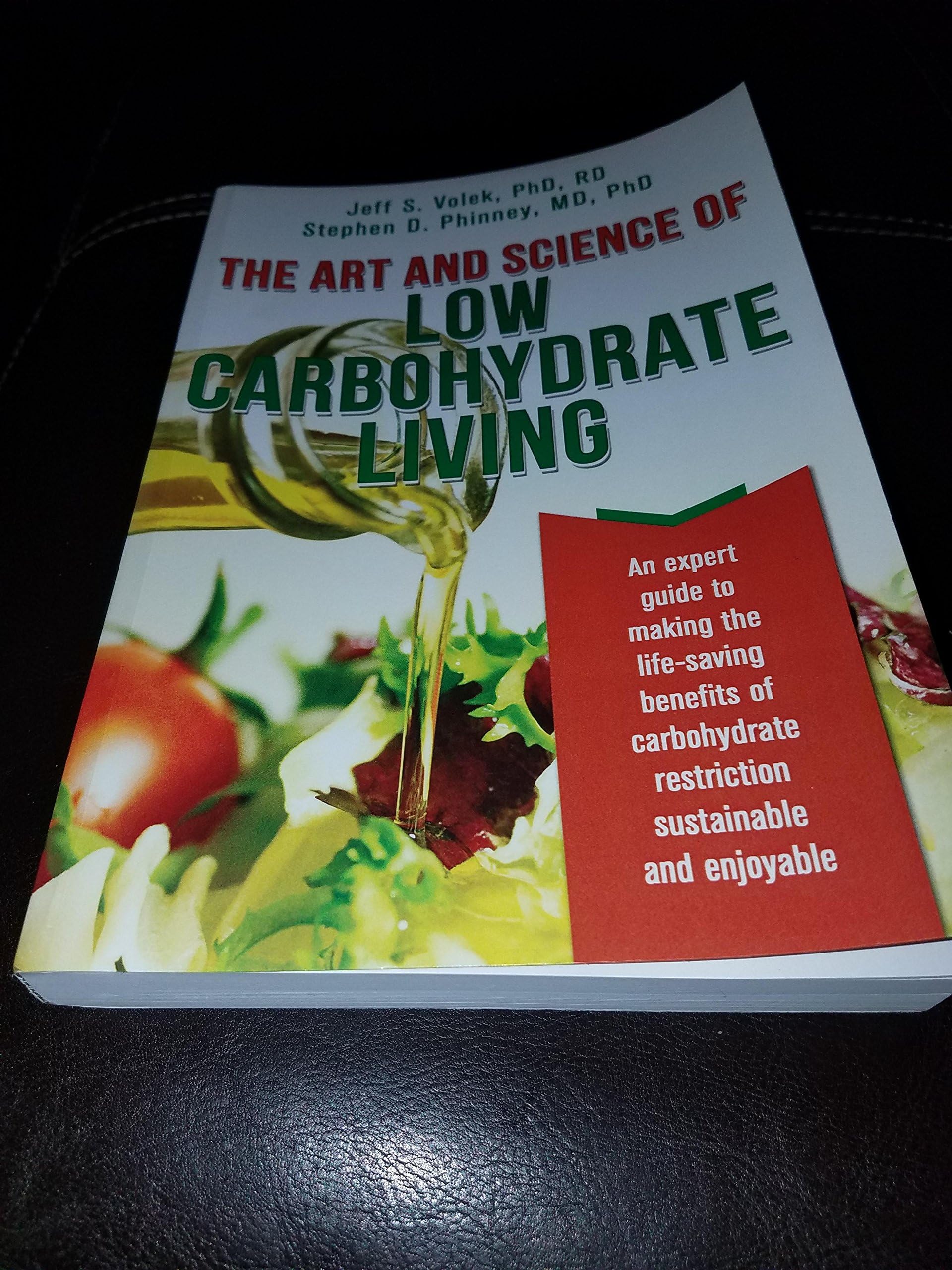

The Art and Science of Low Carbohydrate Living: An Expert Guide to Making the Life-Saving Benefits of Carbohydrate Restriction Sustainable and Enjoyable
Product ID: 4102992
💡Life-saving benefits
📚Expert insights
🥗Sustainable recipes
Desertcart purchases this item on your behalf and handles shipping, customs, and support to Croatia.
🥦 Elevate Your Plate: Discover the Art of Low-Carb Living!
This comprehensive guide offers expert insights into the benefits of low carbohydrate living, providing readers with sustainable strategies, delicious recipes, and a supportive community to help them thrive on their health journey.
| Dimensions | 6 x 0.72 x 9 inches |
| Edition | First Edition |
| Isbn 10 | 0983490708 |
| Isbn 13 | 978-0983490708 |
| Item Weight | 15 ounces |
| Language | English |
| Print Length | 316 pages |
| Publication Date | May 19, 2011 |
| Publisher | Beyond Obesity LLC |
User
In Depth and Utterly Fascinating
There are so very many in depth and all inclusive reviews I see no reason to parrot what they have all said, but I'll say that I agree enthusiastically. Jimmy Moore's review in particular is a gem!As a person who is fascinated with this subject and who eagerly devoured both of Gary Taubes' books, this one offers yet a deeper and more clinical examination of the science of low carbohydrate eating from two doctors who have been immersed in this field for 30 years. This is most definitely NOT a book for the casual reader interested in following a low carb diet. Rather, this is a book that will be understood and appreciated by someone who has a great deal of personal interest in learning more about this subject and who enjoys the deeply scientific explanations and discussion, and additionally, a person who has already done a fair bit of reading on this subject. This book is most definitely targeted at someone with a scientific and medical background, specifically doctors, and there are things that I had to read a few times to fully comprehend and absorb, but if you have the inclination and interest, this is a very rewarding and enlightening discussion that is quite unique in the current low carb literature. One would be hard pressed to deny the absolutely overwhelming and glaring evidence arguing for low carb diets when the vast body of proof is presented as compellingly and clearly is it is here. Low carb's undeniable superiority as a way of eating is nothing short of amazing to read about in all its historic and fascinating glory. My own personal observation and experience (also success) with eating low carb left me with vaguely formed ideas and I was self-identified as perhaps a "carb sensitive" person, and yet I couldn't put it all together in terms of how it ultimately affected me until I read this book, which discusses this subject at great length. Carb sensitivity is apparently a matter of degree within each individual, and I now understand the hows and whys of its effects on me as related to my own independent observations over the years. It's now clear why a low carb diet works so superbly and easily for me (when nothing else works) and why it has so vastly improved my health in myriad ways.Another important discussion was that of individual variability, which explains why not every diet works for everyone equally, why some don't gain weight on a high carb diet and why some can lose weight equally well on various types of diets. One shoe obviously does not fit all, and for some, only one shoe fits!Despite my own success with weight loss and good health eating low carb, I still had this nagging worry about fats in particular, especially in light of the deafening chorus of low carb detractors out there who railed endlessly about the dangers of fat. My insecurity about this aspect of low carb eating has now been entirely put to rest because of how fully the authors explain the body's use of fat in all its aspects. This alone make this book a valuable asset.As it was when I was reading the two Taubes books, I continue to be dismayed and disgusted by the narrow mindedness and yes, dishonesty of the general scientific/nutrition community. The word "sheeple" comes to mind, but it's even more than that. It's about politics, money, influence peddling as well. It is nothing short of amazing how so many of us lay folks out in the trenches can quite clearly see all the evidence for what it is and relate it to our own experiences, and as a result we draw such a different conclusion from the so-called "experts" with regard to the merits of low carb eating. Many, maybe even most of the diet gurus continue to march down that same old highway chanting their tired mantra of low fat/high carb/grains are great, all while totally ignoring or at least remaining oblivious to decades of increasing obesity rates that are the result of their recommendations. Do they never connect any dots or examine the evidence? In the popular media, it is a continual frustration to hear them continue to hawk diets full of the very foods that keep their patients overweight, increasingly diabetic and unhealthy. Virtually everything I come across that is not written within the low carb framework is jam packed with misinformation and downright untruths, proclaiming as desirable, healthy and effective the very approaches and strategies that were long ago shown to be just the opposite. Old habits and beliefs die hard, apparently.So if you have already done a fair bit of reading on this subject and thirst for a deeper, more thorough knowledge and understanding of the history and actual body mechanics of low carb nutrition, then this is definitely a book you will want to read and enjoy. In addition, it provides you with a huge new database of ammunition with which to make your own case and defense of low carb nutrition! Overall a very fascinating, enlightening, comprehensive and well presented discussion that delves deeper than anything I have yet to come across in this field. Despite the rather high cost of this book, it is well worth owning.
User
Has material I have found nowhere else
Earlier I wrote an enthusiastic review about the English edition based on Dr. Wolfgang Lutz' Leben Ohne Brot (1967) [in English the German would be rendered "life without bread'] based on his experience regarding his own well being and the effect on his patients to whom he strongly recommended a very low carbohydrate diet. The English edition I read and reviewed on Amazon was titled Life Without Bread: How a Low-Carbohydrate Diet Can Save Your Life (2000) in which Christian Allan is a co-author (though Amazon seems only to credit Allan in their database, at least so far their author look-up seems to reflect).However, I would give this book - by two life long researchers in the area of low carbohydrate dietary regimens and their effects on those who follow such a regimen, including high performance athletes - eight stars if possible to show how I feel about its value compared to 'Life Without Bread' despite the high esteem I still have for that book and Dr Lutz' work [I gave Dr Lutz' book five stars].Serious athletic training is an area in which Drs Phinney and Volek both have strong interests and have done a great deal of research. Their comments about errors in a number of the often cited medical papers in this area (which ground the high carb, very low protein, low fat axe so in fashion for a good while) I found very helpful and interesting.This is, I would say, a must read book for anyone interested seriously in low carb eating. It also as I imply above addresses questions about how this affects athletes in sports from bicycle racing to power lifting (my impression was that Dr Phinney had a strong personal as well as professional interest in bicycle racing, Dr Jeff Volek in power lifting). This is especially helpful as most discussions of low carb eating tend not to be addressed to those involved in regular strenuous physical activity where the concern is not losing fat but enhancing performance.Among things I had never come across before was an explanation for how keto stix did not always reflect one's true state of ketosis but could fail to flag a ketone commonly found in many who had been on keto adapted diets for a long enough time, e.g beta- hydroxy butyric acid or BOHB so one could pretty much be running on ketones (as desired) but not have it flagged by the ketostix.Also it contains a very interesting discussion of problems with excess protein consumption and what might constitute excess protein consumption. As part of this discussion not merely results in experiments attempting to verify just how much protein could be utilised by the body and how much beyond that likely was of no benefit, but also acknowledgement was made of subjective comments in certain athletic communities... e.g. comments made by some power lifters about higher levels of protein that they felt worked for them even though this did not seem to be implied by the studies. The book does not suggest that anyone follow what is implied by such comments but notes them, which I feel truly reflects well on the book.[A problem with studies and experiments is that in attempting to express the results, outliers may be ignored.. just looking at the numbers in a number of bio medical papers can be disconcerting. One cannot escape the feeling that not merely are our statistical tools too awkward to catch what may be happening very often, the way results are presented tends to require some assumptions about the nature of what is being observed ... an experimental result published may in effect screen out outliers .. but the outlier may not be a result of 'noise' in the recording of the data, so to speak, but actual differences in individuals... ]Volek and Phinney feel like true scientists in that while they have written a number of papers published in peer reviewed journals, they give context to the issue being discussed and do not just play the game of sophistry with Abstracts from published papers (which can really lead one astray) ... When one examines published papers it can be most disillusioning how 'shaped' the results can be and how misleading it can be if one outside the area tries to come to understanding just going over Abstracts [as testimony to this one need only look at the changing fashions of thought about healthful eating; the controversies now in process about the risk benefit analyses of various screenings formerly widely urged on the public for their supposed value in 'the war [dreadful name] against cancer'; and just what significance blood cholesterol figures have, just to name three matters that at present seem in a state of flux](For those biassed in the direction of attributing more to an MD degree than I think warranted, Stephen Phinney is an MD [Stanford] as well as a PhD in Nutritional Biochemistry [MIT] ; Jeff Volek has a PhD [Penn State] in exercise physiology and nutrition and is an Associate Professor in the #1 ranked Department of Kinesiology at the University of Connecticut where he teaches and leads a research team that explores the physiologic impact of various dietary and exercise regimens and nutritional supplements. I quote the blurb on Dr. Volek from Amazon's biography page for convenience but I recognised names of people he worked with and am not surprised the U of Connecticut Depart of Kinesiology is rated so high.I think these guys are the real thing, so to speak. Their book is definitely the real thing.Nothing is all one ever would want to look at.. the world is too rich to be simply caught in words... So I would also recommend the neurologist David Perlmutter's book 'Grain Brain' and Gary Taubes' book 'Good Calories, Bad Calories: Fats, Carbs, and the Controversial Science of Diet and Health'Taubes' book is of great interest I felt for his presentation of the history behind what has seemed widely accepted ideas on good and safe diets solidly based on science and which turns out to be too often what seems political smoke I am afraid.. How this happened is presented by Taubes in a way I felt very clear and unbiassed to me and makes his book impressive as a study of human behaviour aside from what he has to say about science, politics, misinformation and factors that can influence who gets heard and whose work is ignored.[Volek and Phinney touch on the political aspect in science but briefly... Taubes' book is worth reading even if one were an alien whose metabolism was totally different from ours and completely unconcerned with what seems to be good for humans to eat or to avoid eating, it is a fascinating document about human behaviour.]For those interested in trying a keto adapted life or considering it, aside from what may be behind all the smoke and turmoil in this dispute, I would recommend Volek and Phinney most highly. I also was struck at things I had not come across elsewhere that I found in David Perlmutter's 'Grain Brain' .
User
Love low carb/keto living
I just lost 20 pounds in four months doing a KETO based diet. JUST read this book...so helpful. I'm a low carb/primal/paleo (can we invent anymore labels nowadays? LOL!) I have not eaten grains, beans, much fruit for 6 years. No longer have any chronic respiratory problems BUT I never lost weight ..maintained - kinda but never lost. I was eating too much protein - who knew? I started to research lower calories and learned about adjusting my macros and keeping a food log on FitDay.com (oh yeah I caved and started logging my daily foods) and lost the weight fast. Some weeks I gained a pound but the next week I lost two...what they say in this book about water weight fluctuation is true. I only weigh once a week. NOW I am learning to maintain...I exercise moderately which means my new macro calculations are about 3-400 more calories a day. Bummer Man...now I have to eat more Kerry Gold butter and organic coconut oil while keeping my protein and carbs the same...oh well LOL!Don't listen to the naysayers! Oh, the only reason I gave this four not five stars is because canola oil is mentioned as part of the good oils...no no no - new research says that Canola oil (or rape seed oil as it is called) is rancid stuff and coconut oil is hardly mentioned at all and should be. I make coffee every morning with a tab of butter and a tab of coconut oil and blend with my "Smart Stick" - a little cinnamon, a couple of tabs of chia seeds - amazing treat. The book was published in 2010 so it makes sense that the current research on oils is not included. Other than that - wonderful...another low carb bible to add to my library. Love low carb/keto living...thanks for well researched information gentlemen.
User
Science moves forward, important and impressive contribution
I have been very impressed by this book, what an important topic, so important to the health of us all in making good choices in a world of abundant foods of all kinds and perversions, and imagine the impact on a portion of our population as high as 20% who would benefit greatly from the excellent science in this book. ( I really believe Banting had a blood sugar metabolism problem, and he was not entirely reflective of all people ) I am about half done with this book, and find it engaging, it is a book that requires some background in biology, but an interested reader can use wikipedia and other sources to follow the reasoning. I will update this review when I finish the book and also my first two weeks of Low carb living especially with any changes in my opinions and comments.Two rebuttals to the impressive research offerred thus far in this book, this is no attack on the authors only something to consider in evaluating the research. ( the authors included )1. It is becoming fashionable to talk in terms of the "Paleo" diet, but while this is a very important point, there are some counter arguments that should be considered. I think the most important anomaly to this avenue of reason is "mother's milk" which is composed of a substantial amount of carbohydrates, so if carbohydrates are so inferior, why did nature evolve the current composition of mother's milk. The child is forming a great deal of important cells and bioinfrastructure and this seems to defy the countervailing argument about how our diet consisted of very little carbs for optimum living in our past. ( there may be a good explantation, but I could not think of one to square it with the Paleo reasoning that leads us to consider a low carb diet as superior because we evolved on this other diet, the human machine does use carbs for this process of sustaining the newborn, why?.)2. The book thus far has mentioned the brain, but none of the research tests seems to have tested brain function on the low carb diet, which concerns me, I use my brain often, more than as an athlete uses their body, so for me the brain function on a low carb diet is very important. The Brain needs quite a lot of calories and it prefers carbs, now the authors mention that ketones can be used, but having been in the adaption period, I do not feel good, and my brain is not optimum, some would say I need to wait longer, but I think the liver is very adaptable and does not require the full two weeks, where as maybe the muscles might need to change the machinery over a bit and require a full adaption period for the low carb adjustment. So I am lead to believe that my body and other folk's bodies are using the protein for creating the fuel for the brain, not the fat, which concerns me since protein is needed for other activites and this is not optimum for fueling the brain, and I might not be considering my protein intake in relation to my fat intake as encouraged in the book. I agree that a winter can be survived acceptably using the low carb option, but is this truly optimal considering the importance of brain function, on this point I am skeptical, but open minded.I find the book compelling in considering the dangers of excessive sugars and starches, this it would seem applies to everyone, where as a smaller portion of metabolically challenged folks might need to consider the more extreme diet proffered in this book. I think we should think in terms of "SLOW carbs" more than "LOW carbs", and I do agree a decent amount of good fats and lean proteins should be part of a good diet for most, but the low carb diet is extreme and I am not yet sold this is optimum for all people. I think the authors do highlight the fact that sugar and fat control are a lot more complex than just fat control, and that there are limits to sugar assaults on the body, and some people are a lot more sensitive than others, which might be one of the most important factors in wide spread obesity( truly a groundbreaking point ) and should not be diminished even if the low carb option is not optimal for all.I really hope the good work of these authors and their research is continued, especially using genetic markers to help the mass population in tailoring their diets to optimize their living. I also hope the authors do more brain function testing in their research, unless I discover this later in the book, this is lacking.It really takes some moxy to advocate a high saturated diet with extra sodium, I must admit I could not let my prejudice go immediately even with the well reasoned argument, old habits and prejudices die hard :-). Thank you for this excellent contribution to science.
User
this book brought me to the next level and helped me doing Low-Carb correctly
when I bought this book, i had already read Gary Taubes Good Calories, Bad Calories and Why we get fat. So I was already convinced. if you are largely unconviced about low-carb maybe you should read one of those first, if you are neutral or almost conviced you can proceed with this one.the book did one thing for me that is important - it helped me to do very low carb correctly. just letting go of bread, pizza, pasta, rice and soft-drinks is good, but it doesnt get you all the way and you might encounter adverse effects.I discovered Volek & Phinney in some papers that i had read in between and then finally in a report about 100km Marthon Low-Carb Runner (who beat his competition by far). It appeared to me these guys do serious science and ask the right questions and have an open mind when approaching things.if you want to go low carb, or better, very low carb to lose weight or improve your health AND do it successfully AND understand how and why all of this works - read this book! if you just want to lose weight read the updated Atkins book or the other book that Phinney/Volek wrote.if you really want to know the why and how, then this book will give you fascinating insights. the book is an absolute pleasure to read, it sticks very close to the point it wants to make and tells everything in a very pleasant way. Its adressed to doctors in the field treating pateitns as well as normal people like me who just want to know everything there is to know about it.for more details about the contents, read the other reviews, i will focus on what was important for me:- using the right metrics when doing blood tests- eating the right amount of salt & magnesium- using the right amount FAT in you diet- vastly improved understand about 'all-of-it' works- why to relax about the uridic acid and colesterol increase even if it skyrockets- better understanding about the whole ketosis process and why to relax about the urine test stripsIn total i lost 24kg doing low-carb and about the last 6-7kg with it doing very low carb just for the last 5 weeks.I applied all their tips & tricks, i feel no hunger, feel energized, have retained all my muscle and the blood results have developed exactly according to what was likely.my HDL skyrocketed, my triglycerides plummetet, my LDL increased as well, my total cholesteral as well, uridic acid as well - all as explained and predicated by the book and probably all normal.I am now in the last weeks of keto-adaption and now waiting for my uridic acid excretion to increase and ketone bode retention to increase as well.I feel very well equipped now to do the diet correctly as a lifestyle and hope i can reap the plenty benefits of this lifestyle, including the cardio- and neuro-protective elements, as well as the anti-inflammatory etc benefits.
User
Great addition to the low-carbohydrate literature.
The book, as compared to the other Atkins diet books, gets more into the science behind what makes the low-carbohydrate diet a successful way to lose weight. It is ostensibly marketed to health care professionals but can appeal to others that want to know more about the science behind low carbohydrate dieting.Other reviewers have given excellent outlines of this book but I would like to emphasize some important points that this book has made. One of the most important considerations is about how one is able to accomplish the first part, or induction phase, of the diet. Many people abandon the diet within two weeks because of experiencing weakness and other debilitating symptoms. The book discusses the causes and remedies employed to succeed in adhering to the diet.The book also emphasizes that the diet must be truly low carbohydrate in content to be effective. Reducing one's usual carbohydrate intake by half or somewhat more may leave one unaffected or even worse off compared to one's original diet. Some individuals may have to reduce their carbohydrate intake to as little as 20 grams per day to reduce weight, blood sugar levels, blood pressure, etc. in a significant way.I hope that the discussion about LDL cholesterol levels can be changed in their next edition. LDL-C results are of little analytical value compared to ratio of triglyceride level to HDL-C levels, and for that matter, other measured results that can now be obtained. A statement that I regard as somewhat controversial is, "Too much cholesterol circulating as LDL-C may lead to accumulation of cholesterol in the arterial wall, plaque formation, and arterial disease." One of the reasons that the diet-heart hypothesis is so durable is that a well-accepted model for plaque formation and arterial disease lends impetus to the hypothesis. In this model cholesterol precipitates out to the lining of the artery and starts an inflammation reaction that develops into a dangerous plaque. In analogy to a corrosive mineral in a pipe the higher the concentration of LDL-C the more likely the LDL-C will react with the wall of the artery and start plaque formation. Statin manufacturers and adherents to this school of thought use this model to label LDL-C as the `bad' cholesterol and imply that LDL-C levels should be minimized.Although the above paragraph describes the conventionally accepted model in a sketchy fashion there is no proof that the model is correct. There is at least one other plausible model discussed in the book titled Fat and Cholesterol are Good for You by Uffe Ravnskov that does not necessarily lead to higher likelihood of plaque formation with increased LDL-C level. Although the correlation between LDL-C level and coronary vascular disease is quite weak, it is admittedly positive. The LDL-C may only correlate with some other variable that may be involved more intimately in the mechanism that is involved in plaque formation.Promotion of the importance of LDL-C levels can potentially hamper the acceptance of low-carbohydrate eating as a healthy practice. Adoption of a low-carbohydrate diet does not necessarily cause LDL-C levels to decline. When I embarked on a low-carbohydrate diet my HDL-C level rose from below 40 to near 60. My triglycerides went from near 400 to near 100. My lipoprotein-cholesterol particles went from dense to fluffy. Nevertheless, my LDL-C rose from below 200 to over 300. My LDL-C level may have simply increased to achieve homeostasis. Everything else about my blood work was beautiful but my physician wanted to put me on statins, which I refused. This physician, who advocates for low values of LDL-C and knowing that I had gone on a low-carbohydrate diet, may have joined the opposition against low-carbohydrate diets.I hope that the next edition would also discuss the role of stress or cortisol management in weight and health issues. The various hormone levels are intimately connected to one another. If stress levels increase, cortisol levels also increase and, in turn, insulin levels rise. A person's stress levels relate to the amount of carbohydrates that one can use in a maintenance diet. As the stress level goes up the maximum number of carbohydrates permitted on a maintenance diet must usually decrease.
User
low carbohydrate living
This is an educational book explaining all you wanted to know about watching your what you consume and living a low carbohydrate diet. A section with recipes would have been helpful.
User
Very Helpful Information
I have been on a low carb diet now for about a year. I have never been a snacker in between meals or go back for seconds kind of eater. I wasn't one to pile up my plate and rarely ever "cleaned" my plate. I assure you that I was not an overeater. This was due to the fact that even before feeling full the food would stop tasting good and I would stop. It was like my body had it's own meter that said that's enough. My husband was envious. I never had a weight problem until I hit the age of 36 which I got under control by going on the Zone diet which is similar to a low carb but it limits your fats. I was very successful until I entered pre-menopause around 45. I started packing pounds in my stomach which I could not seem to stop or get rid of. I was eating as sensibly as I could with the info I knew so far, but I was getting heavier. I know that this is common in menopausal women so I figured that once I hit menopause it would stop. Well it didn't. Then I happened upon the low carb diet by chance. My husband noticed that whenever he had something with sugar, his legs would ache shortly after and he has always had restless legs. So I started researching and came upon some bloggers who found relief with a Ketogenic Diet. I researched the diet and decided we should try it, but I felt a more modified Ketogenic would be easier for us to follow. This book pretty much verifies what I have been finding in the diet to be true. Not only have I lost 35 lbs. but my whole body feels so much better. I noticed the difference long before losing a pound, e.g. acid reflux that I have been fighting most of my life disappeared over night in eliminating sugars and starches, and my muscles no longer ached. My body felt peaceful. I am 58 and attributed a lot of my body aches to getting older. To my surprise, in going low carb I have never felt younger. I have more energy, am less hungry, and my tryglicerides have never been lower ever! This book explains that. I find the need to read books like this one because the recommendation for low fat diets has been so ingrained in us that I still find myself concerned that I might be causing harm to my body even though I feel great and my lipid panels and blood pressure are good. It's hard to overcome that kind of thinking when it's all you've heard most of your life, even though obesity and diabetes has never been higher. Yet we still hear from the mainstream that a low fat diet with multi-grains is the answer. The book describes the science behind the low carb diet and sheds some light on how the studies that helped send out the decree for low fat were interpreted. This book is not a recipe book or a step by step guide on how to do a low carb diet, but it helps you to understand how the body utilizes carbs and fats and why fats are important in our diet. I always like to know the why or how something works. This book makes sense of it all and helps me to stay the course. If you are tired of feeling lousy and being overweight, this book might be the information you need.
User
I am very pleased to have read this book
I am very pleased to have read this book. I am insulin resistant and doing whatever I can to avoid being diagnosed with diabetes 2. This book as well as Jenny Ruhl's "Blood Sugar 101" will probably extend my life and the quality of my life by many years. The technical information in this book was sometimes above my ability to grasp/follow/understand, but the message remained clear throughout these very technical chapters. The thinking/research/interpretations presented here add to the ever growing body of "new news" that low fat, high carbohydrate life styles are simply not good for us. If you are have an open mind and want to learn more about the way our bodies work, I think you will be stunned by the content of this book. Thank you for publishing this book.
User
Lchf explained
Excellent scientific proof of LCHF. Diet!Very useful for me ; a type 2, diabetic .Proper use of fat and protein explained
User
Indispensable pour comprendre l'alimentation low carb
Une introduction à l'alimentation low carb par deux des meilleurs spécialistes de la méthode. Les auteurs sont parmi les représentants les plus en vue de l'alimentation et du métabolisme low carb. Ce sont des chercheurs très rigoureux ayant publié dans les revues scientifiques de haut niveau. Il faut dire que la méthode n'est pas un régime, mais d'une hygiène de vie s'appliquant à tous et permettant de diminuer le risque des dites maladies de civilisation. En fait, cela consiste à se nourrir comme nos ancêtres l'ont fait durant les 99% de l'histoire de l’humanité où ils étaient chasseurs-cueilleurs. Avec bien sûr les adaptations que permettent nos méthodes actuelles. Jusqu'à fort récemment, l'humanité ne consommait pas les quantités astronomiques de sucre qu'on ingurgite maintenant.Encore que ça peut être aussi pratiqué comme régime, pour perdre des kilos en trop. Les coauteurs, avec Eric Westman, ont également publié un nouveau manuel du régime Atkins qui est basé sur des dizaines de publications scientifiques et a été un bestseller (traduit en français sous le titre: Le Nouveau régime Atkins).Malheureusement, l'ouvrage n'est pas traduit en français. Mais il faut s'y mettre à l'anglais, plus de 95% des livres intéressants paraissant dans cette langue. Les sportifs peuvent lire le complément indispensable pour eux, écrit par les mêmes auteurs: The Art and Science of Low Carbohydrate Performance.
User
Estupendo complemento del libro "Good calories, bad calories" de Gary Taubes
Contiene información complementaria interesante sobre las dietas LCHF (low carbohydrate - high fat) que no recuerdo que se mencionase en el libro de "Good calories, bad calories" de Gary Taubes (GCBC). Es un libro más fácil de leer que el GCBC, y lo recomendaría a todos los interesados en entender el funcionamiento de las dietas LCHF. Los autores tienen otro libro, de titulo parecido (cambia el "Living" por "Performance") que está más orientado a deportistas interesados en seguir una dieta LCHF.
User
Great book!
The most comprehensive book on low carb diet!Very interesting and very detailed.A must for everyone interested in being healthy.
Trustpilot
1 month ago
2 weeks ago