Anthony Bourdain's Les Halles Cookbook: Strategies, Recipes, and Techniques of Classic Bistro Cooking
Product ID: 4130177
Desertcart purchases this item on your behalf and handles shipping, customs, and support to Croatia.
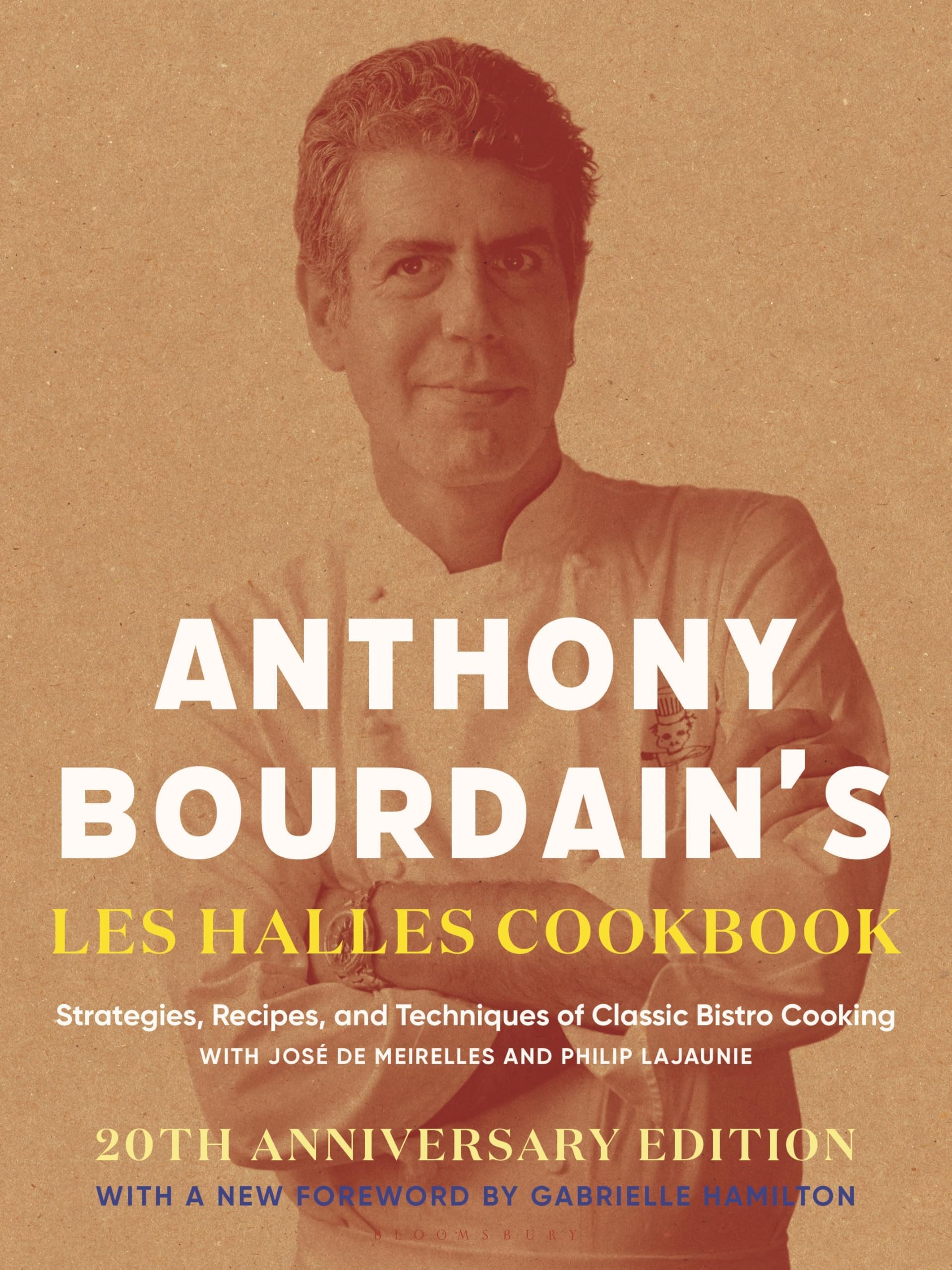
20TH ANNIVERSARY EDITION "It's like having the chef standing on the back of your clogs while you cook . . . This is evergreen.” -Gabrielle Hamilton Globally beloved chef Anthony Bourdain's bestselling classic-the hearty, delicious recipes and provocative tricks of the trade from his famed French brasserie where he made his name-with a new foreword from Gabrielle Hamilton. Before stunning the world with his bestselling Kitchen Confidential , and hit TV shows Parts Unknown and No Reservations , Anthony Bourdain spent years serving some of the best French brasserie food in New York. With its no-nonsense, down-to-earth atmosphere, Les Halles matched Bourdain's style perfectly: a restaurant where you can dress down, talk loudly, drink a little too much wine, and have a good time with friends. Now, 20 years after its original publication, Bourdain's Les Halles Cookbook remains an audacious classic, full of his signature humor and charm. Bourdain teaches you everything you need to know to prepare classic French bistro fare. While you're being guided, in simple steps, through recipes like roasted veal short ribs and steak frites, escargots aux noix and foie gras au pruneaux, you'll feel like he's in the kitchen beside you-firing off a few insults when you've scorched the sauce, and then patting you on the back for finally getting the steak tartare right. As practical as it is entertaining, Anthony Bourdain's handsomely repackaged Les Halles Cookbook and new foreword from Gabrielle Hamilton make for a can't-miss treat for cookbook lovers, aspiring chefs, and Bourdain fans everywhere. Review: Great Read, Classic Recipies. Great Fun. Highly Recommended - Culinary bad boy Tony Bourdain and his Les Halles owner chefs have written a very, very good cookbook. If you have an ounce of interest in reading good cookbooks, stop reading this and go to the top of the page and order yourself a copy. If you are still here, I will tell you that this is an excellent cookbook: 1. Tony Bourdain is a very good writer. That means reading this book is very entertaining and worth the price even if you make none of the recipes. There are hundreds of good cookbooks, but Bourdain joins the very select rank, along with Alton Brown and Wayne Harley Brachman of culinary writers who can have you laughing out loud. It also means that he knows how to put things so you understand them and remember them. 2. The book is all about demystifying classic Bistro cooking and in convincing you that with the right attitude and the right directions, you can do as well or better than any newbie professional cook entering Tony's kitchen to work for the first time. Bourdain lays out the reality of this cuisine in a way I have never seen before. If you ever had any reservations about whether you wanted to cook or had the aptitude to cook, this is the book for you. 3. The book presents excellent directions for doing most of the basic preparations for bistro dishes, with special emphasis on preparing stocks. I even think Tony sells himself short when he says that if a chef used his directions at one of Thomas Keller's restaurants, he would be fired on the spot. I personally find Bourdain's stockmaking recipes as good or better than any I have seen short of the CIA textbook. All the right steps are there and all the right culinary reasons for doing them are there. 4. The book explains some kitchen techniques and ways of thinking that I have simply never seen anywhere else explained so well. Recipes for dishes such as bouillabaisse and cassoulet which in most other books seem to be daunting projects are broken down into realistic steps which make them entirely manageable. This is the only place I have seen the very logical distinction between `deep prep' and `prep'. Deep prep is the type of work Beetle Bailey does when he is on KP duty. It is distinctly unskilled labor. Prep work requires culinary training and involves making stocks, glazes, compotes, and the like, and work that requires trained knife skills. 5. The book gives us excellent recipes for all and only classic bistro cooking with wonderfully informative comments and instructions. (I am especially grateful that Bourdain gives both English and Metric measurements for all ingredients. The French, after all, cook entirely in metric.) There is no filler here. There are no recipes which would be more at home in a book by Mario Batali or Ming Tsai. It also means that if you have two or three good French books on `cuisine bourgeois', you will probably already have recipes for many of the dishes presented in this book. But, this book is so entertaining and the recipes are so well written I would not let this give you any pause. Buy it anyway. 6. The book does not make itself out as the wisdom of a single mind. Culinary skill is highly social, done in a world full of influences and people to influence. Bourdain is generous with his being clear about the people and institutions to whom he owes his culinary skill, with special mention being given to Jacques Pepin. Yet, Bourdain has absolutely nothing about which to be modest. He has given us a major addition to useful culinary literature. Aside from excellent chapters on general principles and glossaries, the chapters are almost all the same you will find in any good English language book of French recipes. These are: Soups, including excellent comments on which preparations improve with age and which DO NOT! Salads, including a surprising method for preparing lardons. Boiled, not fried. Appetizers, especially gratins, snails, and mussels. Fish and shellfish: Lobster and dry scallops and pike, oh my! Beef, of course. Note the very important notes on how the French cut up the cow different from us Yanks. Veal and Lamb. The lamb stew recipe is especially good. Baaaaaa. Pig, from nose to tail. Bourdain is a great fan of Fergus Henderson and of using everything but the oink. Poultry and Game, roasted, braised, and rolled chicken, duck, and pheasant. The big Classics. You know the ones. Blood and Guts. Recipes for `the fifth quarter' of organ meats. Potatoes. I love a book that puts potato recipes in a special chapter. Way to go Tony. Desserts. Everything you expect. Crème Brule, poached pears in wine, and clafoutis. Even the trivial stuff is done right. The recipe titles are BIG. The recipe text is done in a very easily readable font. The binding is especially well made to take a lot of standing open while you prepare dishes from the recipes. The book is so well put together, I am surprised it was not published by Knopf , Scribners, or Harper Collins. The closest recent book to this volume is from the chefs at Balthazar, also in New York City. This book beats out that effort by a mile. My only complaint that this book shares with the Balthazar book is that some recipes are in French and some in English. Why not consistently give both? This book is not a classic like Julia Child's `Mastering the Art of French Cooking' or James Peterson's `Sauces', but, I have read several of Bourdain's references by Robuchon and Bocuse on French cuisine and I would recommend Bourdain over these luminaries for the clarity and fun in his writing. Very highly recommended for both clear recipes of popular dishes and the great support he gives to the confidence of the amateur cook. Review: Not just a cookbook . . . it is Anthony Bourdain talking to you and teaching you how to be a cook! - Having read all of Bourdain's non-fiction books (Cook's Tour, Kitchen Confidential, Nasty Bits and Medium Raw), he wrote this book in a narrative form. He conveys the recipes as if he is in the kitchen with you, holding a cold beer, and giving you advice with a few expletives to get the point across your thick skull, you knuckle head! It is kind of like an older sibling or a good friend taking you under their wing and lovingly, affectionately, but firmly, with a little bit of smart-ass attitude and a literary smack up-side your head, guiding you how to do the right thing in the kitchen. He talks about knives, mis-en-place and how to get your "crap" together. Honestly, there are some recipes that I may not try because they just do not appeal to me. However, i have tried quite a few, learning some new techniques, and having other techniques reinforced, that i learned form watching Jacques Pepin and Julia Child. I would recommend this book very highly, as an historical time capsule for (a) preserving Anthony's legacy, (b) preserving the lost art of French Bistro cuisine (c) conveying the importance of a chef's or home cooks organization and (d) how to write a cookbook in a language that is alive and speaks, actually communicates, to the reader as if they are in the same room. I have the similar feeling about the writings of Mark Twain. I believe Anthony Bourdain is the reincarnation of Mark Twain, but with better cooking skills and slightly similar penchants for addiction (Mark Twain for Cigars, Tony for the hard stuff). Some people have a Bible in their home and never crack it open. At least buy this book; you may not crack it open, but at least you know that it is there and more useful in everyday life; it is there for inspiration and it has great recipes for pork "rillettes," rabbit, mussels, mushroom soup. "cassoulet," "gigot de sept heures" and how to roast an F-N chicken! As he states on page 181, ". . . if you can't properly roast a damn chicken then you are one helpless, hopeless, sorry-ass bivalve in an apron. Take that apron off. You do not deserve to wear the proud garment of generations of hardworking, dedicated cooks. Turn in those clogs, too."


| Best Sellers Rank | #12,751 in Books ( See Top 100 in Books ) #5 in French Cooking, Food & Wine #9 in Gourmet Cooking (Books) #16 in Food Science (Books) |
| Customer Reviews | 4.8 out of 5 stars 1,956 Reviews |
B**D
Great Read, Classic Recipies. Great Fun. Highly Recommended
Culinary bad boy Tony Bourdain and his Les Halles owner chefs have written a very, very good cookbook. If you have an ounce of interest in reading good cookbooks, stop reading this and go to the top of the page and order yourself a copy. If you are still here, I will tell you that this is an excellent cookbook: 1. Tony Bourdain is a very good writer. That means reading this book is very entertaining and worth the price even if you make none of the recipes. There are hundreds of good cookbooks, but Bourdain joins the very select rank, along with Alton Brown and Wayne Harley Brachman of culinary writers who can have you laughing out loud. It also means that he knows how to put things so you understand them and remember them. 2. The book is all about demystifying classic Bistro cooking and in convincing you that with the right attitude and the right directions, you can do as well or better than any newbie professional cook entering Tony's kitchen to work for the first time. Bourdain lays out the reality of this cuisine in a way I have never seen before. If you ever had any reservations about whether you wanted to cook or had the aptitude to cook, this is the book for you. 3. The book presents excellent directions for doing most of the basic preparations for bistro dishes, with special emphasis on preparing stocks. I even think Tony sells himself short when he says that if a chef used his directions at one of Thomas Keller's restaurants, he would be fired on the spot. I personally find Bourdain's stockmaking recipes as good or better than any I have seen short of the CIA textbook. All the right steps are there and all the right culinary reasons for doing them are there. 4. The book explains some kitchen techniques and ways of thinking that I have simply never seen anywhere else explained so well. Recipes for dishes such as bouillabaisse and cassoulet which in most other books seem to be daunting projects are broken down into realistic steps which make them entirely manageable. This is the only place I have seen the very logical distinction between `deep prep' and `prep'. Deep prep is the type of work Beetle Bailey does when he is on KP duty. It is distinctly unskilled labor. Prep work requires culinary training and involves making stocks, glazes, compotes, and the like, and work that requires trained knife skills. 5. The book gives us excellent recipes for all and only classic bistro cooking with wonderfully informative comments and instructions. (I am especially grateful that Bourdain gives both English and Metric measurements for all ingredients. The French, after all, cook entirely in metric.) There is no filler here. There are no recipes which would be more at home in a book by Mario Batali or Ming Tsai. It also means that if you have two or three good French books on `cuisine bourgeois', you will probably already have recipes for many of the dishes presented in this book. But, this book is so entertaining and the recipes are so well written I would not let this give you any pause. Buy it anyway. 6. The book does not make itself out as the wisdom of a single mind. Culinary skill is highly social, done in a world full of influences and people to influence. Bourdain is generous with his being clear about the people and institutions to whom he owes his culinary skill, with special mention being given to Jacques Pepin. Yet, Bourdain has absolutely nothing about which to be modest. He has given us a major addition to useful culinary literature. Aside from excellent chapters on general principles and glossaries, the chapters are almost all the same you will find in any good English language book of French recipes. These are: Soups, including excellent comments on which preparations improve with age and which DO NOT! Salads, including a surprising method for preparing lardons. Boiled, not fried. Appetizers, especially gratins, snails, and mussels. Fish and shellfish: Lobster and dry scallops and pike, oh my! Beef, of course. Note the very important notes on how the French cut up the cow different from us Yanks. Veal and Lamb. The lamb stew recipe is especially good. Baaaaaa. Pig, from nose to tail. Bourdain is a great fan of Fergus Henderson and of using everything but the oink. Poultry and Game, roasted, braised, and rolled chicken, duck, and pheasant. The big Classics. You know the ones. Blood and Guts. Recipes for `the fifth quarter' of organ meats. Potatoes. I love a book that puts potato recipes in a special chapter. Way to go Tony. Desserts. Everything you expect. Crème Brule, poached pears in wine, and clafoutis. Even the trivial stuff is done right. The recipe titles are BIG. The recipe text is done in a very easily readable font. The binding is especially well made to take a lot of standing open while you prepare dishes from the recipes. The book is so well put together, I am surprised it was not published by Knopf , Scribners, or Harper Collins. The closest recent book to this volume is from the chefs at Balthazar, also in New York City. This book beats out that effort by a mile. My only complaint that this book shares with the Balthazar book is that some recipes are in French and some in English. Why not consistently give both? This book is not a classic like Julia Child's `Mastering the Art of French Cooking' or James Peterson's `Sauces', but, I have read several of Bourdain's references by Robuchon and Bocuse on French cuisine and I would recommend Bourdain over these luminaries for the clarity and fun in his writing. Very highly recommended for both clear recipes of popular dishes and the great support he gives to the confidence of the amateur cook.
V**I
Not just a cookbook . . . it is Anthony Bourdain talking to you and teaching you how to be a cook!
Having read all of Bourdain's non-fiction books (Cook's Tour, Kitchen Confidential, Nasty Bits and Medium Raw), he wrote this book in a narrative form. He conveys the recipes as if he is in the kitchen with you, holding a cold beer, and giving you advice with a few expletives to get the point across your thick skull, you knuckle head! It is kind of like an older sibling or a good friend taking you under their wing and lovingly, affectionately, but firmly, with a little bit of smart-ass attitude and a literary smack up-side your head, guiding you how to do the right thing in the kitchen. He talks about knives, mis-en-place and how to get your "crap" together. Honestly, there are some recipes that I may not try because they just do not appeal to me. However, i have tried quite a few, learning some new techniques, and having other techniques reinforced, that i learned form watching Jacques Pepin and Julia Child. I would recommend this book very highly, as an historical time capsule for (a) preserving Anthony's legacy, (b) preserving the lost art of French Bistro cuisine (c) conveying the importance of a chef's or home cooks organization and (d) how to write a cookbook in a language that is alive and speaks, actually communicates, to the reader as if they are in the same room. I have the similar feeling about the writings of Mark Twain. I believe Anthony Bourdain is the reincarnation of Mark Twain, but with better cooking skills and slightly similar penchants for addiction (Mark Twain for Cigars, Tony for the hard stuff). Some people have a Bible in their home and never crack it open. At least buy this book; you may not crack it open, but at least you know that it is there and more useful in everyday life; it is there for inspiration and it has great recipes for pork "rillettes," rabbit, mussels, mushroom soup. "cassoulet," "gigot de sept heures" and how to roast an F-N chicken! As he states on page 181, ". . . if you can't properly roast a damn chicken then you are one helpless, hopeless, sorry-ass bivalve in an apron. Take that apron off. You do not deserve to wear the proud garment of generations of hardworking, dedicated cooks. Turn in those clogs, too."
R**N
Lifechanging book!
This is going to sound insane, but this book is life changing. Not only are the amazing recipes in there, but I NEVER would have thought to Sautee onions and freeze them, or prepare everything 90% of the way when I know company is coming over, the way Anthony explains in the book.... Seriously my favorite pickup in a long long time
J**N
One of the best cookbooks ive ever purchased
Anthony was one of my heroes, and this book doesn't disappoint in the slightest. The recipes aren't too complicated for any level of cook, and will teach you many of the best techniques used in classic French bistro cooking. Buy this book for your collection, you will be very happy with what you receive.
M**J
Surprise! A useful celebrity cookbook!
Yes, Anthony Bourdain is a foul mouthed, opinionated, nasty critic of everything and anything to do with food, and yes, he's probably in danger of becoming a parody of himself. But unlike most other celebrity cookbook authors, he spent most of his adult life as a real line cook, he really does like food, he has a pretty refined palate, and he has produced a really useful cookbook that concentrates on what he was best known for- the "Bistro" style dishes served as Les Halles. I've never eaten at Les Halles and I'm sure I never will, given my feelings about waiting in line and New York City in general. But I do like the style of food they cook there: Basic French fare that concentrates on simple, quality ingredients, prepared in a straightforward manner. You won't find any elaborate dishes of the Le Cordon Bleu variety here; just basic, earthy, dishes like rilettes, veal shank, boeuf bourguignon, veal tongue, pommes frites, cherry clafouti, and other dishes you might find in a French home or a simple bistro. This is, as Bourdain has often told us, the food he likes to eat and that chefs in the four-Michelin star restaurants actually cook for themselves. Every one of these recipes is something Bourdain has cooked, no doubt several thousand times, and he gives you the most uncomplicated and straightforward way of doing do. Cassoulet need not be intimidating, her says, if you break it down into stages. Stock isn't a mystery; it's a simple, straightforward thing to make, and any cook should make it a point to make their own, because it adds so much to a dish. And so on. If you're a Bourdain fan, you'll enjoy his periodic rants and insults. If not, well, they're easy enough to ignore. There's so much that's really useful and good in this book. And at the end of the book he generously recommends a number of books of those whom he respects: Harold McGee, Jacques Pepin, MFK Fisher, and of course, Julia Child, of whom he says, "Everything started- and changed- with her."
K**N
Good read
Love Anthony Bordain. Enjoyed his stories
F**N
Warning: you may be laughing too hard to cook
The target audience for this book is the dedicated home cook, or "foodie." The introduction, and the comments interspersed, which aim to simplify and demystify professional cuisine, are worth the price of the book: you can get recipes anywhere, but they don't come with the benefit of Anthony Bourdain's years of training and exploration (which wasn't a walk in the park; read _Kitchen Confidential_ if you're curious about the underside). His passion makes the prose explode off the page. I actually read most of the Introduction out loud to my wife once, as I was finding it just too delicious not to share the humor and deep insight. I also had to give my first copy to my daughter (who, as a sous-chef at an Atlanta restaurant, is not in the target audience), but she can't get enough of "Uncle Tony"'s writing, either. The recipes spell out not only ingredients, but what tools are needed. Where else can you be instructed to make cotes du boeuf wearing "novelty apron or vintage Ted Nugent T-shirt," and to serve it with "an outrageously expensive Burgundy in cheap glasses to show [the guests] who's their Daddy"? All of the funky, sometimes ribald humor (you no like cusswords, you no buy da book, OK, paisan'?) serves to brand certain points into your brain (on using fresh herbs for poulet roti: "keep that dried trash away from my bird"). The emphasis on prep and mise en place, as applied to the home kitchen, will do most cooks a world of good. He makes it clear that by thinking through what you need and what you're going to do ahead of time, and then organizing everything, you reduce mistakes, speed up the process, let go of a ton of stress, and make better food. Resistance is futile. You _will_ go buy a bunch of little stainless pinch bowls for chopped this and minced that. You _will_ sort out what you're doing ahead of time. You will _not_ put dried herbs in a roast chicken or burn the garlic. You _will_ burst out laughing while cooking, before the wine is even open, because you remembered some relevant point from this book. Perhaps you'll also recognize and incorporate some classic techniques into the making of other dishes, if you hadn't already. If you are not already a professional chef and this book doesn't improve your cooking, send me your copy and I'll videotape myself eating it with nothing but some _gros sel_ and maybe a little horseradish. There are lovely sauce and dressing recipes in their own section, and therein I encountered my only problem with the book. I'm not sure it's possible to get an aioli to emulsify with only one egg yolk to a cup of oil, for example; I'm going to have to try that one again. The nice, simple vinaigrette didn't emulsify either, but they're both delicious. If Anthony Bourdain didn't exist, someone would have to invent him.
M**L
How to make your friends fat and alienate people on a diet
This is the cookbook to buy if you are able to spend an entire Sunday afternoon making three kinds of stock, and have enough space in your fridge to store it for the week. All of the instruction is no-nonsense, and accommodates the home kitchen -- you can probably prepare most if not all of the recipes with a single knife, and Bourdain encourages you to do so. The total lack of pretentiousness, especially regarding equipment, is fantastic. I'd say "Les Halles" rivals Paul Prudhomme's "Louisiana Kitchen" in its emphasis on the love of good food over fancy technique. Every recipe is delicious. Like, "you cant even have to say it's delicious, because you ate too much of it to even speak" delicious. And as much as Bourdain loves pork, the real treat here is the fish, and the pie dough recipe alone is worth the price. The accompanying photography is suberb, as is the typesetting and layout. Real care went into making this. And it's plain just a beautiful book. Under the dust jacket, embossed in gold on the maroon cover, there's a skull with a chef's hat clutching a dripping knife in its teeth. So if nothing else, this will be hands down the coolest cookbook on your shelf.
K**E
Perfect Product
Received quick and easy and book is proving to be alot of fun
N**Y
Excellent gift for serious foodies
An excellent book with all the classic French recipes. Wonderful and funny anecdotes from Anthony Bourdain for each. I got it for my foodie son for his birthday. He loves cooking as much as I do. The only negative thing I can say is that the cover for the the book is rather unappealing. It's nice to display these expensive hardcover but not so much with this one.
K**L
Love this book!
Made his Beouf Bourgogne for a group of Paris friands who loved It. The recipes are clear, methods easy to follow and the commentary throughout the book is "Tony." Thanks Tony! I love you and your book!
N**A
Mi libro de cocina
Cuarta vez que compro este libro y la primera que es para mí :) Está más que descatalogadísimo en español, pero afortunadamente había un ejemplar de segunda mano (en un estado extraordinario. Libro obligatorio en una cocina
U**E
Super kochbar - super lecker
Toll geschrieben und voll mit Klassiker der Franz. Küche
Trustpilot
3 weeks ago
2 months ago