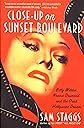
Close-Up on Sunset Boulevard: Billy Wilder, Norma Desmond, and the Dark Hollywood Dream
Product ID: 416481848
Desertcart purchases this item on your behalf and handles shipping, customs, and support to Croatia.
Billy Wilder's Sunset Boulevard , a classic film noir and also a damning dissection of the Hollywood dream factory, evokes the glamour and ruin of the stars who subsist on that dream. It's also one long in-joke about the movie industry and those who made it great-and who were, in turn, destroyed by it. One of the most critically admired films of the twentieth century, Sunset Boulevard is also famous as silent star Gloria Swanson's comeback picture. Sam Staggs's Close-Up On Sunset Boulevard tells the story of this extravagant work, from the writing, casting and filming to the disastrous previews that made Paramount consider shelving it. It's about the writing team of Billy Wilder and Charles Brackett-sardonically called the happiest couple in Hollywood-and their raucous professional relationship. It's about the art direction and the sets, the costumes, the props, the lights and the cameras, and the personalities who used those tools to create a cinematic work of art. Staggs goes behind the scenes to reveal: William Holden, endlessly attacked by his bitter wife and already drinking too much; Nancy Olson, the cheerful ingenue who had never heard of the great Gloria Swanson; the dark genius Erich von Stroheim; the once famous but long-forgotten Waxworks; and of course Swanson herself, who-just like Norma Desmond-had once been the greatest star of them all. But the story of Sunset Boulevard doesn't end with the movie's success and acclaim at its release in 1950. There's much more, and Staggs layers this stylish book with fascinating detail, following the actors and Wilder into their post- Sunset careers and revealing Gloria Swanson's never-ending struggle to free herself from the clutches of Norma Desmond. Close-Up On Sunset Boulevard also chronicles the making of Andrew Lloyd Webber's musical production of Sunset Boulevard and the explosive diva controversies that dogged it. The book ends with a shocking example of Hollywood life imitating Hollywood art. By the last page of this rich narrative, readers will conclude: We are those wonderful people out there in the dark. Review: Wilder's Masterpiece. - Sunset Boulevard....The Dark Hollywood Dream is an insightful, entertaining, if disjointed, read critiquing iconic director Wilder's greatest masterpiece. Wilder's first chief film collaboration was with English perfect Charles Brackett and afterward Diamond. After watching several times the films of Wilder's co- partners, and since a great collaboration is about bringing gifts/insights to the table the other lacks, will agree with the author that the edge rightly goes to the astute, versatile and elegantly enigmatic Charles Bracket who's impeccable pedigree, belying a private family drama veering on a Greek tragedy, provided a fascinating mix, and as luck would have it, was diametrically the polar opposite of Wilder's. The two collaborators admittedly did share a love of games, wordplay and adversarial stimulation. Bracket, the son of a N.Y. state senator and banker, with alma mater Williams College, a Harvard law degree, French Medal of Honor, a New Yorker dramatic critic --juxtaposed with Hollywood resume President of the Screen Writer's Guild, President of Pictures Arts/Sciences, novelist, screen writer and producer of over 40 films--16 he made with Wilder. Among the Brackett lot: "Blue Beard's Wife", "Ninotchka", "The Major and the Minor", "Ball of Fire", "To Each His Own", "The Uninvited", "The Lost Weekend", "The Bishop's Wife" (uncredited), "Miss Tatlock's Millions", "A Foreign Affair", "Sunset Boulevard", "The Mating Season", "Titanic", "The King and I", "Blue Denim", "Journey to the Center of the Earth", Etc. Brackett also contributed and assisted with the original draft of "Double Indemnity" but opted out because according to Wilder his collaborator found the subject distasteful which is curious given that Brackett scripted and produced a theme similar the Monroe film noir technicolor "Niagara" 1953. The chief difference between the two films was that no character in "Double Indemnity" was particularly sympathetic whereas in "Niagara" there was a measure of empathy afforded the two downward spiral chief protagonists, =The genesis of Wilder's break with Brackett, beginning as early as the mid 40s, was predicated on differences both ideological and perspective wherein Wilder wanted to veer off in a direction on subjects he believed would be objectional or not simpatico with Brackett. In response Brackett, irritated by the capricious Wilder's brusque volatility and egocentricity, was somewhat elated that he too would be liberated from the constraints of what Life Magazine had deemed: "The Happiest Couple in Hollywood". =Post Bracket, Wilder's films basically fall into two categories --puff piece iconic Monroe/Hepburn play adaptations irritatingly photographed for no purpose in dour Black and White --i.e., "Love in the Afternoon" "Sabrina" (Bogart miscast), "The Seven Year Inch" (color) or Christie's entertaining "Witness For the Prosecution" VS Wilder's rather hallow one note locker men's jokes (however fairy tale clever) "Stalag 17", "Some Like It Hot" "The Apartment",--with Wilder's hardened belabored cynicism and adolescent vulgarity especially predominant after 1960. Following Brackett, Wilder's most intense muckraking effort, the relentlessly pretentious "Ace In the Hole", is so nihilistic and (Kirk Douglas) astringently shrill over the top it evokes laughter. (Brackett tough, but not bitter or prone to self pity, publicly defended "Ace in a Hole" but privately felt, while "strong" a positive, the film was fixed on hard and lacked nuance.) =What was lacking in Wilder's latter films post Sunset Boulevard was that definitive contrasting spark frequently ignited and ambiguity achieved in partnership with the evocatively romantic, equally cynical but more mature heartfelt Brackett creating for film a rare bittersweet ambience, bemused humanity and unflinching narrative. Review: Five Stars - Amazing price and quick delivery.
| Customer Reviews | 4.7 out of 5 stars 51 Reviews |
G**M
Wilder's Masterpiece.
Sunset Boulevard....The Dark Hollywood Dream is an insightful, entertaining, if disjointed, read critiquing iconic director Wilder's greatest masterpiece. Wilder's first chief film collaboration was with English perfect Charles Brackett and afterward Diamond. After watching several times the films of Wilder's co- partners, and since a great collaboration is about bringing gifts/insights to the table the other lacks, will agree with the author that the edge rightly goes to the astute, versatile and elegantly enigmatic Charles Bracket who's impeccable pedigree, belying a private family drama veering on a Greek tragedy, provided a fascinating mix, and as luck would have it, was diametrically the polar opposite of Wilder's. The two collaborators admittedly did share a love of games, wordplay and adversarial stimulation. Bracket, the son of a N.Y. state senator and banker, with alma mater Williams College, a Harvard law degree, French Medal of Honor, a New Yorker dramatic critic --juxtaposed with Hollywood resume President of the Screen Writer's Guild, President of Pictures Arts/Sciences, novelist, screen writer and producer of over 40 films--16 he made with Wilder. Among the Brackett lot: "Blue Beard's Wife", "Ninotchka", "The Major and the Minor", "Ball of Fire", "To Each His Own", "The Uninvited", "The Lost Weekend", "The Bishop's Wife" (uncredited), "Miss Tatlock's Millions", "A Foreign Affair", "Sunset Boulevard", "The Mating Season", "Titanic", "The King and I", "Blue Denim", "Journey to the Center of the Earth", Etc. Brackett also contributed and assisted with the original draft of "Double Indemnity" but opted out because according to Wilder his collaborator found the subject distasteful which is curious given that Brackett scripted and produced a theme similar the Monroe film noir technicolor "Niagara" 1953. The chief difference between the two films was that no character in "Double Indemnity" was particularly sympathetic whereas in "Niagara" there was a measure of empathy afforded the two downward spiral chief protagonists, =The genesis of Wilder's break with Brackett, beginning as early as the mid 40s, was predicated on differences both ideological and perspective wherein Wilder wanted to veer off in a direction on subjects he believed would be objectional or not simpatico with Brackett. In response Brackett, irritated by the capricious Wilder's brusque volatility and egocentricity, was somewhat elated that he too would be liberated from the constraints of what Life Magazine had deemed: "The Happiest Couple in Hollywood". =Post Bracket, Wilder's films basically fall into two categories --puff piece iconic Monroe/Hepburn play adaptations irritatingly photographed for no purpose in dour Black and White --i.e., "Love in the Afternoon" "Sabrina" (Bogart miscast), "The Seven Year Inch" (color) or Christie's entertaining "Witness For the Prosecution" VS Wilder's rather hallow one note locker men's jokes (however fairy tale clever) "Stalag 17", "Some Like It Hot" "The Apartment",--with Wilder's hardened belabored cynicism and adolescent vulgarity especially predominant after 1960. Following Brackett, Wilder's most intense muckraking effort, the relentlessly pretentious "Ace In the Hole", is so nihilistic and (Kirk Douglas) astringently shrill over the top it evokes laughter. (Brackett tough, but not bitter or prone to self pity, publicly defended "Ace in a Hole" but privately felt, while "strong" a positive, the film was fixed on hard and lacked nuance.) =What was lacking in Wilder's latter films post Sunset Boulevard was that definitive contrasting spark frequently ignited and ambiguity achieved in partnership with the evocatively romantic, equally cynical but more mature heartfelt Brackett creating for film a rare bittersweet ambience, bemused humanity and unflinching narrative.
J**F
Five Stars
Amazing price and quick delivery.
F**N
Sam Staggs at his best
Sam Staggs has proved to be a master of his genre. This is just one of several books that he has written for film buffs. He always comes up with little snippets of gossip and background information that everyone else seems to have missed. It is not necessary to be a film buff to enjoy the books but it certainly helps. So far I have read four of his books about film classics (All About Eve, Sunset Boulevard, Imitation of Life & Streetcar Named Desire) and I am really hoping that he has another up his sleeve. All About All About Eve: The Complete Behind-the-Scenes Story of the Bitchiest Film Ever Made! Close-up on Sunset Boulevard: Billy Wilder, Norma Desmond, and the Dark Hollywood Dream When Blanche Met Brando: The Scandalous Story of "A Streetcar Named Desire" Born to Be Hurt: The Untold Story of Imitation of Life .
D**H
Interesting insight into Billy Wilder, William Holden, Gloria Swanson, and the rest
Enjoyed reading about the filmmakers, including costume design and cinematography. But, too much about the attempts to create a Broadway musical.
G**E
Great
Great deep dive into an iconic movie
Trustpilot
1 month ago
3 weeks ago