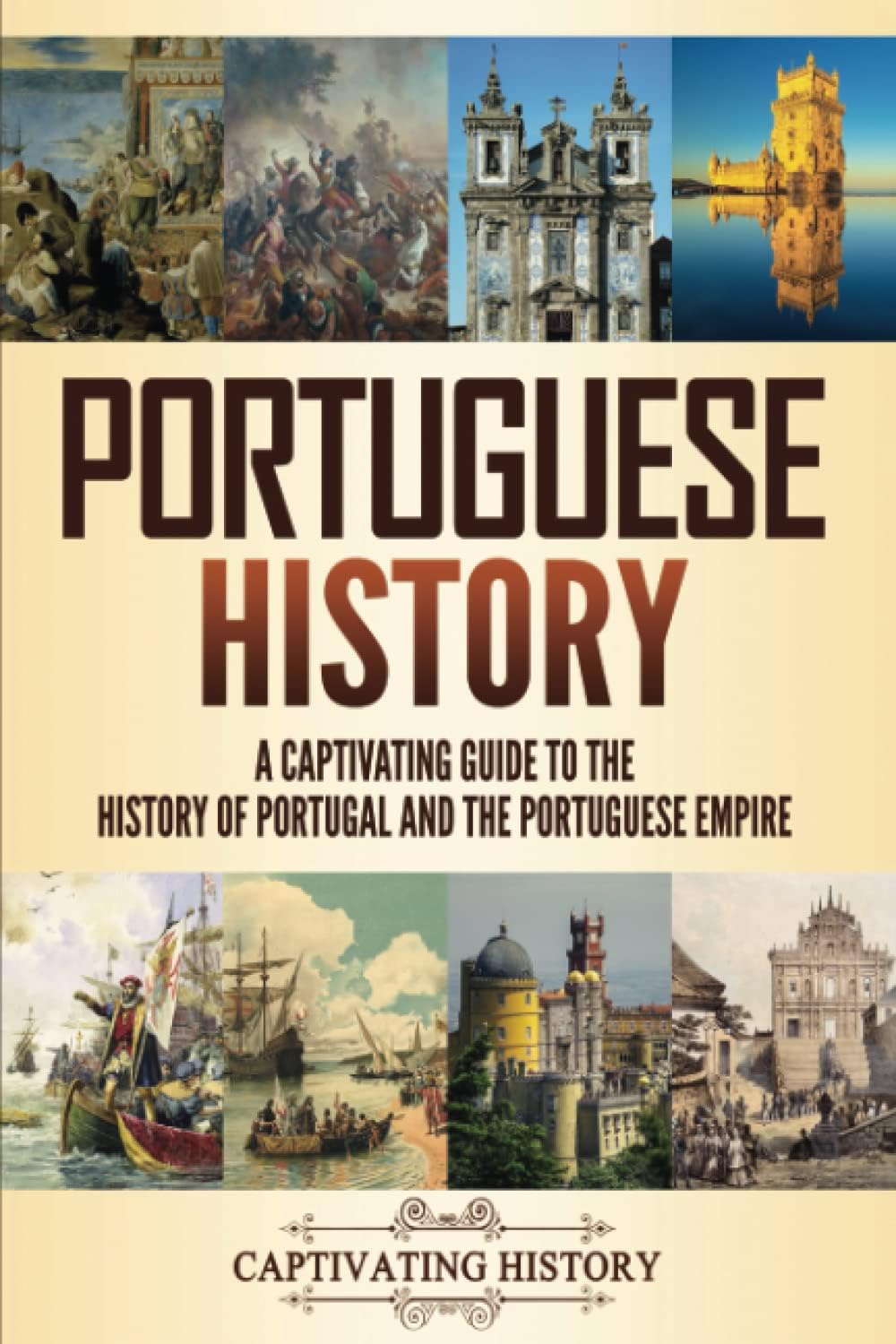


Portuguese History: A Captivating Guide to the History of Portugal and the Portuguese Empire (History of European Countries) [History, Captivating] on desertcart.com. *FREE* shipping on qualifying offers. Portuguese History: A Captivating Guide to the History of Portugal and the Portuguese Empire (History of European Countries) Review: History of Portugal-Portuguese Empire - Portugal, located in the Iberian Peninsula, has a rich history that dates to prehistoric times. The first settlers left unique art behind in the form of rock carvings and rock monoliths. These first peoples never left their country but were integrated into the many societies that came to Portugal over time. There were Phoenician traders, Romans, Germanic tribes, Muslims from North Africa, and Hispanic peoples. This mix of ethnicities resulted in a unique language and culture of the medieval Kingdom of Portugal, and one might even say of the modern-day Portuguese Republic. Even though Portugal is probably best known for exploring the world during the Age of Discovery, the history of mainland Portugal is rarely described outside of the country. This is why the Age of Discovery is only briefly touched upon, as there are many other fascinating things to talk about instead that might be lesser known to readers. The 1755 earthquake was an important event in the history of Portugal. The transformation to democracy in 1975 was another significant event in its history. This book aims to familiarize English speakers with the events and personas that built the Portuguese kingdom, its overseas empire, and the state that Portugal is today. It is a well-written book. The Portuguese Empire originated at the beginning of the Age of Discovery, and the power and influence of the Kingdom of Portugal would eventually expand across the globe. In the wake of the Reconquista, Portuguese sailors began exploring the coast of Africa and the Atlantic archipelagos in 1418–19, using recent developments in navigation, cartography, and maritime technology such as the caravel, to find a sea route to the source of the lucrative spice trade. In 1488 Bartolomeu Dias rounded the Cape of Good Hope, and in 1498 Vasco da Gama reached India. In 1500, either by an accidental landfall or by the crown's secret design, Pedro Álvares Cabral reached what would be Brazil. Over the following decades, Portuguese sailors continued to explore the coasts and islands of East Asia, establishing forts and trading posts (factories) as they went. By 1571 a string of naval outposts connected Lisbon to Nagasaki along the coasts of Africa, the Middle East, India, and South Asia. This commercial network and the colonial trade substantially positively impacted Portuguese economic growth (1500–1800) when it accounted for about a fifth of Portugal's per-capita income. This book traces and evaluates the rise and fall of the Portuguese Empire. Review: Interesting - This was an interesting read. I was able to learn information that was new to me as well as having a nice refresher for what I had already known. The writing team for Captivating History has done a great job once again. I received a free copy of this book via Booksprout and am voluntarily leaving a review.
| Best Sellers Rank | #1,183,381 in Books ( See Top 100 in Books ) #4,261 in European History (Books) |
| Customer Reviews | 4.2 4.2 out of 5 stars (120) |
| Dimensions | 6 x 0.63 x 9 inches |
| ISBN-10 | 1637165994 |
| ISBN-13 | 978-1637165997 |
| Item Weight | 15.2 ounces |
| Language | English |
| Part of series | History of European Countries |
| Print length | 276 pages |
| Publication date | March 22, 2022 |
| Publisher | Captivating History |
V**S
History of Portugal-Portuguese Empire
Portugal, located in the Iberian Peninsula, has a rich history that dates to prehistoric times. The first settlers left unique art behind in the form of rock carvings and rock monoliths. These first peoples never left their country but were integrated into the many societies that came to Portugal over time. There were Phoenician traders, Romans, Germanic tribes, Muslims from North Africa, and Hispanic peoples. This mix of ethnicities resulted in a unique language and culture of the medieval Kingdom of Portugal, and one might even say of the modern-day Portuguese Republic. Even though Portugal is probably best known for exploring the world during the Age of Discovery, the history of mainland Portugal is rarely described outside of the country. This is why the Age of Discovery is only briefly touched upon, as there are many other fascinating things to talk about instead that might be lesser known to readers. The 1755 earthquake was an important event in the history of Portugal. The transformation to democracy in 1975 was another significant event in its history. This book aims to familiarize English speakers with the events and personas that built the Portuguese kingdom, its overseas empire, and the state that Portugal is today. It is a well-written book. The Portuguese Empire originated at the beginning of the Age of Discovery, and the power and influence of the Kingdom of Portugal would eventually expand across the globe. In the wake of the Reconquista, Portuguese sailors began exploring the coast of Africa and the Atlantic archipelagos in 1418–19, using recent developments in navigation, cartography, and maritime technology such as the caravel, to find a sea route to the source of the lucrative spice trade. In 1488 Bartolomeu Dias rounded the Cape of Good Hope, and in 1498 Vasco da Gama reached India. In 1500, either by an accidental landfall or by the crown's secret design, Pedro Álvares Cabral reached what would be Brazil. Over the following decades, Portuguese sailors continued to explore the coasts and islands of East Asia, establishing forts and trading posts (factories) as they went. By 1571 a string of naval outposts connected Lisbon to Nagasaki along the coasts of Africa, the Middle East, India, and South Asia. This commercial network and the colonial trade substantially positively impacted Portuguese economic growth (1500–1800) when it accounted for about a fifth of Portugal's per-capita income. This book traces and evaluates the rise and fall of the Portuguese Empire.
T**R
Interesting
This was an interesting read. I was able to learn information that was new to me as well as having a nice refresher for what I had already known. The writing team for Captivating History has done a great job once again. I received a free copy of this book via Booksprout and am voluntarily leaving a review.
H**K
Portugal and the Portuguese Empire
This was an amazing book. Portugal has an amazing and rich history. This book truly was a captivating history of a country that I knew little about. The book starts off with prehistoric Portugal and ancient rock art and travels through the ages to when Romans ruled Portugal and continues on to modern day Portugal, but with each change in government the Portuguese people tried to remain free from Spanish rulers and strived to remain their own country. Portugal is a very unique country with unique mix of people. It was considered the European version of the Wild West and a sort of smelting pot of Europe. European trends like the Renaissance were slow to trickle into Portugal and often had very little effect on the people of Portugal. Those who came to Portugal stayed and made Portugal their home regardless of who ruled the country adding to the diversity of the country. Because there were so many different groups of people in Portugal. Portugal had a late start in setting a national language both written and verbal because of the various groups that called Portugal home. This is an excellent book about the Portuguese Empire, this book is so well researched that you can even learn some of Portugal's state secrets that were so secret that they were threated not to reveal them upon pain of death (no one was harmed during the writing of this book). Portugal started as a small country who was relatively unknown. As the Portuguese Empire grew, its reputation began to grow as country of exploration, until eventually Portuguese Empire became one of the greatest empires. Many famous explorers sailed under the Portuguese Empire's flag, discovering Brazil and new ways to get to the spice islands. As you read this book you realize that history comes alive and each chapter becomes a new adventure. These are both excellent books, well worth your time to read and add to your library.
A**R
Good content, book falls apart
Good content, but the pages are falling out right after we opened it
C**Y
Great overview
Breaking up the history into internal and external pieces made it easy to follow. Not a tremendous amount of detail but well written and worth the read.
J**R
new learning
I learned a great deal about Portuguese history from these books! After traveling to Portugal I wanted to know more about the country, and these books provided excellent background.
M**R
Disappointing Overall
The book rightfully starts with the prehistoric origins of Portugal, but omits any reference to Heidelbergensis. The next 150 pages are a nicely detailed history through the 1800's, but then the author only uses six pages to skim over the entire 20th century. The book has a 100 page bonus describing the colonial times, but even that only contains a single closing paragraph regarding the 1900's.
T**D
Boring - Poorly illustrated - Needs more Maps
This is a very dry (not captivating) history book. It needs illustrations and maps to support the text. For example, it refers to ancient regions on the Iberian Peninsula. The readers are given no idea of exactly where these regions are. There is one black and white illustration/image at the beginning of each chapter. I cannot recommend it to anyone but students of history.
N**S
Concise and a good start
L**D
An interesting history of Portugal and it's empire with all the intrigue that went with it! A great read for a holiday to portugal
E**.
good book to read
G**R
Fascinated by the history (our oldest allies, don’t you know …)
Trustpilot
3 days ago
1 month ago