

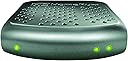


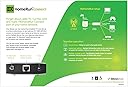

SiliconDust HDHomeRun Connect. Free Broadcast HDTV (2-Tuner)
Product ID: 432345
Details
- BrandSiliconDust
- ColorGrey
- Compatible DevicesComputers TVs
- Connectivity TechnologyNo Wi-Fi
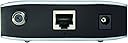
- Connector TypeRJ45
📡1080p Streaming
📺2 Tuners
🔗Wired Network
📡 Elevate Your Viewing Experience - Cut the Cable, Not the Quality!
The SiliconDust HDHomeRun Connect is a cutting-edge digital tuner that allows you to watch live HDTV on up to two devices simultaneously, all while eliminating monthly cable fees. With support for 1080p resolution and compatibility with DLNA devices, this product is perfect for tech-savvy users looking to enhance their home entertainment setup.


| ASIN | B00GY0UB54 |
| Antenna | Television |
| AntennaDescription | Television |
| Best Sellers Rank | #128 in External TV Tuners |
| Brand | SiliconDust |
| Color | Grey |
| Compatible Devices | Computers, Smart TVs, games consoles, Blu-ray players, Tablets, Smartphones |
| Connectivity Technology | No Wi-Fi |
| Connector Type | RJ45 |
| Customer Reviews | 4.1 out of 5 stars 729 Reviews |
| Global Trade Identification Number | 00857799005002 |
| Item Weight | 16 ounces |
| Manufacturer | SiliconDust USA, Inc |
| Mfr Part Number | 4112049 |
| Model Number | HDHR4-2US |
| Number of Items | 1 |
| Number of Packs | 1 |
| Tuner Type | Digital |
| UPC | 094922394576 857799005002 |
| Unit Count | 2 Count |
| Warranty Description | 2 years warranty |
M**Y
How to set it up with Elgato EyeTV on a mac running OSX
I had a lot of trouble setting this up (and the company web site is completely unhelpful) so let me help people out here. I am assuming you want to run this with EyeTV --- I've no useful info if you have other plans. - Install the device in the obvious way --- connect your antenna coax, your ethernet cable, your power adaptor. - Go to SiliconDust's website, find the download section, and download the Mac installer. - The installer will install two basically useless apps, whose sole purpose, IMHO, is to validate that things kinda work. Run the setup app and you should get a truly barebones window which asks you to choose channels. Ignore all that, all we care about is that (presumably) this shows your mac can see the HD HomeRun. Run the Player app, and you should now get live TV and should be able to change the channel. Again, all we care about is proof that things work at this level. Now go to EyeTV. If this is the first time you have installed EyeTV, things should be easy. During the installation process it will ask you what TV tuner you have, and tell it Elgato/HomeRun (or IPTV/HomeRun --- both work). Go through the rest of the installation and things should work fine. Where things are less obvious is if you already have EyeTV installed and running, connected to some other TV tuner(s). You might expect that you'd see the HomeRun in the Devices panel, which lists all your tuners, but you don't, and all the dicking around in the world won't change that. WHAT YOU NEED TO DO is go to the main EyeTV menu and rerun the EyeTV Setup Assistant. This will ask you what tuner you want to use and, like I said above, choose the Home Run. Skip over every subsequent step (like selecting channels). This seems like a terrifying step --- you may fear you will lose all your current state --- but it works fine. EyeTV remembers your current channels (and recording preferences, TVGuide subscription, etc) and just adds the HomeRun to your available tuners, along with whatever other tuners you had previously. Do be aware, however, that when running the Setup Assistant it will ask you for your EyeTV license key, so make sure you have that on-hand before you start down this path. You can check that everything is working by using the command-O command, which will cycle through your list of tuners, showing you the channel each is connected to --- the name of the tuner will appear in the window menu bar, so make sure the window is not maximized. You should be able to cycle through your pre-existing tuner(s) followed by two HomeRun tuners, and obviously you can try changing channels for each one. From this point on everything should just work. In particular, you can set the system up to record as many simultaneous shows as you have tuners, which can be useful for those occasions where three shows you like are all scheduled at the same time. One final thing: Depending on when you installed EyeTV, you may have installed a piece of (now obsolete) companion software called EyeTV connect. This software somehow prevents other software on your computer from seeing the HD HomeRun. In particular it prevents VLC from seeing it. Do a search for "EyeTV Connect Uninstaller" and you'll find an Elgato page with the uninstaller. After you run the uninstaller and reboot, you should now (unlike before) see the HD Home Run in the Local Network/Universal PlugnPlay section of the main VLC window, on the off chance that you want to use VLC rather than EyeTV to connect to the HD HomeRun. If you're trying to debug, the HomeRun registers itself with your DHCP server as you'd expect, so you should see it (and be able to figure out its IP address) from seeing what you have registered there. It does respond to pings. It starts up with only one port (UDP 1900, the UPnP port) open but should respond to appropriate requests from any UPnP/DLNA client on your network (like VLC). The two problems I am aware of are those I described above --- EyeTV Connect blocks the UPnP visibility for VLC until it is uninstalled; and EyeTV doesn't know the box is there until you run the EyeTV Setup Assistant. One final thing. The box is small and crazy light, so once you have everything working the way you want, you'll probably want to hold it down on your media center with double sided tape or velcro or something, otherwise it's very prone to flopping around. Just plan for that so you aren't irritated by it a week or so after the install.
T**M
Awesome. Works great with Comcast in North LA. Was easy to set up. Seriously, it was.
Installed Comcast today. Technician said they(field technicians) don't work with cable cards much anymore, simply because they are usually installing their equipment which has cards already installed and registered. He was very helpful, however. First he set up our internet. ( Used a Arris TM822G-NA purchased on Amazon ) That was the longest part of the whole install by far. After setting up the internet and phone through the Arris TM822, he started the process for the Silicon Dust HDHomerun Prime. I ran the Silicon Dust setup program. He had written the numbers from the Cable card down. There is 1 code on it that he will give to the tech people over the phone 1st in the registration part of the set up. After that, he read them the Cable Card ID and Host ID numbers generated by the HDHomerun Setup program. This is the part where we both found you just have to be patient. It can take 1-30 minutes for the card to be validated after he gives the tech people these two sets of numbers. It took maybe 5-10 minutes tops. When you have the HDHomerun Prime install page up, just refresh it every couple minutes. You will know when it is ready. I ran the channel scan and it took about 10-15 minutes. After that, I did the set up in WMC. It was straight forward and painless. No more calls required either. Wow!!! This thing is awesome. We have a HTPC in the living room and a PC for each of my two children plus one in our bedroom. 4 displays ( TV's ) I also have the Silicon Dust HDHomerun Dual and a Hauppage 2250 dual tuner card. 7 tuners available. 4 over the air and 3 for Comcast. All accessible on any computer at anytime. I used My Channel Logos to populate the channel logos and do some adjustments of the WMC guide. Simply awesome. I recommend a set up like mine. It is as follows. Modem(Arris TM822G-NA) connected to router(Netgear Nighthawk 3200). Router connected to 8 port gigabit switch. Each computer in house connected to switch via ethernet cable. The Silicon Dust HDHomerun Prime and Homerun Dual are connected to switch as well. Absolutely flawless so far in quality. Again, we have the 50Mbps internet plan from Comcast. In Media center it shows all the channels, even the ones we don't subscribe to. It won't let you view the ones we don't subscribe to however. Also, you will not have the ability to do pay-per-view, on demand purchases. Otherwise you get a super nice 3 tuner cable box/dvr !!!
C**N
A somewhat complicated but very good product, make sure to get the right version.
** Overview ** This is great product but when you shop make sure you get the right version. The Silicon Dust HDHomeRun Dual tunes digital television signals from Antenna or Cable TV and re-streams them over ethernet. I bought this device because it promised to allow me to re-transmit antenna TV signals over the ethernet network in my house. *** Pros *** Converts over-the-air and cable TV signals into MPEG video streams on your wired ethernet network; Both versions supported by MythTV, Windows Media Player and VLC; DLNA can play over DLNA aware devices. *** Cons *** Playback of High Def streams can be choppy on WiFi connected devices; Setup is a little non-intuitive especially for the earlier non-DLNA version. ** Setup and Performance ** Setup of the HDHR3-US is pretty simple because the device requires the user to do most of the work. I'm using the HDHomeRun Config program on a Macintosh. This program can scan for and find devices. On the Mac the user interface is typical Linux Minimalist. You select the broadcast range and then scan for programming. The user interface reveals a little too much detail for my taste. I was surprised to find out what I can channel 2, WCBS is actually broadcast on us-broadcast channel 33 (old UHF-33) but I can live with this. I have yet to set this up on my MythTV. When I do, I expect the operation of pairing channels and subchannels to guide information will be tedious but not oppressive. Both version do a little configuration via a built in device web server. While it seems simple, it's not very friendly to TCP/IP novices. The problem is that the HDHomeRun Dual gets its IP address via DHCP. If you have a standard Linksys, Netgear, Belkin, etc router it may not be that easy to figure out what IP address the device is using on your network. If I wasn't proficient with TCP/IP I think I would be very frustrated with this device. On my Mac creative use of the "netstat" command while watching a program revealed the IP address. The Windows software my be more useful in this regard. I would find this especially frustrating with the HDHR4-2US since you need to use the web interface to scan for and set favorite channels before you can use the device with DLNA aware set-top boxes. The performance of either version of this device on a gigabit wired network is good. Both devices connect at 100Mbit so I imagine that a 100Mbit switched network will also be fine. The video is quite smooth. Over 802.11g WiFi the video can become choppy if the network gets busy. This is not a fault of the device as much as it is of WiFi. I didn't notice issues over a 5GHz 802.11n connection but found a little choppyness over a busy 802.11g connection on 2.4 GHz. ** The versions, DLNA ** As I write this, the HDHomeRun Dual is available as either the HDHR4-2US and the earlier HDHR3-US. As I write this review the 4 is the latest version. The 4 features can tune both "over-the-air" antenna broadcasts and unencrypted digital cable television and features DLNA. The advertising that I see for the 3 does not emphasize CATV and says the 3 does not do DLNA. My testing shows that the DLNA report is accurate but on Cablevision in Southern CT shows that the HDHR3-US can do CATV just fine. From what I see the difference between the two products is DLNA. Digital Living Network Alliance or DLNA is a standard built into media devices that allows things like your Blu-Ray player to access and play media with little configuration and a moderately simple user interface. On my Samsung Blu-Ray player, the HDHR4-2US shows up as a folder full of videos sorted by channel number and call letters; for example, "2.1 WCBS-HD". Asking it to play one of the "channels" turns the Blu-Ray player into a TV tuner that shows the current broadcast on that channel. ** Which one do I want? ** I bought these because I wanted to be able to get some relief from the bickering going on between the owners of my local broadcast stations and my CATV carrier. In the past this bickering deprived me of watching live sports. Short term the HDHomeRun Dual turns out to be a cheap and easy alternative to running a RG-6 cable from my attic antenna to my basement and then building a second TV distribution system. This is especially helpful in my house which is under wired for RG-6 Coax and over wired with ethernet. Long term, I expect that it will enable me to cut the cord to CATV entirely. Hooked up to the antenna either HDHomeRun Dual tunes the New York CBS, NBC, ABC, PBS and Fox affiliates and allows me to watch any of them in my house. The "dual" in HDHomeRun Dual means that the device has two tunes so you can watch two different programs simultaneously. Both versions will tune TV on a computer with software that you can download from Silicon Dust. If you have a Windows Media Player PC or a MythTV either version of this product will feed a signal to your Media PC. I have a MythTV and I expect that connecting either HDHomeRun Dual to it will be a simple operation although I expect the operation of associating the channel guide information to channel sources to be tedious. If you value flexibility and have DLNA devices on your TV you probably want to spring for the later version with DLNA. Once setup and when paired with my Samsung Blu-Ray player, the DLNA HDHR4-2US is simple to use.
R**U
Awesome product for those who want to stream a Live OTA TV broadcast and don't want to pay Cable/Satellite bills anymore!!
The HDHomeRun setup is exactly what I needed for my situation.!! A little background will help readers of these review comments…I am a cord-cutter, I refuse to pay cable or satellite TV service ever again. I used an OTA antenna to pickup my local TV broadcasts and have Netflix, Amazon Prime with Instant Video, etc. This set up worked great at my last house but I moved to a new house and have tried to get an OTA antenna set up that worked so I could split/distribute the antenna signal through my in-house cable wiring . Unfortunately, at my location, I can’t get a good enough OTA signal using an outdoor antenna (I’ve tried several different antennas over the last few months and what I determined is that an inexpensive indoor antenna actually gives me the best OTA signal). Now my dilemma…I don’t want an unsightly, indoor antenna on every TV in the house so I needed a way to distribute the OTA signal from my indoor TV antenna to other TVs in the house – and the HDHomeRun setup is exactly what I needed for my situation. I received the HDHomerun OTA tuner, unboxed it, plugged it into my home network router, connected the Indoor Antenna and downloaded the software on my Mac computer and in about 5 minutes – I had a crystal clear HD TV stream available anywhere in the house (I’m still fiddling with my indoor antenna to find the right spot with the best signal, but the HDHomerun box can be located ANYWHERE so that’s not an issue). Super easy to setup and install. I have an Amazon Fire TV box , however, there is no HDHomerun app available…BUT, I also use Kodi which has an HDHomerun app part of the standard Kodi Video Add-ons. So I installed the HDHomerun app on Kodi – and presto – Local OTA TV broadcasts on my TV! The HDHomerun app is super easy to install, clean user interface and the video quality is fantastic. I can’t say enough how great this set up is. I don’t have any wires running to my TV (which is a wall-mount, and my Fire TV box is mounted behind it) so the HDHomerun setup is perfect for my situation. Hopefully others will find this useful. I am very thankful I Found this setup - very satisfied!
G**E
Revised from 3 Stars
This worked well for about 40 days, and then one of the tuners died. Since it was beyond the return window, I was unable to return it. I subtracted one star for faulty construction. Also, I noticed that sometimes the tuners do not show up, or are listed as "in use" (the little green indicator light is on and the tuner becomes unavailable in WMC). The only way to gain access to the tuner is to unplug it or restart your computer. Here is a list of the good and bad things about this tuner. THE GOOD 1. Connected easily to my network and was visible and able to use without any additional set up to both my Panasonic and Samsung smart bluray players, as well as my smartTV. 2. Easily found most of my channels (about 10 more than windows media center). 3. Small file sizes. A one-hour recorded program is usually 1.2 GB- 4.5GB (depending on the channel). The file sizes my previous Hauppauge HTV-2250 and 1250 were between 3.2GB and 5.5GB for a one hour program. 4. Works well with Windows Media Center. 5. Can add another unit to increase the total number of tuners to four. THE BAD. 1. Does not stream closed captions (despite what SiliconDust's website claims), which means that it is not really an exact replacement. (NOTE: I know this is not an issue for everyone, but I thought I would mention it for those who like/need closed captions). 2. Sometimes the picture quality is not very good and is very pixalated- to the point of being unwatchable. This may be due to the cable company dialing back my signal (which they of course deny doing). Connecting my antenna directly to the tuner in my television, I do not seem to have the same issue (or it is not as severe). Since I think this problem can be at least partially to blame on the cable company, I did not remove any stars. 3. One of the two tuners stopped working just after the return period. 4. You will definitely want to use a third party software program like WMC. I also tried out QuickTV (which is included). It is very basic, and not really suitable for doing more than just basic live tv wathcing. I currently have two of these units (including the broken one). I plan to replace the broken unit soon, and will update my post after a trial period with the new unit. **UPDATE 1/11/15*** I replaced the broken unit with a new one. So far I have had no problems with tuners working. Also, after a lot of investigating and research I determined the problem with the closed captions (see review above). The HD Homerun will stream closed captions, however, it requires the receiving unit (TV, blu-ray player, PC, etc.) to do the decoding. This was not clear from the product information provided. Since this problem is not necessarily a problem with the HDHR4, I revised my rating up one star (from 3 stars to 4). I still have occasional issues with pixalation and the tuners being locked in "on" even when no one is using them- requiring a hard reboot of the device. For this reason I still can't give it a perfect five stars. NOTE: if anyone is interested, the Sony Blu-ray player (BDP-S3200 and BDP-BX320) can see and stream closed captions and live tv over home network from the HDHomerun without issue- in my experience there is no noticeable difference in picture from having a hardwired antenna/cable.
S**T
Perfect Device - Wired Network is Best - HDHomeRun View all is the way to go and I have no complaints
If you have a wired network (not wireless) and a good OTA signal then this device will do everything it is intended to do. In my case, I have a large bow-tie antenna in the attic and I am 30+ miles to the network antennas. One of the problems with home antennas is you have to split the signal and try to run it over your house. This creates signal strength problems and you end up needing boosters which can create it's own problem. With this device, my attic antenna has a 6 foot cable into the HDHomeRun so there is next to zero signal loss. The HDHomeRun is then wired directly to my network. The wired network runs directly to where my computers, Amazon Fire TV and outside projector are located. The end result is a perfect unboosted signal that I can enjoy from any network device. The stream from HDHomeRun is hyper-sensitive to network delays and it can consume between 8-15 Mbps so you REALLY need a wired connection. If I leave the View app running on my Fire TV for hours at a time, I have noticed that either the video or audio gets dropped or locks. If you change the channel the problem corrects itself so this is not a big deal for me. These drops are not that common and it takes a second to get it back. If you are running Windows 10, you are better off installing the HDHomeRun View app from the Microsoft Store. If you have Kodi, you can install the HDHomeRun all and it will buffer the signal to make it a little more resilient against network problems. Aside from buffering, I see no real difference between running the viewer through Kodi or natively on my computers or Fire TV device. I've only had this running fro a few days and so far everything is perfect. There are occasional blips but that is causes by signal interference with the antenna and not the HDHomeRun. I am surprised as to how little you can configure these. The device gets an IP over DHCP and there is nearly nothing you can do to tweak or change the system. Maybe there's just nothing that needs to be done, but it would be nice to be able to block out stations with poor signals or unwanted channels.
J**N
Works with PLEX DVR
PLEX DVR (beta) has just been released to Plex Pass Members There are only two 'approved' devices at this point, and this is one of them - which is why I bought it. The PLEX DVR software allows you to schedule recordings on your PLEX Server. Once you setup the DVR in Plex (it was really easy to do - google 'Plex DVR') PLEX will download the 'programming guide' info for the channels that you get. Then it is just a matter of clicking on the show and setting up the recording options for it Note - I am using this with an Over the Air Antenna. I am in S Cal and I can get about 140 digital channels from the Los Angeles area, about 15 are the ones that I want to watch - main channels like ABS, CBS, etc I only got this working this morning but so far I have been very pleased. It was very easy to add to my existing Plex Media Server and I am really surprised how the picture quality it is. I am getting ready to 'cut the cord' in another 6 months or so when my Dish subscription ends out, and this looks like a pretty good way to go - especially if you are already a PLEX user Edit to add - someone asked if this would record two channels at the same time. I noticed this morning that I had it set to record some kids shows in PLEX and sure enough it is recording these two channels at the same time. Also, I was very pleased with the "Gracenote TV Guide" that PLEX uses. For example, I saw the "Commander in Chief" debate was on tonight. I went into Plex and started typing Commander in the search bar, an sure enough it pulled up the listing and I just clicked on it to set up a recording. photo added to show the two programs recording at same time
B**O
You really need two of these to be happy
I've been a cord cutter since 2014. I've used a tivo OTA box as my DVR for most of that time. It's a great 1 TV solution. I've been looking for a whole house DVR solution but most of the available options had less than stellar reviews. When i heard about the Silicon dust HD Homerun tuners I was interested because they offered flexibility in how they could be used. If you want to put TV in different rooms of your house but can't run coax cables to where you want the TV, this could be a good solution. Connect this to your antenna and network and all you need to do is add a compatible streaming device to the TV and you can watch whatever is available over the air. The program guide is very inexpensive and reasonably functional. If you want DVR capability, you have a couple of options. The best options are adding a NAS storage device or using an existing computer as your DVR storage device. I originally intended to use this with a linux desktop computer as my DVR. I had a lot of trouble with the Linux version of the software. I reinstalled Windows 10 on that computer and that worked much better for me. I had a number of crashes and malfunctions that I first blamed on the HD homerun device. After experimenting I found the problems had more to do with the Fire TV stick app for this than with the hardware itself. I purchased a pre-owned one of these that I could experiment with. This is only a two tuner device. For TV watching that was fine for me because there are only two of us in the house. When I added the DVR capability, it didn't take long to realize that two tuners was not enough. I added the second one (One of the great things about these is that you can use multiple homerun boxes together pretty much seamlessly). With 4 tuners now, I'm very happy with the setup. You do need to know that this is not a simple plug and play device. You need to have a little bit of willingness to tinker with options for your set up. You will also need other hardware to make this work. At a minimum, you need an antenna and a wireless router, and a compatible streaming box. FireTV stick works. Roku does not work at all with this. Once it's set up, you can access it on any of your TV's by adding another streaming device. It offers the most flexibility you'll find with a whole house dvr setup, but it requires a little work. I'm happy with mine.
Trustpilot
4 days ago
2 weeks ago