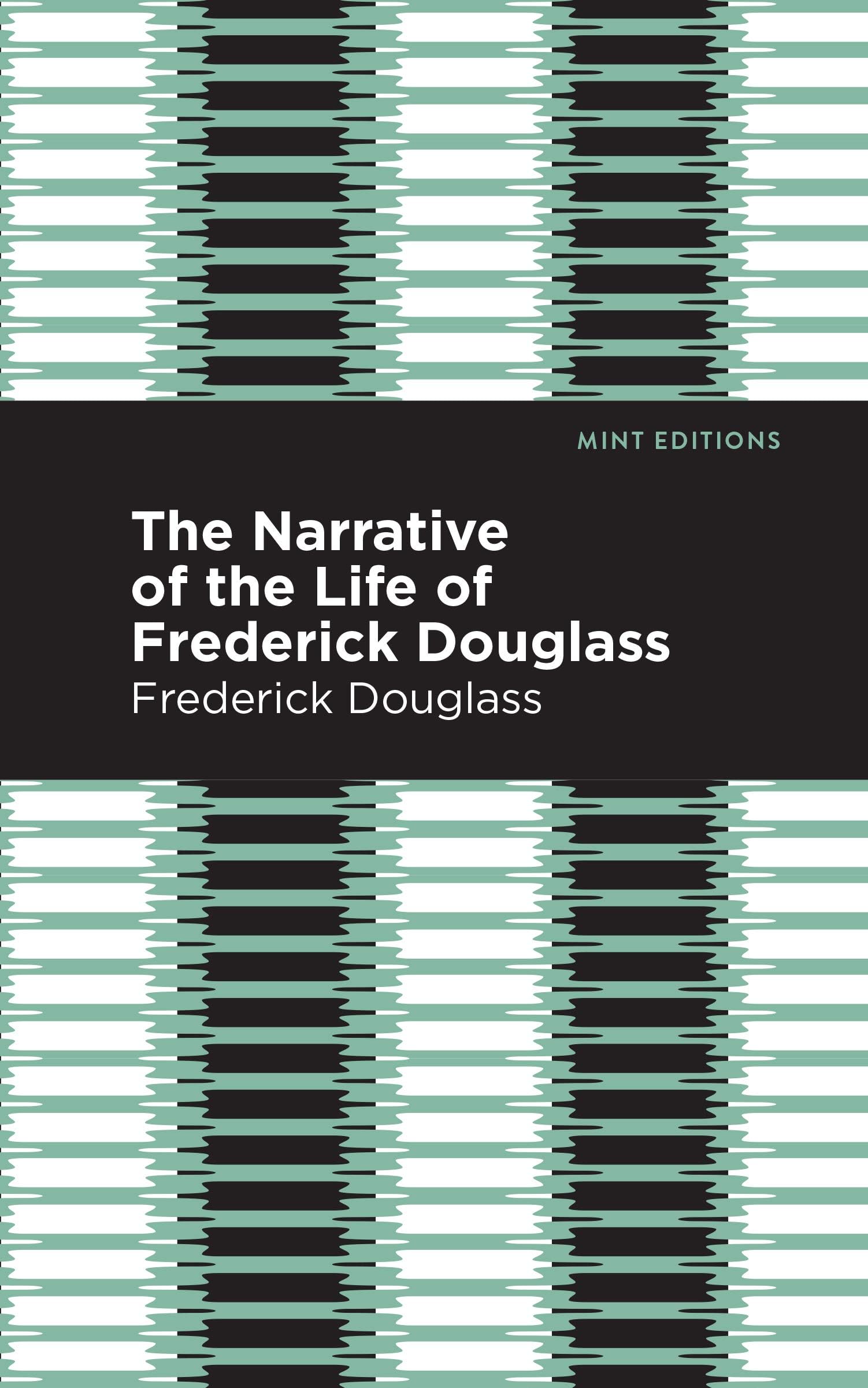
Narrative of the Life of Frederick Douglass (Black Narratives)
Product ID: 496124542
Desertcart purchases this item on your behalf and handles shipping, customs, and support to Croatia.
First appearing in 1845 The Narrative of the Life of Frederick Douglass , with its painfully vivid depiction of life in bondage, was both a bestseller in its day and one of the most powerful, authoritative texts lending support to the abolitionist movement. The author traces his life from an infant born into slavery and taken from his mother at birth, to a displaced child hungry for knowledge, to an abused and beaten laborer seeking freedom and a chance to marry the woman he loved. Offering bright, cameo glimpses into a world that should not be forgotten, Douglass chronicles both the cruel violence of a system that saw him as little more than livestock, and the brighter moments of success, of courageous support from friends and allies. Initially greeted by some with doubt that it could have been written by a black man and former slave, the book had a profound effect on American society, making the author something of a celebrity and his cause less an abstract ideal and more of an urgent human concern. Solemn, powerful and passionate The Narrative of the Life of Frederick Douglass is more than an important historical document―it is a personal account of striving for human freedom in a world where the author was regarded as neither free nor human. Since our inception in 2020, Mint Editions has kept sustainability and innovation at the forefront of our mission. Each and every Mint Editions title gets a fresh, professionally typeset manuscript and a dazzling new cover, all while maintaining the integrity of the original book. With thousands of titles in our collection, we aim to spotlight diverse public domain works to help them find modern audiences. Mint Editions celebrates a breadth of literary works, curated from both canonical and overlooked classics from writers around the globe. Since our inception in 2020, Mint Editions has kept sustainability and innovation at the forefront of our mission. Each and every Mint Edition title gets a fresh, professionally typeset manuscript and a dazzling new cover, all while maintaining the integrity of the original book. With thousands of titles in our collection, we aim to spotlight diverse public domain works to help them find modern audiences. Mint Editions celebrates a breadth of literary works, curated from both canonical and overlooked classics from writers around the globe. Review: Skip the introductions and go right to the narrative - Let's face it. Most of the history I read is written by white people. Some things need to be read in the "first person" and this is one of them. Not only is it a landmark book (not just for it's time but for all time), it is still easy to read, believable, compassionate to all (including slave owners) and completely gripping. It is not too brutally descriptive to be disturbing to any older kids or teens I know, and it is a patient, instructive and compelling story that I believe could still be a powerful, memorable and life changing read for anyone. Personal Note: I went to Maryland public schools in the 70's and early 80's. This was not on my required reading list. I wish it had been, but then maybe I would have hated it. The story of Frederick Douglas is to me overwhelming. The indictment of Southern Christianity is also particularly grievous. I do feel like I'm beginning to get a sense of the longtime North - South cultural divide as a matter of regional . . . religious . . . and economic ... pride. Misc Notes: 1. Brer Rabbit - in the intro to my book - Robert O'Meally mentions Brer Rabbit and Disney's now banned (and well censored) in the USA "Song Of The South" movie (think "Zip-A-De-Do-Da") - I don't have any wisdom on this but Brer Rabbit is a vaguely forbidden character in our country, as is Bugs Bunny, who the writer indentifies as a modern day Brer Rabbit. I always liked Bugs Bunny, but you don't see these cartoons around. I have an older African American friend who asked me if I could find a copy of "Song of the South" which he had fond memories of watching in the movie theater as a kid. Well I couldn't . . . 2. In my appendix, there is mention of pro slavery arguements of the 1840's. One is to the effect of "Slavery itself doesn't hurt slaves . . . its the abuse of slavery by slaveholders that hurts slaves." Hmmm, that sounds familiar . . . Review: An essential American autobiography - As the title implies, this short work is the narrative of Frederick Douglass, an escaped slave. He wrote it by himself, a significant fact in that his prose is so eloquent and his pathos so powerful that it seems impossible for a former slave to have composed it. In this short autobiography, Douglass recounts his life as a slave, and details some of the horrors and atrocities perpetuated on slaves by their fiendish overseers, most of whom Douglass portrays as downright evil. More than just a narrative of his life, Douglass also gives an account of how the desire to be free grew and began to burn within his bosom, and how he grew to hate that horrible institution. Above all, this is a story of a slave learning that he is, in fact, a human being. The significance of this book cannot be overestimated. In it, Douglass effectively dispels a number of popular myths about slaves and slaveholders, and forever changes the way the reader (especially one who lived while slavery still existed) looks at slavery. The theme of this book is very simple: slavery is wrong. It is evil, it is cruel, and, despite what many people thought at the time, the slaves know how cruel it is. Douglass cites several examples of the horrible treatment slaves received, one of them being separation of families. "It is a common custom...to part children from their mothers at a very early age" So it was with Douglass and his own mother. Douglass writes in a very eloquent style, and this contributes to the power of this work. Many people who thought blacks were inferior in intelligence were shown to be sadly mistaken with the coming of Frederick Douglass, a man both educated and refined. It may be said that the book is not entirely fair, for it is decidedly anti-slavery, but it is undoubtedly true for most cases nonetheless. Most of the overseers in Douglass's narrative are demonic and sadistic, but when a good overseer comes along (such as Freeland), he is fair in his treatment of him. One can imagine the fuel this book gave to the abolitionist fire, and it is not difficult to see why Douglass had such an impact on both North and South. This is, in my opinion, a definitive work, in that it shows the horrible institution of slavery in all its barbaric nature, and does it from a firsthand point of view, that of a former slave. This book was a tremendous contribution, both for the light it shed on slavery in general, and for proving that blacks were not intellectually inferior by nature, but instead were "transformed into...brute[s]" at the hands of their overseers. This is a great book, essential for anyone wanting to study the Civil War era or wanting to gain a firmer understanding of slavery.










| Best Sellers Rank | #87,505 in Books ( See Top 100 in Books ) #8 in U.S. Abolition of Slavery History #24 in American Civil War Biographies (Books) #63 in Discrimination & Racism |
| Customer Reviews | 4.7 out of 5 stars 3,449 Reviews |
J**T
Skip the introductions and go right to the narrative
Let's face it. Most of the history I read is written by white people. Some things need to be read in the "first person" and this is one of them. Not only is it a landmark book (not just for it's time but for all time), it is still easy to read, believable, compassionate to all (including slave owners) and completely gripping. It is not too brutally descriptive to be disturbing to any older kids or teens I know, and it is a patient, instructive and compelling story that I believe could still be a powerful, memorable and life changing read for anyone. Personal Note: I went to Maryland public schools in the 70's and early 80's. This was not on my required reading list. I wish it had been, but then maybe I would have hated it. The story of Frederick Douglas is to me overwhelming. The indictment of Southern Christianity is also particularly grievous. I do feel like I'm beginning to get a sense of the longtime North - South cultural divide as a matter of regional . . . religious . . . and economic ... pride. Misc Notes: 1. Brer Rabbit - in the intro to my book - Robert O'Meally mentions Brer Rabbit and Disney's now banned (and well censored) in the USA "Song Of The South" movie (think "Zip-A-De-Do-Da") - I don't have any wisdom on this but Brer Rabbit is a vaguely forbidden character in our country, as is Bugs Bunny, who the writer indentifies as a modern day Brer Rabbit. I always liked Bugs Bunny, but you don't see these cartoons around. I have an older African American friend who asked me if I could find a copy of "Song of the South" which he had fond memories of watching in the movie theater as a kid. Well I couldn't . . . 2. In my appendix, there is mention of pro slavery arguements of the 1840's. One is to the effect of "Slavery itself doesn't hurt slaves . . . its the abuse of slavery by slaveholders that hurts slaves." Hmmm, that sounds familiar . . .
B**O
An essential American autobiography
As the title implies, this short work is the narrative of Frederick Douglass, an escaped slave. He wrote it by himself, a significant fact in that his prose is so eloquent and his pathos so powerful that it seems impossible for a former slave to have composed it. In this short autobiography, Douglass recounts his life as a slave, and details some of the horrors and atrocities perpetuated on slaves by their fiendish overseers, most of whom Douglass portrays as downright evil. More than just a narrative of his life, Douglass also gives an account of how the desire to be free grew and began to burn within his bosom, and how he grew to hate that horrible institution. Above all, this is a story of a slave learning that he is, in fact, a human being. The significance of this book cannot be overestimated. In it, Douglass effectively dispels a number of popular myths about slaves and slaveholders, and forever changes the way the reader (especially one who lived while slavery still existed) looks at slavery. The theme of this book is very simple: slavery is wrong. It is evil, it is cruel, and, despite what many people thought at the time, the slaves know how cruel it is. Douglass cites several examples of the horrible treatment slaves received, one of them being separation of families. "It is a common custom...to part children from their mothers at a very early age" So it was with Douglass and his own mother. Douglass writes in a very eloquent style, and this contributes to the power of this work. Many people who thought blacks were inferior in intelligence were shown to be sadly mistaken with the coming of Frederick Douglass, a man both educated and refined. It may be said that the book is not entirely fair, for it is decidedly anti-slavery, but it is undoubtedly true for most cases nonetheless. Most of the overseers in Douglass's narrative are demonic and sadistic, but when a good overseer comes along (such as Freeland), he is fair in his treatment of him. One can imagine the fuel this book gave to the abolitionist fire, and it is not difficult to see why Douglass had such an impact on both North and South. This is, in my opinion, a definitive work, in that it shows the horrible institution of slavery in all its barbaric nature, and does it from a firsthand point of view, that of a former slave. This book was a tremendous contribution, both for the light it shed on slavery in general, and for proving that blacks were not intellectually inferior by nature, but instead were "transformed into...brute[s]" at the hands of their overseers. This is a great book, essential for anyone wanting to study the Civil War era or wanting to gain a firmer understanding of slavery.
J**A
Bear Witness
This is an excellent read for anyone ignorant of the history of Slavery in the United States. It is this account that jolted the abolitionist movement that would later lead to the emancipation proclamation. It is a quick and powerful read of our shameful pass. But it is necessary for us to learn our pass to move forward.
J**R
I always feel comfortable and at ease when I go...
Good purchase
M**N
This man's ability to describe the various monstrosities encountered throughout his journey in such a beautiful, articulate
I found this book, though historic, to be a modern marvel. I find not only the man himself but even more so the writings of Frederick Douglass to be totally FASCINATING! This man's ability to describe the various monstrosities encountered throughout his journey in such a beautiful, articulate, and eloquent way is utterly GENIUS! In reading this timeless masterpiece I discovered that this man bears the unmatched, undisputed spirit of a champion; the undying essence of a true warrior that I'm sure would resonate to any and every reader who would be so bold as to take a glance at the greatness that lies between the pages of this work of genius. This man's profound desire to acquire knowledge and educate himself by whatever means necessary exudes a ground shaking, bone rattling determination as I have scarcely; if at all, ever heard of. Frederick Douglass is to me the epitome of class and integrity and can serve as a role model and an inspiration to anyone in search of an incentive to better themselves, even or ESPECIALLY in the face of adversity. In this BRILLIANT account of his heroic journey from slavery to freedom he bestows a wisdom; a very keen insight, and he embodies an honor, the likes of which I have never seen in ANY other writer. I HIGHLY recommend this book to ANYBODY who is in search of inspiration or just a GREAT read!
A**X
A very important book
This is one of those books that I’ve known for a while that I needed to read, but I expected it to be dark and depressing. It was hard to prepare myself for it. After it had been on my Kindle a while, I decided that I just needed to take the plunge. I’m glad I did. It deals with a very unpleasant aspect of American history, as told by a formerly enslaved man in the 1800s. It’s not a pleasant topic and the author relates it in very neutral terms. He doesn’t involve his own emotions in what he experienced as a child and young man. He doesn’t have to. The evil that was inflicted on him speaks for itself. The book is extremely well written and it goes fast. It’s educational, but it doesn’t read like a school book. I know that this author has written other books and I do intend to read them at some point. Not right now though. It’s an intense read and I need some time to digest it.
A**R
But really it is a great, easy and fun read
Most people who pick this up are probably looking for history and possibly race issues. Which since it deals with slavery are there slightly. But really it is a great, easy and fun read. Many people act like they think they know what slavery was like. They act like slaves got whipped daily. This historical account actually verifies some things I thought might be actually going on. Really, just like today, the slave masters wanted to keep the slaves ignorant. Fred talks about how they tried to get the slaves to party and get drunk during holidays and has a solid working theory about the masters motivations for this. However, many times you could tell that slavery was really a system doomed to fail. Without incentivising the workers/slaves the output was minimal. Also, each slave master was different with some being bullies and some trying to be nice to get more work done. I added this book to get the free shipping with another order and as I white guy I thought reading this would be uncomfortable. But Whatever race you are I recommend this as a quick easy and fun read. Fred was an awesome dude who taught himself to read, had a wife became free and wrote a book, and even got in a comical fight with one of his slave masters. I wish more people today were like that guy. I think if he were alive today this guy would be a member of the Libertarian party. He had the type of soul that yearned for freedom.
K**R
Classic as true today as 175 years ago
I am on a mission to read classical American literature. Due to Black Lives Matter, this book rolled up. Being a white person raised in the south, this book was not on our required reading list. As the early autobiography of Frederick Douglass, I was impressed by the astute insights into both human nature and the culture of the slaveholding society and the corrupt nature of religion and law that justified these immoral practices. The principles that Frederick outlines in 1845, are the very heart of the cultural conflict we face today. The wholesale disruption and purposeful destruction of the negro family unit carries through today as well as the continuing moral bankruptcy of southern entitlement including the reverence for the rebel flag which is the symbol of the slaveholding way of life. The evil of the father will reap upon the children for seven generations. I hope that we are nearing the end of this evil and that this book will help others see the immutable truths that lie between its pages.
O**Y
Fantastic history
Everyone should read this book, fantastic history
T**A
Kalitesiz
Korsan kitap gibi duruyor, olabilir de emin değilim.
S**A
Interesante
Es un tema que me interesa mucho, sin embargo el estilo de escribirlo es un poco pesado para leer, aunque comprensible!
T**Y
The true account of one man's struggle with slavery and his yearning to be free.
This turned out to be a fascinating, if painful journey of Frederick Douglass, born into American slavery during the 1800's. Frederick shows immense courage, enduring the harsh reality of every day life on his Master's farm. His fortitude of character and sharp perception give him the edge when it comes to dealing with unjust owners, and the desire for a better life keeps him striving towards an almost impossible dream - freedom. Written with a surprising eloquence and gentle honesty, Frederick reveals the shocking truth of the poor slave workers conditions, and just how far their 'respectable', often Christian white owners are prepared to go to keep it that way. I was left with a warmth and respect for this intelligent, inspiring man, who seemed to harbour no bitterness towards his fellow man, despite the barbarity he had both witnessed and endured. Frederick also helped fight the injustices of others, including the vote for women. A concise book of ninety nine pages, but well worth reading, and difficult to put down.
B**.
Really good book!
I totally loved the book. This one is a true story and written by a slave himself who lived through the slavery. In my mind this is something one has to read! The book is thin but it’s a really big format which is the only thing I didn’t like.
Trustpilot
2 weeks ago
3 days ago