

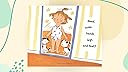
Amazing You!: Getting Smart About Your Private Parts: A First Guide to Body Awareness for Pre-Schoolers
Product ID: 50208667
Amazing You!: Getting Smart About Your Private Parts: A First Guide to Body Awareness for Pre-Schoolers : Saltz, Dr. Gail, Cravath, Lynne Avril: desertcart.co.uk: Books Review: Amazing You!: Amazing book! - I bought this book a couple of weeks ago for my 6-year-old son who kept asking me why I was a girl and why he and his dad were boys. I am very liberal and I am a school teacher, so I should know how to explain facts about life to my own child. However the explanations I gave to my boy were not enough or not clear enough. So I "googled" for books about the subject and found this one on an American website. My son loves it. He reads (or rather looks at) it all the time and he seems to understand more now. I like the drawings (accurate but cute) and the fact that it gives the appropriate explanations for a child of 6 and nothing else. It is liberal (no patronising, no religious bigotry) but at the same time respects the necessary innocence of a young child and tells children that they are the result of love between a man and a woman. That is all what my 6 year old needed for the moment as I give myself a bit of time before I explain that two men or two women can be parents as well etc. Thank you for a very cheap and great book! Review: good starter book to introduce to children - this is a good starting point if you wish to discuss body parts with your child. it is written in easy soft but true/honest language. it explains main differences between girls and boys, mentions baby making in honest/biological way. there is no rude illustrations, all well designed for children as young as 5. well recommended.
| Best Sellers Rank | 80,605 in Books ( See Top 100 in Books ) 56 in Children's Nonfiction on Sexuality & Pregnancy 65 in Children's Books on Maturing 78 in Children's Books on Anatomy & Physiology |
| Customer reviews | 4.6 4.6 out of 5 stars (3,030) |
| Dimensions | 27.9 x 0.3 x 22.9 cm |
| Edition | Reprint |
| Grade level | Pre-school - 2 |
| ISBN-10 | 0142410586 |
| ISBN-13 | 978-0142410585 |
| Item weight | 136 g |
| Language | English |
| Print length | 32 pages |
| Publication date | 31 Jan. 2008 |
| Publisher | Penguin USA |
| Reading age | 4 - 7 years, from customers |
S**E
Amazing You!: Amazing book!
I bought this book a couple of weeks ago for my 6-year-old son who kept asking me why I was a girl and why he and his dad were boys. I am very liberal and I am a school teacher, so I should know how to explain facts about life to my own child. However the explanations I gave to my boy were not enough or not clear enough. So I "googled" for books about the subject and found this one on an American website. My son loves it. He reads (or rather looks at) it all the time and he seems to understand more now. I like the drawings (accurate but cute) and the fact that it gives the appropriate explanations for a child of 6 and nothing else. It is liberal (no patronising, no religious bigotry) but at the same time respects the necessary innocence of a young child and tells children that they are the result of love between a man and a woman. That is all what my 6 year old needed for the moment as I give myself a bit of time before I explain that two men or two women can be parents as well etc. Thank you for a very cheap and great book!
M**A
good starter book to introduce to children
this is a good starting point if you wish to discuss body parts with your child. it is written in easy soft but true/honest language. it explains main differences between girls and boys, mentions baby making in honest/biological way. there is no rude illustrations, all well designed for children as young as 5. well recommended.
S**E
Great way to answer difficult questions
Bought for our 7 year old daughter. She's quite clever, and asks alot of questions, so we wanted somehting a bit more advanced than 'baby grows in mummy's tummy' but not too grown up that it would be inappropriate. This is a great balance - it explains briefly how your body will chnage in the future, and also the names of all the male and female body parts, it show the egg and sperm and where the sperm go, but doesn't explain exactly how they get there. This was enough to satisfy my daughter for now! Coupled with a 'grown-up' family talk, this was great way to start talking about this subject with her. It was slightly 'Americanised', which is the only reason it doesn't have 5 stars.
K**6
Perfectly pitched for young minds
I did a lot of searching for a 'facts of life' book for my two children (4yr & 6yr). I didn't want anything too graphic or too mature. I settled on three books Hair In Funny Places and What's the Big Secret?: Talking about Sex with Girls and Boys and this one. This is the only one I have chosen to share with them so far (I have kept the others for when they are older as they are good but contain images and topics I don't think are suitable for this age(intercourse, masturbation, wet dreams etc.) This book however, I felt, was just right. It mainly talks about the differences between girls and boys bodies - which at this age is what they are mainly interested in, I reckon. Please don't think the images of naked adults are in any way 'too graphic' as another review said - they are lovely and innocent in their cartoon depictions. It does cover eggs and sperm but does not say about, or show any, sexual intercourse and my guys seemed perfectly happy without further explanation. It also only briefly mentions that their bodies will change as they get older without going into teenage issues. Overall I think this is a great book for young children, looking at private parts without too much detail. I didn't feel embarrassed at all reading it to them. It now sits on our library bookshelf amongst all our other books.
C**Y
Buy this book!
My 5 year old was starting to get inquisitive about bodies and I wasn't sure quite how to explain at the right level. Que the search for a book like this. It is very informative and explains the differences between boys and girls (and also men and women) and also explains how babies are made but all at an appropriate level. I.e. My son learned that when he is older he will have sperm that look like tadpoles and older girls will have eggs. When a Mummy and Daddy love each other the egg and sperm join together and a baby starts to grow. He didn't ask how, he just assumed love made it happen. It then goes on to show a baby in utero. He was amazed when I told him his belly button came from the umbilical cord he could see in the picture. It is a very body positive book. He loved it so much we had to immediately read it again!
A**0
A brilliant book for inquisitive pre-schoolers that's easily simplified
Bought this for my very body curious 3-year-old boy. We had to read it four times in a row when it first arrived and it's been our bedtime story all week. Initially I thought about only reading the pages on bodies and leaving out those focused on how babies are made as he hasn't yet asked about this, but he wanted to know when he saw the pictures. For now, I'm simplifying the description of female body parts (he's more interested in how girls pee without a penis) and where a baby comes out. A brilliant book that can easily be simplified to your child's current questions and curiosities that's written in a lovely style that's easy to understand but not talking down to children. Fabulous drawings too. Will be buying another for my godson.
V**8
Great book for younger children age 6+
Brought this book for my 6 year old son as he has started to ask lots of questions recently about his body, body parts etc. Being the way I am I instantly looked on Google and came across this book-had great reviews hence the reason I purchased it for my son. I read it before I gave it to him and I am impressed with it and highly recommend it. It is suitable for his age and does not go into too much detail, just the right amount for a child of his age with pictures age appropriate too. Good to read with your child, not embarrassing at all, helps you to explain things easily.
S**S
Kewl
H**A
This book, in conjunction with What Makes a Baby by Cory Silverberg, was a perfect choice for us for opening discussions with our preschooler. I do not believe in lying or even misleading my children about anything. I have this idea that when it comes to these sorts of things, I want to offer the information *before* my inquisitive four-year-old needs to ask it. This book offers some basic, perfectly-written information... and what you choose to do with it / how far the discussion goes with your preschooler is completely up to you. One thing the other reviews mentioned was the page dedicated to slang words for anatomical parts. We also don't use any slang so I just tooo the chance to explain that some families do use other words and we will just keep doing what we are doing. We have even launched off into discussions about hens and eggs hatching: "Mama, how come there are no baby chickens in the eggs we eat?". For us, this isn't the *only* book we are using. It isn't the right fit for everyone as it is very gender normative using boy/girl man/woman pronouns. The "When a man and a woman love each other" line doesn't settle well with me. I read about it in other reviews so I was able to also buy the above-mentioned book (What Makes A Baby), as I wanted to be sure to include some other discussions about how families can look all sorts of different ways. I also personally didn't mind the vaginal delivery being depicted - it's important to normalize non-surgical deliveries. But I can see how it doesn't really leave room for surgical deliveries unless the caregiver takes the initative to use the book as a starting point for discussion. Overall, an excellent book. If you are looking for a jumping off point for discussions with your young children, you can't go wrong here. I consider this a must-have for parents/guardians/caregivers of preschoolers.
A**K
We bought this to help explain anatomy and baby-making basics to our 3-year-old, who has recently become extremely inquisitive on the topic. It is a very detailed introduction to male and female anatomy; although it is aimed at small children, it is entirely unapologetic in its honest graphic depictions of its topic. I think it is a tasteful introduction to body differences and to the basics of reproductive development and where babies come from. However, the book is not for everyone, and whether you find it helpful will depend on your particular values, your comfort levels with certain images, and whether you think your child is ready to discuss certain ideas. Spoiler alert. ;) Some details that might help you decide whether this book is for you: - The book is not narrative-based, but rather a step-by-step discussion of various aspects of anatomy, development, and how babies come to be. - The cover children are white Europeans and many of the inside illustrations follow suit. That said, the authors did include other races in the book. THAT said, the example family in the make-a-baby scenario is white. - The unstated assumption throughout the book is that people who are making a baby are a race-matched man and woman who love each other. If your family is mixed race, if you are a single parent, if you are two Moms who had a baby, if you adopted a baby made by someone else, etc... your family is not overtly depicted. That's not to say this book is useless to you, but of course more discussion is needed beyond the scenarios depicted here, and other books might do a better job in terms of having your kid identify with the illustrations. (In my opinion, even the book's perfect target audience would do well to discuss the fact that your family is not the only kind of loving family set-up out there. But at least the illustrations are less potentially confusing in your case.) - There is a page that depicts a baby boy next to a preschool boy next to an adult man, in full frontal nudity, to contrast developmental stages and illustrate how the body changes; the page next to it does the same for girls. We are not embarrassed by nudity in our family, and teach context (when is it appropriate to be naked versus not), but some families might be uncomfortable with these pages. - There are pages for both boys and girls that show what the "inside" anatomy looks like. The book uses accurate medical terminology to describe many anatomy details ("labia", "scrotum", "urethra", etc.). Some of this is more detail than our kid needs right now, but will be extra information for a later time. We initially just gloss over some things to avoid getting muddled in details. - The book talks about how a sperm and egg join to make a baby. One silly detail: the cartoon sperm and egg are smiling and saying "hi" at each other. In an otherwise fairly realistic book, this is a bit fanciful. (Our kid likes to point out that this isn't "really" what they look like and that eggs and sperm don't have faces; it's a source of humor.) - There is NO depiction of sexual intercourse in either words or images. "Amazing You" skips from talking about a man and woman loving each other and deciding to make a baby right to picturing the meeting of the egg and sperm, leaving the adults to decide whether to fill in the in-between detail. - There is a page that shows a baby in-utero and a description of what the umbilical cord does. - There is discussion of what happens during labor (that the uterus pushes the baby out and the vagina stretches to allow the baby to fit). None of this is shown in pictures (the pictures are of an excited-looking couple contemplating the pregnant belly and then a hospital room image of a doctor handing Mom the baby with umbilical cord still attached while another person-with-surgical-mask and Dad look on, and no Mom-private-parts are shown). - There is a page that talks about self-exploration, discussing how curiosity is natural and that touching private parts is a private act. (The accompanying picture is of a closed door with a "private" sign on it, and the family dog running in the hallway outside.) Some readers may find this discussion offensive and possibly above the level of the intended audience. From a developmental perspective, it is normal for very young children (yes, including those who have not been confronted with the horror of abuse) to touch their private parts and find them interesting; it would be strange if they found their toes fascinating, but completely ignored another, equally interesting, part of themselves. This page offers an opportunity to address healthy boundaries for such behavior without shaming the child for normal curiosity. It can also be skipped if it doesn't yet seem relevant to the child. Or it might be a deal-breaker for you on this book if this topic is just not something you're comfortable discussing (yet, or ever) with your child. Overall, I think this is a great book. Our kid loves reading it and discussing how things work, and is proud to know more about the topic. The images are graphic but innocent in nature, and helpful for a real conversation about private parts. If you're like us and want to be open about this topic, I'd recommend trying this book. If you want to take this conversation a little slower, or the details described above are not in line with what you're looking for: save your money for another book.
S**M
I love the book. It has nice, normal cartoon style illustrations. It mentions all the information necessary and a child will ask you in terms that they can understand. Not really hard, not shameful, not something to worry and feel ashamed about. It is open ended in terms of sufficient details that the child will understand and also be satisfied with the answers. As they grow you can re-establish the necessary biological knowledge and even further more when they grow and ask more. I love the words, illustrations, and also the way of writing. Also the way they have taken effort to even write a note to the parents about how they should also not feel ashamed and answer their kids as honestly as possible so hey do not end up teaching their children of being ashamed of their body parts too. I have bought it for my 5 year old niece, although she has knowledge prior to this but is now very curious about how the organs and body parts look and work. So this was a good step for beginners.
E**.
El libro llegó dentro de un sobre pero estaba muy maltrado, el contenido es lo básico que esperaba, describen las partes privadas y el proceso del embarazo de manera sencilla.
Trustpilot
1 week ago
2 months ago