Buy anything from 5,000+ international stores. One checkout price. No surprise fees. Join 2M+ shoppers on Desertcart.
Desertcart purchases this item on your behalf and handles shipping, customs, and support to Croatia.
๐ ๏ธ Fix it once, flex forever โ the ultimate shoe savior!
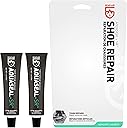
GearAid Aquasure +Sr Quick Repair is a high-performance adhesive paste designed for versatile shoe repairs across leather, rubber, suede, and neoprene. Its concentrated formula offers minimal shrinkage and a flexible, durable bond that rebuilds soles and heels effectively. Ideal for professionals and enthusiasts alike, it delivers cobbler-grade fixes at home, though it requires careful application and safety precautions due to its flammability and potential irritants.


| ASIN | B000PBTV0O |
| Best Sellers Rank | 276,930 in Fashion ( See Top 100 in Fashion ) 425 in Shoe Care Kits |
| Brand | Gear Aid |
| Colour | grey |
| Compatible Material | Leather, Rubber, Suede, Neoprene |
| Customer Reviews | 4.2 4.2 out of 5 stars (336) |
| Global Trade Identification Number | 00021563104158 |
| Included Components | Quick Repair |
| Item Dimensions | 38 x 19 x 114 millimetres |
| Item Form | Paste |
| Item Type Name | Quick Repair |
| Item Weight | 100 g |
| Manufacturer | GearAid |
| Manufacturer Part Number | 10420 |
| Model Number | 10420 |
| Number of Items | 1 |
| Style Name | 1 Oz โ 2 Pack |
| UPC | 021563104158 021563104202 |
| Water Resistance Level | Not Water Resistant |
F**L
It works!!
I think you can only really appreciate how good this stuff is if you have tried repairing shoes or boots without it. I've tried to do home repairs on boots and shoes when they were rejected by the cobblers and it is impossible to get a glue that both sticks and is flexible, and even ignoring that you still have the issue of what to stick onto the sole or heel. I know you can get rubber patches and heels to stick on but in practice they need a lot of shaping or the surfaces don't meet properly and I've never had one stay on for more than about 10 paces. This stuff on the other hand just works. It sticks flappy bits together and can also be used to build up a surface that you can walk on. To build up a heel or sole you have to use it on an upturned sole and dam it in with tape (eg electrical tape) or blu tack because it flows and takes maybe a day to set completely. You need to have a good think about what you can achieve in one go because you can only leave the shoe in one position while it sets and it may be that you need to take several sessions to repair different places. It's quite viscous and very sticky. Someone tipped me to store it in a freezer once opened, otherwise it sets in the tube. This appears to work but it isn't mentioned in the instructions. It is quite expensive for a tube of glue but that is offset against the fact that it actually works. I repaired the split sole on a boot and built up it's heel again. They were rejected as impossible to repair by the cobbler and would have cost about ยฃ50 to place with an equivalent. That was about 3 months ago and they are still going strong. Update: Two years later and the boots are still going strong, but time to build up that heel again.
A**E
Doesn't stick well enough.
I tried this on the underside of my boots to repair a horizontal fissure, of which was allowing standing water to enter and soak my feet. Having followed the excellent instructions posted by Fred Gandt (thank you!) I did end up with a very well polished repair. It looked and felt good, with no water getting in. -- I ensured that the glue was set well (had 2 weeks to do so), was applied thickly, and with a wide surface area. Unfortunately the repair was fairly short lived. About 1 month later the glue has noticeably broken off from part of the rubber it was attached to, so now the water just comes back in. To be honest if your soles have a fissure on a frequently flexed region you'd be better off paying for a professional sole repair or replacing the boots. -- Whichever is cheaper.
A**Y
works, still solid after a couple of months.
Bought for ยฃ7.99 I found this product perfect. I cleaned up my walking boots, scrubbed the soles clean. I found quite a few more holes/cracking than I thought... I'm not surprised my feet were wet! I opened the cracks a little to get some goop in and then just squeezed enough to cover the area, it just turns into a clear circular blob over the cracks. I built up the heels with tape as per the instructions and filled in with goo. I then spot treated and other holes. I decided more was better than less. I have stored in the freezer because other comments say to... But it's still in there... Anyway, surprisingly solid. Not like rubber. More like a resin. My feet are dry. I also waterproofed the uppers but considering the holes I found I'm pretty sure they were the primary inlet of water.
F**T
Sticks very well and quite tough, but not great
In the pack is: * The tube of goop. * A little brush. * A pair of polythene gloves. * A detailed information sheet. Reason for purchase: * I have a pair of Grade 1 used Alt-Berg Defender Boots (bought from elsewhere) which had more sole wear than I expected; the heels are severely worn and provide little grip and will wear through to the midsole soon. * There's also a little peeling of the sole away from the midsole at the heel on one boot, and a little gap opening up between the leather and the midsole on the other boot. * I am using Freesole to hopefully fix these issues and get more use from these boots. Process: * Wash the boots. * Clean the soles with Isopropyl Alcohol and a stiff brush (old paintbrush trimmed short). * Wrap sticky tape around the heel of each boot to contain the Freesole. * Using the small, supplied brush, work the Freesole into the grain of the rubber across the entire surface (greater surface area means greater adhesion). * With the boots held upside down on stable posts (I used a couple of large spent aerosol cans), fill in the worn area with Freesole * Leave for 2 days to set (with possible fiddling in the interim). My initial findings: * It's pretty goopy stuff but easy to work with; viscose but doesn't make long, awkward strings from the tube to the workpiece. * Use in a well ventilated area; it smells quite nice, but could make you queasy in a closed space. * It's pretty much self levelling, with a high surface tension causing it to form blobs in free space and a deep rise up the side of the sticky tape barrier. Direct from the tube, it's not thick enough to form a tread pattern; purposeful bumps mostly level out. * Although large bubbles are self expelled (which is good), minute bubbles are trapped in the liquid. After leaving to cure and a few days of walking: * As you can see in the last 3 images, the Freesole has cured (after about 72 hours) with a lot of bubbles trapped in it. These bubbles weren't at all as prominent when I left the boots to cure; it looks as if the compound kinda fizzed whilst curing. * The result is a somewhat foamy structure that started to crumble away at the edges almost immediately as I put them to use. * Because the compound cured from the outside in, I couldn't mold it as it set to form a tread pattern, so the surface is completely smooth with little undulation, which makes it quite slippy on some surfaces. The actual compound is quite grippy though, so if a tread can be molded from the start (wax coated paper-mache or something similar might work) the grip would be acceptable. * It appears to have bonded quite well with the original Vibram sole, but in a couple of places the high surface tension caused to Freesole to retract from where it was put to form blobs. At thinner points, the edges of the compound have peeled away a little. Updates to follow: I don't think the repair will last long, and will finish this review with more images and final conclusions soon. UPDATE: I'm afraid I was very busy whilst the Freesole wore off and didn't get a chance to set my camera gear up to show the process. Any picture now would just show a few slivers remaining around the heels. CONCLUSION: It sticks really well; as rubber (and rubbery) glue, it's very good stuff. I purchased for sole repair, including rebuilding of worn areas on the heels, but for this, it doesn't so much fail, but doesn't really perform that well either. Since it takes so long to cure, any repairs made with this stuff need to be planned and considered, so it's not much use for "quick and dirty" repairs where super glue would probably be far better. I'm glad I know it exists in case I ever need some for something, but for shoe repairs, I don't think this is the stuff for me. I have yet to try Shoe Goo or Gorilla Glue but look forward to giving them a bash, and in the meantime will stick with Evo Stick - pun intended ;-)
Trustpilot
3 weeks ago
4 days ago