
Desertcart purchases this item on your behalf and handles shipping, customs, and support to Croatia.
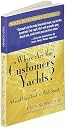
"Once I picked it up I did not put it down until I finished. . . . What Schwed has done is capture fully-in deceptively clean language-the lunacy at the heart of the investment business." -- From the Foreword by Michael Lewis, Bestselling author of Liar's Poker ". . . one of the funniest books ever written about Wall Street." -- Jane Bryant Quinn, The Washington Post "How great to have a reissue of a hilarious classic that proves the more things change the more they stay the same. Only the names have been changed to protect the innocent." -- Michael Bloomberg "It's amazing how well Schwed's book is holding up after fifty-five years. About the only thing that's changed on Wall Street is that computers have replaced pencils and graph paper. Otherwise, the basics are the same. The investor's need to believe somebody is matched by the financial advisor's need to make a nice living. If one of them has to be disappointed, it's bound to be the former." -- John Rothchild, Author, A Fool and His Money , Financial Columnist, Time magazine Humorous and entertaining, this book exposes the folly and hypocrisy of Wall Street. The title refers to a story about a visitor to New York who admired the yachts of the bankers and brokers. Naively, he asked where all the customers' yachts were? Of course, none of the customers could afford yachts, even though they dutifully followed the advice of their bankers and brokers. Full of wise contrarian advice and offering a true look at the world of investing, in which brokers get rich while their customers go broke, this book continues to open the eyes of investors to the reality of Wall Street. Review: A light-hearted but also serious look at Wall Street. - This book was first published in 1940 and the author had experienced Wall Street at its most extremes. He was a trader but lost a lot of his money in the crash of 1929. It’s a cynical look at the practices and people on Wall Street of which the author clearly had a fine understanding. One might conclude that the financial world has not changed much since. It’s both witty and educational. As the introduction to the 2006 edition by Jason Sweig spells out: “The names and faces and machinery of Wall Street have changed completely from Schwed’s day, but the game remains the same. The Individual Investor is still situated at the very bottom of the food chain, a speck of plankton in a sea of predators”. The title of the book refers to the apocryphal story of some out-of-town visitors to New York. On arriving at the Battery their guides indicated some handsome ships riding at anchor and said “Look those are the bankers’ and broker’s yachts”. “Where are the customer’s yachts?” asked the naïve visitor. Here’s one educational paragraph from the book after he comments that “pitifully few financial experts have ever known for two years (much less fifteen) what was going to happen to any class of securities – and that the majority are usually spectacularly wrong in a much shorter time than that”: “Still he is not a liar; nor is our other friend. I can explain it, because I have not only had lunch with economists, I have sometimes had dinner with psychiatrists. It seems that the immature mind has a regrettable tendency to believe, as actually true, that which it only hopes to be true. In this case the notion that the financial future is not predictable is just too unpleasant to be given any room at all in the Wall Streeter’s consciousness. But we expect a child to grow up in time and learn what is reality, as opposed to what are only his hopes. This however is asking too much of the romantic Wall Streeter – and they are all romantics, whether they be villains or philanthropists. Else they would never have chosen this business which is the business of dreams”. On the subject of trusts he says “There has been a good deal of thoughtful, searching legislation enacted against trust abuses in recent years, and all of it favors the investor. The sad thing is that there can be no legislation against stupidity”. The recent events at Woodford come to mind. The writer also comments on the detachment of the investor or speculator from the real businesses represented by pieces of paper – and “with these pieces of paper thrilling games can be played……this inability to grasp ultimate realities is the outstanding mental deficiency of the speculator, small as well as great”. He points out that one of the agendas of the S.E.C. is to work towards the ideal of a completely informed investing public. A laudable effort he says but then points out that then “everybody would know whether to buy or sell, and whichever it was, everybody would try to do the same thing at once”. Orderly markets exist on differences of opinion. This view is worth pondering now that we have such instant dissemination of financial news and analysis on large cap stocks. There is a much wisdom in this book which is both relatively short and readable. Highly recommended for those new to investment for the education and to experienced investors for the levity. Review: As brilliant as it is funny (and it is a lot of both) - This is one of the funniest books I have read recently, and most certainly the funniest related to finance. It is also an eye opener and a guide on the recent (or ever going?) financial crisis with which the mortals are inflicted every so often. The small detail that it was written decades ago does not make it less valuable - it does apply to the financial crises of the XX century as it does to those in the early XXI. It's always the same. The best parts could be those in which it mocks the language of bankers and financiers. A very important book, essential to understand the banks, funds and other financial entities and how they treat their clients.
| Best Sellers Rank | 43,832 in Books ( See Top 100 in Books ) 69 in Business Humour 2,948 in General Humour |
| Customer Reviews | 4.5 out of 5 stars 554 Reviews |
R**N
A light-hearted but also serious look at Wall Street.
This book was first published in 1940 and the author had experienced Wall Street at its most extremes. He was a trader but lost a lot of his money in the crash of 1929. It’s a cynical look at the practices and people on Wall Street of which the author clearly had a fine understanding. One might conclude that the financial world has not changed much since. It’s both witty and educational. As the introduction to the 2006 edition by Jason Sweig spells out: “The names and faces and machinery of Wall Street have changed completely from Schwed’s day, but the game remains the same. The Individual Investor is still situated at the very bottom of the food chain, a speck of plankton in a sea of predators”. The title of the book refers to the apocryphal story of some out-of-town visitors to New York. On arriving at the Battery their guides indicated some handsome ships riding at anchor and said “Look those are the bankers’ and broker’s yachts”. “Where are the customer’s yachts?” asked the naïve visitor. Here’s one educational paragraph from the book after he comments that “pitifully few financial experts have ever known for two years (much less fifteen) what was going to happen to any class of securities – and that the majority are usually spectacularly wrong in a much shorter time than that”: “Still he is not a liar; nor is our other friend. I can explain it, because I have not only had lunch with economists, I have sometimes had dinner with psychiatrists. It seems that the immature mind has a regrettable tendency to believe, as actually true, that which it only hopes to be true. In this case the notion that the financial future is not predictable is just too unpleasant to be given any room at all in the Wall Streeter’s consciousness. But we expect a child to grow up in time and learn what is reality, as opposed to what are only his hopes. This however is asking too much of the romantic Wall Streeter – and they are all romantics, whether they be villains or philanthropists. Else they would never have chosen this business which is the business of dreams”. On the subject of trusts he says “There has been a good deal of thoughtful, searching legislation enacted against trust abuses in recent years, and all of it favors the investor. The sad thing is that there can be no legislation against stupidity”. The recent events at Woodford come to mind. The writer also comments on the detachment of the investor or speculator from the real businesses represented by pieces of paper – and “with these pieces of paper thrilling games can be played……this inability to grasp ultimate realities is the outstanding mental deficiency of the speculator, small as well as great”. He points out that one of the agendas of the S.E.C. is to work towards the ideal of a completely informed investing public. A laudable effort he says but then points out that then “everybody would know whether to buy or sell, and whichever it was, everybody would try to do the same thing at once”. Orderly markets exist on differences of opinion. This view is worth pondering now that we have such instant dissemination of financial news and analysis on large cap stocks. There is a much wisdom in this book which is both relatively short and readable. Highly recommended for those new to investment for the education and to experienced investors for the levity.
R**A
As brilliant as it is funny (and it is a lot of both)
This is one of the funniest books I have read recently, and most certainly the funniest related to finance. It is also an eye opener and a guide on the recent (or ever going?) financial crisis with which the mortals are inflicted every so often. The small detail that it was written decades ago does not make it less valuable - it does apply to the financial crises of the XX century as it does to those in the early XXI. It's always the same. The best parts could be those in which it mocks the language of bankers and financiers. A very important book, essential to understand the banks, funds and other financial entities and how they treat their clients.
D**A
A Good Hard Look At Your Broker's Yacht
You really want to know how easy it is for you to be fleeced? Nah. That's why you're going to pass on this book and pay your broker a nice overdue visit. Maybe call him instead. Get fleeced. This book is in the same vein as Adam Smith's The Money Game just older written circa 1940. Very enjoyable and informative nevertheless. And funny. Schwed covers all the bases of the criminal intent of one's friendly broker. Plus ca change, as the French say, plus c'est la meme chose.
J**N
Where are the customers Yachts
A must read for anyone who invests , even though it was written in the forties still relevant today and a jolly good read funny with a few poignant observations that would make you think twice before investing in certain products.
K**B
Refreshing warning on the pitfalls on investing - complimentary to books on Mr. Buffet , Mr.Graham and on Mr. Munger.
Humorous, yet very serious book on Wall Street. The author was a broker for many years and over that time tried to find someone who could consistently make money through investing. He was disappointed in what he saw around him and conveys this in numerous funny anecdotes through out the book. Take it as a refreshing warning on the pitfalls on investing - and then read books on Mr. Buffet , Mr. Graham and on Mr. Munger. They are complimentary treaties.
M**K
I know it's a classic but it's actually quite dull...
I was in finance for a stint, do my own personal investing still and generally love reading books on finance and investing. This is one of the Warren Buffett recommended books and so I thought I'd give it a go but was pretty disappointed. There's no real content to it, just strange anecdotes from the past... if you're looking for any actual wisdom or inspiration for investing then don't go for this book. If you want a bit of satire and to be able to say you've read the book then sure, go ahead!
F**E
Brilliant. Funny from start to end
Brilliant. Funny from start to end, gives a good insight on finance people's lives in the recent past, which are not so different from today's.
R**V
Great book
A fantastic book book about wall Street
R**O
A Splash of Cold Reality
So, you want to make money on Wall Street? Good idea, only be wary of investment counselors, stock brokers, or anyone purporting to have all the answers, such as authors of books on investing. Fortunately for us, Fred Schwed is not among them. His is a cautionary tale. He's worked on the Street and knows of its many pitfalls. Yes, his book was originally published in 1955, but as Jason Zweig (Money Magazine) points out in the introduction to the 2006 edition, nothing has changed. "The names and faces and machinery of Wall Street have changed completely from Schwed's day," writes Zweig, "but the game remains the same." The fact is, says Schwed, no one can predict the future with accuracy, but that is exactly what Wall Street analysts, investment counselors and ambitious stock brokers are claiming to do. It can't be done. The Wall Street game is nothing less than a crap shoot, with lots of losers and few winners, and the winners often end up losers. Who makes the big money on Wall Street? Investment bankers and brokers--from their exorbitant fees. They are the fat cats with the yachts parked out on Long Island, not the clients. Schwed aims his harshest criticism at investment counselors. "(They) allocate the funds between themselves and their clients in the ancient classic manner, i.e., at the close of the day's business they take all the money and throw it up in the air. Everything that sticks to the ceiling belongs to the clients." The authors makes a fine distinction between Wall Street speculators and investors. Speculators are the quick-buck artists hoping to make a killing; they don't. Investors are patient and looking for some place to put their money for the long term; they are the ones who actually make money. Put another way: "Speculation is an effort, probably unsuccessful, to turn a little money into a lot. Investment is an effort, which should be successful, to prevent a lot of money from becoming a little." Schwed's book is funny, wise, a splash of cold reality. While filled with irony, it's not cynical. The author, who reportedly lost a bundle on Wall Street, remains a believer. "I have a sneaking fondness for that wretched old hag, the capitalistic system . . . we had better preserve our financial machinery even with much of the nonsense still adhering to it . . . The only successful method so far devised for getting millions out of the public, for enterprise both good and bad, is some system similar to the devious mechanism of Wall Street." Bottom line: no one on Wall Street has the answers. It's a guessing game. Be smart: invest for the long term, and maintain a healthy dose of skepticism.
R**L
Interesting???
A good read but in today's market I believe money can be made with prudent investments.
L**P
Empfehlung von Warren Buffett
Ich sah neulich eine Veranstaltung von Warren Buffett auf der er das Buch empfahl. Er gab diese Empfehlung, mehr oder weniger in einem Nebensatz, da er davon ausging, dass es ohnehin jeder bereits gelesen hätte / haben sollte. Nach dem ich es gelesen habe, kann ich dem nur wenig hinzufügen: Sollte man gelesen haben, wenn man plant Kapital anzulegen.
R**V
Molto bello
Bello bello molto bello, mi ha fatto sbellicare dal ridere. E al tempo stesso è anche molto informativo, ho imparato parecchie cose.
A**Y
awsome
loved it
Trustpilot
1 month ago
1 week ago