๐ ๏ธ Seal smart, save energy, and never let a gap go unnoticed!
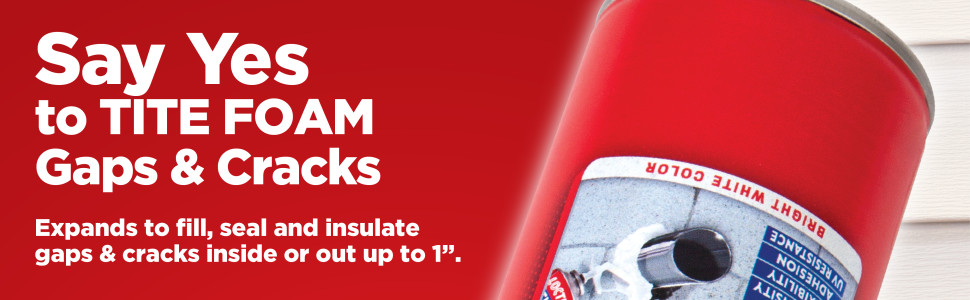
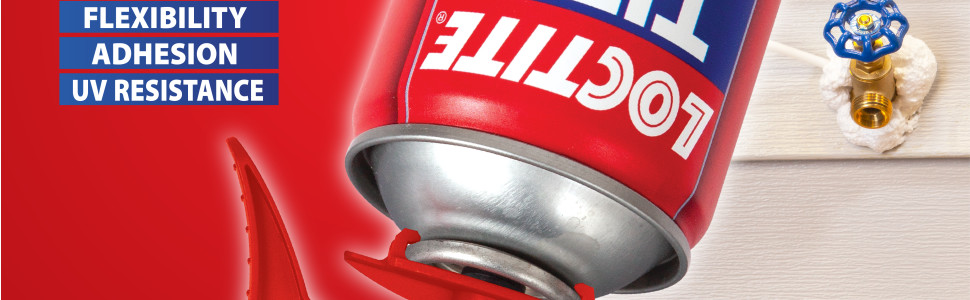
Loctite Polyurethane Foam Sealant is a high-density, UV-resistant expanding foam designed to fill, seal, and insulate gaps up to 1 inch. Its superior adhesion bonds to most building materials, providing durable, flexible, and weather-resistant protection ideal for professional-grade home maintenance and remodeling projects.


| ASIN | B01N21KQ4I |
| Best Sellers Rank | #1,552 in Industrial & Scientific ( See Top 100 in Industrial & Scientific ) #6 in Urethane Adhesives |
| Brand | Loctite |
| Brand Name | Loctite |
| Color | Red |
| Compatible Material | Metal |
| Customer Reviews | 4.4 out of 5 stars 21,602 Reviews |
| Global Trade Identification Number | 00079340648791 |
| Included Components | Insulating Foam Sealant |
| Item Dimensions | 2.56 x 2.56 x 7.87 inches |
| Item Form | Foam |
| Item Type Name | TITE FOAM Insulating Foam Sealant |
| Item Weight | 12 ounces |
| Item dimensions L x W x H | 2.56 x 2.56 x 7.87 inches |
| Manufacturer | Henkel Corp |
| Material | Polyurethane |
| Material Type | Polyurethane |
| Model | 2975892 |
| Number of Items | 1 |
| Part Number | 2975892 |
| Style | Compact |
| Style Name | Compact |
| Surface Recommendation | [MULTIPLE] |
| UPC | 079340648791 |
| Unit Count | 340 Grams |
| Warranty Description | Warranty |
| Water Resistance Level | Water Resistant |
R**R
Stuff is amazing! But a bit of a learning curve. Learn from MY mistakes!
TLDR: This stuff is great and 100% accomplished what I needed in what I think was a somewhat challenging use case. However, there was a bit of a learning curve for applying it properly. - The Project: Creating a vent for portable AC exhaust hose in a disgusting and ancient basement window. - The Process: First I removed the old and already completely shattered glass window from the window frame. I tried to chip out all of the old mortar or whatever it was that held the old glass window into the frame but some of the bits were impossible to remove. I knew I wanted to remove as much of that as possible so that the new panel that I put in place would sit flush and make for a better seal. This proved extremely difficult but I was eventually able to get the panel to fit into the metal framing fairly well. Once the vent panel was in place I started with the foam. There was a learning curve. I started from the outside of the house. Applying the foam into the gap at the bottom went perfectly fine. Then things got ugly. When I first tried to seal along the right side, going up and down vertically, the foam just sort of rolled off the front of the vent panel. It made a mess and was turning what had been a surprisingly tidy and semi-professional looking result into a huge mess. And more importantly, the seal was clearly not made. There was no insulation along the right side and the panel was in no way attached to the frame with any adhesive along that side. It was still secured fairly well from the physical fitment but it wasn't glued at all. This was a major problem and I thought my project was going off the rails. I removed the excess foam that had slid down the side of the panel with my hands (more on that later) to clear it off and give me a second chance. Next I went across the top horizontally with better results, similar to what happened along the bottom, but I still had not gotten the hang of using this foam. I went along the left side vertically and again had it sliding around and had to remove with my hands. I tried again and the foam sort of went into place and did what I wanted it to do but I still didn't understand why or what I had done differently to get the right seal and behavior of the foam. At this point, I decided to start sealing from the inside. But I knew I needed to move fast because I wanted to be able to sort of push the panel into place pushing it outward from inside the house to make for a better seal and fit. But I knew I wouldn't be able to do that if the foam had dried. However, my hands were now completely useless as they were covered with this stuff. After about a 5 minute diversion to the slop sink I had removed enough of the stuff to get my hands back to a functional state. I went to sealing the window from the inside and here is where I finally learned how to use this stuff correctly. I had a gap of about an 3/4" between the edge of the vent panel and the styrofoam backing. So naturally, when I started applying the foam sealer on the inside I was spraying the foam into that gap. And this provided an amazing realization. - Using this product properly: Apply minimal force on the trigger. You don't need to blast this stuff out at a high rate. Spray the foam into a gap (duh!) and the foam will expand to fill the gap (again duh!). As long as you are spraying it slowly into a gap it will expand to fill the area and create adhesion on all sides which will prevent it from being pulled down by gravity or just sort of glooping up on the surface. Just based on the description and purpose of this product and my intended goal with using it, I feel kind of dumb that I didn't do this right from the start. - The Process, continued: With this new understanding of how to apply this foam I completed the inside and went back outside. I carefully position the straw so as to make sure the foam would be quite literally injected into a gap. The foam expanded to fill the gap and didn't gloop up or slide downward. You can't just spray it on the surface...you have to stick the straw into the gap and inject foam into the gap. - Conclusion: End result was probably about as good as I possibly could have hoped for given my complete lack of experience with doing anything like this. I made a mess of my hands but after only about 5-10 mins of washing my hands with regular dish soap I had removed 75% of the adhesive from my hands. About a half day later 95% of is gone. So yes, be careful with handling it, and yes I should have worn gloves. But it's not THAT bad if you get it all over your hands. Your best bet with this stuff is going to be to press VERY lightly on the trigger when applying it. This will keep things neater and avoid the disasters I've seen in the customer images here. This product is great and I think completely lives up to what it says it does. There is a learning curve though but once you get the hang of it your result can be both functional and neat and tidy.
W**I
Potentially VERY Messy to work with
This is an update to the previous review I wrote about Locktite for small cracks: MAKE SURE THE NOZZLE DOUBLE CLICKS ONTO THE RELEASE VALVE. I used a second can of this a week later that arrived that was ordered separately. The mistake MIGHT have been mine. The can I used the first time MIGHT have been defective. I'm pretty sure I heard the nozzle click into place as it says to do in the instructions on the can. I'm pretty sure I looked and it appeared to be seated okay, but I extend the benefit of the doubt to the company for the margin of error. Second can of this I made EXTRA sure the nozzle was properly seated and that both clips were securely in place. Pretty much no mess whatsover and the Locktite for large cracks as it turns out as opposed to this review for Locktite for small cracks, I'm certain, the story is the same. So I raised the original review from 4 to 5 stars. This stuff works GREAT. I will write a review for the other (Locktite for large cracks) and include a picture later. The original review is below in its entitety: I am not going to say a lot right now in case my review gets eaten by my android (again) and all time is wasted. If the photo and video uploads I will try to update. Here's the addendum: Absolutely,positively use work gloves and be advised you will be replacing them with another pair. This stuff is ridiculous to work with. (Ridiculous bad. No good, yuck, bad.) I held the can upside down to dispense it as it shows on the instructions on the can. Pro: they put a lot in the can. Con: No way you get to use it all for the stuff oozing out all over the place on you: still the usable amount is a good value for the money. Con: it makes an ungodly mess at the valve. Do not wear clothing you value when working with this. Pro: have a used stiff paint brush or scraper nearby as you work so you can smooth over the mess it makes as it makes a nasty mess of the can and whatever glove you're using to protect your hands from getting this highly unmanageable goop all over. (Zoom on the photos. That glove? It's stuck to the can and remaining contents that won't come out as it oozes out during application.) It's messy. I cannot emphasize that enough. Pro: I believe I just salvaged part of a wall surrounding my back yard that was built in 1978. I used it in the cracks. I will be buying more despite the mess because this is a very useful product. I rated it only four stars for the near enormous mess it will make. For usefulness: 5 stars plus: but for application 10 rotten tomatoes and not a single star. Okay, maybe 1 or 2 on a good day. Order a pair of inexpensive work gloves to use with this as it is highly likely you will be throwing them away along with the unused portion of the product that is going to seal up around the nozzle as you work.
F**E
Great gmjob
Works works well
C**I
Messy But Works
It had been several years since I used a can of this type expanding foam and things didnโt change. Brought back memories of the first time. The pistol grip dispenser is a nice user functional touch. Be warned this stuff is messy! That was the memory brought back to me from the last time. I am sure if you used this on a regular basis one would get the technique down to improve. For me it expands much more than you expect and you will find globs of the foam getting on your clothes. I had a new pair of cheap shorts on that I bought for working outside and after wearing them for the first time my wife informed me she threw them away instead of washing them LOL. Fortunately they were cheap. They had spatters and globs of foam on them and when it dries it is hard and adheres to the fabric. As you use this the globs of excess that get on your hands are super sticky! Acetone would probably be best to clean it off your fingers. If you are like me you will come back later to find this stuff expanded to the point any long crack you filled will have a long masses of this hanging out from them. I used this for cracks exposed to the outside around EPS insulation panels in an area under my deck that I converted for storage. When I went the next day to clean up the cured product I started with trying to use a utility knife. Not a very effective method at all so broke out my oscillating multi-tool with a scraper blade and it worked perfectly, like a hot knife through butter. Note the final cured product is somewhat hard but with a soft plastic like consistency and by design, sticks extremely well to any surface it cures onto. Good luck.
J**Y
Would buy again!
First of all it is sticky. I shook it and it came out faster and bigger. Also it was great for some open gaps we had in the garage. Used it pointed at an angle and up and it worked! Last ed a bit longer than other ones. I use great stuff for other projects too! Definitely would buy again. Just wear gloves. Itโs messy
S**E
Great for sealing small gaps cleanly
Works well for filling and sealing cracks around small openings. Expands nicely to close gaps and helps cut drafts. Easy to use with good control if you go slowly and build up in layers. Great home maintenance item to keep on hand.
Y**Y
Not good for large openings
Sticky and really not good for large cracks or opening.
J**H
Foam gap
Works well
M**.
Does the job.
If you take care of your hands like my husband did after reading comments, it does a good job! Becomes real hard when it dries. It wont let the wind or bugs come inside!
A**A
WEAR GLOVES BEFORE USING
Don't use without gloves , removing this chemical from hands was pain.
I**I
ู ู ุชุงุฒ
ุชู ุงู
K**D
ุฌูุฏ
ูููู ุบุงูู
K**)
Great
Easy to use
Trustpilot
1 month ago
5 days ago