Desertcart purchases this item on your behalf and handles shipping, customs, and support to Croatia.
📖 Unlock the 40 rules that will change how you love and live—don’t miss the journey everyone’s talking about!
Elif Shafak’s 'The Forty Rules of Love' is an international bestseller blending contemporary narrative with 13th-century Sufi mysticism inspired by Rumi. Celebrated for its profound exploration of love, faith, and transformation, it holds top ranks across multiple fiction categories and boasts a 4.5-star rating from over 20,700 readers worldwide. Elegantly packaged, it’s a must-have for those seeking a meaningful, reflective read that resonates deeply with millennial professionals craving both intellectual and emotional connection.


| Best Sellers Rank | #20 in Books ( See Top 100 in Books ) #1 in African History (Books) #1 in Contemporary Fiction (Books) #1 in Historical Fiction (Books) |
| Customer Reviews | 4.5 out of 5 stars 20,700 Reviews |
L**L
A wonderful book for my fortieth year!!
I would love to give it a 4.5 - it went beyond really liking it and yet, I wouldn't say it was absolutely amazing... but I loved it. The first half of the book did nothing for me... I found it just like every other book and philosophy on heart-centered philosophy that I had read and studied. I even wondered what all the hoohaa about the book was. Then all of a sudden, I was past mid-way into the story and I realised I had spent close to a month with the book, which in itself was a first. And just like that, the story became a reflection and an introspection - a pause to consider what these different rules of love meant to me. The story line in itself was lovely and complete in the various facets of observation - looking through the lens and inside the thoughts of the various characters was very liberating - and insightful. What really drew me in was not the forty rules of love, but the sudden realisation that like Ella, I too had embarked on this year with an intention and instinct that this, my fortieth, was holding the promise and potential of major change. I could relate to Ella and her emotions at many times - and it was quite the coincidence and my son is also named Avi. It was freeing to notice the patriarchy of spiritual pursuits in an ancient age and how the author has allowed both Rumi and Shams to dip into the idea of equal opportunity as well as explore the potential of social limitations of their time. I found myself empathising with Ella's notion of love and marriage, holding my own relationships as a benchmark, and at the same time wondering if I were as hardened as her - knowing that I was not, yet allowing enough space to question, "Are you holding something back? What is stopping you?" In particular, her heart spoken, "deep inside she longed for love." really pulled at my heart strings. The rules explored in this book and the narratives leading to it (along with the parables interspersed) are a good guide for those who find mystic sufism of interest - more so, if you have a philosophical tangent to spirituality and don't yet realise that it is a sufi trait. Yet, with love woven into every nook and corner, I found myself really <i>not getting</i> the Shams-Rumi love in totality. I could sense it and then it fell away as I couldn't always accept them putting their love above and beyond those around them. Or perhaps it is because I still am on the 'spiritual' vibration of a lesser kind of love :) Something that is still working on the relational level and hoping to edge towards the madness of divine spiritual love and oneness. Deep - too deep even for me today. Kimya ... my heart bled for her. I couldn't understand it. It brought up all those ideals of pain where the woman is left yearning in the throes of unrequited love and I was angry at Shams for even accepting it. What good is his realisation of his mistake in marrying her, if he was going to let her die. He was so intuitive about everyone including the man who was hiding there waiting to kill him, but he couldn't sense the needs of his wife. No, I hated him then - and his chauvinist (for lack of a better word) focus on his 'oneness' bit. harumph! But yet, I smiled at his explanation to Kimya of the Al-Nisa verse and his sharing of the alternative perspective of male superiority. It was impressive - the context of manhood and womanhood versus men and women - or even masculine and feminine, for that matter. Perhaps it just sheds a little more light on what we consider these gender stereotypes today. Or is it because the author is a woman and she brings a contemporary feminine yearning to the table? I loved the book - I loved how it made me feel. I loved how I chose to read it in preparation for my fortieth this month. I love how I ended it in my birthday month with a feeling of grounding that this just might be that turning point of age and mystic symbolism, the number 40, that the author has amplified throughout the book. Looking forward to the year ahead. This one was a good spring-board.
S**K
A mirror
Not flashy, not addictive, just something that sits with you in the start, and by the midway you realise, now it sits in you instead.
C**N
A must read for book lovers!
I read a long story-line novel after a long time and thought of starting with this one. Definitely worth readine and giving your time! You may have heard or might have read all the forty rules somewhere in your life but reading them again here truly transforms your imagination. I would say this book is so surreal, spiritual bent, not an average love story, but truly hooking you up by the last page. Multiple protagnists, multiple experiences, brilliantly written!
S**A
Awesome read !! Enjoyed much
Really loved the story telling the way the book is written the story and everything Thank you for the book
S**V
A book that calms you down and makes you introspect
The book was a slow read, one that I did not think I’d like as much as I did. There were many beautiful lines to live and many emotions that I could relate to. I love how the past and the present moved as parallel stories. The ending although known, still made me sad ( both for Shams of Tabriz and Aziz) . It’s a thought provoking book that may not be everybody’s cup of tea. It tells the story of how Rumi turned a poet, about Sufism, the relation between Shams of Tabriz and Rumi, about Rumi’s family. Reading it will make you realise that pain and sorrow are a part of life. There cannot be joy without sorrow. The author narrates the past in the form of a book that is received by Ella, the editorial assistant, for review. The reader gets an idea of Ella’s life and her blossoming friendship with the author of the book, Aziz, as the story she is reviewing progresses.
J**M
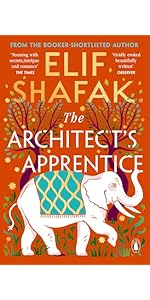
Beautiful cover✨️🌸🫶🏻
I recently received this book and I’m really happy with the overall experience. The packaging was secure and well done, ensuring that the book arrived in perfect condition without any damage. The quality of the book is exactly as expected, with clean pages and a neat cover. I truly appreciate the care taken in handling the delivery. It definitely made the unboxing experience pleasant. I’m excited to start reading it soon and can’t wait to dive into it! Overall, a great purchase experience. Highly satisfied!
N**A
if you enjoy philosophy, spiritualism, or thought-provoking reads, this one is worth picking up.
3.5 stars This was… an experience. A wild ride. Nothing like what I usually read - and yet, somehow, I still enjoyed it. Going into this book blind is honestly the best way to read it. As the title suggests, it talks about forty rules of love, but not in a preachy or straightforward way. These rules unfold through the lives of Shams of Tabriz and Rumi, and that’s what makes it so unique. The story moves along two parallel timelines. One is set in the present, following Ella, whose life begins to unravel and shift after she reads a manuscript about Rumi and Shams. The other takes us to the past, exploring the spiritual bond between Rumi and Shams of Tabriz, and the wisdom they share through their journey. This is a hard book to review because my feelings about it are complicated. There were choices I didn’t agree with and moments that made me uncomfortable. But at the same time, this book is overflowing with quiet wisdom. It’s not something you can rush through. You need to slow down, pause, and let the words sit with you to really absorb what it’s trying to say. Elif Shafak’s writing is hypnotic - almost meditative. Whether you end up loving the story or not, her prose pulls you in and refuses to let go. She’s just that powerful a writer. All I’ll say is this - if you enjoy philosophy, lyrical prose, spiritualism, or thought-provoking reads, this one is worth picking up.
H**R
It will help to understand his work much better. And very much like Rumi’s poems
Rumi’s words have always made a profound impact on me, it has been difficult to read and pass on without settling the internal turbulence caused by his words. In this book, Elif gives us a peek into what made Rumi - the transformation of the preacher Rumi into the immortal Sufi Poet. It will help to understand his work much better. And very much like Rumi’s poems, Elif’s writing was powerful enough to make me pause after every chapter and ponder. I am impressed by the manner in which Elif handled this book, at times seems to be borrowing from Rumi’s thoughts ( I could be totally wrong here) , but connecting with the lay audience like me in contemporary manner. Her choice of a storyline of Ella – a lady facing an extreme midlife crisis, intrigued with the concept of love - makes an immediate connection. Elif takes you on a journey into the world of Sufi’s through Forty rules of love – to teach you how important it is admire and appreciate your inner self, without seeking for approvals, changing the way you treat yourself, leading life through changes rather than resisting them. Some rules made me shudder – like “Even if a single day in your life is the same as the day before, it surely is a pity. At every moment and with each new breadth, one should be renewed and renewed again. There is only one way to be born into a new life : to die before death”. While there would have been many of presenting these thoughts, I am glad that Elif decided to base it on Shams and Rumi. I always felt a bit cheated reading The Alchemist as I felt it was borrowed heavily from Rumi’s Poem “IN BAGHDAD, DREAMING OF CAIRO: IN CAIRO, DREAMING OF BAGHDAD” . While I was reading this book, my thoughts were time and again drawn to another great work – The Razor’ Edge (Somerset Maugham). There are some difference of course, like where Shams feels “Intellect and love are made of different material, Intellect ties people in knots and risks nothing, but love dissolves all tangles and risks nothing” , Somerset would say “I found something wonderfully satisfying in the notion that you can attain Reality by knowledge. In the latter ages the sages of India in recognition of human infirmity admiited that salvation may be won by way of love and and the way of works, but they never denied that the noblest way, though the hardest, is by way of knowledge, for its instrument is the most precious facility of man, his reason”. But then when it is said “A God that can be understood is no God. Can there be anything more stupendous than the conception that the universe has no beginning and no end, but passes everlastingly from growth to equilibrium, from equilibrium to decline, from decline to dissolution, from dissolution to growth and so on till eternity?”, that is a proof good enough as any that both of them are equal Sufi’s at heart, separated by a few centuries. Is it too late to learn, can one really abandon one's responsibilities and die before death? Shams does that it to his wife, was he fair to her to have got into that encumbrance? …… perhaps we will never know. In the story Ella decides to break free, but the children are not born by their choice but were born by Ella’s choice, is it fair for them to suffer…… perhaps the debate will go on. When does one have the right to live a life of one’s choice? I lean on Somerset for the answer “ I am of the earth, earthy; I can only admire the radiance of such a rare creature, I cannot step into his shoes and enter into his innermost heart as I can sometimes think I can do with persons more allied to the common run of men” Do read the book. It will move you.
K**A
Beautiful!
“The Forty Rules of Love” by Elif Shafak is more than just a story—it’s an experience that lingers long after you’ve turned the last page. It follows Ella Rubinstein, a woman who feels trapped in the monotony of her seemingly perfect life, as she discovers a manuscript that shakes her to her core. Through the story of Rumi and his spiritual guide, Shams of Tabriz, Ella begins to question everything she thought she knew about love, purpose, and the divine. What makes this book so personal is how it speaks directly to the heart. The “forty rules of love” scattered throughout the narrative aren’t just for the characters—they feel like quiet whispers to the reader, nudging you to reflect on your own relationships, beliefs, and the courage it takes to embrace a life of true authenticity. Reading this book feels like embarking on a spiritual journey, one that challenges and uplifts you, leaving you with a sense of wonder about the power of love—in all its forms.
A**A
Great 🥰🥳💗
Great 🥰🥳💗
S**L
Good
Good as anticipated
K**I
Tiny illegible print
While the cover has a big and colorful title, Penguin opted to print the interior in tiny font which makes reading tedious and unenjoyable. I should have first read the reviews before ordering.
Y**V
Özenli paket
Güzel akıcı kitap. Özenli paketleme
Trustpilot
2 months ago
2 days ago