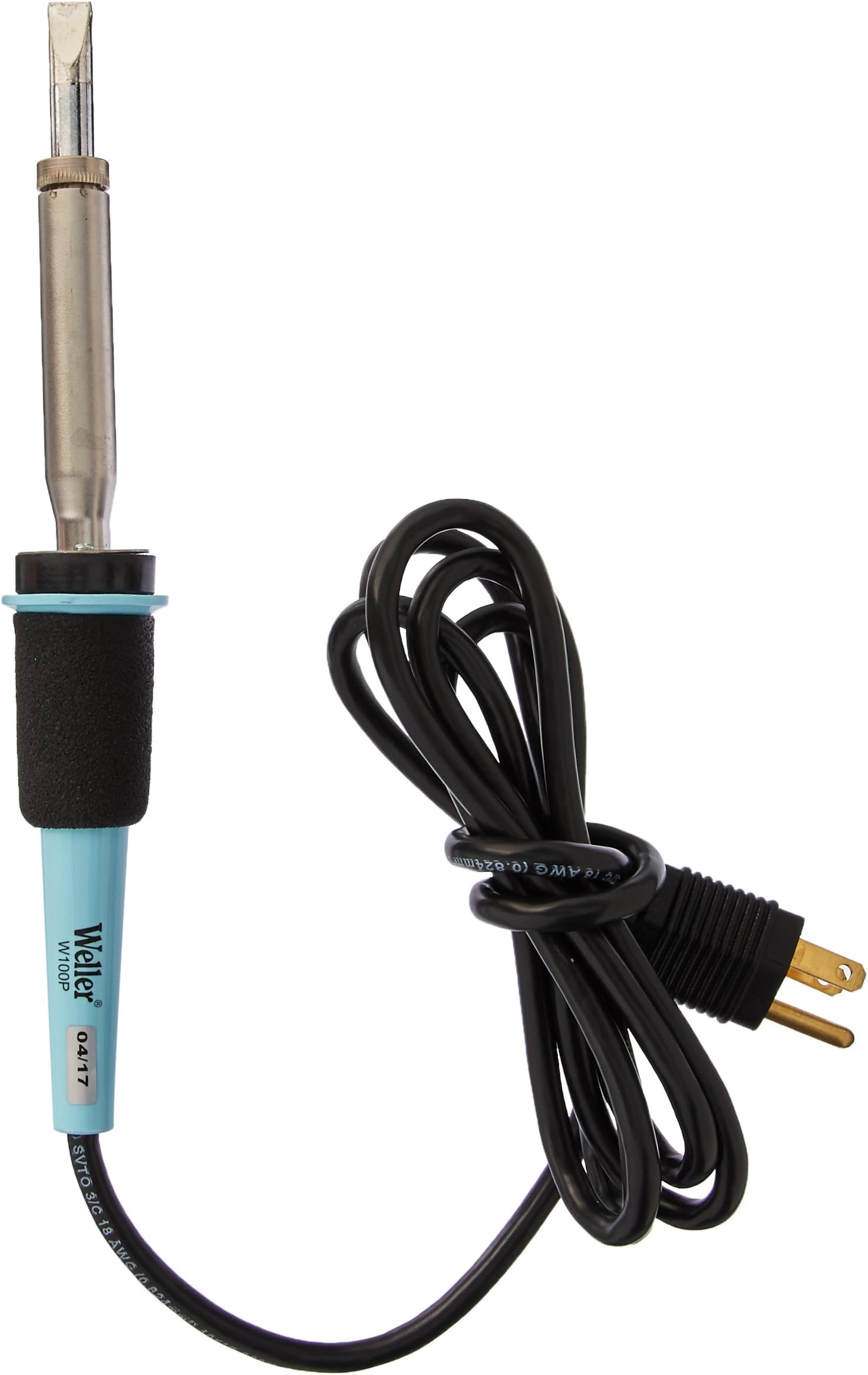
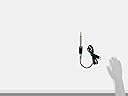
Excellent iron for stained glass work. I've used both Weller 100W and Hakko FX601-02 in my 20 year long career in stained glass, both as a hobbyist and as a fabricator in a professional studio making church windows. If you're considering between the two, here's a quick guide and info: The Weller is a sturdier iron but heats up a little slower and is harder to control as it heats up to a temperature and stays there. The temperature is determined by the tip - the base of the tip if you remove it from the barrel has a letter on it and that shows what temperature it will reach and maintain. You have to be able to adjust and control your heat by how you use the iron (For example, too hot? Dump some heat by cleaning the tip on a damp sponge. Too cold? Wait a little bit for it to get up to temperature again before continuing. That sort of thing. I never bothered with a rheostat for this iron as I could control the temperature manually and I heard that it can shorten the lifespan of it as the iron temperature is determined by the tip.) I've used it and abused it in a professional setting and it holds up well, very durable. It's a slightly heavier, bulkier iron, so it's easier to hold as you've got more weight and is much less prone to fumbling but also means slightly more hand fatigue. I use a Hakko now but will be buying another Weller as my old one bit the dust after many years and I still like to use the Weller for heavier duty soldering jobs on my glasswork and it works better for repairs when I have to disassemble older projects. The Hakko has a rheostat built in, so you select the temperature you want based on the dial setting so it has much finer temperature control. It's a lighter iron so it's easier on the hands but also easier to fumble it and it's ceramic so it has the benefit of heating up very fast, faster than the Weller, but the downside is that it's more fragile. You shouldn't drop it as you can shatter the ceramic element. If you want something durable that will give you a goodly amount of steady heat, go for the Weller and learn how to control your heat manually. If you want very finer control for more varied uses go for the Hakko but be gentler with it. Both are well worth the price! To address some comments I saw on here: - The barrel turning colors: That's normal. It heats up to 600-800 degrees Fahrenheit, that kind of heat will discolor the barrel where the heating element is. This is not a fire hazard or dangerous (beyond the fact that it's a soldering iron and they're meant to get very hot) - it's expected behavior of the iron. - Iron is being sold as new when there's clearly solder on the tip showing it's been used before: If the barrel is silver and doesn't have a discolored band around it, it's NOT been used before. It's expected to have solder on the tip of it. All the tips have been tinned, which means they have a coating of solder on it to begin with. That's normal and expected and does not mean the iron has been used before or isn't new. If the barrel is silver it's new. If it's got a brown band from heat, then it's been used. - Smoking when soldering: That's normal. Flux burns and produces smoke when soldering. Also, the iron also might smell/smoke after first use since it may have dust or a thin coating of oil that burns off on first use. Please be safe and use a fume extractor or a mask to protect yourself from smoke. Lead doesn't burn at these temperatures, it's the flux burning but still smoke is bad for lungs, please wear proper protection or have proper fume/smoke extraction. - Tip gets dirty when soldering: Yes because flux burns and residue from what your soldering on can also build up on the iron. Clean it off on a damp sponge. It's normal and expected. - Needing to re-tin the iron: That's normal and expected of all soldering irons. Depending on what you're soldering, you may need to re-tin more frequently than normal. (Repairing old Tiffany glass projects for example is rough on my iron and requires frequent re-tinning when tearing apart broken projects.) When to know your iron has an issue: - It doesn't heat up/doesn't heat up enough to melt the solder - It's making unexpected noises. It sometimes can make a faint ticking sound from metal expanding when it heats up, especially as it gets a lot older but it shouldn't be making any other noises like whining, knocking, etc. - It's fallen apart into multiple pieces or the twist cap that affixes the tip to the barrel has split into two pieces and no longer holds the tip in. - Smoke from inside the iron (instead of at the tip when soldering) - Trips breakers or shocks you (Note: I've only ever had the first three happen, and all of them from age and hard use. I've not the last ones in this list ever happen but I could see it being a possibility if you got a defective iron.) Other advice: The tip that comes default with this is too large for every day use. It's mostly good for soldering supports or heavier duty objects. Getting a smaller tip helps a lot. I think I use the 1/4" 700 degree tip. Hope this guide helps some people!