
Buy anything from 5,000+ international stores. One checkout price. No surprise fees. Join 2M+ shoppers on Desertcart.
Desertcart purchases this item on your behalf and handles shipping, customs, and support to Croatia.
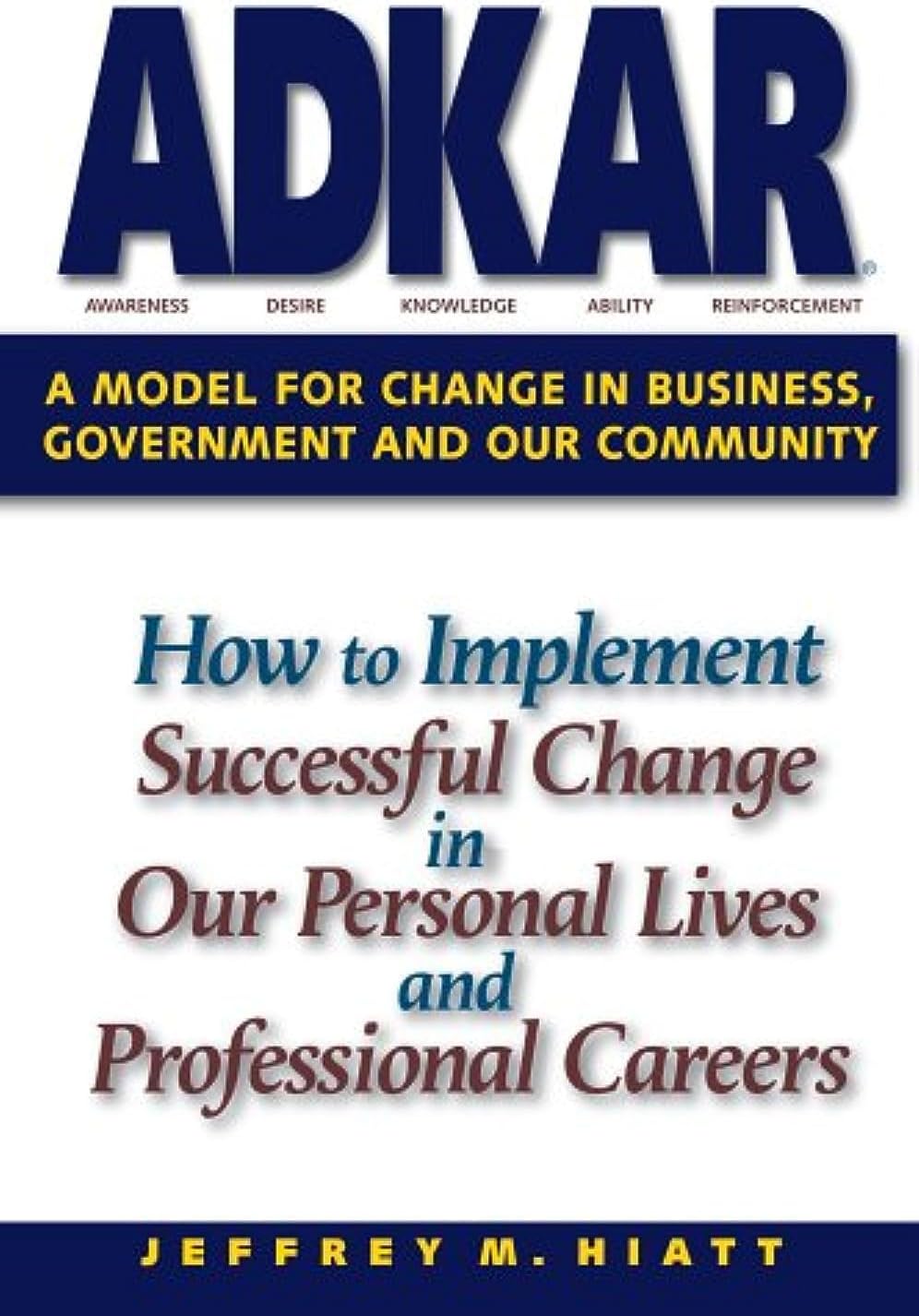
In his first complete text on the ADKAR model, Jeff Hiatt explains the origin of the model and explores what drives each building block of ADKAR. Learn how to build awareness, create desire, develop knowledge, foster ability and reinforce changes in your organization. The ADKAR Model is changing how we think about managing the people side of change, and provides a powerful foundation to help you succeed at change.After more than 14 years of research with corporate change, the ADKAR model has emerged as a holistic approach that brings together the collection of change management work into a simple, results oriented model. This model ties together all aspects of change management including readiness assessments, sponsorship, communications, coaching, training and resistance management. All of these activities are placed into a framework that is oriented on the required phases for realizing change with individuals and the organization.The ADKAR perspective can help you develop a “new lens” through which to observe and influence change. You may be working for change in your public school system or in a small city council. You may be sponsoring change in your department at work. You may be observing large changes that are being attempted at the highest levels of government or you may be leading an enterprise-wide change initiative. The perspective enabled by the ADKAR model allows you to view change in a new way. You can begin to see the barrier points and understand the levers that can move your changes forward. ADKAR allows you to understand why some changes succeed while others fail. Most importantly, ADKAR can help your changes be a success. Based on research with more than 900 companies from 59 countries, ADKAR is a simple and holistic way to manage change. Review: Managing the People Side of Change - ADKAR is an acronym for Awareness, Desire, Knowledge, Ability, and Reinforcement. ADKAR is Jeff's force field model for leading people through a change project. According to the author, it is about managing the people side of change, not project management, software revision change or another definition of change management. Using the ADKAR model can help you help employees navigate from the old way of working to a new way of doing their job in the shortest, most efficient way. Less resistance, more engagement. And we all know that engaged people are more productive. The author, Jeffrey Hyatt, is the president of Prosci Research and founder of the Change Management Learning Center. He has completed seven worldwide benchmark studies over the last thirteen years, and has developed a training program that reaches across the globe. He is also one of the founders of the newly formed ACMP (Association of Change Management Professionals). This, in my opinion, makes him an expert on the subject. Given the amount of research he has done, ADKAR is certainly worth reading and testing out. At the very least, you will have a greater understanding of what people go through during change. ADKAR is also a great starting point for understanding why projects go south. The book has a lot of what to do, how to do it, and who is responsible for doing it. You will learn about identifying barrier points at each of the five phases and what to do about it. If you read Jeff's book, absorb the learning, and follow his suggestions, its likely see improved results on your next project. Considering 70-85% of all change projects fail, any tool that helps you analyze and correct is worth a try. I am already applying lessons learned on existing projects and it has been quite helpful. The book is small, easy to read, and offers many tips on how to get a change project on track, what you can do to diagnose a sick project, and how to get the project moving again. Overall, I found it to be a great book on change management. Jeff's writing style is simple, clear, and concise. This is the first book I have read by the author, but I recently purchased his other two since reading this one and I will review them soon. Review: Will Work Great In Churches - Every church is changing. This might be a truth that is denied, but the reality exists. This book helps with the process of change. Over the years, I have read countless books on change and the process of change from business perspectives to church materials, and most times, the material is good and too complex. There is too much to think about which causes confusion. This book is different. It is a simple path forward for a church or any organization. It is a quick read, that is packed full of relevant and helpful material. The process is easy to follow, as each letter stands for a word. It is Awareness, Desire, Knowledge, Ability, and Reinforcement. In reading the book, I saw numerous places in which the church struggles in following through on change. This is a good book for churches because of the simplicity of the material and model. Well worth a leader's time.
| Best Sellers Rank | #77,059 in Books ( See Top 100 in Books ) #46 in Business & Organizational Learning #674 in Leadership & Motivation |
| Customer Reviews | 4.6 out of 5 stars 965 Reviews |
R**N
Managing the People Side of Change
ADKAR is an acronym for Awareness, Desire, Knowledge, Ability, and Reinforcement. ADKAR is Jeff's force field model for leading people through a change project. According to the author, it is about managing the people side of change, not project management, software revision change or another definition of change management. Using the ADKAR model can help you help employees navigate from the old way of working to a new way of doing their job in the shortest, most efficient way. Less resistance, more engagement. And we all know that engaged people are more productive. The author, Jeffrey Hyatt, is the president of Prosci Research and founder of the Change Management Learning Center. He has completed seven worldwide benchmark studies over the last thirteen years, and has developed a training program that reaches across the globe. He is also one of the founders of the newly formed ACMP (Association of Change Management Professionals). This, in my opinion, makes him an expert on the subject. Given the amount of research he has done, ADKAR is certainly worth reading and testing out. At the very least, you will have a greater understanding of what people go through during change. ADKAR is also a great starting point for understanding why projects go south. The book has a lot of what to do, how to do it, and who is responsible for doing it. You will learn about identifying barrier points at each of the five phases and what to do about it. If you read Jeff's book, absorb the learning, and follow his suggestions, its likely see improved results on your next project. Considering 70-85% of all change projects fail, any tool that helps you analyze and correct is worth a try. I am already applying lessons learned on existing projects and it has been quite helpful. The book is small, easy to read, and offers many tips on how to get a change project on track, what you can do to diagnose a sick project, and how to get the project moving again. Overall, I found it to be a great book on change management. Jeff's writing style is simple, clear, and concise. This is the first book I have read by the author, but I recently purchased his other two since reading this one and I will review them soon.
M**E
Will Work Great In Churches
Every church is changing. This might be a truth that is denied, but the reality exists. This book helps with the process of change. Over the years, I have read countless books on change and the process of change from business perspectives to church materials, and most times, the material is good and too complex. There is too much to think about which causes confusion. This book is different. It is a simple path forward for a church or any organization. It is a quick read, that is packed full of relevant and helpful material. The process is easy to follow, as each letter stands for a word. It is Awareness, Desire, Knowledge, Ability, and Reinforcement. In reading the book, I saw numerous places in which the church struggles in following through on change. This is a good book for churches because of the simplicity of the material and model. Well worth a leader's time.
R**N
Thought provoking
Good book makes a lot of sense and will make you think differently about project/change management. I find myself looking at projects that are not moving and/or moving very slowly and trying to find which "letter" is causing the project to stall. ADKAR stands for Awareness, Desire, Knowledge, Ability and Reinforcement. The author does a very good job explaining each of the ADKAR elements, what they are, how they affect a project and gives suggestions to improve each one. Only real question I had is how to apply it consistently. My guess is you learn how to implement it by taking his week long class on change management.
T**G
The model for change...
Of all the formulations and processes for change management anyone can conceive of few can approach the simplicity of the ADKAR model. Simply put: ADKAR is Awareness, Desire, Knowledge, Ability and Re-enforcement. It is a sequential process one building on the prior step until you move all the way through the model. Applying the model is just as straight forward. You wouldn't be successful in trying to get a group of employees to follow a different process if they are not walked through all of the required steps. Reflect back on when you were asked to do something in a new and different way. What comes to mind? If you asked, "Why are we doing this?," followed by, "What's in it for me?," you are getting the message clearly. I apply this model in all of my change and project management efforts as it does work. It is simple to use and simple to explain. If you wish to excel in management especially in the project and change management fields I recommend you read this book and apply the concepts. It is what I like to consider Change Management 101.
P**R
ADKAR
ADKAR is a widely applicable work for anyone who has to deal with change. Regardless of whether you work at a private business, not-for-profit, or government entity, all of us are affected by changes that go on in the workplace, and this book introduces an insightful perspective to change and how change can be better addressed. And, fortunately for the reader, ADKAR was written by a pioneer in the field of change management, and the preeminent figure in the world of ADKAR methodology. The scope of the book, as the title suggests, focuses solely on the ADKAR model. It doesn't so much as mention competing theories of change management (i.e. person-centered implementation, unfreeze-change-refreeze, etc.). So if you're looking for a broader introduction to change management itself, you'll have to look elsewhere. If, on the other hand you're interested in reading on any methodology within the field of change management, or are specifically seeking out information on ADKAR, this is the book to start with. The author provides a very brief (3-page) introduction to ADKAR, which may be too brief for readers who encounter this book as their first exposure to the topic. He then jumps right in and spends the first third of the book explaining each of the elements of the model, followed by the remainder of the book on how to create/deliver/realize the methodology in practice. Each element of the model is explained quite well, including examples of organizations which have successfully and unsuccessfully addressed change, the factors that affect the element, roles involved, and tactics to remediate the negative factors involved in a change. The author makes no assumptions concerning the reader's knowledge of the topic as he walks through the model, but includes insightful nuggets that even those already familiar with ADKAR will find informative. Upon closing the book, I found myself wanting to know more about the details of ADKAR and how it can be implemented, and it would certainly have been possible for the author to include more, as the book is only 150 pages long. However, I believe the author made the right choice in limiting the length of the book, as expounding too much would have likely made the book too dry and less interesting. Overall, I found this book to be a wonderful introduction to ADKAR, and feel like I walked away from it knowing vastly more about change than I did when I set out to read it.
A**R
An effective approach to change and change management
Excellent read with step by step explanations as to how change can be implemented. Assists with how resistance comes about, how it can be anticipated and how some of it can be avoided. A very good text with practical solutions for implementing changes in organizations. Furthermore it is easy to read and meaning is not lost in superfluity and ambiguity. Handy for HR practitioners , trainers, business owners ,etc. Great read.
R**F
Good Idea
Interesting concept that is well organized. Essentially ONE idea that is spread out over 140 pages with a title "ADKAR: a model for change in business, government and our community" almost as long, that sounds a bit pompous compared to what the book delivers - same as this review?
J**G
Not much to say, it was required by a college course
This book was required for a college course, and the price on Amazon was comparable to other vendors. I chose to purchase it here because I felt more confident ordering through Amazon due to its reputation (although it has been a bit inconsistent lately). The book arrived quickly and in excellent condition.
P**R
Complete... excellent companion to certification review or prep
A great read and summary of the ADKAR model. real easy to understand... takes a while and real practice to master ;-)
P**A
Muy buen libri
Este libro es una buena guia para entender la metodología ADKAR, me parece que solo lo debes de tomar como una guia y no como objeto base para poder diseñar una estrategia de administracion del cambio.
E**T
Un livre clé
Pour qui s'intéresse à la Conduite du changement, en topant ici les actions à mettre en oeuvre qui ciblent avant tout les 'individus' (vs groupes et organisations) , c'est à mon sens un livre de référence - Une réflexion sur chacun des 5 termes nous a permis d'identifier des leviers au plus près du quotidien des collaborateurs, en le complétant par la lecture sur le Théorie U on obtient une démarche d'écoute ou l'effort consiste à s'adapter à sa cible. Avec un impératif : s'adapter à l'espace temps de notre cible - Un ouvrage avec une structure simple et un contenu très opérationnel
A**R
The Perfect Companion to Managing Change
Love this book. Straight to the point, easy to read. If you want to know how to manage change better in your personal or professional life, then do as I did, and grab a copy.
B**S
Praxis orientiert
Dieses Buch gibt halt wenn Sie nicht mehr weiter wissen, oder wenn jemanden auf dem Schlaug steht. Es ist sehr Paxisnah mit sehr viele Beispiele und Anweisungen was wirklich wichtig ist in jeder Phase des Projekts. Strukturiert der Prozess. Bietet endlich die MÖglichkeit Ihr Projekt zu visualiseeren. Ein MUST READ für jeden der Verbesserungen und/oder Änderungsprojekte mitmacht, sich beteiligt oder führt. Viele Jahre Erfahrung kommen hier zusammen. Mit Vorsicht zu geniessen, behalte dein eigener Styl, aber nütze die Struktur und Messmethoden.
Trustpilot
1 month ago
3 weeks ago