
Buy anything from 5,000+ international stores. One checkout price. No surprise fees. Join 2M+ shoppers on Desertcart.
Desertcart purchases this item on your behalf and handles shipping, customs, and support to Croatia.
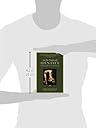
"Makes for compelling reading in America today."--New York Times Book Review. "I want to try and understand why so many people commit crimes in the name of identity," writes Amin Maalouf. Identity is the crucible out of which we come: our background, our race, our gender, our tribal affiliations, our religion (or lack thereof), all go into making up who we are. All too often, however, the notion of identity--personal, religious, ethnic, or national--has given rise to heated passions and even massive crimes. Moving across the world's history, faiths, and politics, he argues against an oversimplified and hostile interpretation of the concept. He cogently and persuasively examines identity in the context of the modern world, where it can be viewed as both glory and poison. Evident here are the dangers of using identity as a protective--and therefore aggressive--mechanism, the root of racial, geographical, and colonialist subjugation throughout history. Maalouf contends that many of us would reject our inherited conceptions of identity, to which we cling through habit, if only we examined them more closely. The future of society depends on accepting all identities, while recognizing our individualism. Review: A classic - One of the small number of books that change the way you think....lives on the book shelf next to 1984, animal farm, darkness at noon Review: Reaching out to a common spark of humanity in all of us. - This book says more about the events of Sept. 11th than any newspaper article, book or worthy journal I have read. By rising above murderously devisive concepts of identity, we can prevent the creation of a world dominated by fear of terrorism. Maalouf's deep humanity and love of diversity provides a vision we all need - the basis for a new global identity and respect for all cultures.
| Best Sellers Rank | 1,030,752 in Books ( See Top 100 in Books ) 149 in Psychology & Violence 4,428 in Multicultural Studies |
| Customer Reviews | 4.4 out of 5 stars 125 Reviews |
H**S
A classic
One of the small number of books that change the way you think....lives on the book shelf next to 1984, animal farm, darkness at noon
E**L
Reaching out to a common spark of humanity in all of us.
This book says more about the events of Sept. 11th than any newspaper article, book or worthy journal I have read. By rising above murderously devisive concepts of identity, we can prevent the creation of a world dominated by fear of terrorism. Maalouf's deep humanity and love of diversity provides a vision we all need - the basis for a new global identity and respect for all cultures.
M**N
Good book
I don't think I received this item
A**R
A conclusion found wanting.
The considerations presented in the first part of this short book are thought-provoking. However I did not give the book five stars as the concluding chapter was very weak on its suggested solutions to the problems that face our modern world in the form of a cruel terrorism whose protagonists owe allegiance to neither nation, ethnicity, religion nor even ideology. Clearly what we have in the disappointingly failed Arab Spring especially as it is being played out in Iraq-Syria and Libya does not have a quick fix. The 'International Community' or UNO clearly has a responsibility to the people in the conflict areas but also to those fleeing from them. In both failure is more obvious than success. Strategies must not be based on political expediency but a fundamentally moral/ethical stance that builds on the human and humane qualities present in all nations. That strategy was not developed in any realistic way by Amin Maalouf.
C**R
Islam more tolerant than Christianity - historically anyway
Great on how fluid history is - and how Islam has more history of tolerance than Christianity does. But ways forward seem too idealistic to me. And to ignore economic, social and educational inequalities.
M**D
Not Good Quality
Quality of book wasnt good. Worn out
L**N
Buyers Warning!!!!
This is a really important book. You should buy it and read it if you have any interest in the troubled state of the world at present. But DON'T buy it as well as 'On Identity' which Amazon unhelpfully suggest you buy in addition, because it's the SAME BOOK only with a different title!!!! Buy something else by Maalouf - 'The Crusades through Arab eyes' is excellent.
N**N
Five Stars
Answers many unasked questions about the concept of identity.
K**I
Inspirational
Dr. Morgan was able to weave her story effectively without the dense shibboleth of her scholarship. Her family nucleus is complete and coherent after all her trials and tribulation. Shiny example of what ought to be. I really liked the very first pre introduction page . Like a nice jazz introductory tease , it kept me captivated. Navigating her conversational style of penmanship, I will say it was obvious to me she was always cerebral, carries the inherent tools for success in addition to her sense of “true north”. Inspirational read!
W**3
A book that will change your concept of identity.
so logic, so simple. you even wonder how you did not think of it till now. if you are Christian Arab, Jewish Iranian, Cambogian French or fed up of being German or Greek, read it.
G**S
Respect or genocide?
How does globalization change our perspective of who we are and what we want? In the words of Amin Maalouf… “In fact, we are all infinitely closer to our contemporaries than to our ancestors... I have a lot more in common with a passerby picked from the streets of Prague, Seoul or San Francisco, than I do with my own great-grandfather...in my moral framework, my styles of thinking.” This is but one of many short paragraphs in a book that forcefully challenges our thinking about how we decide who we are as individuals and groups and why we behave toward each other as we do. What is the relationship of our cultural specialness to what we have in common? The book is full of cultural street sense which foster embracing diversity, engendering respect and helping us face our fears about it, for example, Maalouf points out that, “The more an immigrant feels his culture of origin respected, the more he will open himself to the culture that has received him.” How do we respect our cultures and their legitimate aspirations and find the balance between culturally diverse richness that is spread by today’s mobility and globalization and the banal sameness that our media and thin thinking seem to engender instead? There is not an easy answer, but In the Name of Identity makes it possible for us to see and work with the dilemma in ourselves and in our society. Amin Maalouf is certainly a seer. After 9/11 it is hard to believe that this book was written before those events. The author asserts that, “In each of us there exists a Mr Hyde, and our most important task is to prevent those conditions from coming together that bring the monster out.” Unfortunately they have come together and we are now faced with its terror on a day-to-day basis. Mr Hyde is now on the loose like never before. This author’s wisdom about how we use our identities to define ourselves against each other in deadly ways may lead us to insights to help contain the monster of our own reactions to the unfamiliar in each other as well as make wise choices about diversity in our organizations and public policies. I would have to rank In the Name of Identity in the top five books that I have read in the last decade. It is also available as: Les Identités meurtrières , Le livre de poche, Paris Mörderische Identitäten, Taschenbuch, Suhrkamp. Les identitats que maten. Per una mundialització que respecti la diversitat. Barcelona: Edicions La Campana Identitades asesinas. Alianza Editorial, Madrid As identidades assassinas, Lisboa, Ed. Difel, 2000 L'identità, Ed. Bompiani, Cortina (Torino)
K**K
in the Name of Identity
. This pre-9/11 book remains fresh and important today. Maalouf, who is Lebanese by birth and French by citizenship, examines the importance of how both individuals and groups identify themselves in the modern world. Maalouf is both Arab and Christian, and his family was Christian long before Christianity made its way to the Western world. To pin people in boxes based on their ethnicity or on their religion is both foolish and dangerous. Maalouf captures this thought succinctly, stating: "...it is often the way we look at other people that imprisons them within their own narrower allegiances. And it is also the way we look at them that may set the, free." [pg 22] "People often see themselves in terms of whichever one of their allegiances is most under attack." [pg 26] One of the most fascinating points Maalouf makes is that in this world of rapid global communication we are living in an age of both harmony and dissonance. As the peoples of the world become more and more alike, it is a natural human reaction to cling to, and insist upon, those elements of our culture that make us special and unique. "Mistrust," he says, "is undoubtedly one of the keywords of our age." He reminds us that "the future is not written down anywhere. The future will be what we make it." [pg 98] His hope for the world, and for his family, is that someday his grandson will marvel that "in his grandfather's day such things still needed to be said." [pg 164]. This a thoughtful and well-written book that should be required reading in every sociology and World History course, and a top choice among thinking people everywhere. Kim Burdick Stanton, DE
Trustpilot
5 days ago
2 days ago