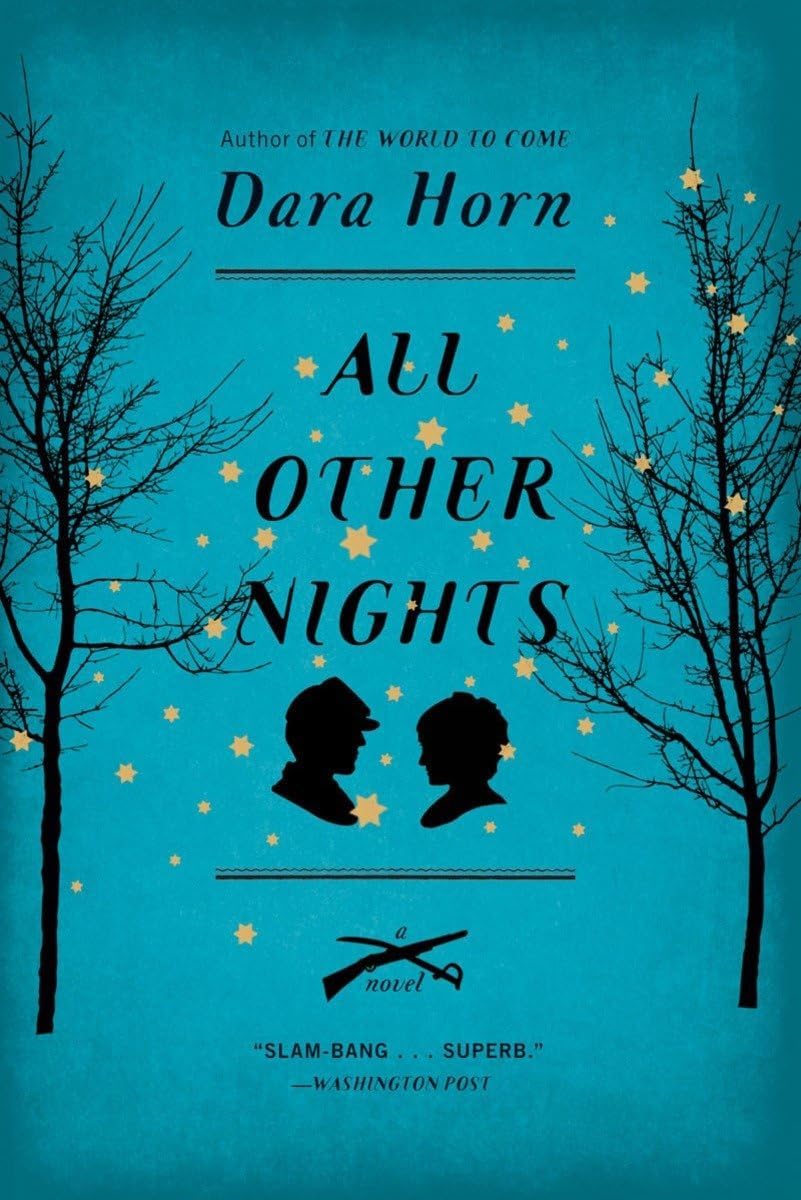
All Other Nights: A Novel
Product ID: 8691893
desertcart.com: All Other Nights: A Novel: 9780393338324: Horn, Dara: Books Review: Amazing story!! - As an "audiobook addict" I've listened to many audiobooks. This book is one of the best that I've heard. The story of how the Jews were involved in the Civil War completely escaped my knowledge of this horrific time in our nation's history. This is a fascinating very interesting story that has held my attention to the point of keeping me in the car a little longer after I've reached my destination because I have to hear what's going to happen next. I'm very pleased with the reader. He is able to change voices in a way that distinguishes the characters well. Not all readers can do that. It is a very intense story but its told with the absence of profanity. I wish other "good" writers would understand that a book can be written without profanity. My only concern with this book is that the 9th CD appears to be from another book. I'm currently on CD 7 and hoping that having to skip CD 9 will not hinder too much the rest of the book. (13 CD's total). Even without the 9th CD, I definitely will recommend this book to all my history buff friends. I intend to look for more books by this writer and more audiobooks read by the reader of this book. Just wanted to amend what I said about there being no profanity. There is profanity in the 9th CD, but it seems appropriate (if one can say that about profanity) for the story line. Also, it is the 8th CD that has been replaced with a CD from a totally different book not the 9th as I stated previously. I'm really amazed at this because its never happened to this "audio book addict". Review: Moral virtue and glory at odds - All Other Nights by Dara Horn Jacob Rappaport, 19, left his father's home to avoid an unsuitable marriage and voluntarily joined President Lincoln's Union army. He was called upon by his superior officers to commit the crime of murder of his uncle, accused of being a Confederate spy and involved in a plot to assassinate President Lincoln. Jacob's position as a soldier serving in the Union Army exacted loyalty. He also sought respect and esteem, something he had not received from his father. Opposing these ideals, was the question of moral virtue, as pertaining to the distinction between right and wrong, or good and evil. Making the situation even more difficult was the fact of his being a Hebrew. In Jewish thought, one is created in the divine image of God, and if one is to be worthwhile, one must distinguish right from wrong and have the ability and the capacity to act on this knowledge. Jacob's choice in the first part of the book opens up the mythical Pandora's Box releasing for Jacob all the pains and grief his imagination could never have configured. One night, one decision and the shape of events to come altered irrevocably. I asked myself the question, could he have turned down the assignment since it was way outside the duties of a Private in the 18th Infantry Regiment of NY? What would his punishment have been? Would he have been punished? However, he accepted and even when he realized that his uncle was more bluster than deed he went ahead with the plan. These are three out of four questions. In the second part of the book, his choices are even more difficult. His imprisoned father-in-law, Philip Levy, a secret spy for the Union, saved his life and his wife, Eugenia Levy, knowing Jacob was a Union spy, protected him from her own sister. Jacob, in spite of these sacrifices, decided to send the message on through: " Mission compromised by confirmed confederate agent Charlotte Levy. Request capture of Charlotte Levy as soon as possible" As Jacob wrote out the words to send, he felt himself burning with glory. Caleb, the freed slave and Union agent, warns Jacob. He says, "You know this will break Philip's heart all over again." Jacob answers. " It isn't a choice" and Caleb replies, "There are always choices." Jacob once again has chosen glory over moral virtue. The third part of the book deals with redemption. Jacob's vanity has ended and his physical destruction left him disfigured beyond recognition. Redemption was his only way of salvaging what he began. He continues as a spy for the Union, possibly to save many Union soldiers' lives and avert the kidnap plot of Lincoln. He believes he can atone for his crimes. He also wants to locate the Levy daughters for Philip and for himself and thereby find Eugenia and his own daughter. He believes that his life would regain the meaning he had lost. What occurs with Jacob and Philip Levy's family parallels the devastation of the Civil War itself. The human cost of the conflict was 1.2 million, the combination of dead and wounded. Human suffering extended beyond the military sphere. Thousands of blacks and white Southerners became refugees. Although the blacks emerged from the war with their freedom, they did not have equal rights for many years to come. Not until the 20th century did the South fully recover from the economic devastation. In contrast, the North forged ahead with the building of a modern industrial state. The final question for me which completes the four questions like at the Passover Seder when the youngest child asks the traditional four questions beginning with "Why is this night different from all other nights?" is the following. Did I love the book? The honest answer is I liked it but...other than forcing me to review the history of the Civil War, which was a great read; I felt that the book was just a step above a romance novel. Set in a period of major historical significance and using real characters like Judah Benjamin, who were fascinating to learn about separately, it then became more relevant. Much of what happened is a stretch and not believable other than the descriptions of the war torn south. And surprisingly, I never reached a point where I admired and truly cared for the protagonist. Jacob was just too immature from the start and his growth and maturation in character never seemed to acquire a resounding identity and uniqueness. One always hopes for the protagonist to distinguish himself or herself in a manner that will manipulate the reader into revering the individual.
| Best Sellers Rank | #1,031,641 in Books ( See Top 100 in Books ) #187 in Jewish Historical Fiction #1,069 in Jewish Literature & Fiction #13,880 in Literary Fiction (Books) |
| Customer Reviews | 4.2 4.2 out of 5 stars (500) |
| Dimensions | 5.6 x 1.1 x 8.3 inches |
| Edition | Reprint |
| ISBN-10 | 0393338320 |
| ISBN-13 | 978-0393338324 |
| Item Weight | 10.9 ounces |
| Language | English |
| Print length | 400 pages |
| Publication date | March 8, 2010 |
| Publisher | W. W. Norton & Company |
V**L
Amazing story!!
As an "audiobook addict" I've listened to many audiobooks. This book is one of the best that I've heard. The story of how the Jews were involved in the Civil War completely escaped my knowledge of this horrific time in our nation's history. This is a fascinating very interesting story that has held my attention to the point of keeping me in the car a little longer after I've reached my destination because I have to hear what's going to happen next. I'm very pleased with the reader. He is able to change voices in a way that distinguishes the characters well. Not all readers can do that. It is a very intense story but its told with the absence of profanity. I wish other "good" writers would understand that a book can be written without profanity. My only concern with this book is that the 9th CD appears to be from another book. I'm currently on CD 7 and hoping that having to skip CD 9 will not hinder too much the rest of the book. (13 CD's total). Even without the 9th CD, I definitely will recommend this book to all my history buff friends. I intend to look for more books by this writer and more audiobooks read by the reader of this book. Just wanted to amend what I said about there being no profanity. There is profanity in the 9th CD, but it seems appropriate (if one can say that about profanity) for the story line. Also, it is the 8th CD that has been replaced with a CD from a totally different book not the 9th as I stated previously. I'm really amazed at this because its never happened to this "audio book addict".
A**N
Moral virtue and glory at odds
All Other Nights by Dara Horn Jacob Rappaport, 19, left his father's home to avoid an unsuitable marriage and voluntarily joined President Lincoln's Union army. He was called upon by his superior officers to commit the crime of murder of his uncle, accused of being a Confederate spy and involved in a plot to assassinate President Lincoln. Jacob's position as a soldier serving in the Union Army exacted loyalty. He also sought respect and esteem, something he had not received from his father. Opposing these ideals, was the question of moral virtue, as pertaining to the distinction between right and wrong, or good and evil. Making the situation even more difficult was the fact of his being a Hebrew. In Jewish thought, one is created in the divine image of God, and if one is to be worthwhile, one must distinguish right from wrong and have the ability and the capacity to act on this knowledge. Jacob's choice in the first part of the book opens up the mythical Pandora's Box releasing for Jacob all the pains and grief his imagination could never have configured. One night, one decision and the shape of events to come altered irrevocably. I asked myself the question, could he have turned down the assignment since it was way outside the duties of a Private in the 18th Infantry Regiment of NY? What would his punishment have been? Would he have been punished? However, he accepted and even when he realized that his uncle was more bluster than deed he went ahead with the plan. These are three out of four questions. In the second part of the book, his choices are even more difficult. His imprisoned father-in-law, Philip Levy, a secret spy for the Union, saved his life and his wife, Eugenia Levy, knowing Jacob was a Union spy, protected him from her own sister. Jacob, in spite of these sacrifices, decided to send the message on through: " Mission compromised by confirmed confederate agent Charlotte Levy. Request capture of Charlotte Levy as soon as possible" As Jacob wrote out the words to send, he felt himself burning with glory. Caleb, the freed slave and Union agent, warns Jacob. He says, "You know this will break Philip's heart all over again." Jacob answers. " It isn't a choice" and Caleb replies, "There are always choices." Jacob once again has chosen glory over moral virtue. The third part of the book deals with redemption. Jacob's vanity has ended and his physical destruction left him disfigured beyond recognition. Redemption was his only way of salvaging what he began. He continues as a spy for the Union, possibly to save many Union soldiers' lives and avert the kidnap plot of Lincoln. He believes he can atone for his crimes. He also wants to locate the Levy daughters for Philip and for himself and thereby find Eugenia and his own daughter. He believes that his life would regain the meaning he had lost. What occurs with Jacob and Philip Levy's family parallels the devastation of the Civil War itself. The human cost of the conflict was 1.2 million, the combination of dead and wounded. Human suffering extended beyond the military sphere. Thousands of blacks and white Southerners became refugees. Although the blacks emerged from the war with their freedom, they did not have equal rights for many years to come. Not until the 20th century did the South fully recover from the economic devastation. In contrast, the North forged ahead with the building of a modern industrial state. The final question for me which completes the four questions like at the Passover Seder when the youngest child asks the traditional four questions beginning with "Why is this night different from all other nights?" is the following. Did I love the book? The honest answer is I liked it but...other than forcing me to review the history of the Civil War, which was a great read; I felt that the book was just a step above a romance novel. Set in a period of major historical significance and using real characters like Judah Benjamin, who were fascinating to learn about separately, it then became more relevant. Much of what happened is a stretch and not believable other than the descriptions of the war torn south. And surprisingly, I never reached a point where I admired and truly cared for the protagonist. Jacob was just too immature from the start and his growth and maturation in character never seemed to acquire a resounding identity and uniqueness. One always hopes for the protagonist to distinguish himself or herself in a manner that will manipulate the reader into revering the individual.
V**R
Historical Chick Lit
Compared to Dara Horn's other books, this is a disappointment. While The World To Come is a rich densely layered novel, this novel is a very ordinary historical romance. The main character Jacob R. is a Jewish Yankee assassin and spy facing issues of honor and redemption. There were a few passages which dealt with the fact that in spite of Jacob's tremendous sacrifice, he would never have the respect and honor attributable to non-Jews. He will never reach the pinnacle of a Jew whose religion bears no influence on his society, economic or academic success. But then until very recent times what Jew has? Even today if a Jew is an authority or has a leadership position, he or she is always described as Jewish. Still it was interesting to read about the attitude toward Jews in society during the civil war. This novel could have examined the conundrum of southern Jews who supported slavery and Jewish attitudes toward slavery because Jews themselves were slaves in Egypt. It did not. I was surprised that this conflict did not give rise to discussion and debate. Jacob R. sympathized with the slaves and felt badly for them, but none of the other characters expressed this concern. Judah Benjamin, the Jewish Confederate secretary of state was well fleshed out. His life was described as that of a gay man who married to keep his secret in a time when homosexuality was demonized. He was short, unattractive, gay and Jewish. Yet due to his superior intellect and personable nature he was successful in life with a position of prominance and respect. This book is primarily a love story between Jacob R. and Jeannie Levy during the tumultous time of the civil war. One of the most interesting facts I learned was general Grant's expullsion order of all non military Jews from Kentucky, Tennessee and Missippi. He forced all the Jews in those southern states to leave their homes and property.He believed that Jews were the cause of war profiteering. These sorts of beliefs about Jews were commonplace at the time and continue to this day. Lincoln upon hearing of the order retracted it. However, for three weeks Jews were forced to leave their homes and property and vacate the territories. This is an ugly stain on American history and one that was not taught in history class in the U.S. It should have been part of the civil war lesson. Worse yet is that Grant succeeded to the presidency after Lincoln. Apparently his prejudice did not negatively impact his image before the American people. This novel was enjoyable. I had no trouble finishing it. It was suspenseful and it is probably a good beach book, but it is nothing more. Too bad Dara Horn did not live up to her promise. This book could have been so much more.
K**K
Book is exactly as described
V**M
The print of this book is very poor, light and the letters are too small although I have fairly good vision.
Trustpilot
1 month ago
3 weeks ago