
Buy anything from 5,000+ international stores. One checkout price. No surprise fees. Join 2M+ shoppers on Desertcart.
Desertcart purchases this item on your behalf and handles shipping, customs, and support to Croatia.
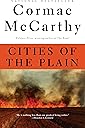
NATIONAL BESTSELLER • The third volume of the award-winning Border Trilogy, from the bestselling author of The Passenger and the Pulitzer Prize–winning novel The Road • A darkly beautiful elegy for the American frontier The setting is New Mexico in 1952, where John Grady Cole and Billy Parham are working as ranch hands. To the North lie the proving grounds of Alamogordo; to the South, the twin cities of El Paso and Juarez, Mexico. Their life is made up of trail drives and horse auctions and stories told by campfire light. It is a life that is about to change forever, and John Grady and Billy both know it. The catalyst for that change appears in the form of a beautiful, ill-starred Mexican prostitute. When John Grady falls in love, Billy agrees—against his better judgment—to help him rescue the girl from her suavely brutal pimp. The ensuing events resonate with the violence and inevitability of classic tragedy. Hauntingly beautiful, filled with sorrow, humor and awe, Cities of the Plain is a genuine American epic. Review: I will be your child to hold - And you be me when I am old The world grows cold The heathen rage The story’s told Turn the page. This is a great dedication to Cormac McCarthy’s 3rd book in his Border Trilogy and a realism of his choosing to bring it to its culmination. I’ve read a lot of McCarthy’s books and each time he “literally” blows me away. This novel is hard to capture in a review because there is so much going on and so many interesting characters and events that being too selective diminishes the novel. Since you already know the storyline, I’ll limit my review to my reactions to the novel. I love the way Cormac handles the spoken word in this trilogy. His main protagonists are two cowboys in their early to late twenties and their incessant lingo, sitting horses, and constant spitting evokes an image of this place and era (mid 1900s) that is spot on. John Grady and Billy Parham return in this final novel to draw together the first two books and round out the life of the two cowboys presently punching cattle for a widower rancher. Since this kind of life in southern New Mexico’s hard scrabble land is harsh, it was good to see that their employer took great pains to keep good care of them, feeding them well, respecting their opinions, especially his favorite--John Grady. John Grady was my favorite as well and I don’t think they make many like him anymore: handy, polite, respectful, resilient, humble but confident, excellent at breaking and/or getting the best out of horses and dogs and people, dependable, hard working, faithful and passionate to a fault. The story covers many aspects of a life of ranching but focuses on Billy and Grady’s friendship told in the fierce beauty and desolation of countryside that few could capture, as does McCarthy. The story is peopled with interesting characters that are fleshed out so that you feel you know them almost as well as the main characters. McCarthy can capture the typical speech patterns of unschooled cowpokes as easily as he does the visceral complex conversations that populate the book. “Daybreak to daybreak for a godgiven dollar, said Billy. I love this life. You love this life, son? I love this life don’t you? Cause by god I love it. Just love it.” John Grady’s demeanor charms most of the other characters including an old blind maestro he meets in a whorehouse/bar. Grady grows so fond of the maestro that he asks him to serve as the padrino for his bride. The maestro’s thoughtful explanation upon being asked but refusing to be the padrino gives insight into McCarthy’s ability to use words like few writers today. “He was not a man given to illusions He knew that those things we most desire to hold in our hearts are often taken from us while that which we would put away seems often by that very wish to become endowed with unsuspected powers of endurance. He knew how frail is the memory of loved ones. How we long to hear their voices once gain, and how those voices and those memories grow faint and faint until what was flesh and blood is no more than echo and shadow. In the end perhaps not even that. He knew by contrast that our enemies seem always with us. The greater our hatred the more persistent the memory of them so that a truly terrible enemy becomes deathless. So that a man who has done you great injury or injustice makes himself a guest in your house forever. Perhaps only forgiveness can dislodge him.” Brush up on your Spanish because there is a lot of it in the storyline that isn’t translated. Most can be figured out by the words or the context but this twist, so like McCarthy, added a degree of reality to the book, that while a tad frustrating at times, added to the overall atmosphere. It was hard to put this novel down. In fact, I reread many parts and they still continue to elicit the same deep wrenching, almost reverent, responses. While the story often brings a chuckle and the action never abates, it is the ending that will bring you to your knees. While it wasn’t what this reader may have wished for the two friends, it would appear this was really the only end to the paths that each had chosen. “Men imagine that the choices before them are theirs to make. But we are free to act only upon what is given. Choice is lost in the maze of generations and each act in that maze is itself an enslavement for it voids every alternative and binds one ever more tightly into the constraints that make a life” Review: Shorter, Better, Still Bleak. - It was a book. Shorter than The Crossing and, thankfully, better. It contains all the elements you would expect from McCarthy. Suffering, cowboying, and a committed refusal to use commas. While it still leans heavily into bleakness, it feels more focused and less self indulgent than the second book in the series. I would not read it again, but I did enjoy it, which is probably about as strong a compliment as this trilogy allows.


| Best Sellers Rank | #23,550 in Books ( See Top 100 in Books ) #151 in Westerns (Books) #205 in Contemporary Literature & Fiction #923 in Literary Fiction (Books) |
| Customer Reviews | 4.5 out of 5 stars 2,590 Reviews |
D**T
I will be your child to hold
And you be me when I am old The world grows cold The heathen rage The story’s told Turn the page. This is a great dedication to Cormac McCarthy’s 3rd book in his Border Trilogy and a realism of his choosing to bring it to its culmination. I’ve read a lot of McCarthy’s books and each time he “literally” blows me away. This novel is hard to capture in a review because there is so much going on and so many interesting characters and events that being too selective diminishes the novel. Since you already know the storyline, I’ll limit my review to my reactions to the novel. I love the way Cormac handles the spoken word in this trilogy. His main protagonists are two cowboys in their early to late twenties and their incessant lingo, sitting horses, and constant spitting evokes an image of this place and era (mid 1900s) that is spot on. John Grady and Billy Parham return in this final novel to draw together the first two books and round out the life of the two cowboys presently punching cattle for a widower rancher. Since this kind of life in southern New Mexico’s hard scrabble land is harsh, it was good to see that their employer took great pains to keep good care of them, feeding them well, respecting their opinions, especially his favorite--John Grady. John Grady was my favorite as well and I don’t think they make many like him anymore: handy, polite, respectful, resilient, humble but confident, excellent at breaking and/or getting the best out of horses and dogs and people, dependable, hard working, faithful and passionate to a fault. The story covers many aspects of a life of ranching but focuses on Billy and Grady’s friendship told in the fierce beauty and desolation of countryside that few could capture, as does McCarthy. The story is peopled with interesting characters that are fleshed out so that you feel you know them almost as well as the main characters. McCarthy can capture the typical speech patterns of unschooled cowpokes as easily as he does the visceral complex conversations that populate the book. “Daybreak to daybreak for a godgiven dollar, said Billy. I love this life. You love this life, son? I love this life don’t you? Cause by god I love it. Just love it.” John Grady’s demeanor charms most of the other characters including an old blind maestro he meets in a whorehouse/bar. Grady grows so fond of the maestro that he asks him to serve as the padrino for his bride. The maestro’s thoughtful explanation upon being asked but refusing to be the padrino gives insight into McCarthy’s ability to use words like few writers today. “He was not a man given to illusions He knew that those things we most desire to hold in our hearts are often taken from us while that which we would put away seems often by that very wish to become endowed with unsuspected powers of endurance. He knew how frail is the memory of loved ones. How we long to hear their voices once gain, and how those voices and those memories grow faint and faint until what was flesh and blood is no more than echo and shadow. In the end perhaps not even that. He knew by contrast that our enemies seem always with us. The greater our hatred the more persistent the memory of them so that a truly terrible enemy becomes deathless. So that a man who has done you great injury or injustice makes himself a guest in your house forever. Perhaps only forgiveness can dislodge him.” Brush up on your Spanish because there is a lot of it in the storyline that isn’t translated. Most can be figured out by the words or the context but this twist, so like McCarthy, added a degree of reality to the book, that while a tad frustrating at times, added to the overall atmosphere. It was hard to put this novel down. In fact, I reread many parts and they still continue to elicit the same deep wrenching, almost reverent, responses. While the story often brings a chuckle and the action never abates, it is the ending that will bring you to your knees. While it wasn’t what this reader may have wished for the two friends, it would appear this was really the only end to the paths that each had chosen. “Men imagine that the choices before them are theirs to make. But we are free to act only upon what is given. Choice is lost in the maze of generations and each act in that maze is itself an enslavement for it voids every alternative and binds one ever more tightly into the constraints that make a life”
S**N
Shorter, Better, Still Bleak.
It was a book. Shorter than The Crossing and, thankfully, better. It contains all the elements you would expect from McCarthy. Suffering, cowboying, and a committed refusal to use commas. While it still leans heavily into bleakness, it feels more focused and less self indulgent than the second book in the series. I would not read it again, but I did enjoy it, which is probably about as strong a compliment as this trilogy allows.
I**Š
Beauty and Loss are One - Cities of the Plain
"Quinquagesima Sunday in the predawn dark she lit a candle and set the candledish on the floor beside the bureau where the light would not show beneath the doorway to the outer hall." In the historic calendar of western Christianity, the Sunday before Ash Wednesday - the beginning of Lent - is known as Quinquagesima (50 days). From antiquity the church has assigned an episode from the life of Christ as recorded in Luke chapter 18 to be read on that day. Here, in so many words, Jesus tells his disciples that it's time for his work to end; he will go to Jerusalem, confront evil and be killed. For their part, the disciples fail to grasp his meaning, though the fault it would seem is not entirely their own. Luke writes, "This saying was hidden from them." Throughout his Border Trilogy, McCarthy has been examining the nature of things which are unable to ever be fully known, things hidden from view. Those things which, despite our inability to put a name to them or our best failed attempts to measure them, possess an ancient power. "Immanence" is what the ancients came to call it: the thought that a thing can somehow be real in the world and yet transcend that world. The idea has been troubling the minds of mystics of every progressive culture for at least five millennia, if the record is to be believed. From Abraham through Hesiod and Homer, first-century Buddhist holy men, through the ante-Nicene Fathers up through Spinoza and finding its way into the lyrics of Tom Waits. Things which are even if you can't quite put a finger on them. Cormac McCarthy captures this spirit with an eloquence rarely witnessed in American letters. "A man was coming down the road driving a donkey piled high with firewood. In the distance the churchbells had begun. The man smiled at him a sly smile. As if they knew a secret between them, these two. Something of age and youth and their claims and the justice of those claims. And of the claims upon them. The world past, the world to come. Their common transiencies. Above all a knowing deep in the bone that beauty and loss are one." Just prior to that incident in Cities of the Plain, John Grady has left a Mexican bordello where he has - he is convinced - found love. It is characteristic of the Border Trilogy that characters cross boundaries both geographic and mythic, leading to encounters both real and transcendent of reality. Transgression, by definition, is the result: borders crossed that must otherwise remain inviolate. And one begins to question whether this miracle of a writer is going soft; McCarthy's view in Cities of the Plain is an unapologetic and steadily backward gaze at a world that once was, though perhaps, in reality, a world that never was and could never be. The novel is surely his most romantic work, inhabited by a protagonist resolved to fulfill a calling, quixotic as it may be. What calling? Beauty and its redemption from that which would corrupt it into something unrecognizable. In other hands this would turn into unbearable melodrama. McCarthy lets it be what it is, and lets the wheels of his characteristically dark-hearted mill grind out its result with the material it's fed. And so John Grady sets out, determined to free a Mexican prostitute - Magdalena, by name - take her to wife, and set up home in the Jarilla hills of west Texas. His heroism, in a decidedly Greek cast, is marked by the sense that perishing in battle for a noble cause is a fate preferable than that of having one's convictions called into question after death. Hamlet's admonition to Horatio - "more things in heaven and earth than are dreamt of in your philosophy" - echoes here, as McCarthy balances masterfully the slow burn of a Texas ranch hand attending to the mundane, yet all the while permeating this with the understanding that more vital matters await. Indeed, once John Grady's rescue plan has been hatched the intervening episodes transition into that inevitable ticking clock of subject-verb-object prose. Sentence after sentence the likes of "he swipes the plate with the last of the tortilla and eats it and takes his breakfast dishes to the sink". Time passes audibly. The cowboy's "almost blunted purpose" is palpable. McCarthy stokes the urge to jump up from one's chair in frustration and shout at the book "go get the girl already", though the suspicion - if not the knowledge - is strong of where that will lead. And so we are left with the quite intentional imagery of Quinquagesima Sunday, the final preparation of the devout for the hell about to be unleashed upon both the evil and the just, of lambs led to slaughter. The urge to ask why the world is this way is nearly as old as the world itself. McCarthy's encouragement here comes with the act of dogged perseverance that marks those who inhabit his worlds. In Cities of the Plain it is clear through their actions that the desire is strong in these characters for those things which might represent order , yet the writing is never sentimental. The naturalism of McCarthy's prose provides us with characters of a hard reality, men familiar with suffering, women acquainted with grief. Characters caught in the insularity of an impersonal universe, a persistent, dark night of the soul, but one marked by fleeting sparks of light of an ineluctable beauty. There is so much in this universe, which despite our righteous desire to uncover its meaning, can only be known when it is set to be known, set to be revealed. Only a fool would set himself to believe otherwise. Highly recommended.
J**D
great book quality
book in excellent condition, fast shipping, thanks
M**H
A gorgeous ending to a timeless story
I usually read every night to my wife. We've gone through dozens of books together in our marriage, and several months ago, I read "All the Pretty Horses" to her. She loved it, and would not let me read her anything else until we had read McCarthy's entire trilogy. We just finished it. This book, the third in that trilogy, has its shortcomings, but it is still one amazing piece of work. In this book, John Grady Cole--the genius horsetrainer of "All the Pretty Horses"--and Billy Parham--the kindhearted nomad of "The Crossing"--come together as ranch hands on a New Mexico estancia. Both are older than they were in the previous books--Billy much older--but both are kindred spirits whose stories connect with and affect each another. The book tends more heavily toward the lengthy philosophical monologues that appear only occasionally in the trilogy's earlier volumes, and the whole story at momemnts goes a little bit long if you've just read the two previous volumes right before. However, the writing is gorgeous, and haunting. For example, in one passage, a dead calf's "ribcage lay with curved tines upturned on the gravel plain like some carnivorous plant brooding in the barren dawn." Yeah. And the ending--the ending is amazing. It might not be quite what you expect or ask for, but it is thrilling in its perfectness, in its completess, in how true it feels. It left me holding the book like a priceless religious relic, re-reading its back cover, flipping back through it to parts I had marked, reluctant and unwilling to let go of these characters or their world. Cormac McCarthy is a literary genius. He has made the West tangible, taken its most ineffable qualities and turned them into words. He makes me homesick for the place I already live. Do not start with this book, if you've never read his other works, but do work up to it. Do read it.
C**E
A Great Conclusion to a Classic Western Trilogy
The first thing you notice about this book is McCarthy’s language. Ignore the lack of quotation marks, etc., and just enjoy his back and forth conversations between *cowboys* - an utterly fascinating glimpse into a world of its own. It took a number of pages to “get” McCarthy’s cadence, and then I’d often go back and read sentences or even passages over for their perfect phrasing, all in a language readable but at the same time foreign to me. It’s a world fading in post WWII and the point is made a bit too bluntly by having the Army take over the ranch that serves as the main setting. Unfortunately, I read All the Pretty Horses and The Crossing quite a while before this book, so I didn’t remember John Grady Cole and Billy Parham. But they are strong central characters. I found John Grady particularly fascinating, feeling a bit wistful that he connects with horses more naturally than people. A sense of foreboding builds throughout the book about John Grady, and his mission – indeed, his obsession – to save and love Magdalena, a prostitute he meets across the border, a frail soul too young, frightened, damaged both physically and psychically. Mistakes are made, terrible mistakes, in John Grady’s plan to spirit her out of Mexico that propel the novel towards its truly gripping, dramatic finale. I won’t hint at any spoilers, but the action scenes are superbly rendered. For me, the book could have ended a bit before its actual conclusion. I frankly lost interest in the final conversations in which McCarthy philosophizes, post narrative so to speak. Nevertheless, I’m compelled to go back and re-read the first books in his exceptional trilogy.
J**I
The "john" with a heart of gold...
This is the third volume of the "Border Trilogy." The first two volume are All the Pretty Horses (The Border Trilogy, Book 1) and The Crossing (The Border Trilogy, Book 2) , both of which I have read and reviewed. The "border" is the Mexican-American one, in the area centering around El Paso, where Cormac McCarthy lived for a number of years. The author is reticent in giving interviews. What I'd love to know is what led this man, born in Rhode Island, and having spent some of his formative young adult years in Appalachia, to decide to move to El Paso, truly in the border zone, surrounded by bleak lands, as he notes in this novel. But even more so, I'd love to know what he did in order to learn so much about the ranching - horse culture of the American West that he could so vividly and authentically portray it in this trilogy. McCarthy placed a couple very unlikely places on the "literary map," almost certainly the only author to do so. The Crossing (The Border Trilogy, Book 2) commences in the "boot heel" of New Mexico, where very few, even New Mexicans, have been (including myself). His depiction of the land there makes it a "must see." (Much of the novel does unfold in Mexico, hence the title). And this, the last of the trilogy, is primarily set on a ranch near Orogrande, New Mexico, which is approximately 35 miles north of El Paso. It is a hard-scrabble landscape, filled with those ranchers and cowboys trying to scratch out an existence, but the landscape seems to only be suitable for a military base, a fate that McCarthy alludes to, as it would become part of Ft. Bliss. The novel commences in a whore house, in Juarez, and it is raining outside. Given the aforementioned reticence, it is unlikely that we will ever learn if that scene was inspired by Bob Dylan's song "Tom Thumb's Blues": "When you are lost in the rain in Juarez, and it is Easter time too,... she speaks good English and invites you up into her room, and you try to be so kind and careful, and not go to her too soon." And that is the "heart" of this novel. The "john" is, literally, John Grady, who was depicted in the first novel of this trilogy, growing up way too soon. And he links up with Billy Parham, who was the central character in the second novel. They are ranch hands, on that aforementioned ranch near Orogrande. Grady, who is now all of 19, falls in love with a Mexican prostitute, who is all of 16. She speaks no English, unlike in Dylan's song. He, however, does speak Spanish. As one might suspect, they have not nurtured a long-term relationship when cupid's arrows found Grady, and he decides to "liberate" her from her current occupation, and bring her to the "pale empire," as McCarthy says, north of the river. Who knows what sort of apparition that Grady "saw" in front of him, but it surely was not the girl who he thought would be happy in a ramshackle ranch house with no running water. Juarez then, as it is now, is no place for gentle souls to take a Sunday stroll in the park. It is marked by violence, and for the White Swan, as the 16-year olds place of abode is known, to lose one of its star assets, will not go down well with those "asset tenders." Or, as Grady is told, by the prime "tender,": "And we will devour you, my friend. You and all your pale empire." McCarthy never philosophizes about how and why that thin ribbon of water, misnamed "Grande" separates men of modest means, but with a relative fortune to women eager for their own small part of it. But he sure can vividly describe a knife fight. McCarthy concludes with an epilogue, which reinforced my thoughts about who might be living under those interstate overpasses that I sometimes bike by. All part of the underbelly of that pale empire. 5-stars, plus.
A**R
Misprint
The storyline and writing of this book is great, however, the copy I received had some significant misprint issues, including a large portion of missing pages near the end as well as several duplicate pages.
L**H
heartbreaking
Lost souls, loving hearts, simple life. I miss these men when reading is done. Sweet wrapup for Billy and John Grady
C**N
Belo final para uma linda trilogia.
Com este livro, termina a trilogia da fronteira de McCarthy. Nesse último livro, ele dá seguimento à vida de dois personagens, John Cole de All the Pretty Horses e Bill Parham de A travessia. Na trama John, ainda um jovem ingênuo, se apaixona por uma prostituta da cidade de Juarez e a partir desse início, a trama leva a inúmeras desventuras e dificuldades, mas também nos traz uma rica e belíssima narrativa da vida do cowboy do Oeste americano, que, naquele momento, pós-segunda guerra, talvez já se encaminhasse para o seu ocaso, fazendo, ao mesmo tempo, um lindo elogio dessa vida. A narrativa é também em alguns momentos profundamente filosófica. McCarthy nos traz temas acerca da vida e da religiosidade humana. Nesse sentido, sobretudo, o diálogo do epílogo. Encerrando a trilogia, devo dizer que preferi a Travessia, seguido de Cities of the Plain. De qualquer maneira, uma belíssima trilogia, estando esse último livro à sua altura, para o seu fechamento.
R**A
Endless pleasure
I never get tired of re-reading McCarthy as I find new gems every time I pick up his books. The Border Trilogy is an elegy of the human soul, not just of the West and this book is its proper conclusion. To be read several times.
S**N
Truly great
Third of the trilogy, to be read in order, I was hooked after the first book and compelled to read the rest. Truly magnificent, stark, unrelenting in its focus on existentialism. A journey on horseback of simple men with simple truths. Evocative of days gone by with vivid imagery that transports the reader into the life of the cowboy/pilgrim.
J**Y
Greatbook
Great book. Arrived on time
Trustpilot
1 week ago
2 weeks ago