Some deliveries may take a little longer than usual due to regional shipping conditions.

DOWNLOAD THE APP


Customer Services
Copyright © 2025 Desertcart Holdings Limited
DOWNLOAD THE APP
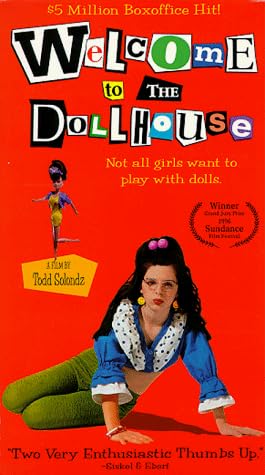
.com What is junior high school but a strange, disorienting pastiche of black comedy, tragedy, soap opera, and (most of all) horror movie? Well, that pretty much describes Todd Solondz's astonishingly honest and clear-sighted film, Welcome to the Dollhouse. Like Solondz's even more controversial follow-up--the acclaimed and despised Happiness (1998)--Dollhouse unflinchingly looks deep into its characters' souls (and their embarrassing desires, and their floundering sexuality) in ways that can be simultaneously disturbing and liberating, appalling and hilarious. Dawn Wiener (Heather Matarazzo) is a hapless seventh-grade geek whose cruel and contemptuous schoolmates have nicknamed her (what else?) "Wiener Dog." Everything about Dawn is so awkward--the way she looks, talks, moves--that it's no wonder other kids dump on her. They're most likely so insecure about themselves that they're terrified of the Wiener Dog they know lurks somewhere down inside themselves, too. So, the best social and psychological survival tactic is to distance themselves from Dawn by relentlessly reminding her of her "place" at the bottom of the junior-high pecking order. Solondz's vision is hardly sentimental, and you wouldn't even call it "compassionate," but it is a moral vision: authentic, undiluted, and, in the end, understanding. --Jim Emerson
C**S
Nuanced, Has Its Own Charm
My rating is more of a 3.5Thanks for reading!𝑾𝒉𝒚 𝒅𝒐 𝒚𝒐𝒖 𝒉𝒂𝒕𝒆 𝒎𝒆?𝑩𝒆𝒄𝒂𝒖𝒔𝒆 𝒚𝒐𝒖'𝒓𝒆 𝒖𝒈𝒍𝒚.Welcome to the Dollhouse is a 1995 American coming-of-age black comedy film written and directed by Todd Solondz. The story follows the unpopular middle schooler Dawn as she goes to extreme lengths trying to earn the respect of her vicious fellow students and her disinterested family.Adolescent atrocity tends to be so knowingly formulaic: cluttered with cliches, so has to encapsulate this period of angst and alienation.At first, Solondz’ direction and writing feels inevitable, opening with a shot of Benjamin Franklin Middle School’s cafeteria: an almost sure sign that his protagonist is far from popular amongst a sea of peers.Introduced as drowning in some pit of inferiority, Dawn’s story would typically develop into some kind of transformative visage, but the rug is just as easily pulled out from underneath this narrative before it gets too comfortable and subsequently predictable. Solondz’ tactics are at times seemingly disingenuous, if not desperate - IE, a split-second spectacle involving a pedophilic neighbor - but this demand for attention given Dawn’s age is intuitive, and not to mention weirdly sympathetic.Suffice to say, 𝑾𝒆𝒍𝒄𝒐𝒎𝒆 𝒕𝒐 𝒕𝒉𝒆 𝑫𝒐𝒍𝒍𝒉𝒐𝒖𝒔𝒆 isn't some didactic merry-go-round, surrendering to the allure of stereotypes that come with cliches so as to label one person or entity as particularly harmful or helpful.There is no denying that Dawn gets continuously let down and neglected by the people that should care about her well-being the most, but this is used as a teachable segue that takes maturity and responsibility into consideration: It’s quite clear that at times Dawn is getting this “totally life thing” wrong, and it calls to question how much she could benefit from having just a single supportive or positive role-model in her life.With one of these, perhaps, she could more easily steer clear of local lust-boy Steven, who illustrates all the things that are wrong with teen-fueled idolization; most often he is a set-up for situations that could be exploitative in the wrong hands and do a number on the standards trusted guardians might hope children develop on their owns without their guidance or demonstration. Brandon, a bully-esque peer that is much closer to the archetypes found in a coming-of-age story, is used to explore puberty in a space that is almost taboo, all the while exploring the mutually greater need for a confidante when some semblance of attraction is present.(On the topic of puberty, this was Heather Matarazzo’s first feature film, and she has been described by cast members as having a precociousness about her that made the production process more streamlined. She was eager to film scenes in which Dawn would be kissing Brandon because she had never kissed someone before, and commitment culminated in her working under conditions (IE, the time of day) that were technically illegal.) Paramount to the becomings of a hormonal preteen is the feeling of being perpetually ostracized or othered: this concern of being singled out is for better or worse, and of course this lends to an egocentric worldview that isn't governed by logic, except on the finite and rare occasion. Dawn, being the opportunist children are primed to be, is challenged by both the pressure to perform andConformity related expectations; as such, her life is consumed by her attempted manufacturing of what she perceives to be a “cooler” version of herself, whereas her sense of autonomy is compromised by the on-going implication that just about everything she does (Even things we know as adults watching aren’t significant) in the moment will haunt her for the rest of her life. To make matters worse, her attempts at resistance are more-often-than-not futile, as she is surrounded by people with little patience for decisions and actions more likely related to Dawn’s lack of life experience than some kind of oppositional disposition. Also set in the city of which he was raised and inspired by “the disappointment and inauthenticity of 𝑻𝒉𝒆 𝑾𝒐𝒏𝒅𝒆𝒓 𝒀𝒆𝒂𝒓𝒔”, the otherwise pessimistic take that is 𝑾𝒆𝒍𝒄𝒐𝒎𝒆 𝒕𝒐 𝒕𝒉𝒆 𝑫𝒐𝒍𝒍𝒉𝒐𝒖𝒔𝒆 manages a nuance that otherwise gets left out of the coming-of-age narrative. To see such a generic understanding of the lives children lead go rebuked is refreshing: and Dawn, not pedestalized as some symbol of hope remains dignified in a funny way as her immaturity and oddities are seen for what they are as opposed to direct threats to her survival. Controversial, and a bit self-worshiping? Sure, but that’s really Solondz to a tee: He tells it like it is, and then some.
T**
THE ENDING???!!!
This is an unfinished movie. It was just so well planned out but the ending wasn't even an ending. WHERE IS MY PART TWO? If you do like romantic movies that show a type of innocence then definitely put this on your "must watch".
J**D
Realism Magnified A Thousand Times...
Writer/director Todd Solondz said he wrote WELCOME TO THE DOLLHOUSE as his "response" to TV's The Wonder Years. Before you argue otherwise -- no, The Wonder Years was not realistic. You didn't have to grow up in the 60s to recognize that. It had realistic MOMENTS but, as a whole, everything was glossed over with nostalgia and highly romanticized Americana. But that works on TV. The medium of the movies allows a writer or director to be darker, more realistic, and more tragic for effect.Only, Solondz didn't merely go for realism -- he magnified it a thousand times to really drive home his point. Hence the reviews that say this movie isn't realistic. No, it is realistic, but those teenage feelings of angst and alienation are distorted, compounded and compressed into 90 minutes. If Dawn's torture was lessened even a little, the movie wouldn't have had as much of an impact. It gives the movie its drama and even its comedy. While we frown at Dawn's tragedies, we can't help but laugh because of the OVERWHELMING amount of turmoil Dawn must fight through on a daily basis. It's a fascinating manipulation of the audience on Solondz's part: we laugh at Dawn but we also see a little part of ourselves in her.So we're kinda laughing at ourselves. Maybe, like Dawn, you had a spoiled baby sister, or a geeky older brother who felt superior to you, or parents that didn't understand you (or even try to), or an older guy/girl you hopelessly had a crush on. Most of us never endured the amount of sheer torture Dawn does, but every teenager has experienced some level of alienation at home and at school. And we can laugh, because most of us have already made it through that awkward part of our lives relatively unscathed. Whether Dawn makes it through or not depends on your interpretation of the final scene. I saw it as Dawn "going along to get along," which is pretty much the best way to make it through those harsh teenage years anyway. It's not a particularly bright ending, but you know she'll awkwardly make it through these difficult years. Like her brother tells her, once she gets to high school "they'll still call you names, but not as much to your face." He's obviously been where Dawn is now, and even HE made it through! And WE know it, too. We pushed through those years, and now we've earned the right to watch something like this and laugh.The absolute key to this movie's success (besides Solondz's writing) was the casting of Heather Matarazzo as Dawn Wiener. She looked the part. She sounded the part. Even her posture and body movements screamed "awkward." Absolutely perfect performance on her part. It had to be, because if you didn't buy Heather's performance, you didn't care about what happened to her character. It's one of my favorite performances of the entire 90s.Which brings us back to The Wonder Years. The Wonder Years wasn't told form the point of view of the kid. It was from the point of view of the ADULT the kid eventually would become, which is what gave the show it's "Gee, all in all, wasn't life pretty great?" feeling. DOLLHOUSE is centered around Dawn. We feel what she feels and that, along with Matarazzo's performance, is what gives WELCOME TO THE DOLLHOUSE its power. It's a tremendous movie -- one of the best of the 90s. FOUR AND A HALF STARS.
T**H
Remember what it was like at school? that's nothing. Being ignored is worse.
A very powerful drama of what it's like to want to be accepted. A struggle with judgement, and no-one to tell you whether it is the right judgement. Tough.
J**E
Five Stars
nice
N**S
New Day Dawning
🍒This is one of those times where I shouldn't have read the reviews on here. I'm probably the only person on here who was disappointed WTTD wasn't darker, or dark enough. The impressions I got, made think okay, Dawn Wiener is going to do something so gross and shocking (so dark that I wasn't going to watch the film again right away.) to/by her bully/bullies. I found this movie very tame. I often couldn't understand why Dawn gets pummeled with name calling, insults and threats. She seems like a pretty normal looking girl, healthy, maybe even a little pretty. She doesn't act any different. She just wants to be popular, but apparently her brother had the same modus operandi except he "used" Steve Rodgers for his popularity with girls and being in a functional Doors-esque band. As for the ending, we hear Dawn singing in a not too awful voice. Fade to black. I'm sure after multiple viewings, I'd like the movie a bit more. I do like it, and I broke out laughing at two parts--when I thought Dawn was gonna kill her sister with the hammer, and when they discovered the sister's tutu in Times Square!!! Oh my!!!! Cue music. Yes I would have loved this movie more without all the hype built up in my head🍒
A**T
Film marquant des années 90
Un film marquant des années 90, qui relate la malheureuse histoire d'un bien vilain petit canard.Dawn est une adolescente au physique très ingrat, rejetée par toute l'école et sa famille.Si dans la plupart des TWENAGE movies(between: entre, pour dire l'intermédiaire dans lequel les adolescents sont plongés), l'issue est positive, et l'histoire, drôle, ici, on ne sait plus trop bien s'il faut rire ou pleurer.Ceci tient sans doute, au jeu remarquable d'acteurs restés depuis sur l'arrière scènes des films indépendants américains (notamment l'actrice principale devenue une représentante fière du mouvement gay/lesbien aux Etats-Unis).A voir absolument!
N**A
Aceptable
La imagen es recortada pero sólo un poco, yo lo ajuste con la pantalla, creo es aceptable no se distorsiona.
Trustpilot
1 month ago
1 month ago