Some deliveries may take a little longer than usual due to regional shipping conditions.

DOWNLOAD THE APP


Customer Services
Copyright © 2025 Desertcart Holdings Limited
DOWNLOAD THE APP
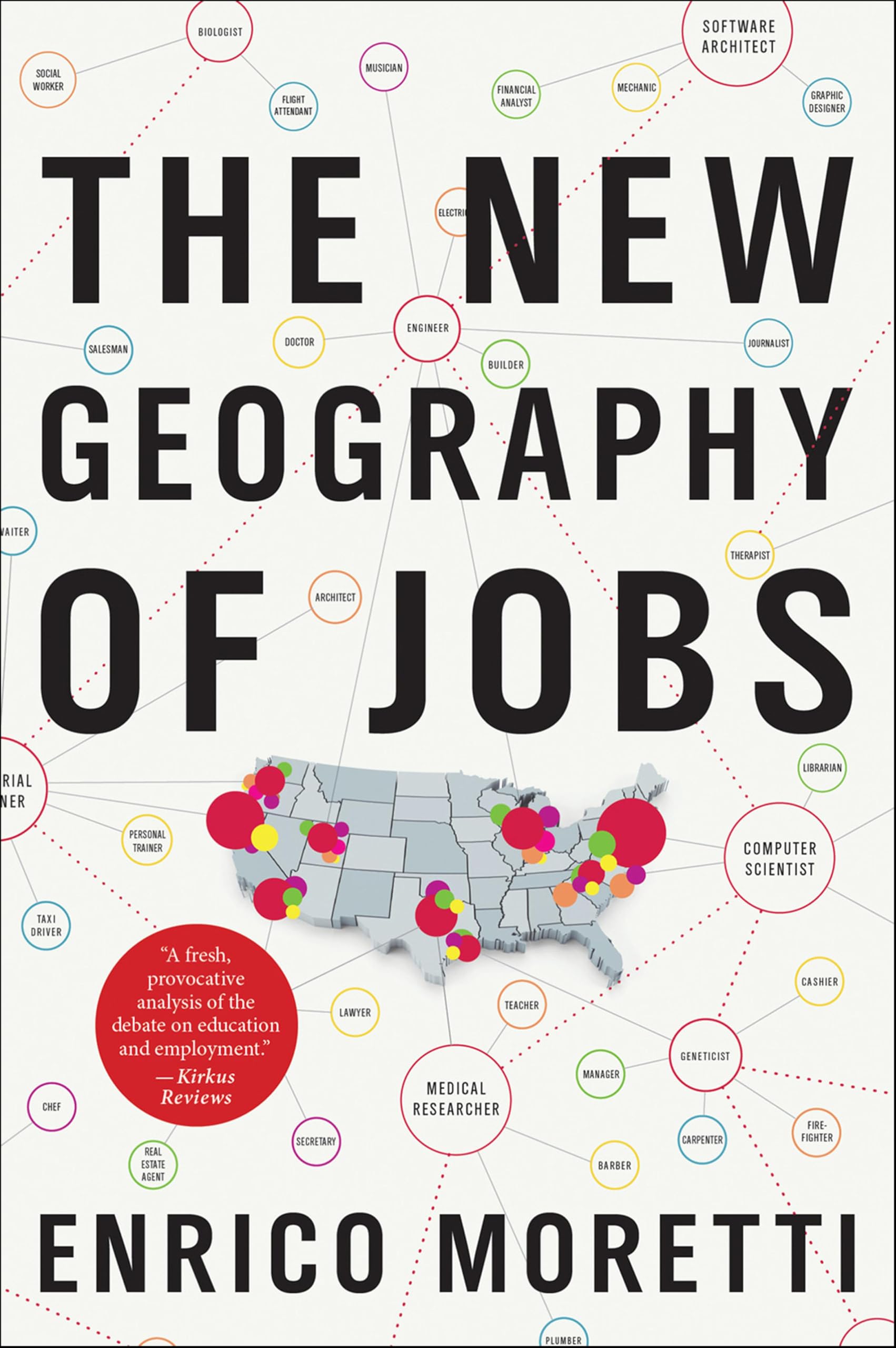
Full description not available
N**T
FAntastic book with some really great insights.
I picked up this book after seeing all the positive reviews and having previously seen this book mentioned as a very good book on economic trends happening before our very eyes in the US.This is a great book. The subject matter, which is how the economy is transforming itself around in ways that are unexpected but yet in some way predictable is a fascinating read. I have read Thomas Friedman's book "The World is Flat" and I thought his observations were pretty spot on. However, given that many of Friedman's predictions don't seem to be happening, perhaps his analysis was incomplete.Moretti really brings up some amazing interesting trends, such as the movement to certain places is precisely because the great divergence is due to like attracting like. Sure, the internet is a great leveler, but not in the was we may have thought about. Moretti discusses how certain features of great cities cannot be instantly duplicated by just having the internet, but rather, whole support systems must be available. Moretti argues, quite effectively that people will migrate to job growth, which is happening to cities where innovation occurs. And this innovation is not just high-technology either. And if knowledge workers, and the ancillary support systems aren't attracted to a certain location because of the lack of 'support networks,' no matter of education or government intervention will prevent the inevitable.Of course, this argument means that this Great Divergence is not just based in income levels, but also on whole hosts of organic systems that cannot just be grown instantly. And naturally, this means places like Detroit will never again be like the 1950's. The consequences of Moretti's book are fascinating and chilling because whole populations of the US will forever be left behind due to no fault of their own. And education, especially the kind of education necessary for innovation, will become ever more valuable.Overall, this is an extremely well-written book and very enjoyable to read. Recommended.
K**E
Inspiration and Insights
Inspiration and insights on the demography of America. Achieve a higher level of success in busines by understanding the impact of trends on geography. Karen Briscoe, author
S**R
Good To Look At Even For People Who Already Have Their Minds On Long-Term location
The reason why I mentioned that this kindlebook of The Geography of Jobs by Enrico Moretti is worthwhile to look at even for people who already have their mind made up on where they want to live long-term is this; the author goes into how certain job availabilities and job industries can shape the quality of life and job opportunities in an area. There is also informative details on the Moving to Opportunity Program. The Moving to Opportunity Program was listed to have been considered an ambitious social experiment because it is written in this kindlebook that from 1994 to 1998 the federal government gave thousands of public housing residents in Baltimore, Chicago, Boston, New York and Los Angeles vouchers to leave their current modest neighborhoods and move to private housing in the same area but in what was considered much better neighborhoods (1,788 families). Ten years later researchers followed up with the families who received better vouchers and found that many of them were in better physical shape, exercised more, and had lower rates of fitness and more depression-free than before.
A**N
Excellent overview on the changes in US employment due to globalization and its implications
The new Geography of Jobs details the changing nature of US employment as production technology has changed. I saw this book as a reference from another book on the implications and dynamics of the way in which supply chains have migrated from domestically to internationally based. It is excellent and remains extremely relevant and even predictive from being published in 2013.In the new geography of jobs, author Enrico Moretti discusses how the nature of US jobs and manufacturing has been changing for the last 30 years. The economy is becoming service based and offshoring of manufacturing is the norm as production migrates to where labor is cheaper. The author details how the size of the manufacturing labor force has been in almost monotonic decline and how even high technology content goods manufacturing quickly moves offshore despite the US housing the intellectual property. The author discusses how this is the natural consequence of the value chain that has been created where the service sector value add is what the US has come to dominate whereas the manufacturing value add is where low cost labor countries tend to have comparative advantage. The author then spends time on describing what high value service sector jobs entail, describing a job at Pixar for example. On the flipside of the decline in manufacturing is the growth in services and the author shows the growth in jobs associated with scientific R&D, software, pharmaceuticals and the internet- here the charts are the inverse and monotonically increasing. Unfortunately the magnitudes don't necessarily add up so therein lies part of the problem but the point is that the nature of where the US has a comparative advantage is changing and the areas of job growth vs decline are structural. The author spends a lot of time discussing how these sectors which are productive have huge spillovers to the surrounding areas and details the wages of base service jobs in areas of high vs low productivity and the ranges are enormous. The author spends a lot of time on how as the nature of jobs demanded is changing the geography of jobs is changing and gravitating towards the coasts where there are more tech related or finance related areas. The author discusses how the forces of agglomeration are strong as productivity feeds on itself as talented individuals come into close contact and as the geography of employment is changing as well as the education levels required to fill those labor gaps is changing the country is becoming polarized in opportunity set.The New Geography of Jobs discusses what labor transitions are occurring in the US right now and their effects on prices and opportunities. It gives good perspective on why the country is increasingly divided and see the world so different in opportunity set. The author discusses the economic consequences of the changes we are seeing and gives some policy advice on how to address them. One thing is hard to argue though which is that what value add the US can offer the global economy is fundamentally different to what it was 40 years ago and many of the changes which are creating conflict are structural. This is a must read to better understand the economic consequences of the changing nature of the US comparative advantage and what the country needs to consider when trying to address the negative consequences to certain subsets of the population who are most affected. The continued need of the US to focus on its human capital rather than its manufacturing capital though is almost a given.
Trustpilot
1 month ago
2 weeks ago