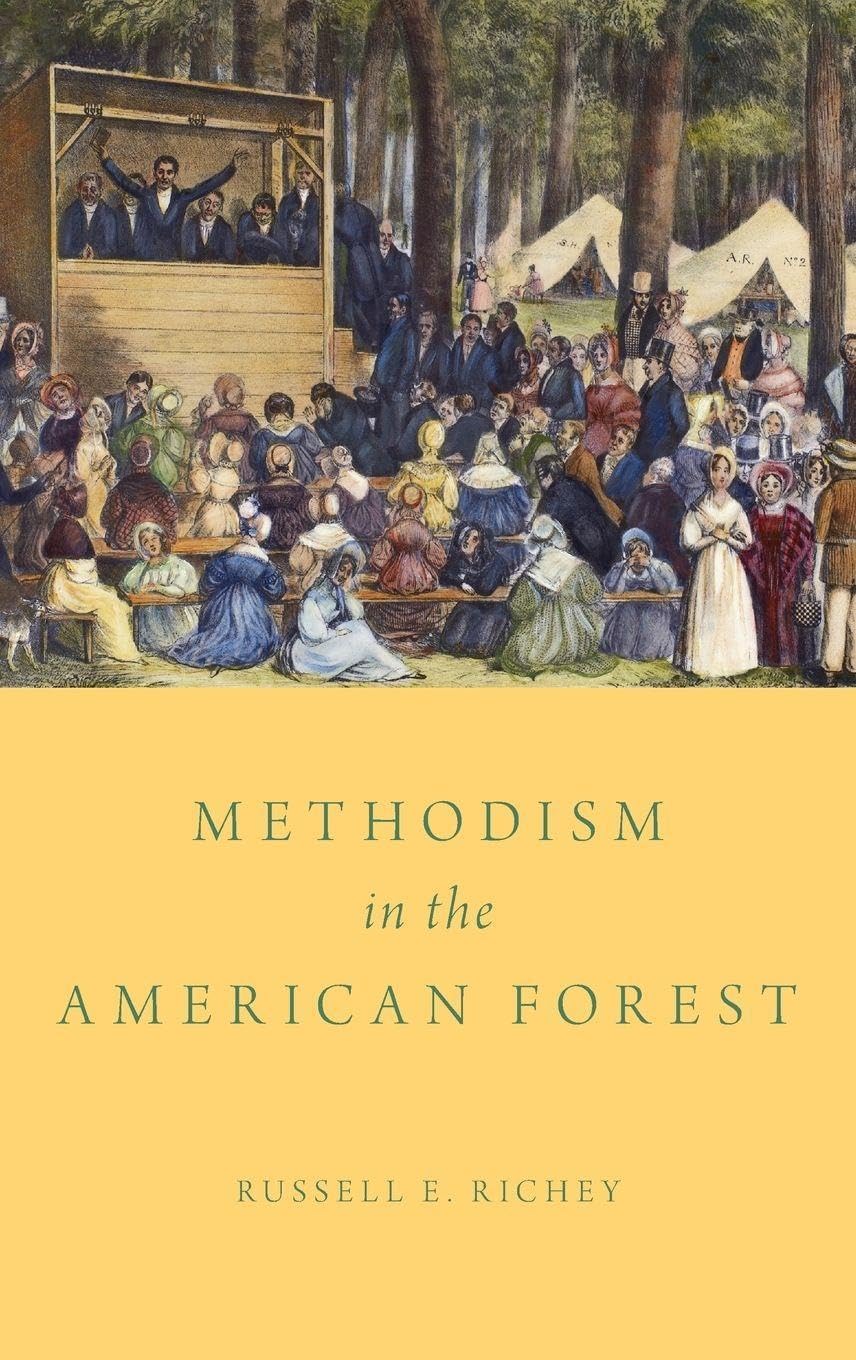

Methodism in the American Forest [Richey, Russell E.] on desertcart.com. *FREE* shipping on qualifying offers. Methodism in the American Forest Review: Important Historical Insights - Ritchie has written a history of Methodism in the American outdoors, specifically under the trees. The theological insights are illuminating. His tracing of the evolution of preaching outdoors in English fields to the trees of America, through camp meetings and Chautauqua meetings made somethings clearer that I've seen in other areas of Methodism. This is a useful book. Review: Did Methodism squander an opportunity in the wilderness? - Did Methodists squander an opportunity in the wilderness? That seems to be one of the implications in Russell Richey’s new book, Methodism in the American Forest. Richey, always a provocative historian of Methodism in its American context, takes what seems a thin theme and turns it into a chaotic book that nevertheless entertains and enlightens along the way. At the center of the book is the Methodist tradition of camp meetings, which had their glory days in the early 1800s, but nevertheless continued to influence Methodism into the twentieth century. Drawing on the field preaching tradition established by Whitfield and Wesley, “Methodists sacralized American woodlands…as cathedral, as confessional, as challenge—as shady grove (nature’s cathedral), as garden (a Gethsemane where temptations might be found and spiritual solace sought), and as wilderness (a challenge through and into which the Methodist ‘gospel’ must be taken)” (7). In the camp meetings, Methodism’s polity, exemplified in the quarterly meeting, was joined to frontier revivalism, resulting in a powerful expression of the Spirit. In the wilderness, Richey argues, the camp meetings “proved especially powerful demonstrations of Methodism’s repudiation of genteel patriarchy” (54). Outdoors, “Methodism sustained its biracial ministry” by including white and black worshippers in ways that were not permissible indoors (71). Over time, however, the camp meetings settled down into more ordered affairs. Small cities for camp meetings popped up in the forests and by seashores. And Methodist leaders grew wary that the meetings were losing their spiritual power, that perhaps the social and leisure dimensions of the events were overtaking the spiritual. By the end of the 19th century, about the time that a camp meeting featured so prominently in Harold Frederic’s send-up of Victorian Methodism, The Damnation of Theron Ware (1895), Methodism’s sylvan ambitions were being harnessed by competing interests - holiness advocates, who had extended the conversion narrative beyond salvation to the second blessing and promotion of Christian perfection, and the Chautauqua movement, which used the forest setting for the edification of leaders in the Sunday School movement. One tended toward what emerged in the 20th century as evangelicalism and the other as liberalism - a breach still not healed. What could Methodists have done in the wilderness? They may have developed a doctrine of creation, an ecclesiology, or a theology adequate to the North American context. These things, Richey says, remained more subtext than text. And what Methodists will do with their heritage in the woods is still unclear.
| Best Sellers Rank | #3,238,663 in Books ( See Top 100 in Books ) #698 in Methodist Christianity (Books) #1,440 in Christianity (Books) #3,394 in United States History (Books) |
| Customer Reviews | 4.7 4.7 out of 5 stars (3) |
| Dimensions | 6.1 x 1 x 9.3 inches |
| Edition | 1st |
| ISBN-10 | 0199359628 |
| ISBN-13 | 978-0199359622 |
| Item Weight | 1 pounds |
| Language | English |
| Print length | 240 pages |
| Publication date | April 3, 2015 |
| Publisher | Oxford University Press |
R**D
Important Historical Insights
Ritchie has written a history of Methodism in the American outdoors, specifically under the trees. The theological insights are illuminating. His tracing of the evolution of preaching outdoors in English fields to the trees of America, through camp meetings and Chautauqua meetings made somethings clearer that I've seen in other areas of Methodism. This is a useful book.
A**R
Did Methodism squander an opportunity in the wilderness?
Did Methodists squander an opportunity in the wilderness? That seems to be one of the implications in Russell Richey’s new book, Methodism in the American Forest. Richey, always a provocative historian of Methodism in its American context, takes what seems a thin theme and turns it into a chaotic book that nevertheless entertains and enlightens along the way. At the center of the book is the Methodist tradition of camp meetings, which had their glory days in the early 1800s, but nevertheless continued to influence Methodism into the twentieth century. Drawing on the field preaching tradition established by Whitfield and Wesley, “Methodists sacralized American woodlands…as cathedral, as confessional, as challenge—as shady grove (nature’s cathedral), as garden (a Gethsemane where temptations might be found and spiritual solace sought), and as wilderness (a challenge through and into which the Methodist ‘gospel’ must be taken)” (7). In the camp meetings, Methodism’s polity, exemplified in the quarterly meeting, was joined to frontier revivalism, resulting in a powerful expression of the Spirit. In the wilderness, Richey argues, the camp meetings “proved especially powerful demonstrations of Methodism’s repudiation of genteel patriarchy” (54). Outdoors, “Methodism sustained its biracial ministry” by including white and black worshippers in ways that were not permissible indoors (71). Over time, however, the camp meetings settled down into more ordered affairs. Small cities for camp meetings popped up in the forests and by seashores. And Methodist leaders grew wary that the meetings were losing their spiritual power, that perhaps the social and leisure dimensions of the events were overtaking the spiritual. By the end of the 19th century, about the time that a camp meeting featured so prominently in Harold Frederic’s send-up of Victorian Methodism, The Damnation of Theron Ware (1895), Methodism’s sylvan ambitions were being harnessed by competing interests - holiness advocates, who had extended the conversion narrative beyond salvation to the second blessing and promotion of Christian perfection, and the Chautauqua movement, which used the forest setting for the edification of leaders in the Sunday School movement. One tended toward what emerged in the 20th century as evangelicalism and the other as liberalism - a breach still not healed. What could Methodists have done in the wilderness? They may have developed a doctrine of creation, an ecclesiology, or a theology adequate to the North American context. These things, Richey says, remained more subtext than text. And what Methodists will do with their heritage in the woods is still unclear.
Trustpilot
1 month ago
3 weeks ago