
DOWNLOAD THE APP


Customer Services
Copyright © 2025 Desertcart Holdings Limited
DOWNLOAD THE APP
Full description not available
G**G
The Storm After the Storm
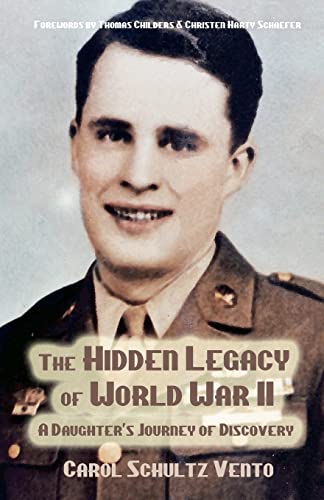
It was sometime around 3 am during the reading of this book that it hit me. I was looking at history with a pulse. History, when I was as a young student, was my least favorite subject. I didn't understand the power behind history and its relevance to learning and the future. As I read the book, I was witnessing the streaming feed of a lifeblood of memory chemistry into waiting synapses of dendrites that had been empty of any real understanding of the latent horrors of World War II.Carol Schultz Vento had revived the spirit of her father, back from the ashes of the urn even buried beneath tons of earth at Arlington Cemetery in way that only a daughter could.Carol captures, prioritizes and replays the life of Dutch to add some direction to an otherwise wandering lifespan of mutlimarriages, booze binges and military glorification and heroism. Who could have the courage to tell the story of a 6-foot bad-ass paratrooper through the eyes of a tiny brown-eyed Italian-American girl?I had learned of the book before it was available on Amazon.com, and when I was told that Carol's father was a significant character in the film, I watched "The Longest Day" in full or in part about four times, taking a special look back at the Arthur Schultz character in the early dice-rolling scene and the later scene with Richard Burton's character as they scoff at the German soldier who was shot dead wearing his boots on the wrong feet.I had always agreed this movie was one of the best World War II movies. It wasn't until AFTER I read Carol's book that I realized the stunning value of "The Hidden Legacy of World War II." Before the book arrived from Amazon.com, I felt I knew where the book was going to take me. It took a day or two for me after reading it to capture my thoughts. It was my REACTION to what I had read that was so exquisitely intense. I realize now that my enjoyment of the typical WWII movies that present only the glory of war without exposing the viewer to the true post-war suffering of veterans is at best thoughtless and at worse, an abuse of the real corpses left in the wake of fierce battles.I certainly understand the concept of artistic freedom of filmmakers and I don't intend to suggest that any motion picture company should base their pictures on any of my new biases. It is up to me and, I'd suggest, people like me who watch these movies to expect something more as critics and as consumers. For decades, we were presented with propaganda, and that is understandable perhaps during a war-bond or recruitment period. There is no excuse for ignoring the issues raised by Carol's book AFTER the war's end. Now, I know where I went wrong: I just became one of those rubber-neckers peering over to the other lanes of the turnpike to gawk at maybe some blood spattering or body part in the aftermath of an accident. Having pondered the personal implications of Carol's book, I feel as if I were a grim reaper, who spent much time channel surfing for the really "great" war movies.I am the son of a WWII combat wounded 29th Infantry Div. soldier and the brother of a Marine who fought in one of the bloodiest battles of the Vietnam war in the Que Son Valley ( Road of 10,000 Pains: The Destruction of the 2nd NVA Division by the U.S. Marines, 1967 ) I know intimately and very clearly how these men kept the horrors of war inside them for decades and decades.A short page of CliffsNotes could condense the story: Dutchie is a very happy young man with a great personality and the best batting average for his high-school baseball career who comes home from the war "somber and melancholy" and never seems to come to full functionality for any great period, save for his later-in-life career as a director for drug and alcohol rehab programs.For this reviewer, the most poignant and riveting thought in the book is: "For some combat veterans, all the parades, ticker tape and marching bands could not drown out the cries of their lost brothers in arms."But please don't just watch the short version, for you'd be denying yourself the full story that has been kept from you by what Carol refers to as the Brokaw/Ambrose stereotype, referring to Tom Brokaw's superficial book on the glory of WWII vets and Steven E. Ambrose's volumes of facts and details on various battles and campaigns.Brokaw, Ambrose and the film industry are not at fault here. It's the full body of literature -- the sheer weight of the hell-is-for-heroes comic-book approach compared with the more introspective studies that does injustice to the veterans and their families who have suffered. Some of this has a sinister hint to it, in that the U.S. government uses its power and influence to discourage or even censor certain war coverage in order to foster support for a war. Our military will refuse to support films that don't meet certain "heroic" criteria. Too, years after the acts were perpetrated we have learned of soldiers used as guinea pigs in chemical and psychological experiments.Carol points out that the tide has been turning and increasing numbers of authors are building a more socially responsible body of knowledge of the after-effects of war on our soldiers. "The Hidden Legacy" puts a real face on it as she invites you into her home. I suggest you don't turn down the invitation. You - really - don't know what you've been missing.- Gary Cummings
O**H
The Hidden Legacy of World War II - Our Journeys of Discovery Continue - Great Read
Carol Schultz Vento's book The Hidden Legacy of World War II, A Daughter's Journey of Discovery is a personal story and at the same time a universal story of the many daughters (and sons) whose fathers were infantrymen, the men who saw the worst horrors of war at closest range. Carol's Dad Arthur "Dutch" Vento was a paratrooper, a member of the elite 82nd Airborne, 505th Parachute Infantry Regiment (PIR). As Carol's research demonstrates the Post-Traumatic Stress Disorder (PTSD) that her father experienced is not uncommon with World War II veterans or veterans returning from any military conflict. Her father was portrayed in Darryl F. Zanuck's movie "The Longest Day" based on the book by Cornelius Ryan and in the writings of Stephen Ambrose.The author notes that until recent decades recognition and treatment of the "unseen" emotional and psychological wounds of men and women returning from World War II were almost nonexistent. After WWII the fighting men and women were expected to return home, march with smiles in the parades and keep smiling as though nothing major had happened to change their lives. The men of the 505th PIR had lived for years with the fear of imminent death and countless experiences of the suffering and death of their brothers in combat. How could they have been expected to return home and live their lives as though nothing traumatic and horrific had happened? Was that feeling of being surrounded by the enemy brought home and felt by their families? Did those who loved them struggle daily with coping with the soldiers' memories and possibly die a bit emotionally as they were viewed as "the enemy"?At times it was painful to turn the pages because I knew I was reading real experiences of a real family that is but the tip of an iceberg of the many families who know that when a soldier comes home from war - the war is not over. The battleground often becomes the family as family members feel the emotional wounds just as the soldier continues to feel them. Carol's research reveals that for many decades after WWII, the men returning from the war had almost no recognition and treatment of the severe impact of PTSD. The term PTSD was not defined as a distinct diagnosis until the 3rd edition of the Diagnostic and Statistical Manual (DSM-III) in 1980.I recommend this book for those who want to understand the impact of war on a relative or friend (and upon themselves). Hasn't war affected all of us? The "Greatest Generation" was and is not only the greatest because of what they did militarily in their victories on foreign soil but they continue to be the greatest because of their survival on the home front. The concept of "the happily ever after" American dream postwar years for the older baby boomers often became a time of questioning and seeking that led many of the daughters (and sons) to their protests of war in the 1960s. I realize that was a "totally different type of war." As Crosby, Stills, Nash and Young told us: "Our father's hell did slowly go by" and CSNY also told us that we will never know "the fears that our elders grew by." Thank you, Carol, for putting into words the thoughts that I couldn't say or write for myself. All of us seek peace. The Journeys of Discovery continue.
B**M
The Hidden Legacy of All Wars !
I would recommend this book to everybody who has a genuine interest in human nature, and the effect of the war experience on many combat veterans. In Australia, at the old Callan Park psychiatric hospital, there was once a large Repatriation section with former soldiers from the First World War, the Second World War, the Korean War, and some from the Vietnam War. Many men return from war as psychiatric casualties, broken into pieces. As late as the late 1970's there were still men there from the First World War, men who would not talk except to ask for news from the front. Another aspect of the war experience is that those with psychopathic tendencies become unfit for a return to normal civilian life after returning from a war, and become underworld hit men or mercenaries.This has always been the case, and is the very reason that criminal activity is rife in refugee communities. This is a very important book, and the subject matter must be faced.
Trustpilot
2 weeks ago
4 days ago