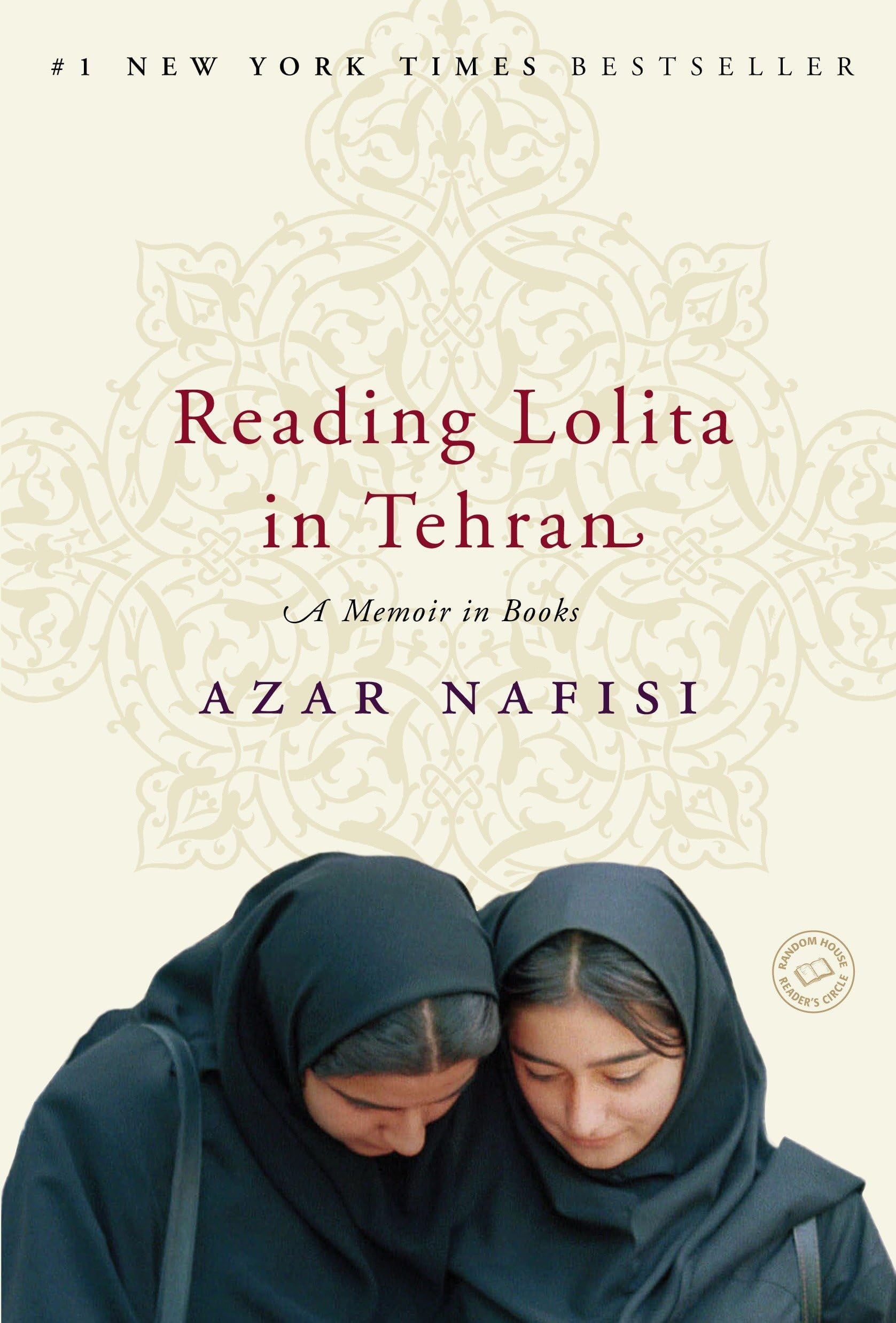
Reading Lolita in Tehran: A Memoir in Books
Product ID: 1693222
🎬Soon-to-be major motion picture
📚Bestselling memoir blending literature & history
🕰️Nonlinear narrative spanning revolutionary Iran
Desertcart purchases this item on your behalf and handles shipping, customs, and support to Croatia.
📖 Unlock the power of forbidden stories and fearless women.
Reading Lolita in Tehran is Azar Nafisi’s acclaimed memoir recounting her clandestine literature classes with female students in post-revolutionary Iran. This #1 New York Times bestseller, soon to be a major motion picture, offers a poetic and powerful exploration of women’s resilience, freedom, and identity through the lens of Western classics, set against the backdrop of political repression and cultural censorship.


| Best Sellers Rank | #50,910 in Books ( See Top 100 in Books ) #36 in Censorship & Politics #180 in Women's Biographies #630 in Memoirs (Books) |
| Customer Reviews | 4.2 out of 5 stars 1,884 Reviews |
T**D
I am very happy that I chose to read this book
I chose to read Reading Lolita in Tehran because I am currently in the middle of reading Lolita. I am very happy that I chose to read this book, it is beautifully written and powerful. This book details the authors, Azar Nafisi’s experiences in Iran after the revolution and her move to America. The book focuses on a class she teaches in her home, during the class they read forbidden western classic books including Lolita. This class gave Azar and her students a chance to take a break from he restrictions of the Islamic State, and gives them the freedom to express their individuality and opinions. I would highly recommend this book, especially to those who value individuality, individual freedom, women's empowerment, and those who appreciate he power of fiction. Personally, I plan on rereading this book in the summer after I finish reading Lolita, so that I can better appreciate Reading Lolita in Tehran. Azar Nafisi's writing style lacked a lot of dialog, but made up for it with lots of descriptive language and powerful comparisons. The dialog that was included was appropriately placed within the memoir. Azar Nafisi is a talented story teller and while you read her book you can really envision the situations she was in and experience her feelings. A powerful composition made to compare Azars students to classic Greek characters is “Their mistakes, like the tragic flaw in a classic traded, become essential to their development and maturity.” (Nafisi 223). She uses Greek characters hamartia’s to relate to her young students. The student’s choices and mistakes help them become who they are by the end of their final class. Another great comparison was used to compare the students to some of Jane Austen's characters, “Austen’s protagonists are private individuals set in public places. Their desire for privacy and reflection is continually being adjusted to their situation within a very small community which keeps them under its constant scrutiny. The balance between the public and private is essential to this world.” (Nafisi 267). This comparison was used to show how important he class was for students to have their own private space to be themselves without strict laws getting in the way. The examples Azar uses are good for keeping the reader engaged and help them develop a clear image of Azar’s students. The most appropriate audience for this book is someone who doesn't expect a lot of intense action or dialog, but can appreciate hearing personal complex thoughts and feelings. Even though I've never been in any situations similar to Azar Nafisi I was able to feel for her and think of points in my life that I felt similar emotions to hers. For example, I can relate to her students and herself feeling trapped without a private life. Being in high school while being controlled by adults can feel like I have no private life, but this is so different and less intense compared to Azar Nafisi’s experiences, regardless she makes it easy to relate to her emotions while reading the book. Azar did an incredible job of describing her students on a very personal level. She made it easy to understand their internal and external struggles. To a degree you were able to choose who to like and dislike, but most of Nafisi’s descriptions determined who you would trust and distrust. Nafisi’s explanations of characters struggles helped me better understand the characters as a whole, like this explanation of a characters relationship with wearing her scarf and the governments mandated dress code “…the revolution that imposed the scarf on others did not relive Mahshid of her loneliness. Before the revolution, she could in a sense take pride in her isolation. At that time she had worn the scarf as a testament to her faith. Her decision was a voluntary act. When the revolution forced the scarf on others, her actions became meaningless.” (Nafisi 13).By explaining the shift in the meaning of Mahshid wearing a scarf it allows the reader to better relate to her and have sympathy for her situation. Azar did not write this book in chronical order. Instead the book jumps around in time from when she worked at a small university, to a large university, to her private class, and to moving to America, all of this is talked about but not in order of when the memories and situations happened. The way she does this doesn’t confuse the reader because she makes it clear what point in time she is describing within each chapter. This book was engaging the whole way through. Azar holds the reader’s attention by emerging them in the lives and emotional struggles of not only her students but her own life as well. Azar writes about many examples of the Islamic state restricting women’s rights and freedoms, she writes about how this effected students and herself. One student, Vida, is written about expressing her anger when she showed her rage regarding the regime’s new laws “‘The law?’ Vida interrupted him. ‘You guys came in and changed the laws. Is it the law? So was wearing the yellow star in Nazi Germany, should all the Jews have worn the star because it was the blasted law?” (Nafisi 134). By sharing Vida’s outrage with the reader they can become invested in Azar’s students’ lives. While reading this book I learned about what life was like for the people, particularly women, in Iran during the time Azar Nafisi lived there. I now have a better understanding of the restrictions the government put in place and the terrible things people unfairly suffered through. Overall I am very pleased with Reading Lolita in Tehran. I learned about Iran and how their revolution affected the country’s women. I would recommend this book to anyone, primarily to anyone interested in modern history, learning about other cultures, women’s rights, and education.
M**E
Tough Walnut to Crack
Reading Lolita in Tehran is structured around the life of the author, an English Literature professor born in Iran, educated in the west and teaching in post-revolutionary Iran. She stands like a maypole at the center of a dance. Dancing around her are the women of her reading group. Further off there are male students, friends and acquaintances, and finally shadowy government functionaries. But these men are not dancers. Some are observers, others play the tune.The strands being woven are thematic ones. As a first guess: Lolita is about the abuse of power. Gatsby, the empty dream. Daisy Miller is about courage and heart. And Pride and Prejudice about using good judgement in social contexts rather than relying on bad rules of engagement. There is no narrative thread, just a group of dancers that weaves back and forth through time. It is tempting, as a westerner, to read this as a polemic against an 'evil regime' But to do so risks making the same mistake as the revolutionaries. Nafisi, I think, is less interested in the politics per se than in how our lives shape and are shaped by politics. The answers are not easy. Some time after a battle waged by the police against a neighbor that took place from her own bedroom balcony, she writes on the blackboard "The highest form of morality is not to feel at home in one's own home," quoting Theodore Adorno. Self satisfaction may not be the greatest moral evil, but it is the progenator of them all. We see this again and again in the acts the regime takes against its citizens. They are all motivated by a mindless and smug notion of self-righeousness. The characters go about their lives, reading James, Austin, Nabokov, and others. They eat cream puffs, drink coffee, defy the regime in their own secret ways, And they have relationships with men. We learn that the revolution seems to have robbed important interpersonal function from its women; by so scrupulously protecting them from the gazes of men it has relegated women to the status of sexual objects. Women retaliate by viewing men the same way. Intimate non-sexual relationships with any member of the opposite sex become impossible. The author highlights this problem in two ways. Firstly, it seems that more of the conversation of this reading circle is about sex than it is about literature. Secondly, by repeatedly seeking advice from a man she calls the magician, she demostrates an ability that seems completely absent from her students. I found the structure of the narrative extremely confusing. I could not keep the characters straight, and I felt the book jumped around in time so much that I frequently gave up trying to figure out the temporal context. If this had not been the first portal through which I was able to glimpse the Iranian Revolution, I may not have had the patience to get through it. I found the literary criticism interesting and insightful. It made me want to read or re-read the pieces of literature cited. The discussion of literature struck me as being a little loosely tied to the narrative. I'm sure that much of this would get pulled together if the book were the subject of a thesis, but I'd rather not work quite that hard; nor, I expect will most readers. Nevertheless, the fact that a book about reading, ideas, literature, and politics requires some reflection in order to be impactful should not be considered a great negative.
E**R
Literature vs. Weapons of Mass Deception
This is definitely the best read I've had in a long time. It integrates literary criticism with historical-political narrative, bringing each theme to illuminate the other. We learn about literature -- about the books discussed, about the love, the meaning, the power of fiction, revealed partly by the role it plays in Iran's Islamic Revolution. In Chapter Five of "Gatsby," Nafisi mentions that she once started a semester by asking her students "what they thought fiction should accomplish, why one should bother to read fiction at all." These questions are central to the book, one might say even to her life. We watch the birth of a totalitarian state. At first it is not clear whether the "leftists," influenced by the leaders of the Russian Revolution, or the Islamists will take power, or if they will share power. In the end it is the Islamists, maybe because of a stategy taught by Khomeini: "Hit them. Do not complain; do not be a victim; hit them." The Islamists are the more ruthless of the two. The secular modernists have no chance, thanks to their lack of interest (and/or understanding) of power struggle. Literature threatens totalitarian powers by teaching the complexity of people, their natures, and their motivations. Before Nafisi is expelled from the university, she sees students who, dedicated to the revolution, are deeply offended by the literature they are studying. Usually, they have no idea of what the book is actually about, so mired they are in a simple, black-and-white world view. When one of these students reviles "the Great Gatsby," Nafisi stages a trial in the classroom, where the accused is the novel ("the Great Gatsby") itself. This tactic electrifies the class, and is one of the most exciting parts of the book. In the midst of Islamic revolution in Iran, Nafisi and her students and friends find themselves wondering how the soul survives under a totalitarian regime that seeks to control every little bit of one's personal life. In Chapter Seven of "Austen," Nafisi's friend "the magician" reminds her that Jane Austen ignored the Napoleonic Wars that were then engulfing the world, and created her own independent world, "the fictional ideal of democracy," as Nafisi calls it. "Remember all that talk of yours about how the first lesson in fighting tyranny is to do your own thing and satisfy your own conscience?" asks the magician. Later, in Chapter Seventeen, Nafisi writes, "Evil in Austen, as in most great fiction, lies in the inability to 'see' others, hence to empathize with them....How does the soul survive? ... through love and imagination." Love and imagination are the antidote to evil, rooting out evil in oneself, and protecting oneself from the evil of others. When Islam comes into formal, governmental power in Iran, it opresses the faithful as well as the secular. Women who wore the veil out of devotion, as a declaration of their faith, before the revolution, now find that wearing the veil no longer means anything. One of Nafisi's devout Muslim students writes (Austen ch 21): "During the Shah's time, it was different. I felt I was in the minority and I had to guard my faith against all odds. Now that my religion is in power, I feel more helpless than ever before, and more alienated." She found Islamic rule to be "a pageant of hypocrisy and shame," and was deeply worried about losing her faith. Nafisi and her husband Bijan must undergo some profound self-examination together in deciding and preparing to leave Iran. "None of us can avoid being contaminated by the world's evils," says Bijan. The book is divided into four parts -- "Lolita," "Gatsby," "James," and "Austen." Some of the commentary on Nabokov's "Lolita" was a bit too rarefied for me; the other three sections were more accessible. I want to read at least some of the literary classics that were highlighted in the book, and then come back for a second reading.
A**Y
Misleading Title
I was extremely disappointed. I expected to read about the lives of the women who were in the "hand-picked" bookclub in Iran, and how they may have used literature to overcame the struggles faced by women in the middle-east. Instead, the book is more a memoir of the author's life. The many friends, co-wokers, family and women she writes about remind me of someone discussing their trophies. She proves over and over again that her NEED to teach is more to force her own narcassic viewpoints rather than encouraging students to draw their own conclusions. How sad for those studying under her. Although the book touches on the lives of the members of the group, the author spends much of her time sharing personal stories of what it was like for her during her years as a rebellious, demonstrating young college woman NOT IN THE MIDDLE EAST, BUT IN THE UNITED STATES while attending college. Instead of blending the use of various great literature pieces into the story to show how the women used such works as "Lolita" to help them cope with their lives, she ran on and on and on with excerpts from various works, and did not relate them to current problems in the Middle East. I felt at times the author was using this book as a means for her to come to terms with herself and how her own life had changed rather than enlighten the public of the struggles in the Middle East. If someone has little knowledge of the struggles of women who are opressed in the Middle East,then you may enjoy this book. If you, however have a general knowledge from other books, then I am almost certain you will find this book long, drawn out and boring.
B**L
"None of us can avoid being contaminated by the world's evils; it's all a matter of what attitude you take towards them"
Have you ever imagined what it would be like to read the autobiography of a person that loves literature, has studied it, and is able and willing to share her passion and knowledge with others? Someone that appreciates books as much as you do, and has the talent to express herself fluently and flawlessly? And what if that person had lived under difficult circumstances, facing complicate decisions regarding her personal and academic life? "Reading Lolita in Tehran" is that book, and I promise, it makes for very interesting reading material, the kind you enjoy while you are reading it and afterwards. On the one hand, you enjoy this book while you are reading it because Nafisi's prose is magnetic, allowing you to imagine that you are with her, while she teaches Literature in Iran after the Islamic Revolution. You are also at the Tehran University defending Gatsby, during the "Gatsby trials", and when Azar decides to quit teaching in order not to wear the veil. You try to understand with her what has happened to her country, and how the situation there can be better understood through literature. You are also with the author during her long walks with her "magician", when she tries to decide whether to teach again or not, and why. And of course, you will be part of her secret classes with selected female students, meetings that made books and plots come to life, and fiction become a space of freedoms reality denied them. On the other hand, you enjoy "Reading Lolita in Tehran" after reading it because this is a book about a person and part of her life, but also a book about books. It teaches you as you read it, but also afterwards, specially if you pay attention to the list of suggested reading material included at the end. On the whole, I can say that "Reading Lolita in Tehran" is an outstanding book that happens to be the best one I read in 2006. I believe that most people will like it, because it is well-written and engaging, delves upon serious matters but also makes you laugh. All the same, I think that the kind of reader this book is waiting for are those zealous readers that simply cannot conceive their lives without good books, and imagine -like Borges- Paradise in the shape of a library. They will realize just how good "Reading Lolita in Tehran", and appreciate its worth. Highly recommended! Belen Alcat
S**E
The Recent Election in Iran Makes it the Perfect Time to Read This Book.
I have owned this book since March 2004, when two very good friends brought me back an autographed copy from their attendance at the Author's reading/ signing. I did not read it until my book club selected it last month. Though it is a little slow to start, I found myself unable to put it down as I reached the last 1/3 of the book. I have read most of the books she discussed and felt like the beginning was a little like reading published papers. But... when she began to talk about her own life and the lives of the women she taught in Tehran is when she had me hooked. I began to understand her need to be true to herself despite ideologies that were forced upon her. I felt inspired by her drive, yet saddened by the repression she felt by being forced to cover (rather than choosing it as modesty and honor for God) and made to censor. Through my highschool years 1985-88, I had a pen pal from Tehran through my Spanish class. At that time, I had NO IDEA that throughout our exchange of crossword puzzles, post cards, letters, stamps and the funny papers that he was experiencing the very things that Ms. Nafisi describes. We were kids, we only talked about pop culture. Reading this took me back to my connection with him. As an adult, now watching the news of current events in Iran I am so saddened. I hope he is safe and a good man. He was a good teenage friend to an oblivious teenage girl. With Iran is the news, it is a perfect time to read this book and understand why there is such unrest right now with thier election. Some have said that the author is narcissistic. To that I say... it is a memoir. It is supposed to be all about her.
R**N
This was a memorable book
My stepmother introduced me to this book. I'm not sure how our discussion led to this, but she was telling me of this site she got by email called "Where Have All the Flowers Gone". This had a picture of a woman weari her native dress from a Middle Eastern country before the religious zealots forced them to wear a type of robe, burqa and or veil. Though this was initially from a particular religious sect, when strong religious forces took control, they required all women to dress this way. Our writer wrote her memoir teaching English literature at a university in Tehran. When she started working, she wore western dress, until the government threatened the women with prison and the possibility of death if they did not comply in changing how they dressed. During this time a revolution was taking place in Iran with several factions attempting to get or hold on to control. During this time, war broke out between Iran and Iraq. The style of punishment was gruesome and done publicly usually to force compliance with their laws. Our writer did move to the United States and went to college here studying English Literature. She took her knowledge back to Iran to discuss relationships in the stories (fiction) and draw comparisons to their own relationships. She left the university in Tehran after so much bullying against her and others. She invited several women to continue studying in her home. She couldn't invite men, because Iran at that time worked very hard to keep the sexes separate unless it was a spouse, parent or sibling. The lessons learned through literature was fascinating and was shared throughout the book. But it was these relationships and how they were handled in such a controlling regime. I really liked this book. It was insightful of another culture during a particular time and if you are curious about that, you will get a lot out of this book.
R**J
Upsilamba!
Wow. Wasn't sure whether I was reading a great work of literature or an obscure repartee on ideals. Quite a few things brought on this feeling. First there was the Author's Note. Normally I don't read them. But this one was brief... so I did, which between reminding myself of the caption "a memoir in books" and weighing in the fact that "...aspects of characters and events in this story have been changed..." (& understandably so) it did little to help separate the ambiguity between events and perspectives... especially since on top of all things, Nafisi teaches literature. But I took on the challenge, and enjoyed it. Irony after irony. It really was beautiful... tell-tale... such as the glimmering irony in the Reading of Lolita...particularly noting where Humbert `is painted' as being both narrator and seducer... of not just Lolita, but also of his readers. I kind of felt the same way about Nafisi. Without going too deep into the revolution of ideals and basic human rights which much of this book encompasses... and I believe in... but regardless of an individual's viewpoint, whether left or right... liberal or conservative, you must seduce to get others to see your point of view. Perception can be a tricky monster... ...for instance, another question I had (initially) was what possibly `could' Nafisi teach about literature (of all subjects), in Tehran? I got my answer. Yet the very reason I had the question to begin with was because of the way I was seduced by the stories of oppression. These questions/ironies alone makes Reading Lolita in Tehran not only engaging, but projects what Nafisi strived to accomplish all along... to revive and keep alive literature!
U**L
Access to different worlds
Books allow us to glimpse unknown worlds - landscapes, cultures and societies. Reading about the lives and thoughts of women in Tehran living under a theocratic tyranny at the end of the 20th century, and knowing that the totalitarian oppression persists and has just killed thousands in 2026, gives this insightful book an unfortunate relevance.
A**O
Mujeres valientes burlándose de la perversión de los ayatollahs
Describe la lucha dia a dia de unas mujeres iraníes contra la brutal opresión religiosa. Escrito con mucha y muy buena ironía que destroza la falsa moral de los ayatollahs y los pone en su sitio: unos pervertidos con poder. No tiene desperdicio el comentario sobre el ayatollah Jomeini y sus instrucciones de sexualidad con pollos!!
M**O
Empolgante e estranhamente atual
Esta é a segunda vez que leio este livro excelente e perturbador, da escritora iraniana e professora de Literatura ocidental Azar Nafisi. Minha primeira leitura foi há dezoito anos, pouco depois da sua primeira publicação nos Estados Unidos, onde eu morava na época. O sucesso foi imediato e tive a sorte de assistir a uma palestra dela em Nova York, que muito me marcou. Além de muito bem escrito, o livro me cativou por conseguir expressar como poucos a revolta e as dificuldades das mulheres iranianas na luta contra a sua colossal perda de direitos após a instauração da República Islâmica do Irã após a queda da monarquia. O que mais me impressionou foi perceber que esta completa reversão histórica, que tão poucos iranianos e observadores internacionais acreditavam ser possível, de repente se impôs na vida de todos os cidadãos com imensa força política, através da ideologia religiosa e manipulação das massas polarizadas. Não há país livre destes perigos, que ameaçam a vida não somente das mulheres, mas de toda a sociedade. Leitura altamente recomendada tanto para homens como mulheres, para aqueles leitores que ainda se lembram da época do Xá da Pérsia, no século passado, bem como para aqueles que já nasceram nestes “novos tempos” do século 21, em que todas as iranianas são obrigadas a sair às ruas envoltas em seus chadors.
R**N
Triumph of Will!
I happened to read this book back in July 2015. The book left a lasting impression on me. I had since then gifted this to most of my friends who love reading books. The book is a memoir by Azar Nafisi detailing her years after being suspended in the early 1990s from the University for not wearing the veil. She forms a ladies only literary club consisting of her past students. The meetings are held once every week in a clandestine manner to discuss banned works of literature. Soon, they find parallels between the works they discuss and their present situation. As their bond strengthens, they try to use their understanding of fiction to make sense of the constantly changing world that is adversely impacting the lives of women. This book is a delightful read. You shall find yourself to have changed from the one you were before laying your hands on this one.
F**H
Fatemeh
Much of the what takes place in the book DID happen in Iran during the period after the war in Iran. However I urge the non-Iranian readers to consult other historical sourses on Iran before and after reading this book since it CAN NOT be taken as a gate to Figuring out Iran, its people and customs. Enjoyed reading it as an Iranian youny woman who spent over 20 years of her life in Iran (28 now) and learned much about the circumstances back then when i wasnt even born. However, life is very different now in Iran and this book is not giving a correct image of the iran women. Plus, the writer seems to be taking sides with the Western liberating ideology!
Trustpilot
1 month ago
2 days ago