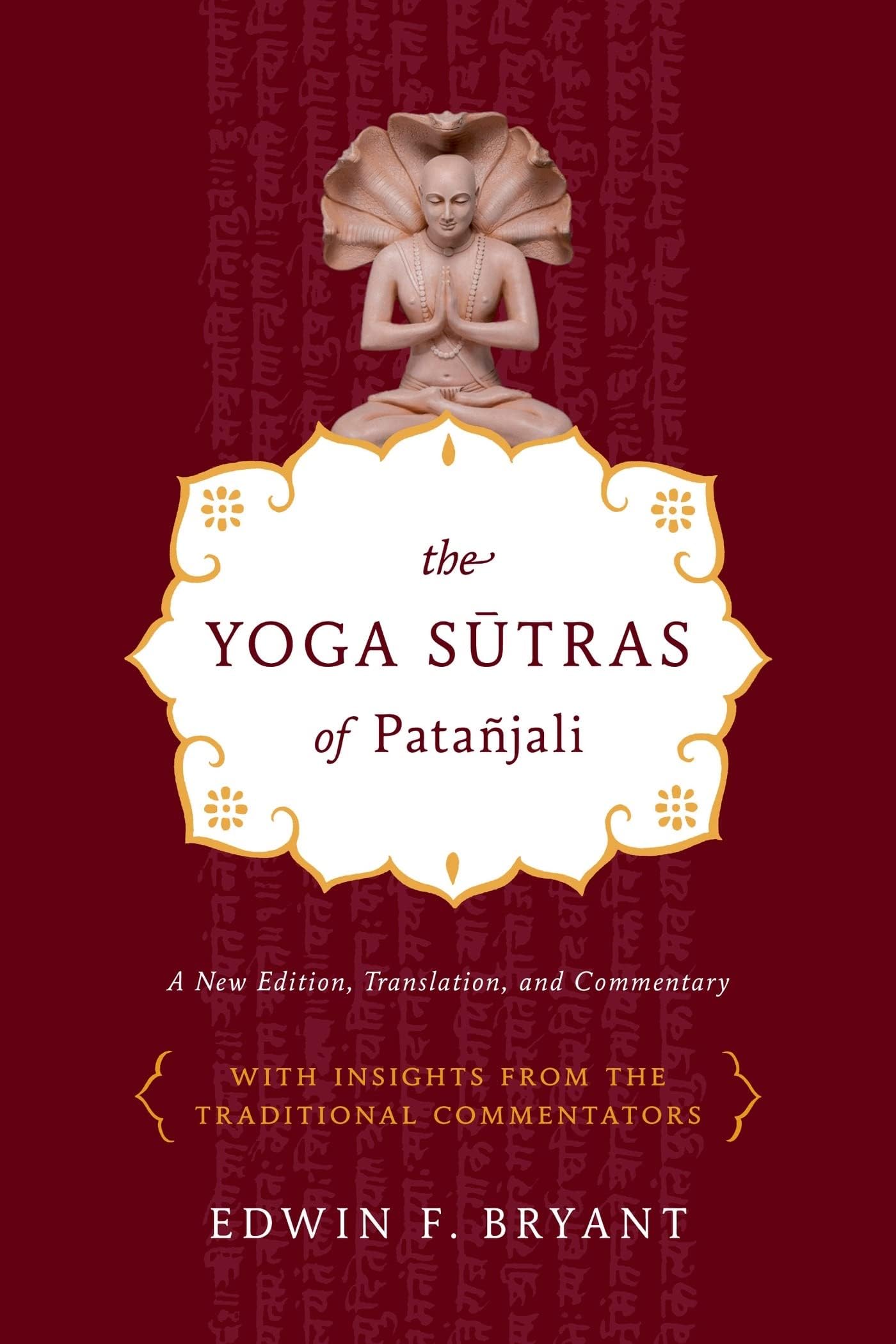

The Yoga Sutras of Patañjali: A New Edition, Translation, and Commentary [Bryant, Edwin F.] on desertcart.com. *FREE* shipping on qualifying offers. The Yoga Sutras of Patañjali: A New Edition, Translation, and Commentary Review: Best all-around translation of Yoga Sutras - The Yoga Sutras is the foundational text of the Vedic philosophy of yoga. It is hard to come by a translation of the Yoga Sutra that does justice to the depth and scope of the original work. Too often, nowadays, it seems that translators are more interested in promoting their interpretations of the text rather than representing the intentions of the original author. As a result, the translator often ends up obscuring the clarity of the original sutras with over-intellectualized or over-interpreted concepts. Enter Edwin Bryant, with his authoritative translation, complete with his own commentary as well as the most revered commentators of the Yoga Sutras, such as Vyasa and Hariharananda. Edwin Bryant is a consummate scholar with expertise in Sanskrit, vedic philosophy and Krishna devotion. Yet, he does not let his own commentary get in the way of the simple power of Patanjali's text. He provides the sutra in its original Sanskrit along with a romanized transliteration, and a word-by-word translation. His concise and simple translation remains close to the terseness of the original sutras, rather than flying off into poetic renditions as some modern translations would do. He then includes quite lengthy excerpts from a handful of major commentators from the tradition, ranging from the most ancient (Vyasa, whose Bhyasa is almost considered as canonical as the Sutra themselves) to the most recent (Swami Hariharananda). He also has a brilliant introduction which helps to provide context for the Yoga Sutras within Indian philosophy and history. Overall, I love this book. I have taken it on several international trips and the density of material, as well as the engaging writing style, continue to enrich my experience of the Yoga Sutras. As a yoga teacher, a studio owner, and a teacher trainer, I highly recommend Edwin Bryant's translation of the Yoga Sutras as the go-to version for the modern scholar-practitioner. Review: Not dry or academic, just thorough. - I am thoroughly enjoying this translation. I am currently also reading the classic Thibaut translation is the Vedanta Sutras with commentary by Shankara and I can say that without a doubt, this reads much easier. For those who found this commentary dry or impenetrable, I wonder if they read the great introduction that explains the Yoga sutras in context of the philosophical systems of ancient India or in other words, the greater historical culture of the Yoga sutras. There are also convenient chapter summaries that are collected at the end of the book that you can read to get into the mindset for reading a chapter. I particularly like how Bryant commits to the repeated uses of the Sanskrit terms and doesn’t depend on English words that fail to catch the subtle differences of meaning between the two languages. This encourages the reader to leave at the door their presuppositions and prejudices that they carry unknowingly being dependent on English. Another great thing is that Bryant explains not only the standard Vyasa commentary, but also connects it to many other commentators including the previously mentioned Shankara, who was a Vedantin and not a Yogin. Bryant will even connect the Sutras in similarity and contrast to Buddhism. Giving context to the different commentaries is essential because in the classic commentaries themselves there are a lot more esoteric and foreign references to scripture, mythology, and other thinkers that aren’t as explicitly explained. I think this book is most valuable for those who might not have been aware of the philosophical depth of the culture of Yoga. Bryant is oftentimes critical of the mass commercial culture that has appropriated Yoga and I think his translation and commentary is perfect for those who want to take the time and explore the ideas unique to Western thought and develop a deeper understanding of what goes into any action, practice, or lifestyle. For those who just want a feel good shallow explication of Yoga that satisfies the minimal threshold of what it is to be “cultural”, then reading any set of Sutras and their commentary is going to disappointing anyway. And for all their complaints about it being too academic, I think that based on a certain prejudice of what “academic” is to them. Because this does not read at all like a philological text or western philosophical treatise.
| Best Sellers Rank | #32,003 in Books ( See Top 100 in Books ) #3 in Hindu Sutras #39 in Yoga (Books) #115 in Eastern Philosophy (Books) |
| Customer Reviews | 4.7 4.7 out of 5 stars (735) |
| Dimensions | 5.5 x 1.65 x 8.25 inches |
| Edition | First Edition |
| ISBN-10 | 0865477361 |
| ISBN-13 | 978-0865477360 |
| Item Weight | 2.31 pounds |
| Language | English |
| Print length | 672 pages |
| Publication date | July 21, 2009 |
| Publisher | North Point Press |
R**E
Best all-around translation of Yoga Sutras
The Yoga Sutras is the foundational text of the Vedic philosophy of yoga. It is hard to come by a translation of the Yoga Sutra that does justice to the depth and scope of the original work. Too often, nowadays, it seems that translators are more interested in promoting their interpretations of the text rather than representing the intentions of the original author. As a result, the translator often ends up obscuring the clarity of the original sutras with over-intellectualized or over-interpreted concepts. Enter Edwin Bryant, with his authoritative translation, complete with his own commentary as well as the most revered commentators of the Yoga Sutras, such as Vyasa and Hariharananda. Edwin Bryant is a consummate scholar with expertise in Sanskrit, vedic philosophy and Krishna devotion. Yet, he does not let his own commentary get in the way of the simple power of Patanjali's text. He provides the sutra in its original Sanskrit along with a romanized transliteration, and a word-by-word translation. His concise and simple translation remains close to the terseness of the original sutras, rather than flying off into poetic renditions as some modern translations would do. He then includes quite lengthy excerpts from a handful of major commentators from the tradition, ranging from the most ancient (Vyasa, whose Bhyasa is almost considered as canonical as the Sutra themselves) to the most recent (Swami Hariharananda). He also has a brilliant introduction which helps to provide context for the Yoga Sutras within Indian philosophy and history. Overall, I love this book. I have taken it on several international trips and the density of material, as well as the engaging writing style, continue to enrich my experience of the Yoga Sutras. As a yoga teacher, a studio owner, and a teacher trainer, I highly recommend Edwin Bryant's translation of the Yoga Sutras as the go-to version for the modern scholar-practitioner.
A**A
Not dry or academic, just thorough.
I am thoroughly enjoying this translation. I am currently also reading the classic Thibaut translation is the Vedanta Sutras with commentary by Shankara and I can say that without a doubt, this reads much easier. For those who found this commentary dry or impenetrable, I wonder if they read the great introduction that explains the Yoga sutras in context of the philosophical systems of ancient India or in other words, the greater historical culture of the Yoga sutras. There are also convenient chapter summaries that are collected at the end of the book that you can read to get into the mindset for reading a chapter. I particularly like how Bryant commits to the repeated uses of the Sanskrit terms and doesn’t depend on English words that fail to catch the subtle differences of meaning between the two languages. This encourages the reader to leave at the door their presuppositions and prejudices that they carry unknowingly being dependent on English. Another great thing is that Bryant explains not only the standard Vyasa commentary, but also connects it to many other commentators including the previously mentioned Shankara, who was a Vedantin and not a Yogin. Bryant will even connect the Sutras in similarity and contrast to Buddhism. Giving context to the different commentaries is essential because in the classic commentaries themselves there are a lot more esoteric and foreign references to scripture, mythology, and other thinkers that aren’t as explicitly explained. I think this book is most valuable for those who might not have been aware of the philosophical depth of the culture of Yoga. Bryant is oftentimes critical of the mass commercial culture that has appropriated Yoga and I think his translation and commentary is perfect for those who want to take the time and explore the ideas unique to Western thought and develop a deeper understanding of what goes into any action, practice, or lifestyle. For those who just want a feel good shallow explication of Yoga that satisfies the minimal threshold of what it is to be “cultural”, then reading any set of Sutras and their commentary is going to disappointing anyway. And for all their complaints about it being too academic, I think that based on a certain prejudice of what “academic” is to them. Because this does not read at all like a philological text or western philosophical treatise.
J**N
An exhaustive work of research but still highly readable for those inclined
I have read and studied several translations and commentaries of the Yoga Sutras over the last eighteen years and Doctor Bryant’s book is far and away the most thorough and scholarly. The book is extremely well researched and draws on many traditional translations of this work and associated philosophical material. In Bryant’s own words, at location 1098 on kindle (there is no page numbering on kindle for this book): “For this commentary, I read Vyasas commentary in the Sanskrit and used this as the springboard for my own commentary. For the other later commentaries…I availed myself of various English translations in determining which material to extract for this commentary, for which I then consulted the original Sanskrit.” For some of the sutras, Bryant’s commentaries extend for dozens of swipes of the screen. I am using this text as my primary teaching tool for an informal class I am giving on the Yoga Sutras at a local bookstore. This is not easy reading, but if you want to go deeply into the subject and have questions answered that you did not even realize that you had, then this is the book for you.
N**H
Beste Yogasutrā-Ausgabe. Klare Empfehlung. Derzeit unangefochtener akademischer Standard. Alle Kommentare von Vyāsa über Shankara, Vacaspati, Vijnanabhiksu, Bhoja Raja etc. zusammengefasst, die Unterschiede herausgearbeitet und zu einem neuen komparativen Kommentar vereint. Einen detaillierteren und multiperspektivischeren Einblick in die Samkhya-Yoga Lehre des Patanjali findet man in keinem anderen Buch! Außerdem beinhaltet es auf den ersten ca. fünfzig Seiten ausführliche Hintergrundinformationen, welche das richtige Verständnis der Sūtras überhaupt erst möglich machen. Klare Kaufempfehlung.
S**H
Big and Beuatyful
F**O
Ótimo, simplesmente perfeito. Definitivamente a melhor versão dos yoga sutras para estudiosos e praticantes. O livro é organizado de uma maneira que fica extremamente fácil encontrar cada Sutra e vem com uma introdução esplendorosa de toda história do Yoga (samkhya-yoga). Sem contar na explicação detalhada de cada um dos sutras. Ótimo!
R**I
L'autore interpreta i vari sutra con l'aiuto dei più importanti commentari esistenti: libro fondamentale solo per i veri studiosi del raja yoga, lo yoga della meditazione
G**.
Excelente libro. Fácil lectura y explicación. Recomendado ampliamente.
Trustpilot
1 month ago
3 weeks ago