
DOWNLOAD THE APP


Customer Services
Copyright © 2025 Desertcart Holdings Limited
DOWNLOAD THE APP

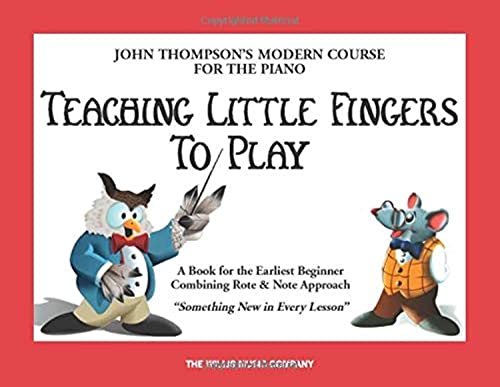
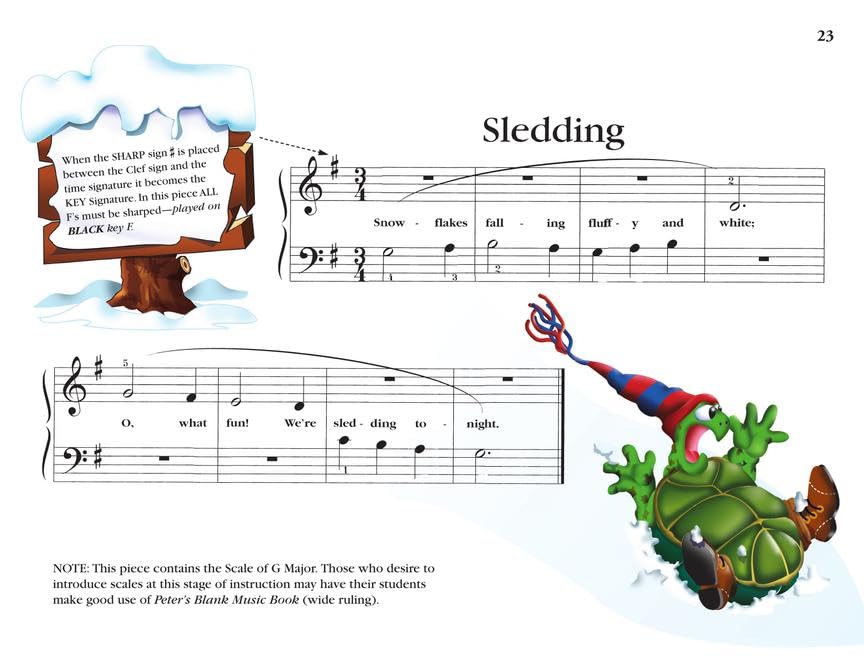

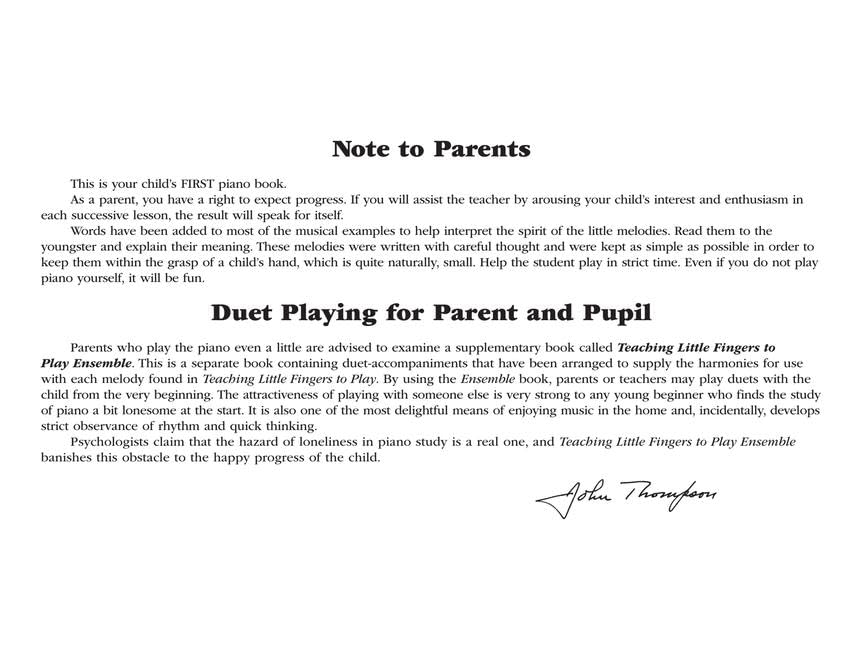
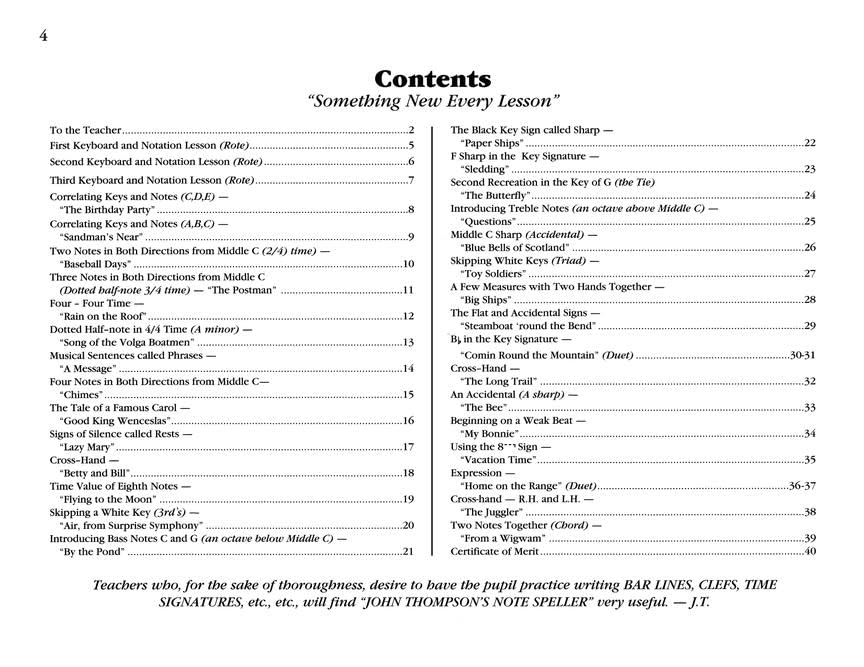
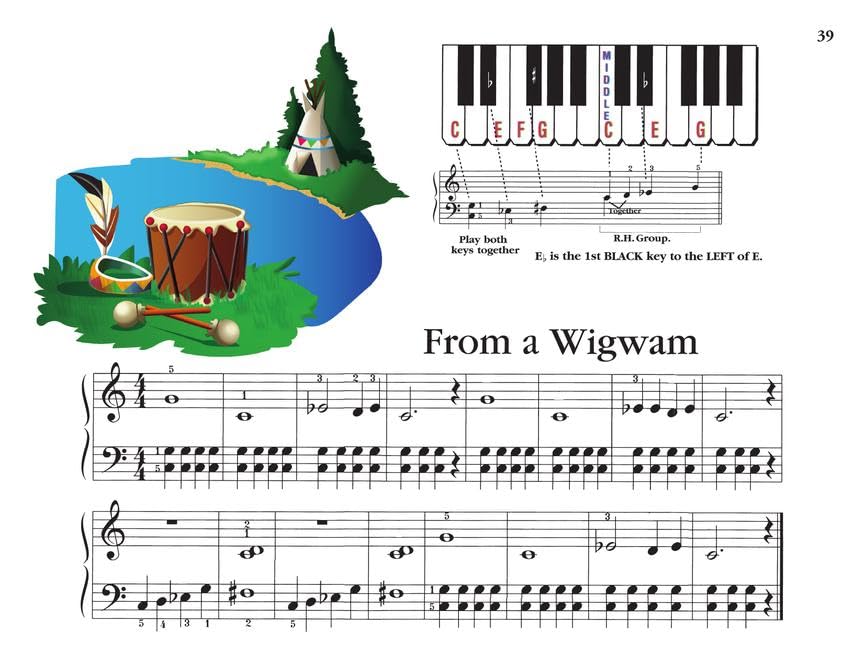

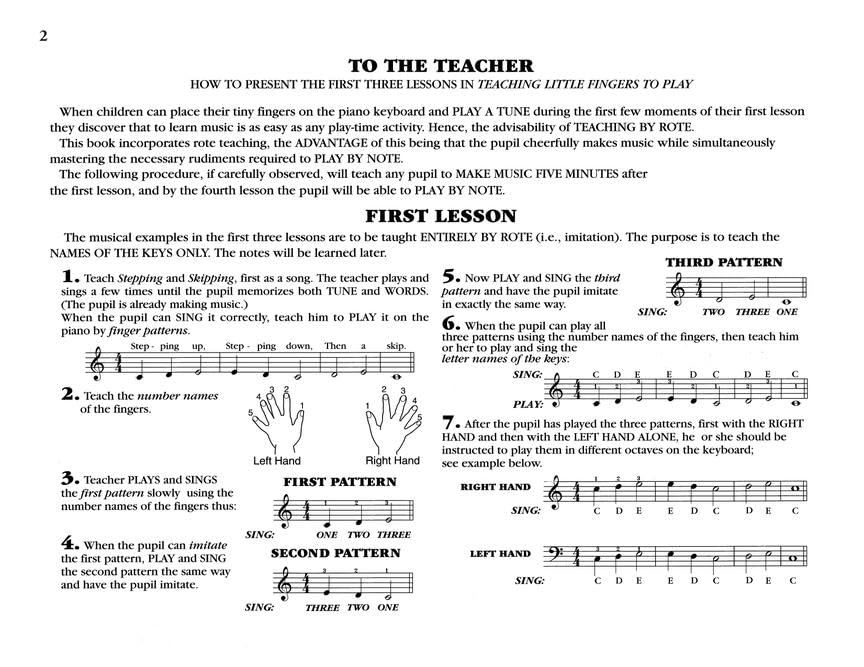


Teaching Little Fingers to Play: A Book for the Earliest Beginner (John Thompsons Modern Course for The Piano) [Thompson, John] on desertcart.com. *FREE* shipping on qualifying offers. Teaching Little Fingers to Play: A Book for the Earliest Beginner (John Thompsons Modern Course for The Piano) Review: Teaching Little Fingers to Play: A book for the Earliest Beginner by John Thompsons - Teaching Little Fingers to Play: A book for the Earliest Beginner by John Thompsons is a wonderful addition to any piano teacher's collection. The book is laid out in an easy-to-follow design. A step-by-step process helps engage beginning students in a fun fashion to be able to read and play the songs from the book. I highly recommend this "Teaching Little Fingers to Play: A book for the Earliest Beginner" by John Thompsons to everyone. I will be purchasing this book again for other students also. Thank you for reading this review. Sincerely, Jeanette L Lane Review: My child loves this book and that's what matters - Her teacher has used the John Thompson series to successfully teach piano for decades. Yes, decades. This Primer is so wonderfully sweet with many fun songs to play. My daughter is also very excited about the new books written to go along with it, Teaching Little Fingers to Play Disney Songs, and TLFTP Hymns, Christmas Carols, and there are so many more. There is even a book specific to Jewish songs. About the numbers...if you actually take time to READ the beginning pages of the book, it gives you a very specific method to ensure that your children begin by playing the proper keys using finger numbers. Then the book explains how to transfer the child to playing the notes only. Basically, just play the song once with the numbers, then play the song from then on SAYING the NOTES while playing the keys. This has worked beautifully for my daughter and she is absolutely NOT relying on the numbering. Really, this book is so likable with fun, familiar songs. Highly, highly recommended. Also, this is not for "the earliest beginner," really...just so you know, a 5 or 6 year old should start with John Thompson's Easiest Piano Course. That book moves SUPER slowly and gently, introducing all the note names one by one. This book is actually for older beginners (maybe 7 or 8 and older) who can pick things up more quickly. WE LOVE THIS BOOK


| Best Sellers Rank | #4,426 in Books ( See Top 100 in Books ) #2 in Music Exercises #11 in Piano & Keyboards #25 in Music Instruction & Study (Books) |
| Customer Reviews | 4.7 4.7 out of 5 stars (4,694) |
| Dimensions | 11 x 0.11 x 8.5 inches |
| Edition | John Thompson's Mode |
| ISBN-10 | 0877180202 |
| ISBN-13 | 978-0877180203 |
| Item Weight | 4.8 ounces |
| Language | English |
| Print length | 40 pages |
| Publication date | July 1, 2005 |
| Publisher | Willis Music |
| Reading age | 4 - 9 years, from customers |
J**E
Teaching Little Fingers to Play: A book for the Earliest Beginner by John Thompsons
Teaching Little Fingers to Play: A book for the Earliest Beginner by John Thompsons is a wonderful addition to any piano teacher's collection. The book is laid out in an easy-to-follow design. A step-by-step process helps engage beginning students in a fun fashion to be able to read and play the songs from the book. I highly recommend this "Teaching Little Fingers to Play: A book for the Earliest Beginner" by John Thompsons to everyone. I will be purchasing this book again for other students also. Thank you for reading this review. Sincerely, Jeanette L Lane
C**R
My child loves this book and that's what matters
Her teacher has used the John Thompson series to successfully teach piano for decades. Yes, decades. This Primer is so wonderfully sweet with many fun songs to play. My daughter is also very excited about the new books written to go along with it, Teaching Little Fingers to Play Disney Songs, and TLFTP Hymns, Christmas Carols, and there are so many more. There is even a book specific to Jewish songs. About the numbers...if you actually take time to READ the beginning pages of the book, it gives you a very specific method to ensure that your children begin by playing the proper keys using finger numbers. Then the book explains how to transfer the child to playing the notes only. Basically, just play the song once with the numbers, then play the song from then on SAYING the NOTES while playing the keys. This has worked beautifully for my daughter and she is absolutely NOT relying on the numbering. Really, this book is so likable with fun, familiar songs. Highly, highly recommended. Also, this is not for "the earliest beginner," really...just so you know, a 5 or 6 year old should start with John Thompson's Easiest Piano Course. That book moves SUPER slowly and gently, introducing all the note names one by one. This book is actually for older beginners (maybe 7 or 8 and older) who can pick things up more quickly. WE LOVE THIS BOOK
M**N
Great
I love how it teaches the parent while teaching the kids. It’s a great bonding experience for the both of you. Starts you in the absolute beginning and increases difficulty over time. Definitely worth the buy
K**A
Great fast-paced primer for beginners, but can make students rely heavily on finger numbers
This is a great book for an older beginner (5th, possibly 6th and up). It goes through all the basics, but gets them playing "real songs" a lot quicker than the method I use with my younger kids. Be aware that you really do need to look ahead in the book and plan out lessons (all the time really, but especially with this book). Because it moves so quickly, it's important that you have other activities and theory work to back up these basic principles so your student has a good grasp on them before moving onto John Thompson First Grade Level or whatever level 1 book you choose to move them into. The only other drawback to this book is that many students begin to rely heavily on reading finger numbers instead of the notes (which is also true for JT First Grade). I normally move my students into a different method after this primer so that they are forced to ready by note names and intervals rather than finger numbers, for obvious reasons. If you have a student who is not bothered by the excess number of finger numbers and can read the note names and intervals very well, by all means--go with the JT books. I've just found that a struggle with several of my students, and it was easily solved by switching to a different method for level 1 that used minimal finger numbers.
E**R
Good as should be
Good as should be
G**N
Teaching Little Fingers To Play
I absolutely love how this teaches note reading from the start and avoids having students get stuck with those blasted finger numbers! How many of us as teachers have asked a student what note a piece begins with, only to hear them plaintively ask... "What's the finger position?". As if the lines and spaces mean nothing. No matter how hard I tried to teach notes with the "finger position" methods i always got that question. Thompson avoids that nonsense all together with a firm knowledge of notes. I use the Schaum Pre A "Green Book" for supplementary music. It also uses the note system from the beginning so it doesn't confuse the student. I also like the audio included with each piece in 2 different tempos. It helps the student learn to play along with the background music and stay in rhythm when they practice without you at home and also work towards a goal of playing the upper tempo. I usually move the student to the next lesson when they can confidently play the current one at the slower tempo. As the begin the new lesson, they continue to play the previous one until they can confidently play it at the upper tempo. Remember to have them play all the earlier lessons! They love playing music they know and it helps them gain fluidity in playing as well as teaching them to transpose by having them change hand position to play an old song in a new key. Hand position is not a bad thing when teaching transposition especially if you have them play the 5-finger scale of each new piece. The songs in the book rarely go out of a 5-finger hand position so starting transposition is easy and makes it so simple when the move into the First Grade Book. And for Heaven's Sake! Avoid that "Teaching Little Fingers To Play More" book like the plague that it is! It is NOT written by Thompson. There is a Schaum book that is great if your student needs a little more confidence before moving into the First Grade Thompson. If the teacher moves carefully and spends enough time working hands separately at first, the First Grade Book holds no terrors.
B**P
Good for very young beginner.
I find this to be an excellent book to be used for the piano student not ready for most beginner books, not at a level to read the notes, recognize the types of noted, key signature study, etc. Student that really wants to learn to play but not ready for most beginner books.
K**.
I’m a senior citizen now but this my first book I started piano lessons with in sixth grade
A great way to learn piano
R**S
Lo que es! Llego en tiempo y forma, por el lugar del que se envía, pues viene en inglés pero me agrada aprender los conceptos musicales en inglés aprovechando la ocasión. No queda más que practicarlo y después llevar ese conocimiento a mis hijas para quienes lo he comprado!
I**D
Mia figlia ha iniziato a suonare da pochissimi mesi e ha 7 anni. Con questo libro riesce ad andare avanti nello studio delle pagine anche da sola. E ogni volta giorno migliora.
A**R
As a music teacher I would recommend this for beginner piano students aged 6-8. The work is simple and we'll graded teaching them to read and play music right from day 1
B**D
It’s a good teaching book for young beginners.
C**N
Always was and always is the best little teaching book ever. This time I will teach my GREAT grand daughter.
Trustpilot
2 months ago
3 weeks ago