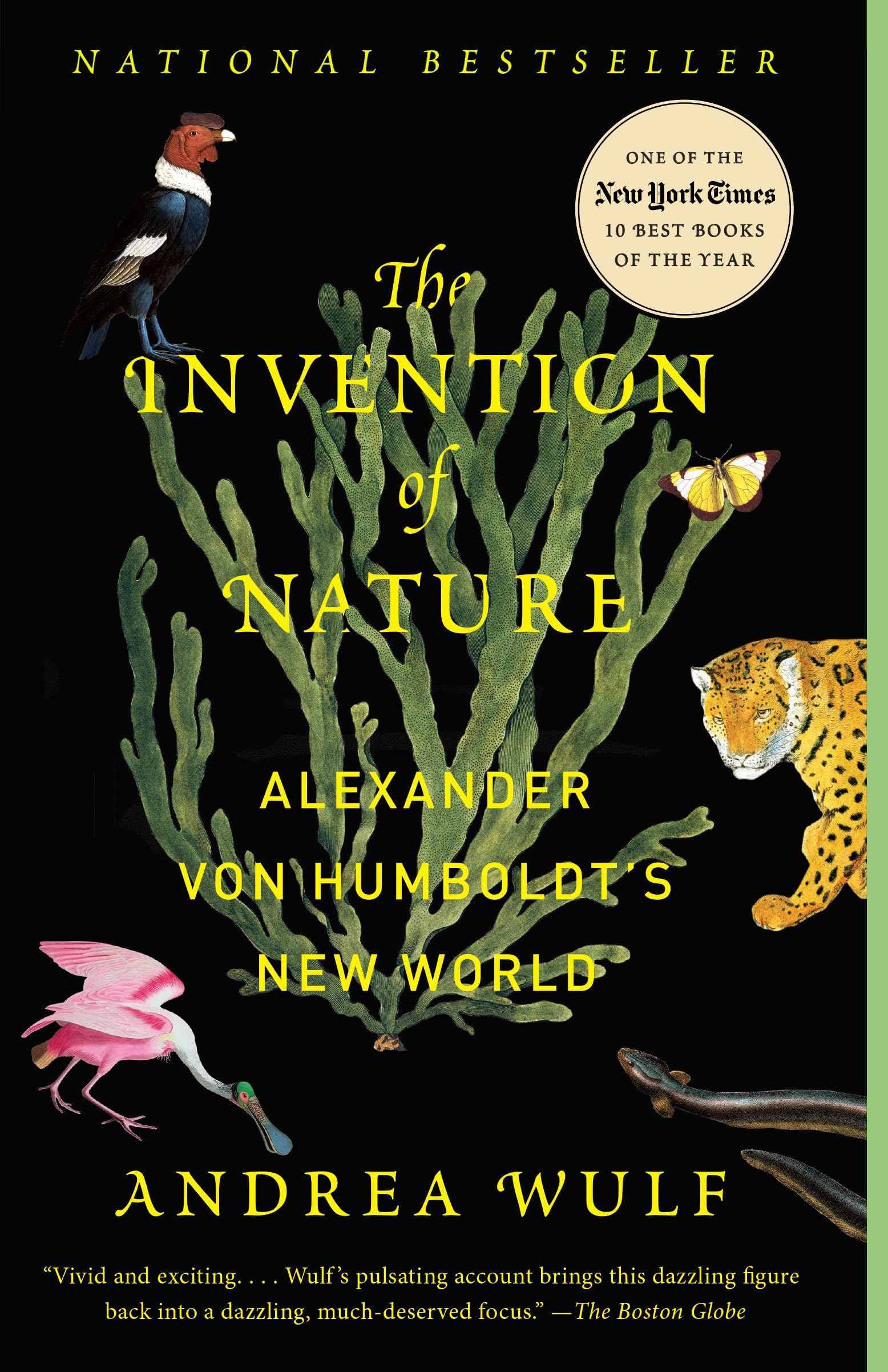

Buy The Invention of Nature: Alexander von Humboldt's New World on desertcart.com ✓ FREE SHIPPING on qualified orders Review: Comments on Andrea Wulf's The Invention of Nature: Alexander von Humboldt's New World - Andrea Wulf’s biography of Alexander von Humboldt is a beautifully written work that restores our awareness of a life that paradoxically seems largely forgotten and yet is somehow familiar once this wonderful book is read. And to classify this work as a biography is not totally accurate in that it is a biography, a history of science, and a commentary on the interconnectivity of life from the viewpoint of both aesthetics and science. As well, it documents how von Humboldt influenced a number of other individuals who are now famous and better known to us. Wulf gives us great detail of the life of the fascinating man Alexander von Humboldt. She conveys an insight into how his early life molded him into a frenetic, driven scholar with a lifelong thirst for both knowledge and adventure. Perhaps more commonplace in the late 18th century than today, he became vitally interested in what would become later known as “scientific specialties” such as geology and botany as well as in aesthetics. His early self-concept led to his first and most monumental journey, along with the botanist Aime Bonpland, across the northern reaches of South America lasting 5 years and led to his view of nature as an interconnected force, a view that would shape the remainder of his long life. While his insights now resonate with us, this book makes clear that his comprehensive understanding of nature was totally new at the time and that the reason it is now familiar to us was his tremendous influence on others to follow. Wulf brings into clear view the strong friendship between the youthful von Humboldt and the poet Johann von Goethe and how each influenced the other. Von Humboldt developed an appreciation of the artistic side of life through Goethe while Goethe developed a fascination with science through von Humboldt that influenced the writing of his Foust. Later in life, both because of his own fame and through his brother (a foreign minister of Prussia), von Humboldt would meet many other famous people, with wonderful vignettes developed by Wulf. One such acquaintance was Simon Bolivar, whom he met in Rome well after his own travels in South America. Bolivar, born in Spanish Venezuela, would seem to have been inspired by von Humboldt’s poetic vision of South American landscapes and would return to his native land as liberator and later, sadly, as a dictator. Even during his long years of brutal warfare he was said to have maintained a strong interest in nature that had been inspired by von Humboldt. Von Humboldt’s view of colonial South America went far beyond the aesthetic appreciation of the landscapes and of the amazing scientific discoveries. He spoke out against the evils of colonialism, and slavery. He also noted how deforestation adversely affected the water table, animal populations, the atmosphere and much more. For this he became known as the founder of environmentalism. Von Humboldt’s scientific studies in Europe, South America and later the Asiatic part of Russia are well chronicled and led him to develop his view on how all of life is interconnected and part of one vital force. For instance, he invented the concept of atmospheric isotherms, showing how landmasses and oceans affect weather patterns, developing the field of meteorology. Late in life he wrote the five-volume work he called Cosmos. Based on his life’s work, the word “ecology” was invented. In the latter portion of this work, Wulf speaks of several of the more famous people heavily influenced by von Humboldt. While some might feel that this turns a wonderful biography into an unnecessarily long book, I feel this adds a most worthwhile dimension to her work. And just as von Humboldt himself saw the interconnections across all of nature, in similar fashion Wulf brings out the interconnections between the life and writings of von Humboldt and those individuals influenced by him who have so greatly influenced and even shaped our modern views of science and nature. I only became aware of The Invention of Nature through a review published in the Wall Street Journal that focused on the landscape painter Frederic Edwin Church and his painting called “In the Heart of the Andes”. Church had been motivated by von Humboldt to appreciate both the emotional impact on us from nature and its scientific aspects. He trekked through some of the regions of South America previously covered by von Humboldt and Bonpland and painted this landscape that was so detailed that botanists could discern the name of each plant and tree on the canvas. It was first displayed in 1859 just weeks before von Humboldt’s death. This review led me to read the Invention of Nature. Wulf goes on to describe the massive influence by von Humboldt on so many others. Charles Darwin had a copy of von Humboldt’s Personal Narrative with him during the voyage of the HMS Beagle and would later refer to von Humboldt in his own writings. Henry David Thoreau read Personal Narrative, Views of Nature and Cosmos and mentioned von Humboldt often in his journals. He narrowed his own view of nature to that of Walden Pond but tried to make it as comprehensive and interconnected as that of von Humboldt’s cosmos. George Perkins Marsh read all of the major writings of von Humboldt and was very motivated by him, becoming the prototypical conservationist and writer of Man and Nature. Ernst Haeckel was a German physician, artist and zoologist who was enthralled with von Humboldt. He studied microscopic marine life and then developed them into amazing works of art that led to the Art Nouveau movement and monism. And finally John Muir was deeply influenced by von Humboldt. He owned and heavily studied all of von Humboldt’s major books and extended von Humboldt’s thoughts on the spiritual connections seen within nature. Beyond the conservationism of Marsh, Muir advocated for protection of our environment and of course founded the Sierra Club and contributed to the development of our National Parks system. All of this is brought out in fascinating detail in the latter portions of Wulf’s book. In conclusion, The Invention of Nature is a description not only of a remarkable life but also of how we have come to think of environment, ecology, and nature itself. From it, I feel, we can be inspired to appreciate the nature that surrounds us from small to great, to widen our own views in a way that can bring a revitalization to ourselves and to cause us to advocate for the environment. I believe Alexander von Humboldt would be extremely proud of The Invention of Nature. By Jerry W. Jackson, Birmingham, Alabama Review: A must read! - Amazing book. Well written and informative about this man who discovered so much about nature. My book club loved it!


| Best Sellers Rank | #23,638 in Books ( See Top 100 in Books ) #16 in Environmental Science (Books) #25 in Environmentalism #51 in Traveler & Explorer Biographies |
| Customer Reviews | 4.6 4.6 out of 5 stars (4,940) |
| Dimensions | 5.12 x 1.15 x 7.96 inches |
| Edition | Reprint |
| ISBN-10 | 0345806298 |
| ISBN-13 | 978-0345806291 |
| Item Weight | 12.8 ounces |
| Language | English |
| Print length | 576 pages |
| Publication date | October 4, 2016 |
| Publisher | Vintage |
C**J
Comments on Andrea Wulf's The Invention of Nature: Alexander von Humboldt's New World
Andrea Wulf’s biography of Alexander von Humboldt is a beautifully written work that restores our awareness of a life that paradoxically seems largely forgotten and yet is somehow familiar once this wonderful book is read. And to classify this work as a biography is not totally accurate in that it is a biography, a history of science, and a commentary on the interconnectivity of life from the viewpoint of both aesthetics and science. As well, it documents how von Humboldt influenced a number of other individuals who are now famous and better known to us. Wulf gives us great detail of the life of the fascinating man Alexander von Humboldt. She conveys an insight into how his early life molded him into a frenetic, driven scholar with a lifelong thirst for both knowledge and adventure. Perhaps more commonplace in the late 18th century than today, he became vitally interested in what would become later known as “scientific specialties” such as geology and botany as well as in aesthetics. His early self-concept led to his first and most monumental journey, along with the botanist Aime Bonpland, across the northern reaches of South America lasting 5 years and led to his view of nature as an interconnected force, a view that would shape the remainder of his long life. While his insights now resonate with us, this book makes clear that his comprehensive understanding of nature was totally new at the time and that the reason it is now familiar to us was his tremendous influence on others to follow. Wulf brings into clear view the strong friendship between the youthful von Humboldt and the poet Johann von Goethe and how each influenced the other. Von Humboldt developed an appreciation of the artistic side of life through Goethe while Goethe developed a fascination with science through von Humboldt that influenced the writing of his Foust. Later in life, both because of his own fame and through his brother (a foreign minister of Prussia), von Humboldt would meet many other famous people, with wonderful vignettes developed by Wulf. One such acquaintance was Simon Bolivar, whom he met in Rome well after his own travels in South America. Bolivar, born in Spanish Venezuela, would seem to have been inspired by von Humboldt’s poetic vision of South American landscapes and would return to his native land as liberator and later, sadly, as a dictator. Even during his long years of brutal warfare he was said to have maintained a strong interest in nature that had been inspired by von Humboldt. Von Humboldt’s view of colonial South America went far beyond the aesthetic appreciation of the landscapes and of the amazing scientific discoveries. He spoke out against the evils of colonialism, and slavery. He also noted how deforestation adversely affected the water table, animal populations, the atmosphere and much more. For this he became known as the founder of environmentalism. Von Humboldt’s scientific studies in Europe, South America and later the Asiatic part of Russia are well chronicled and led him to develop his view on how all of life is interconnected and part of one vital force. For instance, he invented the concept of atmospheric isotherms, showing how landmasses and oceans affect weather patterns, developing the field of meteorology. Late in life he wrote the five-volume work he called Cosmos. Based on his life’s work, the word “ecology” was invented. In the latter portion of this work, Wulf speaks of several of the more famous people heavily influenced by von Humboldt. While some might feel that this turns a wonderful biography into an unnecessarily long book, I feel this adds a most worthwhile dimension to her work. And just as von Humboldt himself saw the interconnections across all of nature, in similar fashion Wulf brings out the interconnections between the life and writings of von Humboldt and those individuals influenced by him who have so greatly influenced and even shaped our modern views of science and nature. I only became aware of The Invention of Nature through a review published in the Wall Street Journal that focused on the landscape painter Frederic Edwin Church and his painting called “In the Heart of the Andes”. Church had been motivated by von Humboldt to appreciate both the emotional impact on us from nature and its scientific aspects. He trekked through some of the regions of South America previously covered by von Humboldt and Bonpland and painted this landscape that was so detailed that botanists could discern the name of each plant and tree on the canvas. It was first displayed in 1859 just weeks before von Humboldt’s death. This review led me to read the Invention of Nature. Wulf goes on to describe the massive influence by von Humboldt on so many others. Charles Darwin had a copy of von Humboldt’s Personal Narrative with him during the voyage of the HMS Beagle and would later refer to von Humboldt in his own writings. Henry David Thoreau read Personal Narrative, Views of Nature and Cosmos and mentioned von Humboldt often in his journals. He narrowed his own view of nature to that of Walden Pond but tried to make it as comprehensive and interconnected as that of von Humboldt’s cosmos. George Perkins Marsh read all of the major writings of von Humboldt and was very motivated by him, becoming the prototypical conservationist and writer of Man and Nature. Ernst Haeckel was a German physician, artist and zoologist who was enthralled with von Humboldt. He studied microscopic marine life and then developed them into amazing works of art that led to the Art Nouveau movement and monism. And finally John Muir was deeply influenced by von Humboldt. He owned and heavily studied all of von Humboldt’s major books and extended von Humboldt’s thoughts on the spiritual connections seen within nature. Beyond the conservationism of Marsh, Muir advocated for protection of our environment and of course founded the Sierra Club and contributed to the development of our National Parks system. All of this is brought out in fascinating detail in the latter portions of Wulf’s book. In conclusion, The Invention of Nature is a description not only of a remarkable life but also of how we have come to think of environment, ecology, and nature itself. From it, I feel, we can be inspired to appreciate the nature that surrounds us from small to great, to widen our own views in a way that can bring a revitalization to ourselves and to cause us to advocate for the environment. I believe Alexander von Humboldt would be extremely proud of The Invention of Nature. By Jerry W. Jackson, Birmingham, Alabama
T**R
A must read!
Amazing book. Well written and informative about this man who discovered so much about nature. My book club loved it!
M**E
Good biography & argument for understanding nature passionately
On first reading, I made the mistake of taking Wulf's book primarily as a biography of Alexander von Humbolt: It is that (and a good one), but foremost it is an argument for a new understanding of nature. I should have paid more attention to the first part of the book's title: "The Invention of Nature" Alexander von Humbolt's New World. Ms. Wulf is making the case that a proper understanding (not simply appreciation) of nature includes, perhaps requires, a passionate enthusiasm for nature, as well. She shows Humbolt as the embodiment of that new understanding -- romantic and poetic, as well as scientific. She then traces his influence in subsequent scientists, including Darwin, but even more in Thoreau, Marsh, Haeckel and Muir --- partly in their science, but particularly in their embrace of his enthusiasm. There is an inevitable tension between writing a personal biography and analyzing the intellectual/cultural history of an idea, i.e., a new "invention" or way of thinking about nature. On the whole, Wulf succeeds on both counts, and her book is both a pleasure to read and a genuine contribution to our history of thinking about nature. But the tension in her purposes does require some concessions. Wulf deserves applause for her effort to restore Humbolt to his rightful place "in the pantheon of nature and science." The man was nothing short of remarkable and recognized as such in his time. It is unfortunate, and curious, that his fame has been largely eclipsed in the last century. Partly, this is a matter of accessibility: Not only was he remarkably prolific, but much of the work is simply unavailable to English-language readers. Some recent popular books have helped, e.g., Gerhard Helferich's 2011 "Humbolt's Cosmos," but much is either narrowly focused, outdated or unavailable outside research libraries. Wulf's remedy is the best contemporary biography of Humbolt, and that alone would make this book worth reading. Her particular service, however, is in providing an excellent summary of his principle ideas and new way of thinking about nature. From this foundation, she proceeds to make a strong case for his influence on subsequent generations of scientists and nature writers. Because Wulf is focused on Humbolt as the progenitor of a new ("invented") way of thinking about nature, a more comprehensive, and perhaps more complex, examination of the man gives way to the theme of influence on successors. This is not a defect in the book: It is a choice by the author to focus on the theme of a more subjective and impassioned understanding of nature, as embodied by Humbolt and then his successors. But it does mean that a more purely biographical "life" of Humbolt remains to be written. Wulf's shifting focus from the man to the theme creates some tension. At times, Wulf works so hard at restoring a deserved luster to Humbolt and his ideas that she may go too far. One might get the impression not only that all his ideas were original, but that much (if not most) of subsequent nature science was derivative of Humbolt, from Darwin's thinking on evolution to contemporary climate science. Indeed, many of Humbolt's astute observations can find an echo is contemporary nature science. But many of his ideas regarding geology, species and the complex interaction in nature were "in the air" and under discussion at the time. In addition to some genuinely original concepts (e.g., climate bands or zones), Humbolt's great contribution was to focus and lend excitement to this new thinking. No small thing that! Moreover, Humbolt certainly was an inspiration to many subsequent (but equally original) scientists -- my own first inklings of Humbolt's influence came from reading Darwin's account of being inspired by Humbolt's South American explorations. In short, Humbolt not only made major substantive contributions to science, but his remarkable travels and passion for nature inspired many then and since. But how much contemporary science derives from his work, and why his contribution is nowadays less appreciated, is a larger and still open question. This points to an additional caveat: In making the case not only for Humbolt's historical influence but contemporary relevance, Wulf sometimes leaves the impression that we are listening to her pronounce on contemporary issues, e.g., climate change, in Humbolt's voice. As noted, Wulf is making an unapologetic case for a subjective understanding and appreciation of nature. When Wulf relates the tale of an occasion when John Muir "jumping around and singing to 'glory in it all" derides a hiking companion for evidently too "cool" an appreciation of nature, she leaves no doubt where her sympathies lie. Fair enough, so long as one recognizes that this stance occasionally colors her treatment of Humbolt, as well as his successors. Since I suspect that most prospective readers are (like me) inclined to sympathize, this is unlikely to be a problem for most. A final, non-trivial recommendation: In addition to being strong on substance, Wulf writes a very nice and expressive style, highly readable and nearly always interesting. This is a needed and well-done biography. As to Wulf's broader argument about the legitimacy and importance of including subjectivity and passion in our scientific understanding of nature, she makes a strong case and (needless to say) makes it passionately. [Note: I re-wrote this review significantly upon reflecting on some thoughtful comments and responses by other readers -- thanks!]
S**N
One of the most engrossing wonderful and an epic of science. About the man who almost singlehandedly spawned the understanding of ecology, climate change and even evolution. This book is beautiful in it's conception and epic in it's scope. Alexander Von Humboldt is one of the greatest personalities science has ever produced. An advocate of human rights and liberty and a believer of free government he found his peers in the founding fathers of America. A lot of American cities are named after Humboldt. It is said and rightly so by the king of Prussia that Humboldt was, "The greatest Man since the deluge".
H**N
A splendid account of Alexander von Humboldt and his importance for the environmental movement. Well informed and elegantly written.
J**Y
My friend wanted it for her birthday. Loved it
T**Z
Öncelikle bu kitabı bu fiyata bulabilmek güzel… Sonrasında hızlı kargo ve güzel paketleme memnuniyet verici… Teşekkür ederim…
W**Y
Review of ‘Invention of Nature: Alexander von Humboldt’s New World’ by Andrea Wulf This is an extraordinary work that looks in detail into the life and vision of a remarkable scientist of the late 18th and 19th century, a rare polymath and his place in scientific history. Alexander von Humboldt was a radical thinker with insightful and revolutionary ideas about nature that had everything to do with rational questions and empirical fact finding, as divorced from the divine origin of fixed species immune to the dynamics of nature. Here the author deftly takes pre-evolutionary ideas proposed by Humboldt and weaves them into the thinking of other 19th Century scientists, such as Charles Darwin, Ernst Haeckel, Henry David Thoreau, George Perkins Marsh, and John Muir, amongst others, stressing how Humboldt’s ‘Personal Narrative’ played such a prominent role in their evolving theories about nature. More importantly, perhaps, Humboldt’s vision that all human endeavors are deeply connected to nature, as Wulf expertly shows, are as important today as when they were first proposed by the great scientist who feared humankind might destroy itself as it slowly impacted vast tracts of land upsetting the rhythms of nature, many of which could not be reset over time. With climatic change looming as one of the greatest threats facing humans, a force largely unleashed by unthinking human greed and ignorance, Humboldt’s multi-disciplinary approach to scientific problems is all the more germane today than in the 19th century. I strongly recommend this book to anyone interested in environmental science and the future of the human species. W.C. Mahaney, author of ‘Ice on the Equator’,‘Hannibal’s Odyssey: Environmental Background to the Alpine Invasion of Italia’; and Bill Mahaney author of ‘The Warmaker-Hannibal’s Invasion of Italia and the Aftermath’ (fiction).
Trustpilot
2 weeks ago
2 weeks ago