Full description not available
R**Z
Superb.
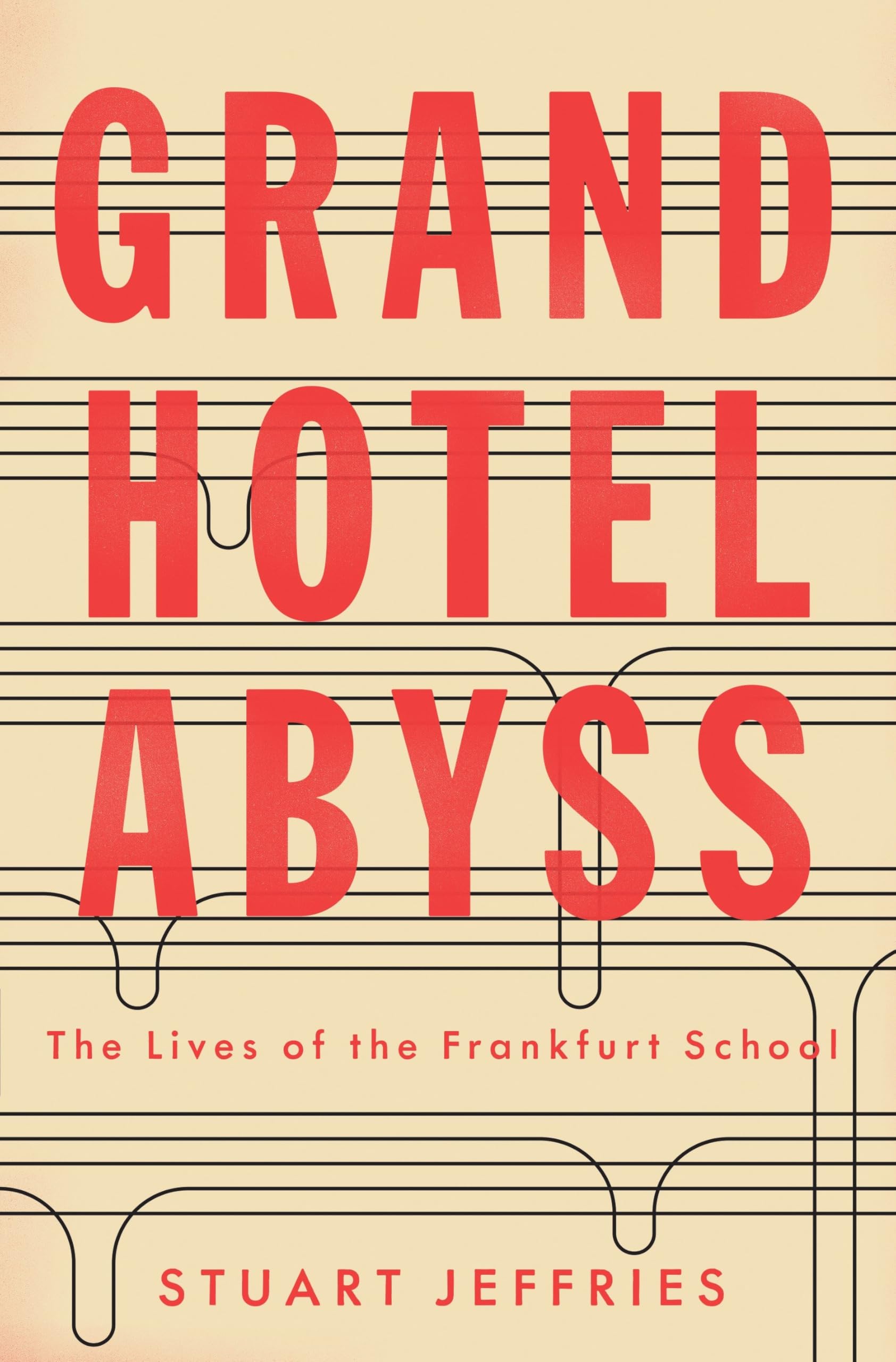
This is a superb book on a complex subject. The title comes from Lukacs, who suggested that the members of the Frankfurt School—Adorno, Horkheimer, Benjamin, Marcuse, et al. lived in a lovely hotel from whose windows they contemplated what, for them, was an abyss. The group consisted of social scientists who attempted to draw inspiration from Marx and find an alternative to capitalism. They did so during parlous times. The experiences of the ‘proletariat’ under Soviet communism and National Socialism were anything but encouraging. As we recovered from the second world war the successes of capitalism neutralized any desire for revolution; at the same time, the emoluments of capitalism helped to conceal the manner in which it could bring subtler forms of alienation. The book is organized historically and formally ends with the complex departures from Frankfurt School orthodoxy represented by the thought of Habermas. In a kind of coda the author ends with a very clever look at Jonathan Franzen’s The Corrections, in particular the scene in which Chip Lambert liquidates his library, selling off his collection of Frankfurt School books and more recent books of capital-T Theory. Chip needs some money to impress his new girlfriend and he has departed from the groves of academe to seek a career in screenwriting. Jeffries uses this passage as a springboard to an incisive discussion of Critical Theory in the 21st century.The reader should be wary of some of the book’s jacket blurbs and other reviews. They speak of the book as “an exhilarating page-turner,” and as “funny.” Jeffries has a great sense of the ironic and a full appreciation of the contradictions inherent in the Frankfurt School ‘project’, but this is not a leg-slapping beach book. This is serious and significant (but not ponderous or obscurantist) intellectual history. Similarly, his subtitle, “The Lives of the Frankfurt School” is spot-on but potentially misleading. It does indeed trace the various incarnations of the School and the writings of its members and it does provide trenchant anecdotes about the members’ personal lives, but this is not a Kitty Kelly exposé and it does not focus on the members’ lives to the exclusion of their work. I would say that it offers the perfect balance; every book on philosophy needs to balance out the personal experiences of a thinker with that individual’s thought. It is important to know that Hume was a genial and decent fellow who gave up professional opportunities in order to be faithful to his beliefs, just as it is important to know that Kant (like Jane Austen, e.g.) never travelled to a significant degree and whose favorite music (despite the Critique of Judgment’s vast influence on aesthetic theory) consisted of Prussian marches.The best feature of this book is the author’s balanced viewpoint. It is often said that great biography requires personal sympathy on the part of the author (though Robert Caro stands as a rather prominent exception), but that sympathy must be balanced with objectivity. Jeffries sees all of the foibles of the Frankfurt School, commenting on Benjamin in the following way:“If the Frankfurt School was the last hurrah of German romanticism, then Benjamin was its emblem, revealing the group in all its contradictions—Marxists without party, socialists dependent on capitalist money, beneficiaries of a society they sniffily disdained and without which they would have had nothing to write about” (p. 167).At the same time he concludes with a discussion of contemporary capitalism, saying that in “such a customized culture, one that abolishes serendipity, makes a mockery of dignity and turns human liberation into a terrifying prospect, the best writings of the Frankfurt School still have much to teach us—not least about the impossibility and the necessity of thinking differently” (p. 392). While Jeffries focuses on large, global corporations, I think of a phenomenon closer to home. As I write this, reports are circulating about the University of Virginia’s desire to cut their library’s shelf space by 40-70%. If one seeks an example of an assault on serendipity, one need look no farther than what the contemporary university is doing to itself.My only reservation concerning the book is the fact that it has no illustrations, except for a wonderful picture of Adorno on the book’s spine, extending his wrist and offering a ‘thumb’s down’.Highly recommended.
N**D
Best Introduction to it's Subject
I have been interested in the Frankfurt School for a long time. Adorno, Benjamin, and Marcuse are thinkers not just important to the left, but to anyone interested in the history of twentieth century thought. The Dialectical Imagination: A History of the Frankfurt School and the Institute of Social Research, 1923-1950 (Weimar and Now: German Cultural Criticism) has long been the best overview of the scholarship produced by these remarkable intellectuals. Jeffries has written an essential new overview of the Frankfurt School. First off the writing is excellent, and I don't believe the sophistication of the ideas is dumbed down at all through Jeffries' accessible and entertaining presentation. (However, I would have to defer to people smarter than me on that score). What I can definitely say is that if you have any interest the Frankfurt School thinkers I can't imagine you won't find this book incredibly stimulating and enlightening. Jeffries' presentation brought a great deal of clarity to issues that previously confused me, such as Adorno's conception of the "negative dialectic." This book has already helped me to better understand references to Frankfurt School debates in other books and articles. It is a first class synthesis of the work of some very provocative thinkers.
T**G
Informative
Very informative. With critical race theory being discussed so much in America these days, it seems urgent to get a strong grip on critical theory, its predecessor — which by the way is also influencing culture greatly in areas of sexuality, gender, disability, and more.Those who disagree strongly with critical theory (as I do) would do well to read the original sources, not just books and articles opposed to it. While this isn’t an original source written by an influencer within the Frankfurt School, it is at least a sympathetic source, occasionally even obviously biased, and it gives a broad, sweeping, and also very readable overview of the thinking within that group.
Trustpilot
1 month ago
2 weeks ago