


☕ Elevate your mornings with Kenya’s finest – taste the volcanic difference!
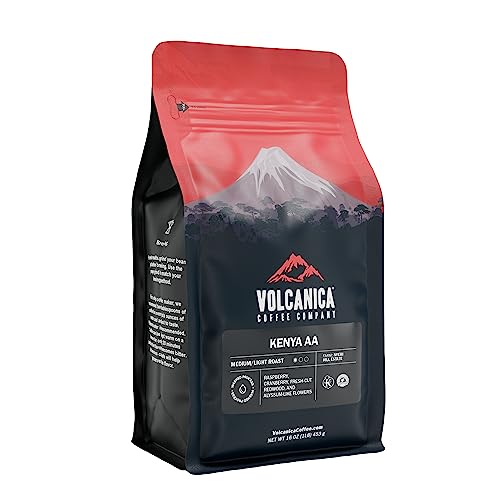
Volcanica Coffee Kenya AA Beans are premium whole beans sourced from East Africa’s volcanic highlands, known for their large size and rich aromatic oils. Medium/light roasted to preserve vibrant acidity and complex flavor notes of raspberry, cranberry, and floral undertones, these freshly roasted beans are sealed immediately to ensure maximum freshness. Ideal for discerning coffee lovers seeking a bright, smooth, and distinctive cup with ethical sourcing and exceptional quality.


| ASIN | B0030IEZUU |
| Additives | Arabica Beans |
| Allergen Information | Peanut Free |
| Best Sellers Rank | #41,315 in Grocery ( See Top 100 in Grocery ) #543 in Roasted Whole Coffee Beans |
| Brand | Volcanica Coffee |
| Caffeine Content | Caffeinated |
| Customer Reviews | 4.1 4.1 out of 5 stars (502) |
| Date First Available | 21 March 2010 |
| Format | Whole Bean |
| Manufacturer | Volcanica Coffee |
| Package Information | Bag |
| Product Dimensions | 7.62 x 6.35 x 22.86 cm; 453.59 g |
| Serving Recommendation | 2 tbsp to 6 oz water |
| Serving Size | 32 tablespoons |
| Special Feature | Kosher Certified |
| Units | 453.00 Grams |
| Weight | 454 g |
Z**C
We just bought a DeLonghi Eletta Explorer for Christmas, and these beans have been excellent with it. The flavor is smooth, rich, and not bitter at all. Fresh aroma and consistent quality — we’ll definitely be buying these again.
P**.
VOLCANICA 7/5/24 EAST AFRICAN COFFEE STATUS & OUTLOOK Based on the USDA’s latest outlook, Africa accounts for 11-12% of the world’s total coffee production, including 10.5% of the Robusta crop and 12.5% of the 23/24 Arabica crop. There are 54 countries in Africa, but only about a dozen produce coffee. While Ethiopia accounts for most of it, the high-quality specialty grade Arabica coffee production is limited to 6-7 East African countries, including some very small countries with problematic histories. Located in the equatorial coffee belt, East African coffee benefits from ideal coffee growing conditions, including volcanic soil, high altitude, climate, access to fresh water and tradition. Conscientious processing, disciplined coops and dedicated smallholder farms also play a role. Coffee is a subjective topic and while good coffee can be found throughout the equatorial belt, the acid rich East African coffees are recognized as the world’s most distinctive. The traditional varieties and grade from Ethiopia (Yirgacheffe) and Kenya (south-central highlands) are particularly noteworthy and often compared. While some would include 100% authentic Kona (miniscule production, hard to get & subject to fraud), the best Tanzanian and the crazy expensive Geisha (Panama & elsewhere) among the best, the coffee from Kenya and Ethiopia is widely viewed as the world’s most consistent, distinctive and recognizable. Regardless of source, it is important to note that countries producing the most distinguished specialty coffee also produce average or worse coffee. In a way, East African coffees are like finalists in a beauty contents, it’s hard to pick the winner. The contest is also dynamic, i.e., this year’s crop winner could be next year’s loser. While the demand for specialty coffee continues to grow, small coffee farmers have been burdened by an exploitive value chain. Living on a few dollars a day, Africa’s small coffee farmers have had little incentive to produce the low yielding crop. If impoverished farmers do not get a bigger piece of the value chain’s pie, higher prices and a shortage of high-quality coffee seem likely. FINDING REPUTABLE RETAIL ROASTERS When purchasing country of origin coffee, the quality will vary by crop year, terroir, region, sub-region, botanical variety, grade, processing, storage, logistics, roast and freshness. Excluding effective auctions, higher prices may not guarantee a better tasting coffee. Storage and freshness are key because coffee does not age well. Indeed, assuming the flavor has not been compromised by logistics and storage, fresh green coffee has a 6–12-month shelf life while fresh roasted whole bean has a 30-day window. As the importer of these potentially fine coffees, IT IS THE RETAIL ROASTER WHO DETERMINES THE QUALITY AND FRESHNESS OF OUR COFFEE. Finding a reputable retail roaster with good customer service, a good menu of single origin coffee and consistency is a Herculean task. Given the limited shelf life, always looming new crop and roaster inconsistency, the ongoing journey never ends. Organic, free trade, direct trade, sustainable, certified, relationships and consistent buying all make sense, but coffee that shoots the lights out on the cupping table is really what the specialty coffee game is about. While there are exceptions, roaster websites are not generally well developed or organized and many do not disclose all the information required to make an informed purchase, including the origin, roast, ounces per bag, processing, etc. Some lack contact information while others fail to follow up on inquiries. Many also use a poor choice of colors and fonts that make the websites difficult to read. Fortunately, many roasters specializing in East African coffee provide more detail and organized information, including the granular source, varietal, processing, roast and roast date. Blends are being hyped by roasters and while they might be relevant to coffee drinkers, they are not very relevant to coffee lovers that already know what they want. Affordability is another issue because there are high-quality single origin coffees that are affordable and offer real value. Indeed, many blends are priced higher than good single origin coffee. VOLCANICA EAST AFRICAN COFFEE: As Good As It Gets Volcanica is currently offering nine East African single origin coffees, including the Kenya AA (Nyeri Hill Estate), the Ethiopia Yirgacheffe and the Tanzania Peaberry (Nitin Estate, Ngorongoro Crater). All are washed and roasted light or medium light. In addition to being among the highest quality East African coffee on the market today, they offer real value. Indeed, Volcanica’s 16 oz pricing is less than what many of their competitors are charging for 12 oz. Volcanica’s website is also developed, organized and provides granular details appreciated by coffee lovers. JBC has also done a good job with their website development and disclosure. I have chased the perfect cup of East African coffee for over forty years and these three are among the best. Will sample the other six in the months ahead and share the results with another post.
S**N
I waited until late in life to get into coffee. I really started enjoying it more when I quit smoking cigarettes 2 months ago. So compared to most I'm very new to the coffee world. I have tried a few other brands in my new quest for that "perfect cup of coffee" - for me. I tend to enjoy Arabica medium pecan roast or medium roast. In my quest, I did a little research and Volcanica kept coming up on "best of" lists. So I thought I'd give it a try, without much more research into the SEO in SEMRush of these lists to see if they were all written by the company or persons for backlinks. The coffee is good, but it is worth the extra money compared to similar products by other coffee houses? Eh, not really... I mean it is good do not get me wrong. It has a great rich flavor in all the right spots. Yet it has a hint of "burnt popcorn" as an aftertaste. I brewed it completely by the book too. I tried several different grinds etc. Then just over halfway through the 1-pound bag, it lost its rich flavor. I started drinking it almost black and it is like drinking water now. Kind of disappointed. I even kept it in an air tight steel container made for storing coffee. I am glad the company is based in Georgia, they have a great range of roasts to choose from. Alas, I must leave the Volcanica land of coffee and continue my quest for that perfect medium roast.
D**D
This Kenyan coffee is LOVELY! It has a rich and smooth flavor, and it's just a treat to enjoy it every morning. It's important to order just one or two bags at a time, otherwise the beans begin to go stale and you will lose some of the taste. I ordered the whole bean and grind it each morning before using a French press. A bit of a production, but SO worth it! In addition, buying this (and I assume versions from other countries) provides much needed support of community programs. I visited a small Kenyan coffee farm while recently in that country, and was so impressed with the local impact of their coffee production. At this particular location, not only were more than one hundred local folks employed, but around 40 of them actually were able to live on the farm itself. So it's a win-win...you get great coffee, and you help deserving families who benefit by the sale. In short, highly, highly recommend.
A**R
All tasting done in French Press 1/15 ratio, 1/12 and 1/9. Roast color: (1green-10french) 6.5. Aroma: Bell pepper. Light sandalwood. Inspection: After sampling other Kenyan AA beans and comparing this offering shows a roasting that is lighter in color. Beans are equal size to other 16-18 screens. Because of the lighter roast “oils” were only a very light sheen if it all. This could be due to lower roast temp or time in the bag. TASTE: 1/15 Very subtle well balanced cup of coffee. No acid bite, no bad flavors, delicate berry and milk chocolate. 1/12 ratio started moving this coffee towards a more preferred flavor profile same as above 1/9 ratio really hit it out of the park for me especially when it cooled in my cup at the end of tasting the pot (ice coffee anyone ?) however that said, I think the bean in this bag is good but the roaster pulled it a bit short. One bag doesn’t tell the whole story here so another couple of tries with this company is recommended.
Trustpilot
2 weeks ago
2 weeks ago