

Desert Online General Trading LLC
Dubai, United Arab Emirates
Desert Online General Trading LLC
Dubai, United Arab Emirates

Full description not available
A**E
A few I enjoyed very much
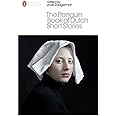
These are short stories written by several different authors, all Dutch origin. A few I enjoyed very much; one seemed pointless and I did not finish; but most I found interesting. The editor had chosen authors from over the decades including one from the 19th century. It seems to me that what they had in common was a sense of irony. This was sometimes expressed very openly and other times very subtly. I wonder if living in a small country where there is always another waterway leads to an expectation of an inevitable ironic point of view. Or was it the editor's search that accounted for it. At any rate, I want to search out more Dutch literature.
T**I
not worth the money
dark, gloomy, unpleasant, nasty stories
R**O
Madness, Death, Dislocation -- This Collection Is a Scream
This book was published in 2016 and collected 36 works by as many authors. All were short fiction except for the last piece, which was autobiographical.The works ranged from 1915 ("Young Titans," Nescio's best-known story) to 2014 (Joost de Vries). Only four of the pieces were published before World War II, the rest covered each decade from the 1950s to the present. Fourteen were from the past 25 years.Included were major postwar writers W. F. Hermans and Harry Mulisch, major naturalist author Louis Couperus, Nescio -- called one of the best Dutch writers of the past 150 years -- as well as Hella Haasse and Cees Nooteboom. There were also younger authors such as Arnon Grunberg and Sanneke van Hassel. Not in the collection: Naturalist author Frans Coenen, Herman de Man, Gerard Reve, Leon de Winter, Connie Palmen, or Tommy Wierenga.In his introduction, the editor stated that the most striking ambition of his anthology was to "give a voice to madness. To show madness itself, lurking beneath the surface of the story. To embody madness in language." This was at least partly to counter the stereotypes of his country as sober, hard headed and practical, Van Gogh's example notwithstanding.Accordingly, there was a generous amount of madness, death and dislocation, especially in the shorter works (Couperus, Bordewijk, Belcampo, Alberts, Hermans, Wolkers, Mulisch, de Jong, Grunberg). Or otherwise absurd or violent situations (Hotz, Campert, Biesheuvel, Nooteboom, Matsier, van Keulen, Uphoff, Bouazza). Sometimes these were mixed with a powerful sense of melancholy at the irrationality of humanity or lost dreams and the passing of time (Emants, Nescio). A smaller number of stories contained more quiet depictions of life (Haasse, 't Hart, Möring, van Hassel, de Vries), awkward relations with a foreign worker (Kellendonk), or robbery and drug addiction (van der Heijden).Although most of the works were set in the Netherlands, a few took place in the Asian colonies (Dermoût, Mulisch) or an imagined land that was based on them (Alberts); in the latter, the narrator's breakdown resembled that in a story by Conrad. One tale, by P. F. Thomèse, imagined the early life of Jacob Roggeveen, an 18th-century Dutch seafarer. Another was set in present-day NYC (Grunberg), and one -- by Moroccan-born Dutch author Hafid Bouazza -- was set in an unnamed Arab country.Several of the most interesting stories in the book were a response to World War II. One of the most striking, before it descended into incoherence, was "Glass" (Hermans), narrated by a man working in a hospital for horrific burn casualties. Some of the lines in it were an astounding mix of image and black humor. The growing sense of unreality in the story echoed a tale by German author Wolfgang Hildesheimer in which a man attended a dinner party at a palace that ended up sinking into the sea. A story by Belcampo, who has been compared to E. T. A. Hoffmann, imagined an unnamed country that had been invaded, with prisoners held in a dungeon while their captors gorged themselves above.Stylistically, the best for this reader was "The Shattering Truth" (Biesheuvel), in which a writer tried to come up with an ending for his tale about a suicide who was being judged in heaven, while the writer's family, neighbors, repairmen and the world kept intruding into the work. This type of narrative mixed with humor recalled a lightly comic tale by Dino Buzzati. A very moving story was "The Portrait" (Haasse), in which a group of siblings had to come to terms with their past and their family's history; centered on an old photograph, it worked on a number of levels. A different kind of tale was "Castle Muider" ('t Hart), a journalist's interview of a muskrat-catcher that touched subtly on history, nature and social change. "The Opera Glasses" (Couperus) expressed well a psychological compulsion.***There was a striking imbalance in the collection between the number of male first-person narrators (17) and female narrators (two), it's too bad the editor couldn't locate more of the latter. Included in this book were seven writers who were women, but most of their stories didn't feature a woman describing her own experience.There were no tales involving close ties between parents and children, and nothing showing any kind of a positive relationship between couples. (Maybe this was to be expected in a collection focused on "giving voice to madness.") Instead, too often the stories discussed a relationship that failed, as told by the man, with the woman as observed by the man. In the editor's own contribution, for example, he imagined the accidental death of his ex-girlfriend, among other things. Eventually, this became monotonous and slightly creepy. Another problem with some of the tales -- with male narrators or without -- was that they were overly cerebral.Still, the collection overall was a worthwhile intro to the world of Dutch lit. Some memorable lines:"See how [people] honor truth as something sacred, and constantly lie to and cheat each other on a small and a grand scale. Notice how everyone is praised after his death, but is disparaged, thwarted and even persecuted during his lifetime. Consider that people regard earthly life as the most valuable thing they possess, the sine qua non for enjoying everything else, and consider how frivolously they behave with that life, risk reckless adventures, shorten it through their behavior, sacrifice it for figments of the imagination like a love, the fatherland or honor . . . it may not be long before the whole of society is constructed on the mode of a gigantic madhouse with a system of wards."". . . his eyes had been burnt out by phosphorus and had finally grown over (he was not dying from his wounds, which had long since healed, but from a pre-existing heart condition), and his lower jaw and tongue had been ripped away.""Her tunic had slipped open and I could see her body, which had taken on the peculiar beauty of a woman who has been had by hundreds of men, a woman who, although young and unscathed, possesses the mature smoothness of the boxwood handle of a burin, polished year in year out by the callused palm of a supple hand.""Her lovely black hair was dark grey and hung in greasy strands, her proud face was the pointy, shrunken skull of a witch . . . . Her hands, which she had laid across her belly, looked like the yellow horny claws of a dead wild duck.""I'll be the Watteau of corpse desecration . . . . She sought to speak but I only heard her bottom teeth tap against the hook like a woodpecker hidden in the woods.""Is it really so despicable of me to conjure up a tragedy [in which the narrator's ex-girlfriend is killed], to daydream about the ambulance, her parents' despair, the brief paragraph in the paper, the obituaries, and finally the low-budget but lovingly produced docudrama. . . shown six months after her death on the hippest commercial TV channel?""The poor man stood up, stretched his stiff legs a bit, took a deep breath of fresh air and headed for the two enormous turds, which seemed to summon him mockingly: Eat us, eat us.""[A] Belgian friend once said it was typically Dutch to throw yourself under a train. Doesn't cost a thing.""A helicopter flew overhead, quite low. I assumed a foetal position and concentrated very contentedly on my own death.""Now he's in an institution. It's very peaceful there and he's calm. He just looks up at the sky, or gazes at the horizon, or sits staring into the sun until his eyes hurt. He's not supposed to do that, but they can't get anywhere with him. They can't get him to talk. His paintings fetch a high price nowadays.""It was a strange time. And when I think about it, I realize that that time must still be happening now, it will last as long as there are young men of nineteen or twenty running around. It's only for us that the time is long since past."Other translations of Dutch works can be found in Modern Stories from Holland and Flanders: An Anthology (1973), Bittersweet Pieces: A Collection of Dutch Short Stories (1991), Nice People: A Collection of Dutch Short Stories (1992), The Dedalus Book of Dutch Fantasy (1993), Amsterdam: A Traveler's Literary Companion (2001), In Praise of Navigation: An Anthology of Modern Dutch Short Stories (2007), and Amsterdam Tales (2017).
D**R
Five Stars
Learning Dutch - found this book to be a great lot of help!
M**A
Three Stars
Good stuff but book damaged and returned.
A**.
Reading this book...
You search in vain for a short story of any quality, perhaps Dutch lives are just too comfortable and safe for originality
M**Y
Five Stars
very good
Trustpilot
1 week ago
3 weeks ago
![The Penguin Book of Korean Short Stories [Paperback] Bruce Fulton Kwon Youngmin Bruce Fulton [Paperback] Fulton, Bruce and Youngmin, Kwon [Paperback] Fulton, Bruce and Youngmin, Kwon [Paperback] Fulton, Bruce and Youngmin, Kwon](https://images-eu.ssl-images-amazon.com/images/I/612ZwyFGC2L._AC_UL116_SR116,116_.jpg)
