We remain fully operational. Our teams are working around the clock to ensure your deliveries continue safely.

DOWNLOAD THE APP


Customer Services
Copyright © 2025 Desertcart Holdings Limited
DOWNLOAD THE APP

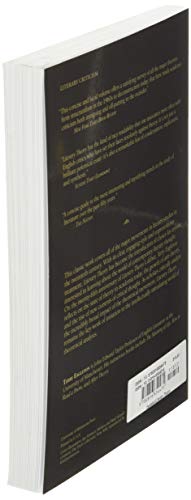
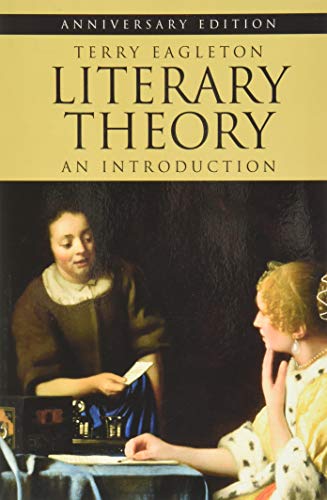
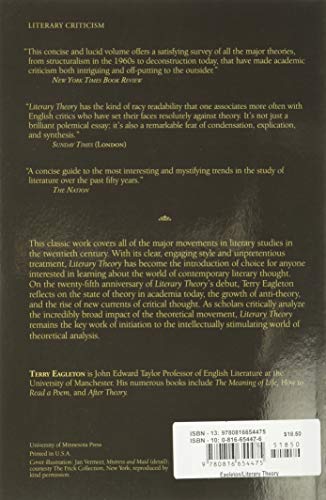
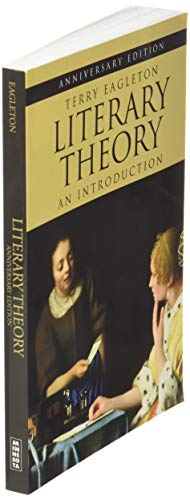

desertcart.co.jp: Literary Theory: An Introduction : Eagleton, Terry: Foreign Language Books Review: Decades ago, I was a disengaged and rebellious student at an average high school in a small town in Pennsylvania. When, under parental pressure, I enrolled in the local state college, I took two semesters of English Composition with a professor who had taken a Ph.D at the University of Edinburgh in Scotland. When the professor discussed literary works such as Hemingway's A Clean Well Lighted Place, Oneill's The Hairy Ape, or Shakespeare's Othello, I was mystified. I understood what he said, but I had no idea where it came from. A friend, whose low-level of educational attainment matched mine, called it "reading between the lines." However one characterized the source of the professor's insights, I couldn't see how he did it, nor could I understand the imagery in the poems we read, or see the humor in Andrew Marvell's reference to "vegetable love" in To His Coy Mistress. I was in trouble. If the first edition of Terry Eagleton's book Literary Theory had been published twenty years earlier, I might have read and understood it (a real long shot!) and learned that the professor was a Leavasite. Nothing insidious about that. It just means that, during a time that the professor himself termed a post-Christian era, he was a proponent of the view that literature was the last refuge of truth, beauty, and the pastoral values that provide sustenance to the soul rather than carefully counted coins to the purse. Beyond that, followers of F.R. Leavis were committed to close reading of the text itself without reference to contextual factors or the biography of the author. Literary works of real quality and lasting value were seen as organic wholes, standing alone, meant to be read in ways that demonstrated their internal coherence and completeness. Literature at its best aimed at a visceral emotional response that made it moving and memorable. However, when structuralism was introduced as a new kind of literary theory, the close reading of Leavis and like-minded students of English literature, was found by some to be wanting. Structuralists were committed to a search for deeply embedded formal organizing principles that could be used to explain why any work of literature took a specific form. Structuralists, notably Claude Levi-Strauss and Roland Barthes, took the view that the form of what we wrote, the shape of what we built, how we organized our social lives were controlled by deep structures intrinsic to our central nervous system and thus inescapable. Structures could be reckoned in terms of binary opposites such as hot/cold, raw/cooked, light/dark and so on. These may seem unduly simple terms with which to understand the formal properties of any social creation, but sophisticated analyses have been done of objects of all kinds, from Shakespeare's history plays to pulp fiction to kinship systems. Following the great French linguist Ferdinand de Saussure, structuralists viewed the connection between a thing and its name as completely arbitrary, a product of historical habit and cultural convention. Thus a dog was called a dog because we had gotten accustomed to it not being called something else, say dressing gown or sandwich. There was no inherent parallel between the signifier dog and the thing to which it referred, the signified. Structuralism's prominence was short-lived, perhaps because of it's sterile formalism. Once you've completed a structural analysis, where does that leave us? What's next? All you've really done is again verified that an analysis in terms of binary opposites can be accomplished, but have you learned anything of value? An open question about another de-contextualized and tightly closed system. Furthermore, a subsequent development, post-structuralism, cast doubt on the solidity and permanence of the binary oppositions and organized wholes that structuralilsts found so novel and intriguing. Post-structuralists such as Jacques Derrida concluded that the signifiers used to constitute binary opposites were not only arbitrary but bore an unstable relationship to their signifieds. A signifier like "cold," for example, could refer to the ambient temperature in an air conditioned office, the impersonal tone of a bureacrat's communication, a viral infection common during the winter, an evaluation of a response in the game charades, the distinctive and unforgettable feel of a dead animal when you touch it to determine its condition, and so on. Depending on the linguistic context made up of modifiers, associated nouns, and its history of usage, any signifier has perhaps an infinite variety of signifieds. In the absence of fixed definitions, the relationships between signifiers and signifieds become mutable and uncertain. Even the simplest signifiers are never pure, but bound up with ways that we and others have used them and will use them, rendering the meaning of all signifiers problematic. Not exactly a death knell for structuralism, but it rests on much shakier ground. And the same is true for the close reading in search of emotionally charged organic wholes championed by Leavisites. The post-structuralist positon regarding the slippery instability of signifiers implies that we can never write exactly what we mean, and that we never mean exactly what we write. Under these unsteady conditions, just what is a close reading and how stable is an organic whole? The Leavasites, structuralists, and post-structuralists represent just three of the literary theories ably discussed by Terry Eagleton in Literary Theory. The others -- semiotics, phenomenology, hermeneutics, reception theory, and psychoanalysis -- are all interpretably rendered by the author, and each is interesting, especially psychoanalysis. None of this, however, is light reading, but Eagleton introduces truly novel and unfamiliar ideas in an understandable way. It helps, however, if you don't take the names of authors too seriously as things to be learned. Eagleton invokes a lot of names, and many are only peripheral to his discussion and would best have been deleted. Perhaps he wants to display his erudition. Literary theories fall in and out of favor. I remember when the New York Times Book Review treated publication of an English translation of Levi-Strauss' structuralist volume The Raw and the Cooked as a sensational development that would change the way we understood the world. It didn't, but like other literary and cultural theories it left a residue. Structuralism is still taught in college and university courses that hope to develop the history of their discipline and show how literary theory has broadened into cultural studies, activities that treat everything, in some significant sense, as text to be interpreted and understood using tools once artificially reserved for literature. Eagleton's understanding of all this is inextricably bound to his commitment to the idea that literary theory, and more to the point, cultural studies, should not be construed as fundamentally useless ends in themselves. If they remain independent of their social context including power relations, class structure, and vast differences in life chances that occasioned their production, they are difficult to defend. Eagleton is a long-time socialist, so his understanding of the proper role of cultural studies is to contribute to the creation of a world in which asymmetrical relations of domination and exploitation are overcome. He envisions what some would regard as an earthly utopia, where class, race, gender, and other invidious distinctions are erased, and everyone really is able to develop his full potential as a multi-talented human being, avoiding the disfiguring and destructive social roles intrinsic to global capitalism. Eagelton is quite serious when he argues that this is the only rationale for the continued existence of cultural studies. Even for one with sharply different political views, however, Eagleton's fundamental thesis has merit. If cultural studies restrict themselves to the construction of closed systems, immune to and uninterested in contextual factors, what is their value? This question could be raised with good reason by a conservative as well as a socialist. After all, in contrast to Eagleton, many literary theorists are conservatives. It's the sterility of their enterprise that is objectionable, yet another reason why conservatives tend to be dismissive of academics. So could Eagleton's book have helped me when I was a clueless college freshman doing poorly in English composition? Not a chance. I wouldn't have understood as word of it. Now that I've been around for quite awhile, however, it strikes me as the best available introduction to literary theory. Review: Eagleton gives us a readable no-nonsense account of the history of literary theory, that has proven useful more than once.
| Amazon Bestseller | #540,847 in Foreign Language Books ( See Top 100 in Foreign Language Books ) #4,271 in Literary Criticism & Theory (Foreign Language Books) |
| Customer Reviews | 4.6 4.6 out of 5 stars (165) |
| Dimensions | 6 x 0.7 x 9 inches |
| ISBN-10 | 0816654476 |
| ISBN-13 | 978-0816654475 |
| Language | English |
| Paperback | 234 pages |
| Publication date | April 24, 2008 |
| Publisher | Univ of Minnesota Pr; Anniversary edition (April 24, 2008) |
N**L
Decades ago, I was a disengaged and rebellious student at an average high school in a small town in Pennsylvania. When, under parental pressure, I enrolled in the local state college, I took two semesters of English Composition with a professor who had taken a Ph.D at the University of Edinburgh in Scotland. When the professor discussed literary works such as Hemingway's A Clean Well Lighted Place, Oneill's The Hairy Ape, or Shakespeare's Othello, I was mystified. I understood what he said, but I had no idea where it came from. A friend, whose low-level of educational attainment matched mine, called it "reading between the lines." However one characterized the source of the professor's insights, I couldn't see how he did it, nor could I understand the imagery in the poems we read, or see the humor in Andrew Marvell's reference to "vegetable love" in To His Coy Mistress. I was in trouble. If the first edition of Terry Eagleton's book Literary Theory had been published twenty years earlier, I might have read and understood it (a real long shot!) and learned that the professor was a Leavasite. Nothing insidious about that. It just means that, during a time that the professor himself termed a post-Christian era, he was a proponent of the view that literature was the last refuge of truth, beauty, and the pastoral values that provide sustenance to the soul rather than carefully counted coins to the purse. Beyond that, followers of F.R. Leavis were committed to close reading of the text itself without reference to contextual factors or the biography of the author. Literary works of real quality and lasting value were seen as organic wholes, standing alone, meant to be read in ways that demonstrated their internal coherence and completeness. Literature at its best aimed at a visceral emotional response that made it moving and memorable. However, when structuralism was introduced as a new kind of literary theory, the close reading of Leavis and like-minded students of English literature, was found by some to be wanting. Structuralists were committed to a search for deeply embedded formal organizing principles that could be used to explain why any work of literature took a specific form. Structuralists, notably Claude Levi-Strauss and Roland Barthes, took the view that the form of what we wrote, the shape of what we built, how we organized our social lives were controlled by deep structures intrinsic to our central nervous system and thus inescapable. Structures could be reckoned in terms of binary opposites such as hot/cold, raw/cooked, light/dark and so on. These may seem unduly simple terms with which to understand the formal properties of any social creation, but sophisticated analyses have been done of objects of all kinds, from Shakespeare's history plays to pulp fiction to kinship systems. Following the great French linguist Ferdinand de Saussure, structuralists viewed the connection between a thing and its name as completely arbitrary, a product of historical habit and cultural convention. Thus a dog was called a dog because we had gotten accustomed to it not being called something else, say dressing gown or sandwich. There was no inherent parallel between the signifier dog and the thing to which it referred, the signified. Structuralism's prominence was short-lived, perhaps because of it's sterile formalism. Once you've completed a structural analysis, where does that leave us? What's next? All you've really done is again verified that an analysis in terms of binary opposites can be accomplished, but have you learned anything of value? An open question about another de-contextualized and tightly closed system. Furthermore, a subsequent development, post-structuralism, cast doubt on the solidity and permanence of the binary oppositions and organized wholes that structuralilsts found so novel and intriguing. Post-structuralists such as Jacques Derrida concluded that the signifiers used to constitute binary opposites were not only arbitrary but bore an unstable relationship to their signifieds. A signifier like "cold," for example, could refer to the ambient temperature in an air conditioned office, the impersonal tone of a bureacrat's communication, a viral infection common during the winter, an evaluation of a response in the game charades, the distinctive and unforgettable feel of a dead animal when you touch it to determine its condition, and so on. Depending on the linguistic context made up of modifiers, associated nouns, and its history of usage, any signifier has perhaps an infinite variety of signifieds. In the absence of fixed definitions, the relationships between signifiers and signifieds become mutable and uncertain. Even the simplest signifiers are never pure, but bound up with ways that we and others have used them and will use them, rendering the meaning of all signifiers problematic. Not exactly a death knell for structuralism, but it rests on much shakier ground. And the same is true for the close reading in search of emotionally charged organic wholes championed by Leavisites. The post-structuralist positon regarding the slippery instability of signifiers implies that we can never write exactly what we mean, and that we never mean exactly what we write. Under these unsteady conditions, just what is a close reading and how stable is an organic whole? The Leavasites, structuralists, and post-structuralists represent just three of the literary theories ably discussed by Terry Eagleton in Literary Theory. The others -- semiotics, phenomenology, hermeneutics, reception theory, and psychoanalysis -- are all interpretably rendered by the author, and each is interesting, especially psychoanalysis. None of this, however, is light reading, but Eagleton introduces truly novel and unfamiliar ideas in an understandable way. It helps, however, if you don't take the names of authors too seriously as things to be learned. Eagleton invokes a lot of names, and many are only peripheral to his discussion and would best have been deleted. Perhaps he wants to display his erudition. Literary theories fall in and out of favor. I remember when the New York Times Book Review treated publication of an English translation of Levi-Strauss' structuralist volume The Raw and the Cooked as a sensational development that would change the way we understood the world. It didn't, but like other literary and cultural theories it left a residue. Structuralism is still taught in college and university courses that hope to develop the history of their discipline and show how literary theory has broadened into cultural studies, activities that treat everything, in some significant sense, as text to be interpreted and understood using tools once artificially reserved for literature. Eagleton's understanding of all this is inextricably bound to his commitment to the idea that literary theory, and more to the point, cultural studies, should not be construed as fundamentally useless ends in themselves. If they remain independent of their social context including power relations, class structure, and vast differences in life chances that occasioned their production, they are difficult to defend. Eagleton is a long-time socialist, so his understanding of the proper role of cultural studies is to contribute to the creation of a world in which asymmetrical relations of domination and exploitation are overcome. He envisions what some would regard as an earthly utopia, where class, race, gender, and other invidious distinctions are erased, and everyone really is able to develop his full potential as a multi-talented human being, avoiding the disfiguring and destructive social roles intrinsic to global capitalism. Eagelton is quite serious when he argues that this is the only rationale for the continued existence of cultural studies. Even for one with sharply different political views, however, Eagleton's fundamental thesis has merit. If cultural studies restrict themselves to the construction of closed systems, immune to and uninterested in contextual factors, what is their value? This question could be raised with good reason by a conservative as well as a socialist. After all, in contrast to Eagleton, many literary theorists are conservatives. It's the sterility of their enterprise that is objectionable, yet another reason why conservatives tend to be dismissive of academics. So could Eagleton's book have helped me when I was a clueless college freshman doing poorly in English composition? Not a chance. I wouldn't have understood as word of it. Now that I've been around for quite awhile, however, it strikes me as the best available introduction to literary theory.
J**E
Eagleton gives us a readable no-nonsense account of the history of literary theory, that has proven useful more than once.
V**R
One of the best books that every student of language and literature should read
J**E
Just what I needed and at a slightly cheaper price.
A**J
A superb introduction to the world of Lit Crit & theory. If you're doing a degree in English, or simply want to look at the cogs which make literary theory work, then this is THE book for you.
Trustpilot
2 weeks ago
4 days ago