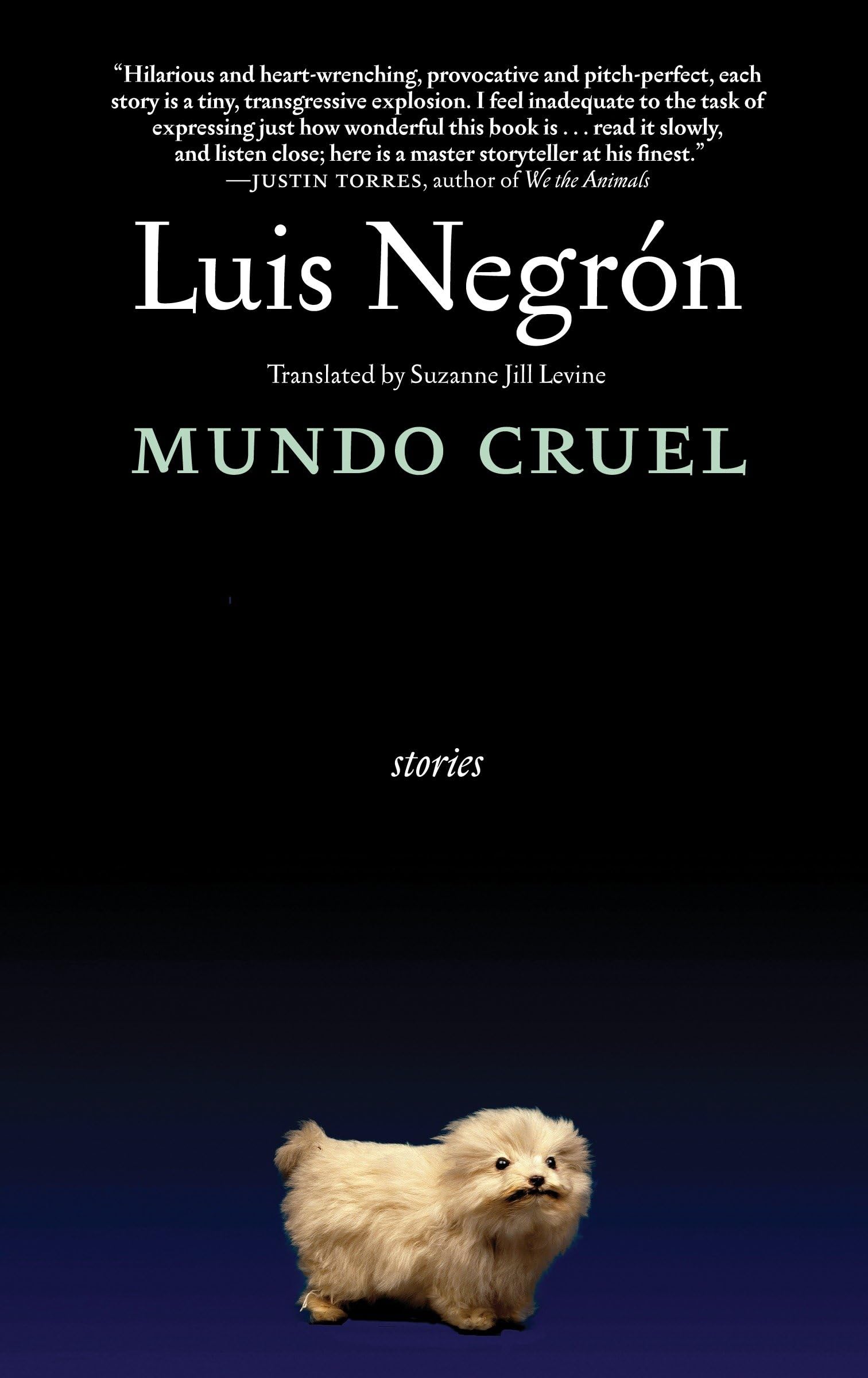
desertcart.com: Mundo Cruel: Stories (Lambda Literary Awards - Gay Fiction): 9781609804183: Negron, Luis, Levine, Suzanne Jill: Books Review: These are stories of urban violence. poverty, ignorance, prejudices, stereotypes as they exist in today’s Puerto Rican reality. - Mundo Cruel by Luis Negrón; Spanish Edition This is a collection of 9 short stories. In "El Elegido," a “Chosen” evangelical candidate for baptism- which happens when he turns fifteen - narrates his homosexual adventures with the sons some of the parishioners, the minister's son, a bus conductor, a famous singer - who taught him how to smoke as he was taken to cheap motels in Caguas. The narrator is criticized for wearing effeminate white clothing to his baptism ceremony, however this makes the pastor get an erection at the ceremony and our narrator ends up in a hotel with the pastor who promises to move to Orlando with him. In "El Vampiro de Moca" (Moca's vampire) A landlord meets a gorgeous tenant at the seven/eleven in Santurce. After fixing his studio apartment for him - air condition is added plus stolen cable service - the tenant moves in. Salivating over his tenant, the landlord stops going to gay bars in San Juan. Concerned over this, his friend, "la Carlos" comes to visit him to inquire on his whereabouts. As Carlos meets the tenant, he asks the landlord if they are dating. After a negative answer from the landlord, Carlos moves in on the tenant and the landlord is left with nothing to do but watch. "La Carlos, como yo, pensaba - este si es un hombre de verdad - y por lo que ví se le viró en la cama." Carlos, like me, thought this was a a real man, but from what I saw, he just turned around (was passive in bed). In "Por Guayama" Guayama, a stray dog has died. The owner, Naldi, is asking Sammy, his friend, an advance of the money he's owed so that he can perform taxidermy on his beloved pet. The story is a series of notes from Naldi to Sammy in which it becomes clear that Sammy has no intentions of ever paying Naldi. Naldi ends up following Sammy to the Dominican Republic where the dog is finally stuffed. Upon returning to Puerto Rico, Naldi is arrested because the Dominicans stuffed the dogs with illegal birth certificates, social security cards, and US passports - a federal felony. In "La Edwin," the story is a cell phone conversation between La Yola and La Jorge about the troubles that La Edwin is in. Apparently Edwin fell for a communist, Che Guevara university student type who was "bisexual" and after a brief romance the Che Guevara type leaves Edwin for a pro statehood homosexual. "Todas las locas son iguales y ustedes las jovencitas lo quieren cambiar todo de la noche a la mañana. Que si la bisexualidad, que si gay es una identidad política, buchas y locas juntas todo el tiempo, pero - entérate niña - que el mundo es mundo desde hace mucho tiempo. Y este mundo de nosotros es así." All gays are the same and you young ones want to change everything overnight. Bisexuality, gay as a political entity, femmes and butch ones together, but - be forewarned - the world has been the same for ages. Our world is that way. In Junito A gay man is telling Junito he is moving to Boston to escape the stigma associated with being gay in Puerto Rico. In “Bottella” (The Bottle) A cocaine addicted gay man walks into one of his older tricks named Paco, nicknamed Caneca, to find the old man dead. He panics and buys a bottle of Clorox to erase all of his DNA from the scene. Trying to explain what happened to his friend, Niebla, they go into Caneca’s house and the same man kills Niebla. Unfortunately, another of the gay man who also visits Caneca is known for carrying a bottle (Botella) of Clorox with him to prevent getting HIV. Botella becomes the main suspect and the killer and Botella go through lots of trouble to get Botella out to Boston to prevent being captured. In “Muchos” (Many) two women, Worried Woman, and Worried also Woman, gossip about Alta’s son because he’s both gay and Dominican. It is clear that both of these conditions are stigma in Puerto Rican Society. In “El Jardín” (The Garden), Nestito is taking care of his HIV infected lover, Willie. They live in a house in Santa Rita with Willie’s sister, Sharon. As Willie is dying he decides to have a big celebration for New Year’s Eve. We learn that Sharon has a secret: she has been dating a Sidney Poitier lookalike for over twenty years because she is afraid to marry him. Finally, in “Mundo Cruel” (Cruel World) - the story that gives the book its title, two Condado “A homosexuals” José A. and Pachi, get a nervous breakdown because Gabriel Solá Cohen, the only owner of a purple Audi in Puerto Rico was having a full breakfast with eggs and white toast. Both of them spend all of their time at the gym and avoid eating, to the point that José A. is a bulimic. José A. goes home and calls in sick, but Pachi has to go to work. Pachi’s boss decides it’s time to have a talk on homophobia in the workplace. Pachi is petrified as sixteen of his co-workers come out of the closet. For Pachi “la patería no era asunto para promulgarse a cuatro vientos.” (Being gay was not a public thing). As they go to the gay bar that night, they are horrified by the number of lesbians in the bar, so much they have to ask the bouncer if it’s ladies night. After a negative answer, they are faced with an announcement that Ponce de León Avenue was closed because the mayor had declared gay nights in Santurce every Thursday. Pachi is able to adapt, because his childhood crush, Papote, come out that evening and takes Pachi home, but José A decides that he’ll move to Miami to prevent living with the underlings. I was glad to read the original SpanIsh version. Most of the stories are written in phonetical Spanish, don’t think that translates too well. The feminine pronouns are used on male names to denote they are gay. Also the terms “loca” and “bugarrón” are used a lot. I guess the best English translation would be “queen” and “one who only is active in bed” but those would still miss the mark. The stories are strong on the plot, but not on character development. The country of Puerto Rico is one of the strongest characters, and places like Santurce are described in detail like on page thirty three “Santurce, Puerto Rico, antes conocido como Cangrejos, pero ya nunca más.” (Santurce once known as Cangrejos, but no more.) Most proper names are avoided. The writer wants to develop the themes and most characters are either anonymous - like Worried Women - or named after a an object - like Botella. The point of view is unclear most of the time, to the point that sometimes you don’t know who’s doing the talking. I loved the book. These are stories of urban violence. poverty, ignorance, prejudices, stereotypes as they exist in today’s Puerto Rican reality. I was glad to see the book win the 2014 Lammy for fiction. Well deserved! Review: This little book is a huge treat! - First of all, there is such a diversity of form (which I love) and the stories go back and forth between first-person narrative to trancriptions of fictional telephone calls to records of characters' letters/notes. Secondly, the characters feel so genuine and relatable, especially because they are so imperfect. Lastly, the stories are laugh-out-loud hilarious!
| Best Sellers Rank | #1,606,802 in Books ( See Top 100 in Books ) #1,447 in Hispanic American Literature & Fiction #3,370 in Fiction Satire #42,679 in Literary Fiction (Books) |
| Customer Reviews | 4.3 4.3 out of 5 stars (90) |
| Dimensions | 4.99 x 0.24 x 7.94 inches |
| ISBN-10 | 160980418X |
| ISBN-13 | 978-1609804183 |
| Item Weight | 3 ounces |
| Language | English |
| Print length | 96 pages |
| Publication date | March 12, 2013 |
| Publisher | Seven Stories Press |
C**K
These are stories of urban violence. poverty, ignorance, prejudices, stereotypes as they exist in today’s Puerto Rican reality.
Mundo Cruel by Luis Negrón; Spanish Edition This is a collection of 9 short stories. In "El Elegido," a “Chosen” evangelical candidate for baptism- which happens when he turns fifteen - narrates his homosexual adventures with the sons some of the parishioners, the minister's son, a bus conductor, a famous singer - who taught him how to smoke as he was taken to cheap motels in Caguas. The narrator is criticized for wearing effeminate white clothing to his baptism ceremony, however this makes the pastor get an erection at the ceremony and our narrator ends up in a hotel with the pastor who promises to move to Orlando with him. In "El Vampiro de Moca" (Moca's vampire) A landlord meets a gorgeous tenant at the seven/eleven in Santurce. After fixing his studio apartment for him - air condition is added plus stolen cable service - the tenant moves in. Salivating over his tenant, the landlord stops going to gay bars in San Juan. Concerned over this, his friend, "la Carlos" comes to visit him to inquire on his whereabouts. As Carlos meets the tenant, he asks the landlord if they are dating. After a negative answer from the landlord, Carlos moves in on the tenant and the landlord is left with nothing to do but watch. "La Carlos, como yo, pensaba - este si es un hombre de verdad - y por lo que ví se le viró en la cama." Carlos, like me, thought this was a a real man, but from what I saw, he just turned around (was passive in bed). In "Por Guayama" Guayama, a stray dog has died. The owner, Naldi, is asking Sammy, his friend, an advance of the money he's owed so that he can perform taxidermy on his beloved pet. The story is a series of notes from Naldi to Sammy in which it becomes clear that Sammy has no intentions of ever paying Naldi. Naldi ends up following Sammy to the Dominican Republic where the dog is finally stuffed. Upon returning to Puerto Rico, Naldi is arrested because the Dominicans stuffed the dogs with illegal birth certificates, social security cards, and US passports - a federal felony. In "La Edwin," the story is a cell phone conversation between La Yola and La Jorge about the troubles that La Edwin is in. Apparently Edwin fell for a communist, Che Guevara university student type who was "bisexual" and after a brief romance the Che Guevara type leaves Edwin for a pro statehood homosexual. "Todas las locas son iguales y ustedes las jovencitas lo quieren cambiar todo de la noche a la mañana. Que si la bisexualidad, que si gay es una identidad política, buchas y locas juntas todo el tiempo, pero - entérate niña - que el mundo es mundo desde hace mucho tiempo. Y este mundo de nosotros es así." All gays are the same and you young ones want to change everything overnight. Bisexuality, gay as a political entity, femmes and butch ones together, but - be forewarned - the world has been the same for ages. Our world is that way. In Junito A gay man is telling Junito he is moving to Boston to escape the stigma associated with being gay in Puerto Rico. In “Bottella” (The Bottle) A cocaine addicted gay man walks into one of his older tricks named Paco, nicknamed Caneca, to find the old man dead. He panics and buys a bottle of Clorox to erase all of his DNA from the scene. Trying to explain what happened to his friend, Niebla, they go into Caneca’s house and the same man kills Niebla. Unfortunately, another of the gay man who also visits Caneca is known for carrying a bottle (Botella) of Clorox with him to prevent getting HIV. Botella becomes the main suspect and the killer and Botella go through lots of trouble to get Botella out to Boston to prevent being captured. In “Muchos” (Many) two women, Worried Woman, and Worried also Woman, gossip about Alta’s son because he’s both gay and Dominican. It is clear that both of these conditions are stigma in Puerto Rican Society. In “El Jardín” (The Garden), Nestito is taking care of his HIV infected lover, Willie. They live in a house in Santa Rita with Willie’s sister, Sharon. As Willie is dying he decides to have a big celebration for New Year’s Eve. We learn that Sharon has a secret: she has been dating a Sidney Poitier lookalike for over twenty years because she is afraid to marry him. Finally, in “Mundo Cruel” (Cruel World) - the story that gives the book its title, two Condado “A homosexuals” José A. and Pachi, get a nervous breakdown because Gabriel Solá Cohen, the only owner of a purple Audi in Puerto Rico was having a full breakfast with eggs and white toast. Both of them spend all of their time at the gym and avoid eating, to the point that José A. is a bulimic. José A. goes home and calls in sick, but Pachi has to go to work. Pachi’s boss decides it’s time to have a talk on homophobia in the workplace. Pachi is petrified as sixteen of his co-workers come out of the closet. For Pachi “la patería no era asunto para promulgarse a cuatro vientos.” (Being gay was not a public thing). As they go to the gay bar that night, they are horrified by the number of lesbians in the bar, so much they have to ask the bouncer if it’s ladies night. After a negative answer, they are faced with an announcement that Ponce de León Avenue was closed because the mayor had declared gay nights in Santurce every Thursday. Pachi is able to adapt, because his childhood crush, Papote, come out that evening and takes Pachi home, but José A decides that he’ll move to Miami to prevent living with the underlings. I was glad to read the original SpanIsh version. Most of the stories are written in phonetical Spanish, don’t think that translates too well. The feminine pronouns are used on male names to denote they are gay. Also the terms “loca” and “bugarrón” are used a lot. I guess the best English translation would be “queen” and “one who only is active in bed” but those would still miss the mark. The stories are strong on the plot, but not on character development. The country of Puerto Rico is one of the strongest characters, and places like Santurce are described in detail like on page thirty three “Santurce, Puerto Rico, antes conocido como Cangrejos, pero ya nunca más.” (Santurce once known as Cangrejos, but no more.) Most proper names are avoided. The writer wants to develop the themes and most characters are either anonymous - like Worried Women - or named after a an object - like Botella. The point of view is unclear most of the time, to the point that sometimes you don’t know who’s doing the talking. I loved the book. These are stories of urban violence. poverty, ignorance, prejudices, stereotypes as they exist in today’s Puerto Rican reality. I was glad to see the book win the 2014 Lammy for fiction. Well deserved!
L**E
This little book is a huge treat!
First of all, there is such a diversity of form (which I love) and the stories go back and forth between first-person narrative to trancriptions of fictional telephone calls to records of characters' letters/notes. Secondly, the characters feel so genuine and relatable, especially because they are so imperfect. Lastly, the stories are laugh-out-loud hilarious!
C**E
Mundo Cruel
Its an easy read. Interesting collection of stories involving a significant amount of homosexuality. So if that bothers anyone they should not read it. I enjoyed the stories many of which shed light on the many dynamics of different realtionships, friendships included. Many are set in Puerto Rico, an amazing place for our minds to travel to. I wonder if anything was "lost in translation". I may read the original version as well.
S**Z
Nene, relax!
Love the translation almost as much as the original Spanish version! The humor used in the book to portray the underlying serious implications of a homophobic society on the island is perfect and synonymous with our "isla" way of life. We joke about serious things and we laugh when we're worried, we make biting remarks behind a mask of humor and then say things like, "nene relax, I'm just kidding!"
J**O
Lazy translation.
My review relates to the English translation. I love Luis Negron's stories, but I wish I could find this book in Spanish. Reading it in English is fine enough, but I was stunned to come across “aya fuera” translated to just "out there.” These words literally mean “out there,” but a diligent translator would’ve appreciated and tried to convey their full meaning. To Puerto Ricans, the United States (and only the United States) is "aya fuera." I was disappointed to see it translated as just "out there," as if the author was referencing the back yard or “out in the countryside.” It showed the translator's (maybe careless) misunderstanding of the place and people whose voice she was trusted to carry. Almost any other pair of words would've been forgivable, but these two words speak volumes about the Puerto Rican experience and world view. Every Puerto Rican understands them. Hard to believe the author and publisher couldn't find a competent translator on the island who wouldn't have missed such a basic (but meaningful) use of words.
S**D
Funny and provocative
This translation perfectly captures that unique thought process (not language alone) that some call spanglish. As a Gringo in gay San Juan in the 80s, every word in these stories resonates. Incredible collection
D**N
Intoxicating
This tightly written collection reads like a fun vacation to gay Puerto Rico. It goes down real easy and gave me a bit of a high. Only complaint is I wanted more.
T**U
Interesting
From a time I'm not familiar with and with places I know of not as they were this book was a fun read. Knowing about the culture I think the translations were as good as they could have been. I can almost hear one of the older ladies from my child hood talking like the ladies in this book. The machismo is something I don't think has changed at all.
K**R
Loved this book. At times, it reminded me of Mariana Enriquez and, at times of Charles Bukowski. 4.5 out of 5.
Trustpilot
1 week ago
1 month ago